
Navigating the XR Crossroads: Valve’s Hardware Milestone Amidst Industry Turbulence
The Extended Reality (XR) landscape currently finds itself at a peculiar juncture. On one hand, the industry is witnessing the birth of new hardware categories and the entry of traditional tech titans like Valve and Samsung. On the other, a series of high-profile layoffs, project cancellations, and disappointing sales figures have cast a shadow over the "metaverse" dream. This week’s developments—headlined by the launch of the Valve Steam Controller and a series of high-stakes leaks regarding Apple and Samsung—perfectly encapsulate this duality of progress and retrenchment.
Main Facts: A Week of High-Stakes Hardware and Industry Contraction
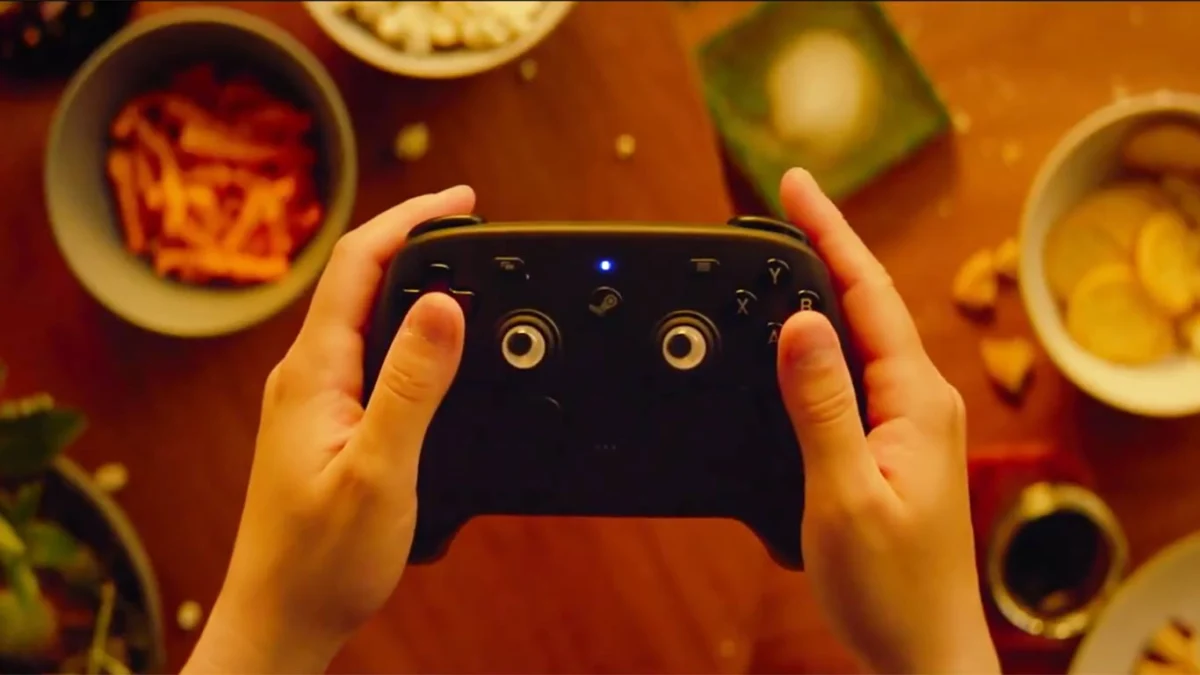
The most significant event for the hardware community this week was the official release of the Valve Steam Controller. Launched strategically on May 4th (Star Wars Day), the $99 device marks the first of three planned hardware pieces from Valve. While it is ostensibly a gaming peripheral, its inclusion of an IR LED for tracking via the upcoming "Steam Frame" positions it as a foundational component of Valve’s next-generation XR ecosystem.
However, the hardware excitement is tempered by sobering news from the software and development side. Survios, once a titan of VR game development responsible for hits like Creed: Rise to Glory and The Walking Dead: Onslaught, has reportedly laid off the vast majority of its staff. Rumors suggest the studio may be on the verge of total closure, a move that signals a cooling interest in high-budget, VR-exclusive titles.
Simultaneously, the "Apple Vision Pro" narrative has taken a sharp turn. Conflicting reports suggest that Apple may be pivoting away from its high-end headset in favor of more lightweight "smartglasses." This is mirrored by leaks from the Samsung camp, where renders of upcoming Samsung Galaxy Glasses suggest a focus on AI-integrated eyewear rather than immersive VR.
Chronology of Events: From Star Wars Day to the Summer Showcases
To understand the current momentum of the industry, one must look at the sequence of releases and the upcoming milestones scheduled for the second quarter of 2026:

- April 29, 2026: Reports surface via MacRumors and industry analyst Mark Gurman suggesting that Apple has significantly reduced its investment in the Vision Pro line, allegedly disbanding parts of the hardware team to focus on smartglasses and Siri AI integration.
- April 30, 2026: Meta confirms an additional 8,000 job cuts, citing the high costs of AI development as a primary driver for the restructuring.
- May 4, 2026: Valve launches the Steam Controller. The device sells out almost instantly despite a $99 price tag, though Valve acknowledges delays for its "Steam Frame" and "Steam Machine" due to global RAM shortages.
- May 4, 2026: VITURE launches the "Beast," its third-generation flagship XR glasses, priced at $549 and available through major retailers like Amazon and Best Buy.
- June 12, 2026 (Upcoming): The UploadVR Summer Showcase is scheduled to air, promising a look at the remaining pipeline of VR titles for the year.
- June 16, 2026 (Upcoming): Snap CEO Evan Spiegel is set to keynote at AWE US, where industry insiders expect the official unveiling of the first consumer-oriented AR Spectacles.
Supporting Data: Technical Specifications and Market Positioning
The shift toward "smartglasses" over "VR headsets" is supported by the technical specifications leaked and announced this week.
The Samsung Galaxy Glasses Leak
According to reports from Android Headlines, the upcoming Samsung eyewear is designed for daily wear rather than immersive gaming. Key specifications include:
- Processing: Qualcomm Snapdragon AR1 or AR2 platform.
- Software: Android XR, featuring deep integration with Google’s Gemini AI.
- Weight: Projected to be under 75 grams to ensure all-day comfort.
- Features: Integrated speakers, a privacy-focused LED for camera use, and a design that mimics traditional eyewear.
VITURE Beast Specs
The VITURE Beast, which hit shelves this week, provides a benchmark for what consumers currently expect from media-consumption glasses:
- Display: 1250 nits of brightness.
- Field of View (FOV): 57 degrees.
- Virtual Screen Size: Equivalent to a 174-inch screen at a 4-meter distance.
- Tracking: 3DOF (Degrees of Freedom) out of the box, with potential for 6DOF via its onboard RGB camera.
Valve’s Strategic Delay
Valve’s decision to launch the Controller without the Steam Frame or Steam Machine is a calculated move dictated by supply chain data. Unlike the Frame and Machine, the Controller does not require dedicated RAM modules, which are currently suffering from a severe chip shortage. This allowed Valve to maintain its May 4th launch window for at least one component of its ecosystem while monitoring price volatility for the more complex hardware.
Official Responses and Community Reaction
The reaction to this week’s news has been polarized, reflecting the uncertainty within the XR community.

The Apple Vision Pro Controversy
When reports broke that the Vision Pro team was being disbanded, the community response was one of fierce skepticism. Critics pointed to Apple’s ongoing public recruitment for Vision Pro-related roles as evidence that the platform is far from dead. Mark Gurman defended his reporting, clarifying that while the specific hardware team for the first-generation headset may be shifting, visionOS remains the core of Apple’s future wearable strategy. The official stance from Apple remains one of "quiet progress," though the lack of a clear roadmap for a Vision Pro 2 has left early adopters anxious.
Valve’s Supply Chain Transparency
Valve executives expressed "disappointment" regarding the staggered launch. In a statement, the company acknowledged that while they are "bummed" about the state of global hardware manufacturing, they believe launching the Controller separately is the only way to avoid a "pricing disaster" for the Steam Frame.
The Pimax "Dream Air" Backlash
On the more critical side, Pimax faced significant community ire this week. In a YouTube update, the company casually revealed that new orders of the $2,000 "Dream Air" headset would ship without the promised 3D strap or updated controllers. Instead, customers would receive older-generation hardware. This has led to accusations of a "bait-and-switch" tactic, forcing Pimax representatives to scramble for a damage-control strategy.
Implications: A Pivot from Immersion to Assistance
The collective weight of this week’s news suggests a fundamental shift in the XR industry’s trajectory. The "Metaverse" era, defined by bulky headsets and totally immersive virtual worlds, appears to be yielding to the "AI Glasses" era.
1. The Decline of the "Hero" VR Studio
The layoffs at Survios are a grim indicator for the VR gaming market. If a studio with high-profile IP and years of experience cannot sustain its development team, it suggests that the "installed base" of VR users is not growing fast enough to support AAA-level production costs. We may see a shift toward smaller, experimental indie titles or "mixed reality" experiences that require lower overhead.

2. The Convergence of AI and AR
The Samsung leaks and the VITURE launch highlight that the next battleground is not the eyes, but the ears and the "HUD" (Heads-Up Display). By integrating Gemini AI (Samsung) and Siri (Apple) into glasses, these companies are betting that users want a "smart assistant" on their face rather than a "gaming console" on their head. This makes the devices more socially acceptable and broadens the target demographic from gamers to general tech consumers.
3. Valve’s Long Game
Valve remains the "wild card." By ensuring the Steam Controller is trackable via IR, they are building a bridge between traditional PC gaming and XR. If the Steam Frame succeeds in bringing the Steam library into a wearable format without the friction of current VR setups, Valve could effectively own the "hardcore" segment of the market while Apple and Samsung fight over the "lifestyle" segment.
4. The Narrative of "VR is Dead"
The recurring reports of layoffs and "flops" are damaging the ecosystem’s ability to attract venture capital and new talent. As noted by industry observers, the narrative that VR is a failing experiment is becoming self-fulfilling. The industry desperately needs a "win"—perhaps in the form of the Snap Spectacles reveal at AWE or a breakthrough game at the UploadVR Showcase—to restore confidence.
Conclusion
The launch of the Valve Steam Controller is a beacon of hardware innovation in a week otherwise defined by contraction. While the XR industry is clearly struggling with the transition from niche enthusiast product to mass-market staple, the pivot toward lightweight, AI-driven eyewear suggests that the technology is not dying, but evolving. The coming months, particularly the June keynotes and showcases, will determine if 2026 is remembered as the year the VR bubble burst or the year the AR revolution finally found its form factor.



Leave a Comment