
The Architect of Literary Manga: Reflecting on the Legacy of Yoshiharu Tsuge
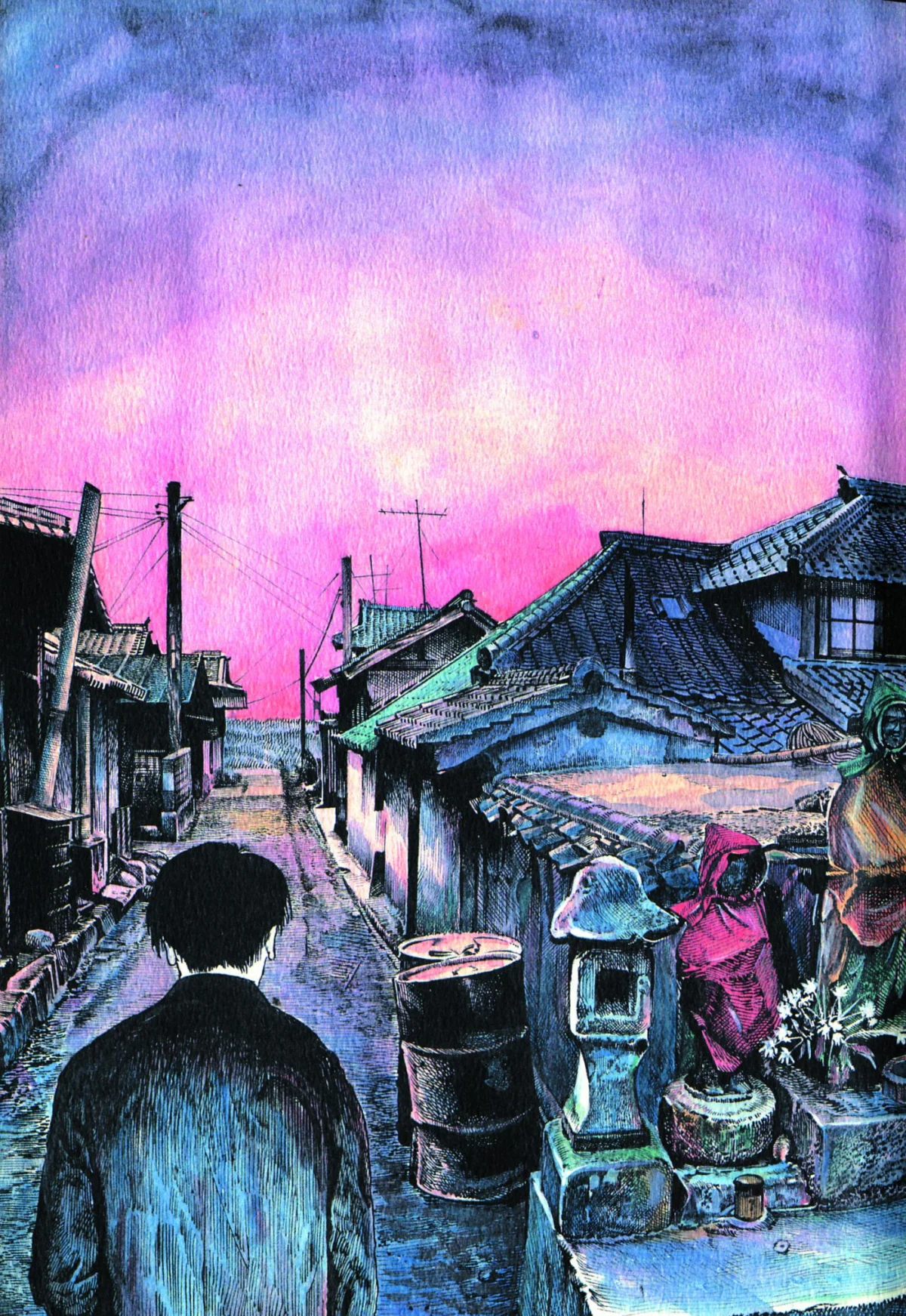
The history of manga is often divided into two eras: before and after Yoshiharu Tsuge. While the medium was born from the kinetic energy of Osamu Tezuka’s "God of Manga" period, it was Tsuge who provided its soul, its neuroses, and its literary legitimacy. Following the recent retrospective features from The Comics Journal (TCJ) archives—most notably Béatrice Maréchal’s seminal 2005 essay, "On Top of the Mountain"—the global comics community finds itself once again grappling with the immense shadow cast by a man who spent much of his life trying to disappear.
The following report synthesizes the historical significance of Tsuge’s work, the evolution of his "I-manga" style, and the profound implications his storytelling has had on the global perception of sequential art.
Main Facts: The "Garo" Revolutionary
Yoshiharu Tsuge remains the most enigmatic figure in Japanese comics. Emerging from the grueling "rental manga" (kashihon) market of the 1950s, he eventually became the crown jewel of the avant-garde magazine Garo. His work signaled a departure from the high-octane adventures of the Shonen mainstream, opting instead for a somber, surreal, and deeply personal exploration of the human psyche.
The core of the recent discourse surrounding Tsuge centers on Béatrice Maréchal’s analysis, originally published in The Comics Journal Special Edition Vol. 5: Seduction. Maréchal argues that Tsuge did not merely "improve" manga; he reinvented its communicative possibilities. By blending the mundane details of poverty-stricken Japanese life with Jungian dreamscapes, Tsuge created a visual language that spoke to the alienation of the post-war generation.
Key highlights of his career include:
- The Invention of "Watakushi" (I-Manga): Translating the Japanese literary tradition of the "I-novel" into comics, where the protagonist is a thinly veiled version of the author.
- "Neji-shiki" (Screw-Style): Published in 1968, this story is widely considered the most influential single chapter in the history of adult manga, utilizing a non-linear, dream-logic narrative.
- Cultural Recluse Status: Tsuge effectively retired from the industry in 1987, living a life of near-total seclusion, which only served to heighten the mythos surrounding his work.
Chronology: From Poverty to Post-Modernism
To understand Tsuge’s impact, one must trace the trajectory of his life, which often mirrored the fractured recovery of Japan itself.
1937–1954: The Formative Years
Born in Tokyo, Tsuge experienced a childhood defined by the deprivations of World War II and the subsequent American occupation. After the death of his father, he took on various menial jobs to support his family. These early experiences with poverty and social marginalization would become the bedrock of his later narratives.
1954–1965: The Rental Manga Era
Tsuge entered the industry through the kashihon (rental) market, producing dark, "hard-boiled" gekiga (dramatic pictures). During this time, he worked alongside other legends like Shigeru Mizuki, though he struggled with severe bouts of depression and creative stagnation, often contemplating leaving the medium entirely.
1966–1968: The Garo Breakthrough
The founding of Garo magazine by Katsuichi Nagai provided Tsuge with a platform free from commercial constraints. In 1968, he published "Neji-shiki." The story, featuring a boy wandering a surreal landscape seeking a doctor to fix a ruptured artery with a literal screw, became a sensation. It was analyzed by literary critics, philosophers, and student protesters alike, marking the moment manga was recognized as high art.
1970–1987: Travelogues and The Man Without Talent
In his later years of productivity, Tsuge moved toward "travel manga," which were less about the destinations and more about the existential dread of the traveler. His final masterpiece, The Man Without Talent (1985–1987), serves as a semi-autobiographical swan song, depicting an artist who gives up drawing to sell stones by a river.
1988–Present: The Silent Master
Since his retirement, Tsuge has lived a quiet life. However, his influence has only grown internationally, particularly as publishers like Drawn & Quarterly began the monumental task of translating his complete works into English in the 2020s.
Supporting Data: The Maréchal Thesis and Visual Innovation
Béatrice Maréchal’s 2005 critique remains a cornerstone of Tsuge scholarship. She posits that Tsuge’s mastery lies in his ability to "anchor the fantastic in the hyper-real."
The Aesthetic of Despair
Data from visual analysis of Tsuge’s middle-period works shows a unique synthesis of styles. While his characters were often drawn with simple, almost cartoonish lines (a remnant of his early gekiga days), his backgrounds were meticulously detailed, often based on photographs he took during his travels to decaying hot-spring towns. This "visual dissonance" created a sense of unease in the reader—a feeling that the characters were ghosts haunting a real, physical world.
Narrative Statistics
An analysis of the "Garo" years (1965–1970) shows that Tsuge’s contribution frequency was low compared to his peers, yet his impact on circulation was disproportionately high. "Neji-shiki" reportedly led to a surge in Garo’s popularity among university students, shifting the magazine’s demographic from children to the intellectual elite. According to Maréchal, Tsuge’s work allowed manga to move away from "the tyranny of the plot" and toward "the poetry of the moment."
Official Responses and Academic Reception
The response to Tsuge’s legacy from the global artistic community has been one of reverence, often bordering on the hagiographic.
Zack Davisson, Translator and Historian:
In his recent obituary/retrospective for TCJ, Davisson noted: "Tsuge was the first to prove that manga could be used for self-reflection rather than just self-projection. He didn’t want to be a hero; he wanted to understand why he felt so small in a world that was getting so big."
The Japan Cartoonists Association:
In various retrospectives, the Association has credited Tsuge with bridging the gap between traditional Japanese aesthetics (the concept of mono no aware, or the pathos of things) and modern existentialism. They have frequently cited him as the primary reason manga gained "National Treasure" status in the eyes of the Ministry of Culture.
Western Critics:
Critics like Art Spiegelman and Scott McCloud have pointed to Tsuge as a vital link in the chain of "alternative comics." His work predated the American "underground comix" movement in its psychological complexity, leading many to view him as a contemporary of figures like Robert Crumb, albeit with a more meditative, Eastern philosophical bent.
Implications: The Future of the "Tsuge-esque"
The enduring relevance of Yoshiharu Tsuge carries several implications for the future of the medium:
1. The Validation of the "Small Story"
Tsuge’s success proved that there is a global market for quiet, introspective narratives. In an era dominated by cinematic superhero franchises and high-stakes "battle manga," Tsuge’s legacy provides a blueprint for creators who wish to explore the "micro-dramas" of daily life.
2. The Bridge Between Literature and Art
By incorporating the "I-novel" structure, Tsuge effectively turned manga into a legitimate branch of literature. This has paved the way for modern graphic novelists—such as Chris Ware and Alison Bechdel—to use the medium for memoir and complex social commentary.
3. The Preservation of Vanishing Japan
Tsuge’s travelogues serve as an accidental ethnographic record of a Japan that no longer exists—the dilapidated inns, the rural poverty, and the pre-digital isolation of the countryside. As Japan continues to urbanize and modernize, Tsuge’s work becomes an increasingly important historical document.
4. Global Accessibility
For decades, Tsuge was a "legend known only by name" in the West due to the lack of translations. The current push to bring his entire bibliography to the English-speaking world is fundamentally altering the Western canon of manga. It is no longer enough to study Tezuka; one must now study Tsuge to understand the full breadth of the medium.
Conclusion
As Béatrice Maréchal noted nearly two decades ago, Tsuge stands "on top of the mountain," looking down at a landscape he helped shape but never felt entirely part of. His work remains a challenge to the reader: it is often uncomfortable, frequently confusing, and relentlessly honest. In the end, Tsuge’s greatest contribution was not a specific character or a plot twist, but the permission he gave to all future artists to look inward, embrace their anxieties, and find beauty in the broken edges of the world.
Through the archives of The Comics Journal and the ongoing efforts of historians like Zack Davisson, the "Screw-Style" architect continues to turn the bolt of the medium, tightening the connection between the ink on the page and the complexities of the human soul.

Leave a Comment