
The Convergence of Public Health, Political Branding, and the Erosion of Truth
In an era defined by the rapid-fire exchange of information and the increasing polarization of public discourse, the lines between public safety, political marketing, and objective reality have become dangerously blurred. From the emergence of localized viral outbreaks to the proliferation of high-profile branding ventures and the persistent shadow of "truth decay," the United States finds itself at a critical juncture. The intersection of these issues suggests a landscape where institutional trust is low, and the capacity for the state to respond to crises is under significant scrutiny.
Main Facts: A Multi-Front Crisis
The current national conversation is dominated by three primary pillars: a looming public health challenge exacerbated by administrative shifts, a series of controversial commercial ventures tied to the executive branch, and a deepening crisis of misinformation that spans the political spectrum.
The Hantavirus and Health Governance
Recent reports of a Hantavirus outbreak associated with the MV Hondius cruise ship have ignited a debate over the federal government’s preparedness. While the Andean strain of the virus—typically spread through rodent droppings—likely emerged during land excursions in remote regions rather than on the vessel itself, the incident has highlighted significant vulnerabilities in the U.S. health infrastructure. This comes amid reports of layoffs among CDC cruise ship inspectors and a broader reorganization of the Department of Health and Human Services (HHS).
The appointment of Robert F. Kennedy Jr. to a leadership role within the health apparatus has drawn sharp criticism from the scientific community. Critics argue that his history of skepticism toward conventional medical wisdom—particularly regarding vaccines and disease transmission—represents a shift toward what some have termed "medieval quackery." This administrative direction, combined with the resignation of career experts, has raised questions about the nation’s ability to manage future pandemics or localized outbreaks like Hantavirus and measles.
The Commercialization of the Presidency
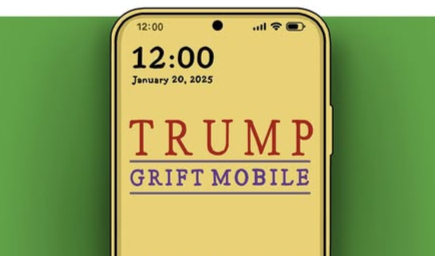
Simultaneously, the political landscape is being reshaped by unprecedented branding efforts. The introduction of "Trump Vanity Passports" and the controversial "Trump Mobile" T1 phone has created a unique overlap between civic identity and commercial loyalty. While the vanity passports are limited to specific outlets in Washington, D.C., the "Trump Mobile" venture has faced allegations of being a "pigeon drop" scam. Thousands of supporters who provided $100 deposits for a device that has yet to materialize are now finding themselves subject to revised terms of service that categorize their payments as "conditional opportunities" rather than pre-orders, with no guarantee of refunds.
The Misinformation Paradox
Perhaps most concerning is the statistical rise in conspiracy theories. Recent data suggests that nearly 30 percent of Americans believe that high-profile political events, including assassination attempts, may have been staged. This "truth decay" is not confined to a single party; it reflects a broader societal inability to distinguish between verified facts and politically motivated narratives.
Chronology of Events
To understand the current state of affairs, one must trace the sequence of administrative decisions and public health developments over the last several months.
- Initial Health Reports: The MV Hondius, carrying nature enthusiasts to remote South American locations, becomes the focal point of a Hantavirus scare. Although the ship is not U.S.-regulated, the return of American passengers prompts a review of CDC inspection protocols.
- Administrative Shift: Following the transition of power, the new administration begins a series of layoffs within the CDC and HHS. Robert F. Kennedy Jr. is tapped for a prominent role, signaling a departure from traditional public health strategies.
- The Branding Launch: Amidst these policy shifts, the "Trump Mobile" and "Vanity Passport" programs are announced. Promoted heavily by Donald Trump Jr. and Eric Trump, these products aim to capitalize on the "MAGA" brand, despite growing concerns regarding the legitimacy of the technology behind the mobile devices.
- The Contract Revision: In a quiet update to the Trump Mobile website, the $100 "pre-order" deposit is reclassified. The new terms state that the company "in its sole discretion" may elect not to offer the device, effectively shielding the entity from refund demands.
- Escalation of Misinformation: Throughout this period, old myths—such as the debunked claim that the U.S. "paid" Iran pallets of cash (which was, in reality, the return of frozen Iranian assets)—re-emerge in the wake of new tensions in the Middle East.
Supporting Data and Evidence
Public Health Risks
Hantaviruses remain a potent threat, particularly in the Western United States. Unlike more humid climates, desert environments allow rodent droppings to remain desiccated and viable for longer periods, facilitating airborne transmission when disturbed. The CDC has historically relied on a network of inspectors to monitor such risks on commercial vessels; however, current staffing levels are reportedly at a ten-year low.
Economic Discrepancies
While the stock market has shown a surprising level of resilience, "kitchen-table" issues continue to plague the average consumer. Data indicates that the cost of living—driven by gas prices and grocery inflation—is outpacing wage growth. This creates a "double whammy" effect: families are forced to raid their retirement "nest eggs" to cover daily expenses, even as the headline market indices reach new highs.
The Psychology of the "Mark"
The success of political branding ventures like golden sneakers, cryptocoins, and non-existent phones relies on a specific psychological profile. Experts in consumer behavior note that these "con games" often succeed by making the buyer feel like an "insider" or "smarter" than the general public. This same mechanism fuels the spread of conspiracy theories. When a population is told "everything is a lie," they eventually lose the ability to judge right from wrong, making them more susceptible to the "rule of lies," as philosopher Hannah Arendt famously posited.
Official Responses and Counter-Narratives
The official government stance on these burgeoning crises has been characterized by a "Don’t Worry, Be Happy" philosophy. HHS spokespeople have downplayed the risks of Hantavirus and measles, suggesting that natural immunity and "alternative" health perspectives are sufficient to protect the public.
Conversely, the scientific community has expressed profound alarm. Leading epidemiologists have pointed out that "science denialism" is not a victimless political stance but a precursor to public health catastrophes. They argue that the Andean strain of Hantavirus is particularly dangerous due to its potential for human-to-human transmission—a factor the government’s current guidance largely ignores.
Regarding the Trump Mobile controversy, representatives for the Trump family have distanced the former President’s sons from the financial management of the venture, despite their roles as the primary spokesmen for the product. They maintain that no laws have been broken and that the "conditional opportunity" clause is standard in high-tech startups.
Implications for the Future
The convergence of these events suggests several long-term implications for the American social and political fabric.
1. The Erosion of Institutional Expertise
The exodus of career professionals from the CDC and HHS represents a loss of institutional memory that cannot be easily replaced. If a major pandemic were to strike, the lack of experienced inspectors and scientists could lead to a disorganized and potentially lethal response. The reliance on "looney" or "quack" theories over established peer-reviewed science sets a precedent that may take decades to reverse.
2. The Normalization of the "Political Scam"
The "Trump Mobile" situation highlights a new era where political loyalty is monetized through questionable commercial products. If there are no legal or political consequences for soliciting millions in deposits for non-existent products, it may encourage a new wave of "unilateral contracts" where the consumer bears all the risk and the political entity reaps all the reward.
3. The Midterm Impact of "Kitchen-Table" Issues
Despite the noise of conspiracy theories and branding, the upcoming midterm elections will likely be decided by the economic reality of the average voter. If the "double whammy" of inflation and depleted savings continues, the incumbent administration may face a backlash similar to that which saw FDR defeat Hoover during the Great Depression. Voters may be gullible regarding certain narratives, but the reality of an empty bank account is an "alternative fact" that is difficult to ignore.
4. The Death of Objective Truth
As Hannah Arendt noted, the goal of constant lying is not to make people believe a specific lie, but to ensure they believe nothing. In a society where 30 percent of the population views every tragedy as a "staged event," the capacity for collective action disappears. Without a shared reality, the nation remains vulnerable not only to viruses like Hantavirus but to the social decay that follows when a people can no longer distinguish between truth and falsehood.
In conclusion, the current landscape is a cautionary tale of what happens when public health is politicized, branding replaces policy, and misinformation becomes a tool of governance. Whether the American public can "put on its shoes" before the next lie travels halfway around the world remains the defining question of this era.


Leave a Comment