
Small Mouse, Massive Stakes: A Deep Dive into the Tactical Pinball RPG ‘Beast Breaker’
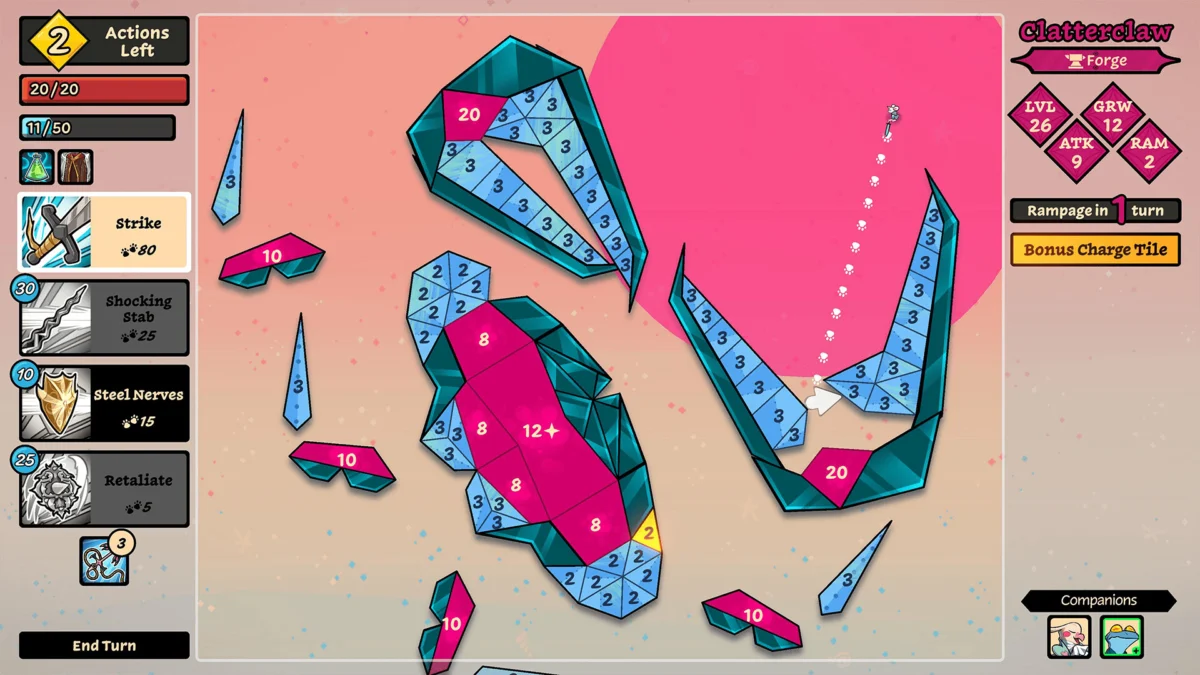
The independent gaming landscape has long been a crucible for genre-defying experiments, but few titles manage to fuse disparate mechanics as seamlessly as Beast Breaker. Developed by Vodeo Games—the studio founded by Asher Vollmer, the visionary behind the mobile phenomenon Threes!—Beast Breaker is a sophisticated turn-based RPG that eschews traditional menu-based combat in favor of high-velocity, physics-driven encounters. At its core, the game reimagines the monster-hunting genre through the lens of a pinball machine, asking players to calculate trajectories and momentum to take down crystalline titans.
This article explores the intricate design of Beast Breaker, its narrative charm, and its significant contribution to the evolving "tactical physics" subgenre.
Main Facts: A Genre-Bending Masterpiece
Beast Breaker is not a game that fits neatly into a single box. It is a turn-based strategy game where the primary mode of interaction is flinging a protagonist across a screen to collide with enemies. You play as Skipper, a diminutive but resolute mouse who finds himself the sole protector of a world besieged by "Great Beasts"—massive, semi-sentient constructs made of geometric shards and crystalline energy.
The game’s primary hook lies in its "tactical pinball" mechanics. Unlike action-heavy titles where success depends on twitch reflexes, Beast Breaker rewards patience and geometric foresight. Every move is a calculated risk. Players must predict how Skipper will bounce off the various segments of a monster, which parts will break upon impact, and where the mouse will eventually land.
The title first gained significant traction during its showcase at Dreamhack Birmingham, where its unique gameplay loop captivated attendees. It stood out not just for its mechanics, but for its accessibility. By removing the pressure of real-time combat, it allows players who typically shy away from action games to enjoy the thrill of "breaking" massive enemies through intellectual rigor rather than button-mashing.
Chronology: From Humble Beginnings to Giant Slaying
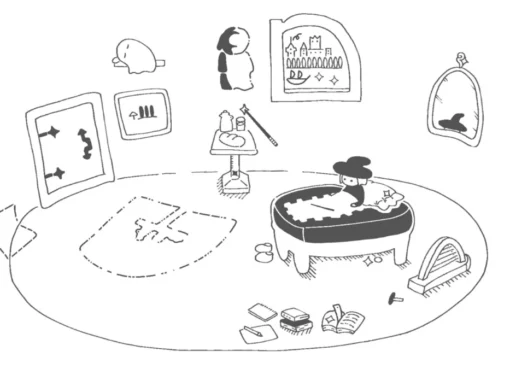
The narrative of Beast Breaker follows a classic "hero’s journey" arc, but with a cozy, domestic twist. The story begins in the modest surroundings of Skipper’s grandmother’s house. This setting serves as more than just a backdrop; it establishes the "small world" perspective that defines the game’s scale. Skipper is a tiny creature in a world that has suddenly become overwhelmingly large and dangerous.
The Rise of the Mosaic Beasts
As the story progresses, the tranquility of the village is shattered by the arrival of the Great Beasts. These are not biological creatures in the traditional sense; they are referred to as "Mosaics." Their arrival is treated as a natural disaster—a corruption of the landscape that the villagers are ill-equipped to handle. Skipper’s transition from a household pet to a legendary "Beast Breaker" happens organically as he discovers he possesses the unique ability to disrupt the energy signatures of these giants.
The Progression Loop
The game follows a structured loop that mirrors the "Monster Hunter" formula but adapted for a turn-based pace:
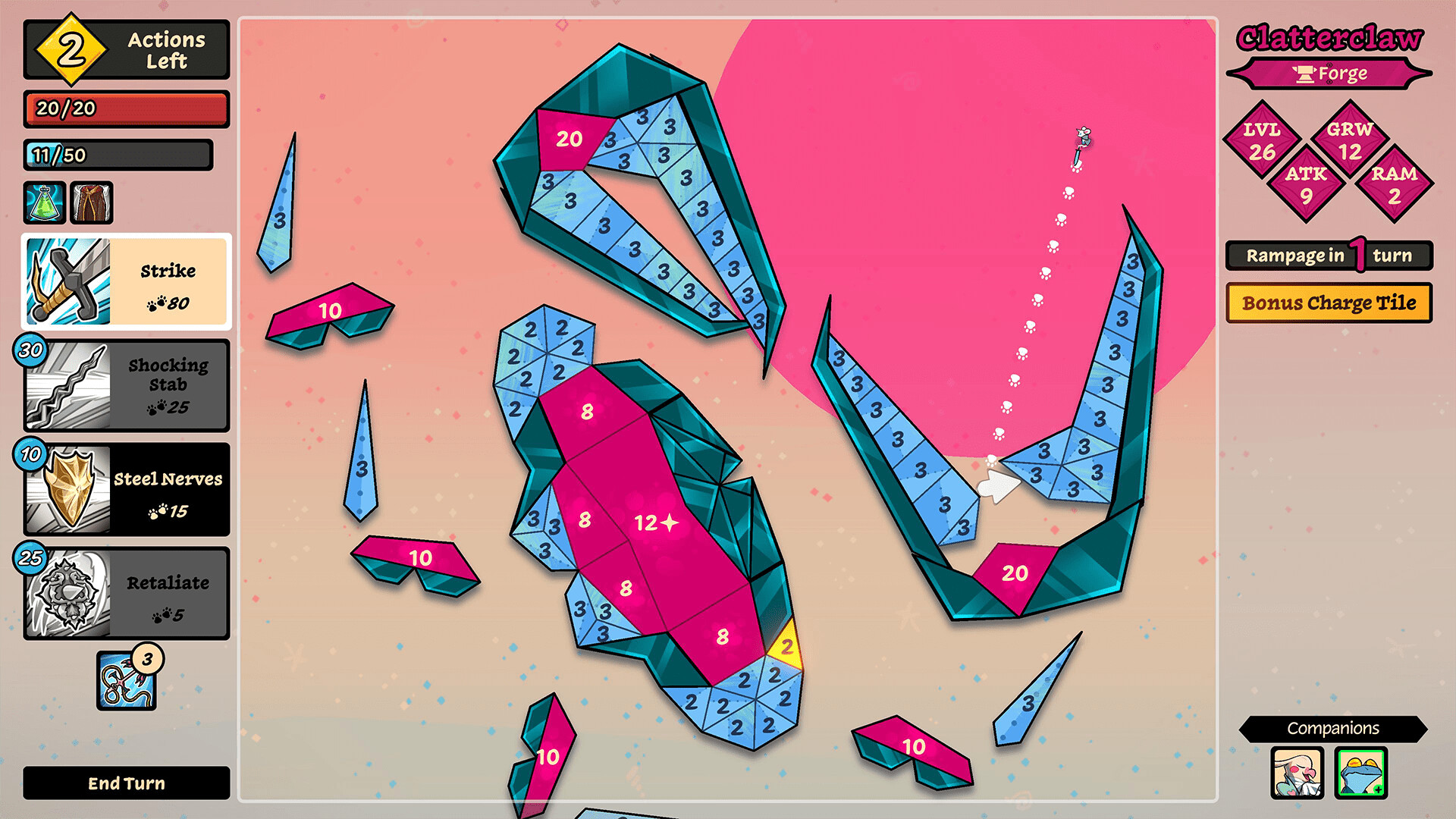
- Preparation: In the village, Skipper interacts with a cast of charming animal NPCs, including blacksmiths and alchemists, to craft new equipment.
- Tracking: Players select missions to track down specific beasts across a stylized map.
- Engagement: The core combat phase, where Skipper enters the "arena" of the beast’s body.
- Harvesting: Defeating beasts yields materials used to upgrade Skipper’s arsenal, allowing him to take on even larger threats.
Supporting Data: The Mechanics of Destruction
To understand why Beast Breaker is so compelling, one must look at the data-driven precision of its combat system. The "Beasts" are essentially puzzles masquerading as monsters. Each beast is composed of dozens of individual "shards," each with its own properties and roles within the monster’s ecosystem.
The Anatomy of a Mosaic
When engaging a beast, players are presented with a complex grid of shapes. These parts are color-coded to provide immediate tactical feedback:
- Shields (White/Grey): These segments protect the beast’s core. Hitting them does no permanent damage to the monster’s health but is often necessary to clear a path.
- Weak Points (Red with Numbers): These are the primary targets. The number displayed on a red shard indicates how many times it must be struck before it shatters. Destroying these shards reduces the beast’s overall HP and can often "break" the monster’s attack patterns.
- Indestructible Parts (Black): These serve as permanent obstacles. Players must use these to their advantage, bouncing off them to reach difficult angles or to stay out of danger zones.
The Rule of Three
The tactical depth is reinforced by a strict turn-based economy. Skipper is granted three "attacks" or moves per turn. Once these moves are exhausted, the beast takes its turn. This creates a high-stakes environment where the player must decide whether to use all three moves to deal maximum damage or save a move to position Skipper in a "safe zone."
The Danger Zone
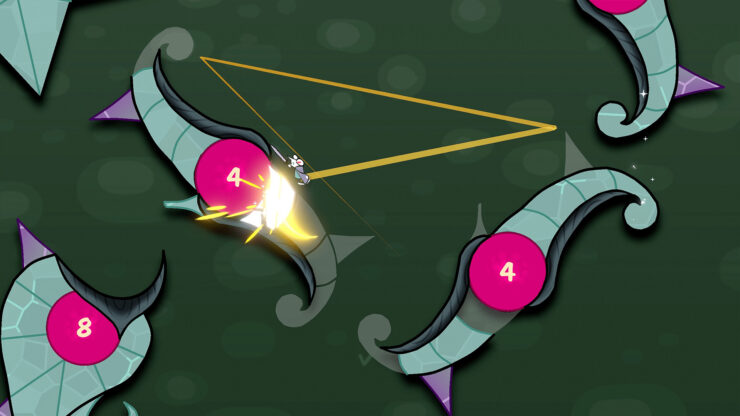
After Skipper’s turn, the beast will execute an attack, usually highlighted on the floor by a red "danger zone." If Skipper ends his third move within this zone, he takes damage. This adds a layer of "positional play" found in traditional SRPGs (Strategy RPGs). The goal is not just to hit the enemy, but to calculate a trajectory that ends with Skipper tucked safely behind a shield or out of the reach of a sweeping claw.
Weapon Variety and Physics
The game features four distinct weapon classes, each fundamentally altering the physics of the "pinball" launch:
- Sword: Balanced and reliable, providing a standard bounce.
- Hammer: High impact, capable of smashing through multiple shields in a single line but offering less "bounce" distance.
- Bow: Allows for ranged "phantom" strikes that don’t require Skipper to physically move into the danger zone.
- Shield/Spear: Focuses on defensive positioning and piercing through lines of shards.
Official Responses and Developer Context
The development of Beast Breaker was handled by Vodeo Games, a studio that made headlines not only for its games but for its revolutionary labor practices. Upon its founding, Vodeo Games became the first certified "all-remote, pro-worker" game studio in North America to successfully unionize. This corporate culture was reflected in the game’s "cozy" yet "focused" design philosophy—prioritizing quality of experience over "crunch"-driven bloat.
In official statements during the game’s launch, Asher Vollmer emphasized that the goal of Beast Breaker was to create a "tactical experience that felt tactile." The team wanted players to feel the weight of the mouse and the crunch of the crystals.
Critics and players alike have praised the game for its "low stress, high depth" approach. While the game was sadly the only major release from Vodeo Games before the studio ceased operations in 2022 due to funding challenges, it remains a "cult classic" on Steam. The official response from the indie community has been one of reverence, often citing Beast Breaker as a prime example of how to innovate within the RPG space without relying on traditional tropes.
Implications: A New Path for Indie RPGs
The success of Beast Breaker’s design has broader implications for the indie gaming industry, particularly regarding accessibility and genre hybridity.
Redefining Accessibility in Strategy
By using pinball physics as the primary verb of the game, Vodeo Games tapped into a universal understanding of movement. Almost every player understands how a ball bounces off a wall. By mapping complex RPG stats (like armor penetration, crit chance, and elemental damage) onto these simple physics, the game lowers the barrier to entry for the strategy genre. It proves that "hardcore" tactical depth doesn’t require a screen full of spreadsheets and text-heavy menus.
The "Cozy-Tactical" Trend
Beast Breaker sits at the intersection of the "Cozy Game" movement (characterized by non-violent themes, charming art, and domestic settings) and the "Hardcore Strategy" movement. This hybridity suggests a growing market for games that offer high-level mental stimulation without the grim-dark aesthetics often associated with the genre. The "grandmother’s house" framing is a vital part of this; it provides an emotional safety net that encourages experimentation.
Legacy of the Mosaic System
The "Mosaic" boss system—where a large enemy is a collection of destructible parts—is a design philosophy that we are beginning to see more frequently in indie titles. It transforms a boss fight from a "damage sponge" encounter into a "deconstruction" task. This shift in perspective, from "How much health can I take away?" to "Which part do I need to remove first?", creates a more engaging and memorable combat experience.
Conclusion
Beast Breaker is a testament to the power of creative constraint. By taking the simple act of bouncing and applying it to the epic scale of monster hunting, Vodeo Games created a title that is as intellectually rewarding as it is visually charming. For players seeking a unique RPG experience that favors the mind over the reflex, Skipper’s journey from the grandmother’s cottage to the heart of the Mosaic remains an essential play.
As the game continues to find new audiences on Steam, its legacy serves as a reminder that the most exciting innovations in gaming often come from the smallest heroes.

Leave a Comment