
The Unfolding Saga of J.R.R. Tolkien’s Literary Reception: From Mixed Reviews to Enduring Legacy
Introduction: A Literary Titan’s Uneven Ascent
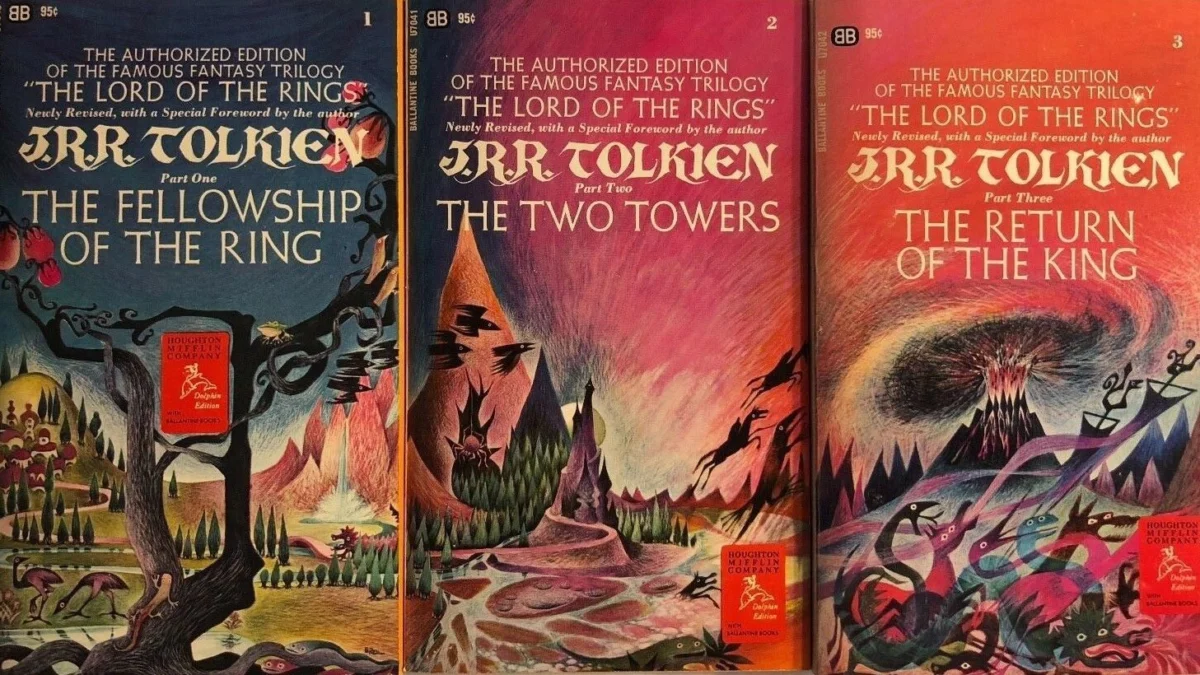
J.R.R. Tolkien’s epic masterpiece, The Lord of the Rings, a sprawling tapestry of myth, language, and adventure, has undeniably cemented its place as a cornerstone of modern literature. Yet, the journey from its mid-1950s publication to its current status as a cultural phenomenon was far from a smooth one. Upon its initial release, the trilogy was met with a surprisingly divided critical reception, a stark contrast to the overwhelming adoration it commands today. This initial hesitancy, born from the novelty of its genre and the perceived anachronism of its style, stands as a fascinating testament to the evolving landscape of literary appreciation and the enduring power of a truly original vision.
This article delves into the complex and often contradictory reception of The Lord of the Rings during its formative years, exploring the initial criticisms, the fervent defenses, and the ultimate, albeit delayed, recognition of its profound literary merit. We will trace the evolution of critical thought, from the bewildered pronouncements of some contemporaries to the eventual acknowledgment of its unique genius, culminating in its status as a benchmark for high fantasy and a profound influence on global culture.
Early Critical Winds: A Divided Landscape
The mid-20th century was a period of significant literary transition, with established forms being challenged and new voices emerging. Into this milieu stepped J.R.R. Tolkien, an Oxford professor whose academic pursuits in philology and ancient literature deeply informed his creative endeavors. The Lord of the Rings, published between 1954 and 1955, was unlike anything that had preceded it for adult readers in recent memory. While some critics struggled to categorize or appreciate its unique qualities, others recognized its groundbreaking scope and imaginative power.
The Skeptics and the Strays: Initial Reservations
The initial reviews of The Lord of the Rings often reflected a sense of bewilderment. The sheer scale of Middle-earth, its intricate history, its invented languages, and its adherence to epic conventions felt alien to a literary world more accustomed to modernist introspection or social realism.
One such early reviewer, Richard Hughes, while acknowledging the "width of imagination" that "almost beggars parallel," also hinted at the unconventional nature of Tolkien’s achievement. He cautiously positioned the work against Edmund Spenser’s 16th-century epic poem, The Faerie Queene, suggesting that The Lord of the Rings was perhaps the first work of comparable ambition since that era. This comparison, while highlighting the grandeur of Tolkien’s vision, also underscored its perceived distance from contemporary literary sensibilities.
Scottish writer Naomi Mitchison offered another comparative point, aligning Tolkien with Sir Thomas Malory, the author of the 15th-century Le Morte d’Arthur. While this connection pointed to the deep roots of Tolkien’s work in chivalric romance and Arthurian legend, it also implicitly framed it as a work of historical or archaic interest rather than a piece of cutting-edge literature. Given Tolkien’s background as a distinguished scholar of English literature, this was hardly a misplaced observation. However, it did highlight that the work was not necessarily perceived as aligning with the prevailing modes of contemporary writing, even amongst those who appreciated its literary roots.
Voices of Appreciation: Recognizing the Unprecedented
Despite the reservations, a significant number of influential figures recognized the monumental achievement that The Lord of the Rings represented. These were often individuals with a deep understanding of literature and a keen eye for innovation.
The renowned poet W.H. Auden, a contemporary and acquaintance of Tolkien, was one of the most prominent champions of the trilogy. In a review for The New York Times, Auden expressed profound admiration for Tolkien’s world-building. He stated, "No previous writer has, to my knowledge, created an imaginary world and a feigned history in such detail." This sentiment captured the unique scope of Tolkien’s creation, emphasizing the meticulous construction of Middle-earth as a fully realized world with its own distinct geography, history, cultures, and languages. Auden’s appreciation was not merely superficial; he recognized the depth and complexity that set Tolkien’s work apart.
However, even Auden, while praising the overall achievement, found fault with Tolkien’s poetry, a point that would later be amplified by more critical voices. This nuanced appreciation, acknowledging both brilliance and perceived flaws, foreshadowed the ongoing debates surrounding the literary merits of The Lord of the Rings.
The Scrutiny of the Elite: Literary Criticism and the Nobel Prize Snub
As The Lord of the Rings gained traction, it inevitably came under the intense scrutiny of literary critics, whose pronouncements carried significant weight in shaping public perception. While some voices championed its originality, others levied sharp criticisms that, in some cases, echoed the initial hesitations about its style and substance.
Edmund Wilson’s Scathing Indictment
One of the most influential and damaging critiques came from the eminent American critic Edmund Wilson. In a scathing review published in The Nation in 1956, Wilson seized upon Auden’s critique of Tolkien’s poetry to launch a broader assault on the trilogy’s prose. Wilson famously wrote, "Mr. Auden is apparently quite insensitive – through lack of interest in the other department – to the fact that Tolkien’s prose is just as bad. Prose and verse are on the same level of professorial amateurishness."
Wilson’s critique highlighted a central tension in the reception of The Lord of the Rings: the perceived gap between its imaginative grandeur and its literary execution. The term "professorial amateurishness" suggested that while Tolkien possessed intellectual depth, his writing lacked the polish and sophistication expected of professional literature. This assessment, coming from a respected critic, undoubtedly influenced the perceptions of many readers and fellow critics.
The Nobel Committee’s Silence: A Missed Opportunity?
The critical divide was further underscored by the Nobel Prize jury’s decision to exclude Tolkien’s works from consideration for the Nobel Prize in Literature. In 1961, the same year that authors like Lawrence Durrell, Robert Frost, Graham Greene, and E.M. Forster were reportedly considered, the prize was awarded to Ivo Andrić.
Internal documents from the Nobel archives, unsealed after 50 years, revealed the jury’s reasoning. Anders Österling, a member of the Swedish Academy, wrote of Tolkien’s prose, "has not in any way measured up to storytelling of the highest quality." This judgment echoed Edmund Wilson’s critique, suggesting that the perceived shortcomings in Tolkien’s prose were a significant impediment to his recognition by the highest literary echelons.
The discovery of this information, brought to light by Swedish journalist Andreas Ekström, who spent years poring over the Nobel archives, provided a concrete glimpse into the official literary establishment’s assessment of Tolkien’s work. Ekström noted that this was the first time he had encountered Tolkien’s name among the suggested candidates, and it appeared largely due to the advocacy of his closest friend and staunch supporter, C.S. Lewis.
The Steadfast Champion: C.S. Lewis’s Unwavering Advocacy
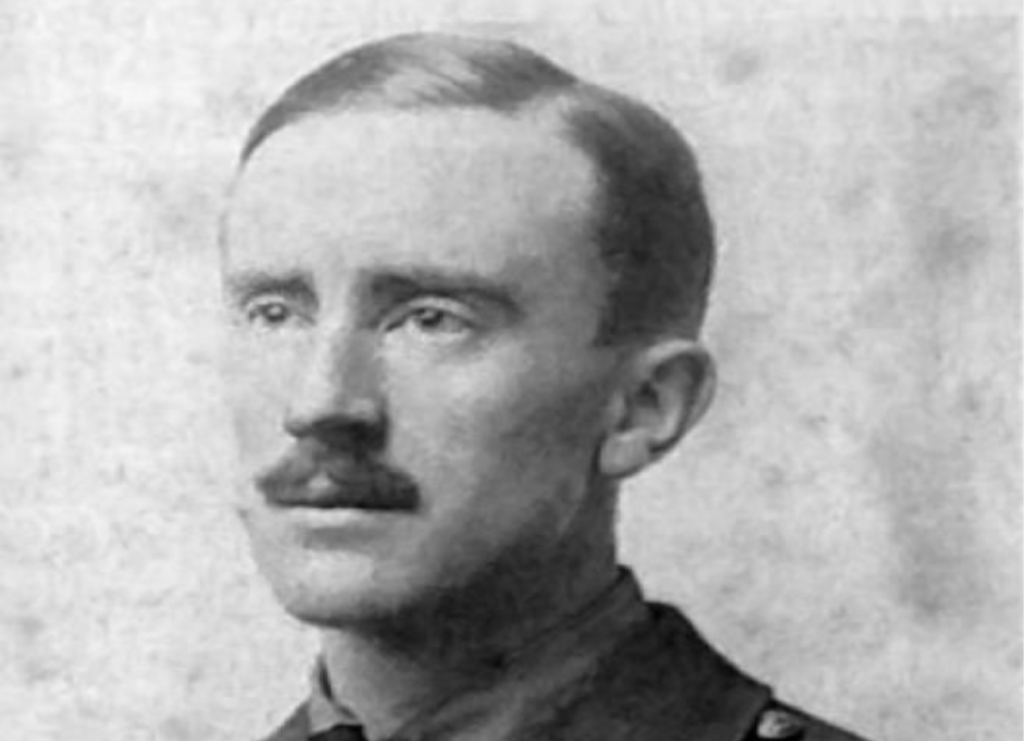
While some critics dismissed The Lord of the Rings, J.R.R. Tolkien found a powerful and unwavering champion in his lifelong friend and fellow Oxford don, C.S. Lewis. Lewis, a celebrated author in his own right, was not only a profound admirer of Tolkien’s work but also a tireless advocate for its recognition.
A Friendship Forged in Literature
The intellectual and personal bond between Tolkien and Lewis, often referred to as "The Inklings," was a significant force in the literary landscape of their time. Lewis, recognizing the immense potential of Tolkien’s creation from its earliest stages, dedicated himself to promoting the author and his magnum opus.
Even before the full publication of The Lord of the Rings, Lewis was actively championing its predecessor, The Hobbit. In a letter to British publisher Stanley Unwin in 1953, Lewis promised to "do all in my power to secure for Tolkien’s great book the recognition it deserves." This early commitment set the stage for Lewis’s sustained efforts to elevate Tolkien’s work.
Defending the Narrative: "The Dethronement of Power"
Lewis’s advocacy extended beyond mere praise; he actively engaged with critics and defended Tolkien’s artistic choices. Following the publication of The Two Towers, the second volume of the trilogy, Lewis penned an essay titled "The Dethronement of Power." In this essay, he directly addressed the criticisms leveled against Tolkien’s writing style, particularly its perceived "tediousness."
Lewis argued that the prolixity and detailed descriptions, which some critics found to be a flaw, were in fact a narrative necessity. He explained, "I do not think he could have done it any other way." This defense suggested that the very qualities that some found objectionable were integral to the immersive experience Tolkien sought to create. For Lewis, the intricate world-building and detailed prose were not amateurish but essential components of a unique and groundbreaking narrative strategy.
Encouraging Deeper Engagement: The Rewards of Rereading
Beyond defending the style, Lewis also urged readers to invest more time and effort in engaging with Tolkien’s work. He understood that the depth and complexity of The Lord of the Rings might not be immediately apparent on a first reading. In his defense of The Two Towers, he concluded:
"The book is too original and too opulent for any final judgment on a first reading. But we know at once that it has done things to us. We are not quite the same men. And though we must ration ourselves in our rereadings, I have little doubt that the book will soon take its place among the indispensables."
This prescient statement highlighted Lewis’s belief in the transformative power of Tolkien’s narrative. He recognized that the trilogy was not meant to be consumed superficially but to be savored and revisited, revealing new layers of meaning and impact with each encounter. His conviction that the book would become an "indispensable" foreshadowed its enduring legacy and its eventual status as a literary touchstone.
The Long Shadow: Tolkien’s Enduring Legacy and the Evolution of Fantasy
The journey of The Lord of the Rings from a critically divided release to a universally acclaimed literary phenomenon is a powerful illustration of how artistic merit can eventually transcend initial resistance. While the Nobel Prize eluded Tolkien, his work has achieved a different, perhaps even more profound, form of recognition: its establishment as the undisputed benchmark for the fantasy genre.
The Genesis of Modern Fantasy
The Lord of the Rings did not merely exist within a literary landscape; it fundamentally reshaped it. Tolkien’s meticulous creation of a secondary world, complete with its own history, mythology, languages, and moral complexities, set a new standard for epic fantasy. Prior to his work, the genre often leaned towards simpler quests and less developed worlds. Tolkien’s achievement demonstrated the potential for fantasy to be a serious literary art form, capable of exploring profound themes of good versus evil, courage, sacrifice, and the corrupting nature of power.
The influence of The Lord of the Rings is immeasurable. Countless authors, from Ursula K. Le Guin to George R.R. Martin, have acknowledged Tolkien’s foundational role. His archetypal characters, his epic narrative structures, and his deep dive into linguistic and mythological foundations have become integral to the genre’s DNA. The term "Tolkien-esque" has become a shorthand for a certain kind of rich, immersive fantasy world-building.
Beyond the Prize: A Cultural Colossus
While the absence of a Nobel Prize might seem like a significant omission, the global impact of The Lord of the Rings transcends such accolades. The books have been translated into over 60 languages and have sold hundreds of millions of copies worldwide. The success of Peter Jackson’s film adaptations further propelled Tolkien’s work into mainstream consciousness, introducing Middle-earth to new generations and solidifying its status as a cultural colossus.
The enduring popularity of The Lord of the Rings speaks to its timeless themes and its profound resonance with readers across diverse cultures and backgrounds. The epic struggle against overwhelming darkness, the courage of ordinary individuals, and the power of friendship and hope are universal concepts that continue to captivate audiences.
A Lasting Measure of Literary Value
Ultimately, the critical reception of The Lord of the Rings serves as a valuable case study in the vagaries of literary judgment. While some contemporary critics struggled to grasp its scope and style, its enduring appeal and its profound impact on literature and popular culture speak volumes about its intrinsic value. The fact that its prose was once deemed "professorial amateurishness" by some, yet is now celebrated for its richness and depth by millions, highlights the subjective nature of critical assessment and the often-delayed recognition of true artistic innovation.
Tolkien’s work has indeed become the "literary standard by which high fantasy is measured," as previously noted. Its journey from mixed reviews to a global phenomenon is a testament to the power of imagination, the enduring appeal of myth, and the profound impact that a truly original voice can have on the world. The Nobel Prize may have passed him by, but J.R.R. Tolkien’s legacy is indelibly etched into the fabric of modern literature, a testament to his unparalleled genius.
Note: This article is an expanded and enriched version of an earlier post, incorporating historical context, detailed analysis of critical responses, and a broader examination of Tolkien’s enduring legacy.



Leave a Comment