
Nat Cassidy’s Acclaimed Novella ‘Rest Stop’ Greenlit for Film Adaptation by Gary Dauberman’s Coin Operated, Cassidy to Pen Script
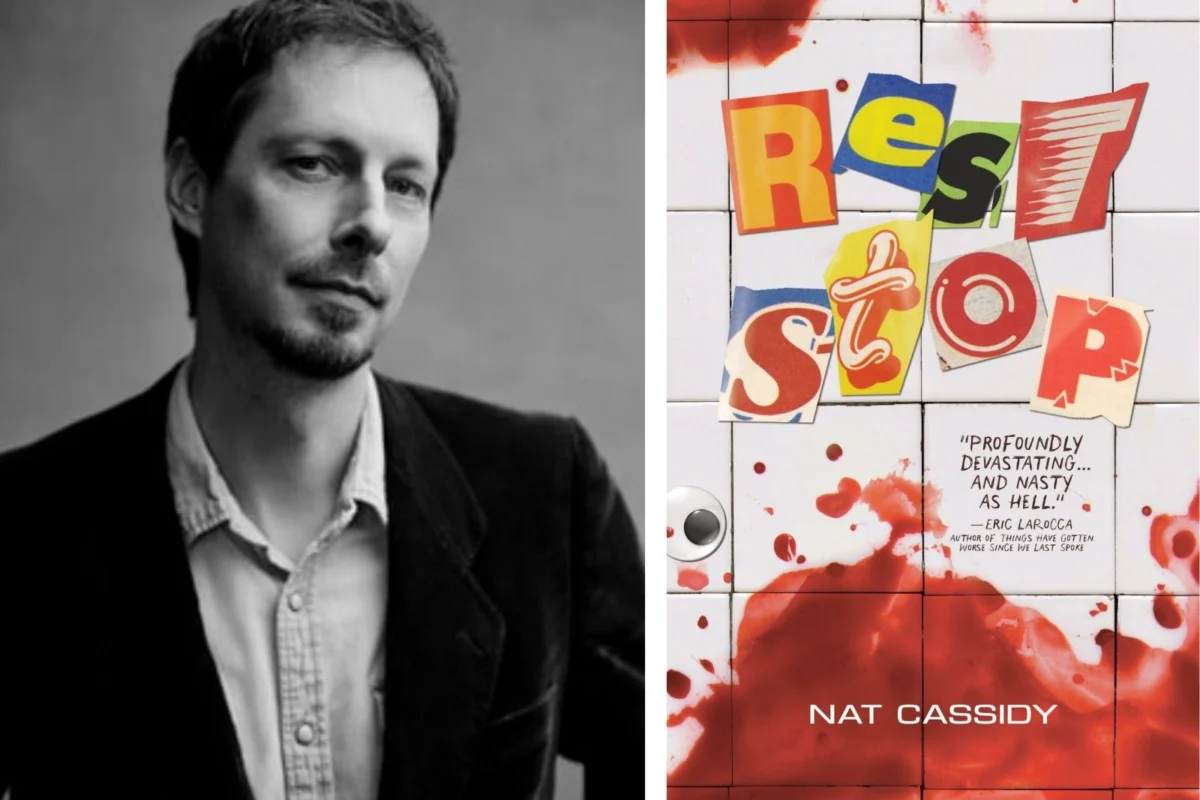
LOS ANGELES, CA – [Current Date] – Horror fans and literary enthusiasts alike are buzzing with the news that Nat Cassidy’s chilling novella, Rest Stop, has been officially picked up for a feature film adaptation. The project, which promises a visceral and psychologically intense cinematic experience, will see Cassidy himself taking on screenwriting duties, ensuring a faithful translation of his acclaimed narrative to the big screen. The rights were acquired by Coin Operated, the production company founded by horror maestro Gary Dauberman, known for his significant contributions to the Annabelle franchise and It films.
Rest Stop is the centerpiece of Cassidy’s recently released collection, I Know a Place: Rest Stop and Other Dark Detours. The novella plunges readers into a nightmarish scenario, focusing on a lone musician who finds himself inexplicably trapped within the confines of a desolate rest stop bathroom. What begins as a desperate bid for escape quickly devolves into a harrowing fight for survival against unseen horrors both lurking within the grimy stalls and pressing in from the world outside. The concept, marrying claustrophobia with existential dread, immediately captured the attention of industry insiders and has been lauded by critics for its relentless tension and inventive scares.
Gary Dauberman, whose directorial credits include Annabelle Comes Home and screenwriting for The Nun and both It chapters, expressed his enthusiasm for the project in a statement to Deadline, the industry publication that first broke the news. He likened Rest Stop to "the junk food aisle at any sketchy gas station on the side of the road" – a fittingly eerie metaphor for its unexpected terrors. Dauberman emphasized the novella’s "relentless pace, psychological torment, heartfelt character moments, and many squirm-inducing sequences," declaring that these elements combine to create "the rare horror story that has all the ingredients for a perfectly terrifying experience on the big screen."
Cassidy himself offered a tantalizing comparison for the novella’s tone, telling Deadline, "I like to describe this novella as Green Room meets Gerald’s Game." He elaborated on its place within his body of work, stating, "It’s the closest thing I’ve yet written to ‘extreme’ horror—though, I wouldn’t say it goes nearly as hard or gets nearly as bleak as the most extreme ‘extreme’ horror stories I’ve read. Regardless, I’m hoping it makes your next visit to a gas station bathroom even scarier than it would otherwise be.”
The project is currently in its nascent stages, with no director or cast attached. However, the early acquisition and the involvement of established horror talent like Dauberman and Cassidy point towards a high-priority production with significant potential to make a mark in the genre.
A Chronology of Terror: From Page to Potential Picture
The journey of Rest Stop from a compelling concept to a highly anticipated film adaptation is a testament to Nat Cassidy’s growing stature in the horror literary world and the keen eye of Gary Dauberman’s Coin Operated.
Nat Cassidy’s Ascendant Literary Career
Nat Cassidy has steadily built a reputation as a distinctive voice in contemporary horror fiction. His works often delve into the psychological underpinnings of fear, blending supernatural elements with visceral, character-driven narratives. Prior to Rest Stop, Cassidy gained recognition for his unique blend of dark humor and genuine terror, often exploring themes of identity, trauma, and the insidious nature of everyday anxieties. His prose is known for its immersive quality, drawing readers deep into the minds of his protagonists and the unsettling worlds they inhabit. The publication of I Know a Place: Rest Stop and Other Dark Detours earlier this year solidified his position as a formidable talent, with Rest Stop quickly emerging as a standout piece within the collection due to its immediate impact and memorable premise.
The Genesis of Rest Stop
The inspiration behind Rest Stop likely taps into a universal, primal fear: being trapped in a vulnerable, unsanitary, and isolated public space. Gas station bathrooms, often depicted in media as havens for unspeakable acts or unsettling encounters, possess an inherent creepiness that Cassidy masterfully exploits. The novella’s genesis can be traced back to this shared cultural unease, amplified by Cassidy’s imaginative exploration of what horrors could truly manifest in such a confined, overlooked setting. The idea of a musician as the protagonist adds another layer of intrigue, perhaps hinting at themes of creative isolation or the fragility of performance under duress. The narrative’s tight focus on a single character in a single location is a bold choice for a novella, demanding intense character work and escalating tension, which Cassidy delivered with aplomb. Its critical reception post-release was overwhelmingly positive, with many reviewers highlighting its originality and effectiveness as a contained thriller. This strong literary foundation undoubtedly made it an attractive property for adaptation.
The Acquisition by Coin Operated
The process of Rest Stop being acquired for film rights underscores the industry’s continuous search for fresh, high-concept horror. Gary Dauberman, through his Coin Operated banner, has demonstrated a consistent interest in projects that push genre boundaries while remaining commercially viable. The initial interest likely stemmed from the novella’s unique premise and strong critical buzz. Given Dauberman’s background as a successful horror screenwriter and director, he possesses a keen understanding of what translates effectively from page to screen. The fact that Nat Cassidy himself was tapped to write the screenplay is a significant development, suggesting a commitment to preserving the source material’s integrity and vision. This direct involvement from the author is often a positive indicator for fans of the original work, as it minimizes the risk of creative dilution during adaptation. The deal, first reported by Deadline, quickly sent ripples through the horror community, igniting anticipation for what promises to be a standout addition to the genre.
Supporting Data: Genre Deep Dive and Production Pedigree
The comparisons drawn by Nat Cassidy and the track record of Gary Dauberman’s Coin Operated provide crucial context for understanding the potential tone, style, and impact of the Rest Stop film adaptation.
The "Green Room Meets Gerald’s Game" Blueprint
Nat Cassidy’s description of Rest Stop as "Green Room meets Gerald’s Game" offers a compelling blueprint for the film’s likely direction.
- Green Room (2015): Jeremy Saulnier’s critically acclaimed thriller is a masterclass in relentless, claustrophobic survival horror. It centers on a punk band trapped in a neo-Nazi club, forced to fight for their lives. The film is known for its intense, unyielding tension, shocking bursts of violence, and a palpable sense of dread. Its single-location setting and focus on desperate survival against overwhelming odds resonate strongly with the premise of Rest Stop. The film adaptation will likely seek to emulate Green Room‘s suffocating atmosphere and the visceral, real-world stakes it establishes.
- Gerald’s Game (2017): Mike Flanagan’s adaptation of Stephen King’s novel is a prime example of psychological horror rooted in a single, inescapable location. A woman is left handcuffed to a bed after her husband dies during a kinky game, forcing her to confront her past traumas and inner demons while hallucinating and fighting for survival. Gerald’s Game excels at exploring the protagonist’s mental state, blurring the lines between reality and delusion, and deriving terror from psychological torment rather than overt supernatural threats. This comparison suggests that Rest Stop will not merely be a creature feature but a deep dive into the musician’s psyche, where internal struggles might be as terrifying as external monsters.
Cassidy’s nuance regarding "extreme horror"—that Rest Stop approaches it but doesn’t go "nearly as hard or get nearly as bleak as the most extreme"—is also insightful. This indicates a film that will push boundaries and deliver genuine shocks but perhaps temper the relentless nihilism or gratuitous gore often associated with the subgenre. It suggests a focus on the psychological impact and the sheer terror of the situation, rather than simply relying on shock value. The goal, as Cassidy states, is to make "your next visit to a gas station bathroom even scarier," implying a horror that lingers and taps into everyday anxieties.
The Inherently Scary Gas Station Bathroom Trope
The gas station bathroom is a surprisingly potent setting for horror. It is a liminal space – neither truly public nor private, often neglected, and associated with transient individuals. These spaces are inherently uncomfortable, often unsanitary, and carry an underlying sense of vulnerability. The locked door provides a false sense of security, which can easily be shattered, making it ripe for psychological terror. The isolation, the strange sounds, the lingering smells, and the potential for unsavory encounters all contribute to its chilling potential. Cassidy’s novella capitalizes on these pre-existing anxieties, turning a mundane, often-dreaded necessity into a literal chamber of horrors.
Gary Dauberman and Coin Operated: A Pedigree in Modern Horror
Gary Dauberman’s involvement through Coin Operated immediately lends credibility and a certain expectation of quality to the Rest Stop adaptation. Dauberman has established himself as a significant force in contemporary horror, particularly within the universe of James Wan’s The Conjuring. His notable contributions include:
- Screenwriter for Annabelle (2014), Annabelle: Creation (2017), and Annabelle Comes Home (2019): These films showcased his ability to craft effective jump scares, build suspense, and develop compelling supernatural lore. His directorial debut with Annabelle Comes Home further demonstrated his command of the genre.
- Screenwriter for It (2017) and It Chapter Two (2019): Adapting Stephen King’s epic novel is a monumental task, and Dauberman played a key role in bringing Pennywise’s terror to a new generation, proving his skill in handling large-scale, character-rich horror.
- Screenwriter for The Nun (2018): Further expanding The Conjuring universe, this film solidified his reputation for crafting atmospheric and terrifying supernatural narratives.
Coin Operated’s growing roster of projects further illustrates its strategic focus within the horror landscape:
- André Øvredal’s Passenger: This upcoming horror film, starring Lou Llobell and Jacob Scipio, focuses on a couple encountering a supernatural hitchhiker on a creepy road. It suggests Coin Operated’s interest in road-trip horror and supernatural thrillers.
- Santiago Menghini’s The Revenge of La Llorona: This project indicates a foray into folk horror and leveraging established terrifying legends.
- An Urban Legend reboot: This points to an interest in re-imagining classic slasher tropes for a modern audience.
The common thread across Coin Operated’s slate is a commitment to high-concept horror, often with supernatural or psychological elements, and a willingness to explore both original stories and established IPs. Dauberman’s quote about Rest Stop containing "all the ingredients for a perfectly terrifying experience" highlights his belief in its commercial and critical potential, aligning with his company’s mission to deliver impactful horror content. His experience with single-location horror (like aspects of Annabelle Comes Home) and character-driven psychological narratives (like It) makes him an ideal steward for Rest Stop.
Current Trends in Horror Cinema
The acquisition of Rest Stop also aligns with several current trends in the horror genre. There’s a strong market appetite for:
- Contained/Single-Location Horror: Films like Don’t Breathe, A Quiet Place, and The Shallows have proven that limiting a story to a single, inescapable setting can amplify tension and create intensely immersive experiences. Rest Stop fits perfectly into this successful subgenre.
- Psychological Horror: As audiences seek more sophisticated scares, films that delve into the human psyche and explore internal demons (e.g., Hereditary, The Babadook) are increasingly popular. The Gerald’s Game comparison firmly places Rest Stop in this category.
- Novella/Short Story Adaptations: With streaming platforms constantly hungry for content, novellas and short stories offer rich, often overlooked source material that can be efficiently adapted into feature films, providing a contained narrative that doesn’t require extensive world-building.
- Author-Driven Adaptations: The involvement of authors like Cassidy in the screenwriting process is gaining traction, promising authenticity and a deeper connection to the source material, which resonates positively with dedicated fanbases.
Official Responses: Unpacking the Creators’ Vision
The direct statements from both Nat Cassidy and Gary Dauberman offer invaluable insights into the creative vision for the Rest Stop film adaptation, painting a picture of a project rooted in psychological dread and visceral impact.
Nat Cassidy’s Articulation of Intent
Cassidy’s comparison to Green Room and Gerald’s Game is a potent descriptor. Green Room suggests a brutal, immediate threat and a fight for survival in a confined space, hinting at physical dangers and a relentless pace. Gerald’s Game, on the other hand, speaks to the psychological unraveling of a character facing internal and external pressures within an inescapable predicament. By combining these two influences, Cassidy signals that the film will likely balance external, physical horror with deep psychological torment. The musician protagonist will not only be fighting tangible threats but also battling their own mind, fears, and possibly past demons, making the horror multi-layered and deeply unsettling.
His comment about Rest Stop being "the closest thing I’ve yet written to ‘extreme’ horror" yet not as "hard or bleak" as the most extreme examples is a crucial clarification. It positions the film to deliver intense, boundary-pushing scares without necessarily alienating a broader audience with unrelenting nihilism or gratuitous, non-narrative gore. This suggests a sophisticated approach to horror, where the terror is earned through character investment and escalating tension rather than shock tactics alone. The ultimate goal, "making your next visit to a gas station bathroom even scarier," perfectly encapsulates the film’s ambition: to inject a pervasive, real-world dread into an everyday experience, ensuring the horror resonates long after the credits roll. It’s a classic horror tactic – transforming the mundane into the terrifying – and Cassidy seems poised to execute it masterfully.
Gary Dauberman’s Enthusiastic Endorsement
Dauberman’s colorful analogy of Rest Stop being like "the junk food aisle at any sketchy gas station on the side of the road" is indicative of its multifaceted appeal. Like a diverse selection of treats (some potentially harmful), the novella offers a range of horror elements. His subsequent breakdown confirms this: "Its relentless pace, psychological torment, heartfelt character moments, and many squirm-inducing sequences."
- Relentless Pace: This implies a film that maintains high tension from start to finish, leaving little room for the audience to breathe.
- Psychological Torment: This reiterates Cassidy’s Gerald’s Game comparison, emphasizing the mental anguish the protagonist will endure, making the horror internal as much as external.
- Heartfelt Character Moments: This is a critical ingredient often overlooked in pure extreme horror. It suggests that despite the terror, the audience will connect with the musician on an emotional level, amplifying the stakes and making their struggle more impactful. This also helps to avoid the "bleakness" Cassidy mentioned, grounding the story in human experience.
- Many Squirm-Inducing Sequences: This promises visceral, uncomfortable moments designed to make the audience physically react, without necessarily being gratuitous. It could involve body horror, extreme discomfort, or morally challenging situations.
Dauberman’s concluding remark, that Rest Stop has "all the ingredients for a perfectly terrifying experience on the big screen," is a strong vote of confidence from a seasoned horror producer and filmmaker. It signifies his belief in the novella’s inherent cinematic quality and its potential to deliver a memorable, impactful horror film that caters to a wide spectrum of horror fans. The combined visions of Cassidy and Dauberman suggest a film that will be smart, scary, and deeply unsettling.
Implications: The Road Ahead for Rest Stop and Beyond
The announcement of Rest Stop‘s film adaptation carries significant implications for its creators, the horror genre, and future production trends.
The Filming Process: Anticipated Challenges and Opportunities
While the project is in its "early days" with no director or cast announced, these initial stages are crucial for shaping the film’s identity.
- Director Selection: Coin Operated will likely seek a director with a proven ability to handle claustrophobic settings, intense psychological narratives, and character-driven horror. Names that excel in contained thrillers or indie horror might be considered, someone who can maximize tension within a single location and elicit strong performances. The director will need to creatively interpret the "horrors within and outside its stalls" without relying solely on CGI, perhaps leaning into practical effects and atmospheric dread.
- Casting: Casting a single, central character who must carry the bulk of the film’s emotional and physical weight is paramount. The actor chosen for the musician role will need to possess significant dramatic range and the ability to convey extreme fear, desperation, and psychological unraveling. This could be a breakout role for an emerging talent or a challenging turn for an established actor looking to explore darker material. The supporting cast, if any, would likely be minimal, perhaps confined to voices, fleeting glimpses, or hallucinations, placing even greater emphasis on the lead.
- Production Timeline: Given the contained nature of the story, Rest Stop could potentially be a relatively efficient production, allowing for a quicker turnaround from development to filming. However, crafting the nuanced psychological elements and the "squirm-inducing sequences" will require careful planning and execution. A realistic timeline might see pre-production ramping up in the coming months, with filming potentially beginning next year, leading to a release in late 2025 or 2026.
Impact on Nat Cassidy’s Career
For Nat Cassidy, this film adaptation is a monumental career milestone.
- Increased Visibility: A major film adaptation, especially with Dauberman’s backing, will significantly elevate Cassidy’s profile within both the literary and film worlds. It will introduce his work to a much wider audience, potentially leading to increased sales of I Know a Place and his other novels.
- Future Adaptations: A successful Rest Stop film could open the floodgates for adaptations of Cassidy’s other works, cementing his status as a go-to source for compelling horror narratives.
- Screenwriting Opportunities: His role as screenwriter for Rest Stop establishes him as a dual threat—a talented author and a capable screenwriter—which could lead to further screenwriting commissions for original projects or adaptations of other authors’ works. This allows him a direct hand in shaping the cinematic legacy of his creations.
Broader Implications for the Horror Genre
- Novellas as Rich Source Material: The success of Rest Stop could further validate novellas as excellent source material for feature films. Their concise nature often provides a strong core concept and narrative drive, making them ideal for adaptation without the need to trim extensive plots or characters, as is often the case with longer novels.
- Reinforcing Contained Horror: The film will undoubtedly contribute to the ongoing popularity of contained, high-concept horror. In an era of escalating blockbuster budgets, films that prove effective scares can be delivered with minimal locations and focused narratives offer a compelling alternative for studios and audiences alike.
- The "Everyday Location" as Horror: Rest Stop will likely reinforce the power of transforming mundane, everyday locations into terrifying settings. This taps into universal anxieties and allows horror to permeate the audience’s real-world experiences, a hallmark of truly effective genre storytelling.
- Balancing "Extreme" and Accessible Horror: The film’s approach to "extreme horror" could influence how filmmakers navigate this subgenre, demonstrating that intensity and psychological depth can be achieved without alienating broader audiences with excessive bleakness or gore.
Audience Reception and Expectations
Fans of Nat Cassidy’s novella will have high expectations for the film’s fidelity to the source material, a concern that Cassidy’s screenwriting role largely assuages. General horror audiences, on the other hand, will be looking for a fresh, terrifying experience. The promise of "Green Room meets Gerald’s Game" and Dauberman’s assurance of "relentless pace, psychological torment, heartfelt character moments, and many squirm-inducing sequences" suggest a film poised to deliver on both fronts. The film will need to master the balance between the internal psychological unraveling of the musician and the external, visceral threats that materialize within the rest stop bathroom. If successful, Rest Stop could become a new benchmark for single-location horror, leaving audiences to nervously check their surroundings the next time they pull over for a pit stop.
As the production gears up, the horror community eagerly awaits further announcements regarding the creative team that will bring Nat Cassidy’s nightmarish vision of the ultimate roadside dread to terrifying life on the silver screen. The journey from a desolate bathroom stall in a novella to a potential horror classic has officially begun.


Leave a Comment