
American Morality Fractured: Pew Research Reveals Deep Societal Divides
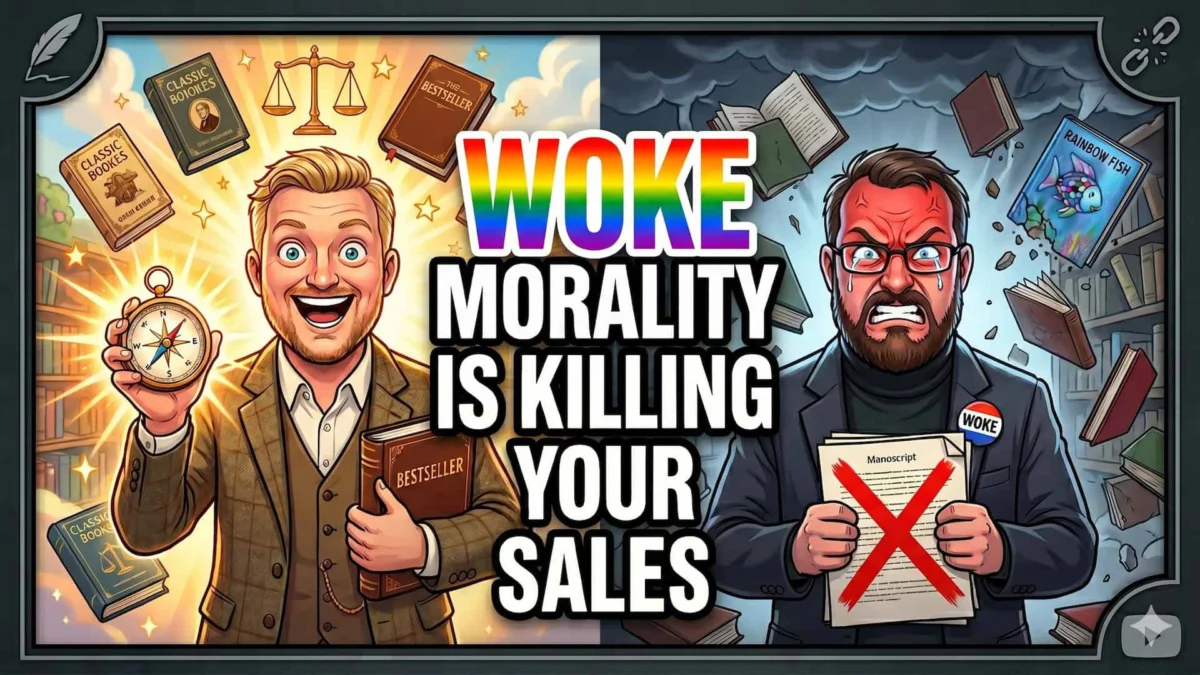
Washington D.C. – A groundbreaking survey released by the Pew Research Center has illuminated the increasingly fractured landscape of American morality, revealing profound disagreements across the nation on what constitutes right and wrong. The comprehensive study, which polled Americans on their views regarding a wide array of social and personal issues, underscores a significant divergence in ethical frameworks, with a growing segment of the population opting to categorize many behaviors as "not a moral issue" rather than definitively right or wrong. This trend has significant implications for social cohesion, cultural discourse, and, as suggested by commentators, the very fabric of storytelling.
The Pew Research Center’s findings paint a complex picture of a nation grappling with evolving values. While some traditional moral anchors appear to remain relatively stable, the data highlights a pronounced fragmentation on topics ranging from personal relationships and reproductive choices to lifestyle habits and end-of-life decisions. This erosion of shared moral understanding, experts argue, presents a significant challenge for a society striving for consensus and common ground.
The Shifting Sands of Moral Consensus
The Pew Research Center survey, conducted with a representative sample of American adults, presented respondents with a series of contemporary issues and asked them to categorize each as "morally wrong," "morally acceptable," or "not a moral issue." The results reveal a striking lack of uniformity in moral judgment across the surveyed population.
One of the most significant findings is the substantial percentage of Americans who classify certain behaviors as falling outside the realm of morality altogether. This inclination towards moral relativism or disengagement, particularly prevalent on issues such as pornography, homosexuality, and even marriage and divorce, suggests a desire by a significant portion of the populace to avoid definitive moral pronouncements or to reserve judgment on personal choices.
Conversely, certain issues, such as married individuals having extramarital affairs, continue to be viewed as unequivocally wrong by a strong majority. However, even on these ostensibly settled matters, the survey indicates a subtle yet present undercurrent of varying perspectives.
Key Moral Divides Uncovered
The Pew Research Center’s detailed breakdown of responses for each surveyed issue offers a granular view of American moral attitudes:
-
Married People Having an Affair: This issue stands out as the most widely condemned, with a substantial majority of Americans labeling it as morally wrong. This suggests a persistent, deeply ingrained societal value placed on marital fidelity. Jonathan, a commentator featured in the analysis, highlights this as a rare "shared moral anchor point," emphasizing that loyalty remains a universally recognized virtue across the political and social spectrum.
-
Eating Meat: Surprisingly, the survey indicates that a significant portion of Americans do not view meat consumption as a moral issue, despite the vocal advocacy of vegan and vegetarian movements. Thomas, another commentator, attributes this to the relative quietude of the majority compared to the perceived loudness of vegans. This suggests that while dietary choices are a point of contention for some, they have not permeated the broader moral consciousness to the extent often assumed.

-
Viewing Pornography: The data reveals a complex sentiment surrounding pornography. While a considerable number view it as morally wrong, a substantial segment categorizes it as "not a moral issue." Thomas interprets this latter response as indicative of a "very limited moral framework," suggesting a reluctance to engage with the ethical implications of such content. Jonathan links this to a broader cultural trend of "you do you," where personal autonomy is prioritized over moral judgment, a perspective he notes has gained traction over the past decade.
-
Using Contraceptives: Historically a contentious issue, the use of contraceptives is now largely viewed as morally acceptable or not a moral issue by the majority of Americans. Thomas, however, raises a prescient concern about the long-term societal impact of widespread contraceptive use on birth rates and the sustainability of social security systems, predicting a potential shift in public perception as these consequences become more apparent.
-
Having an Abortion: The deeply polarizing nature of abortion is reflected in the survey, with a near even split between those who consider it morally wrong and those who deem it morally acceptable. The notable finding here is the significant percentage who classify it as "not a moral issue," underscoring the complexity and differing approaches to this sensitive topic. Jonathan points out that the 47% who consider it morally wrong aligns closely with voting patterns, indicating a strong correlation between moral viewpoints and political affiliation.
-
Homosexuality: While a majority of Americans now consider homosexuality morally acceptable, Jonathan expresses surprise that the percentage is not higher, given the societal shifts in recent decades. Thomas speculates that a resurgence of moral scrutiny might be on the horizon, citing recent social media trends that highlight potential challenges within same-sex parent families, suggesting a shift from a "don’t ask, don’t tell" attitude to a more critical examination of family structures.
-
Doctor-Assisted Suicide: This issue presents one of the closest margins in the survey, with a slight majority deeming it morally acceptable or not a moral issue, though a significant minority still views it as morally wrong. Thomas observes that this topic, like affairs, elicits fewer "not a moral issue" responses, indicating that death is widely perceived as a morally charged event. He notes the strong ethical arguments on both sides, highlighting the tension between the right to die and the sanctity of life.
-
The Death Penalty: Similar to doctor-assisted suicide, the death penalty is largely viewed as a moral issue, with a significant portion considering it morally wrong and a substantial minority deeming it morally acceptable. The low percentage classifying it as "not a moral issue" reinforces the idea that issues involving life and death carry inherent moral weight for most Americans.
-
Gambling: The survey reveals a mixed sentiment towards gambling. While half of Americans consider it morally acceptable, a substantial portion views it as either morally wrong or not a moral issue. Thomas frames this through a Christian worldview lens, suggesting that while gambling may not be inherently evil, it can be considered a foolish act, thus falling into a "wisdom-charged" rather than a "morally charged" category for some.
-
Spanking Children: The survey indicates a decline in the perception of spanking children as morally wrong compared to previous decades. Jonathan suggests this may be a reaction to perceived negative outcomes of lenient parenting. Thomas notes the vocal opposition to spanking, likening it to the intensity of the vegan movement, but also acknowledges the argument that a lack of discipline can be detrimental to child development. The significant number who consider spanking "not a moral issue" is seen by Thomas as peculiar, suggesting that most people should have a definitive opinion on the matter.

-
Using Marijuana: The majority of Americans view marijuana use as morally acceptable or not a moral issue. Thomas, drawing from a religious framework, notes that while not explicitly forbidden in his understanding of religious texts, its consumption may still be a matter of wisdom rather than morality.
-
Getting a Divorce: While a majority considers divorce morally acceptable or not a moral issue, a significant minority still views it as morally wrong. Jonathan connects this to the societal narrative of divorce in the 1990s, which often framed it as a means of female liberation, a concept that has since evolved and broadened.
-
Being Extremely Rich: This topic elicits a divided response, with an equal split between those who view it as morally wrong and morally acceptable, and a large majority who consider it "not a moral issue." Jonathan questions why extreme wealth would be a moral concern, reflecting a common aspiration for financial success.
-
Drinking Alcohol: The survey reveals a split among religious denominations regarding alcohol consumption, with Catholics generally viewing it as morally acceptable and Baptists often abstaining. Jonathan suggests that the strict teetotaling views are becoming less prevalent, with the majority of Christianity having moved past that era. Thomas highlights a broader societal trend of declining alcohol consumption, particularly among Gen Z, who frame their abstinence in terms of health rather than morality. He also offers a speculative theory about potential changes in human gut biome affecting alcohol tolerance.
-
In Vitro Fertilization (IVF): A significant majority of Americans do not consider IVF to be a moral issue, with a very small percentage viewing it as morally wrong. Thomas anticipates this number will shift as more information becomes available, particularly regarding the destruction of embryos. Jonathan suggests that current perceptions are largely shaped by positive public relations, leading to a lack of nuanced moral consideration.
The Author’s Moral Compass: Implications for Storytelling
The profound divisions in American morality have significant implications for authors, as their narratives inherently embed a moral framework that shapes characters’ actions and the consequences they face. Thomas emphasizes that understanding a reader’s moral framework is crucial for effectively structuring a novel and delivering impactful resolutions.
"Every novel has a moral system," Thomas states. "Actions have consequences in your fiction, and what those consequences are is governed by your moral framework as the author. How the story ends is governed by your moral framework. Evaluating that framework is critical."
The commentary also touches upon the fatigue some audiences experience with what they perceive as "woke storytelling." This fatigue, according to Thomas, is not necessarily a rejection of female protagonists but rather a rejection of the specific moral systems often associated with such narratives. Audiences, he suggests, engage in "pattern recognition" and may disengage from stories that present a moral framework they find unappealing or alien.

Jonathan underscores the importance of aligning narrative consequences with reader expectations. "If they don’t think pornography is a problem, you can’t make that the climax that breaks your family or your romance beat," he advises. "Cheating always works." This suggests that while authors have creative freedom, their choices regarding moral consequences must resonate with or challenge the audience in a way that serves the narrative effectively.
The Enduring Power of Embedded Morality in Children’s Literature
The discussion extends to the subtle yet powerful influence of moral frameworks embedded in children’s literature. Thomas recounts a personal experience with a seemingly innocuous 1950s children’s book, "Little Black," which he now recognizes as subtly promoting envy and punishing competence. He argues that such stories, devoid of explicit moral lessons, can insidiously shape a generation’s worldview.
Jonathan draws a parallel with "The Rainbow Fish," a popular children’s book that, he argues, promotes socialist ideals by framing sharing as a moral imperative and individual possession as inherently negative. These examples highlight how children’s literature, through its narrative structure and character arcs, can impart complex moral lessons without overt didacticism, leaving a lasting imprint on young minds.
The enduring popularity of C.S. Lewis’s "The Chronicles of Narnia" is cited as an example of a successful, morally sound narrative. Thomas points out that while the characters in Narnia are flawed and undergo repentance, the overarching moral framework of the stories is robust and compelling. This contrasts with contemporary narratives where characters might be portrayed as morally upright, but the underlying authorial moral framework is perceived as problematic, leading to a disconnect between character actions and believable consequences.
In conclusion, the Pew Research Center’s findings serve as a stark reminder of the evolving and often diverging moral landscape of America. For authors and storytellers, this survey offers invaluable insights into the complex ethical considerations that shape audience reception and the profound responsibility that comes with embedding a moral framework into the narratives that entertain and influence us all. The ability to navigate and understand these deep societal divides is no longer just a matter of artistic choice, but a critical component of effective and resonant storytelling.



Leave a Comment