
The Search for a Successor: Can China’s Shoujing AR-MX2 Fill the HoloLens Void?
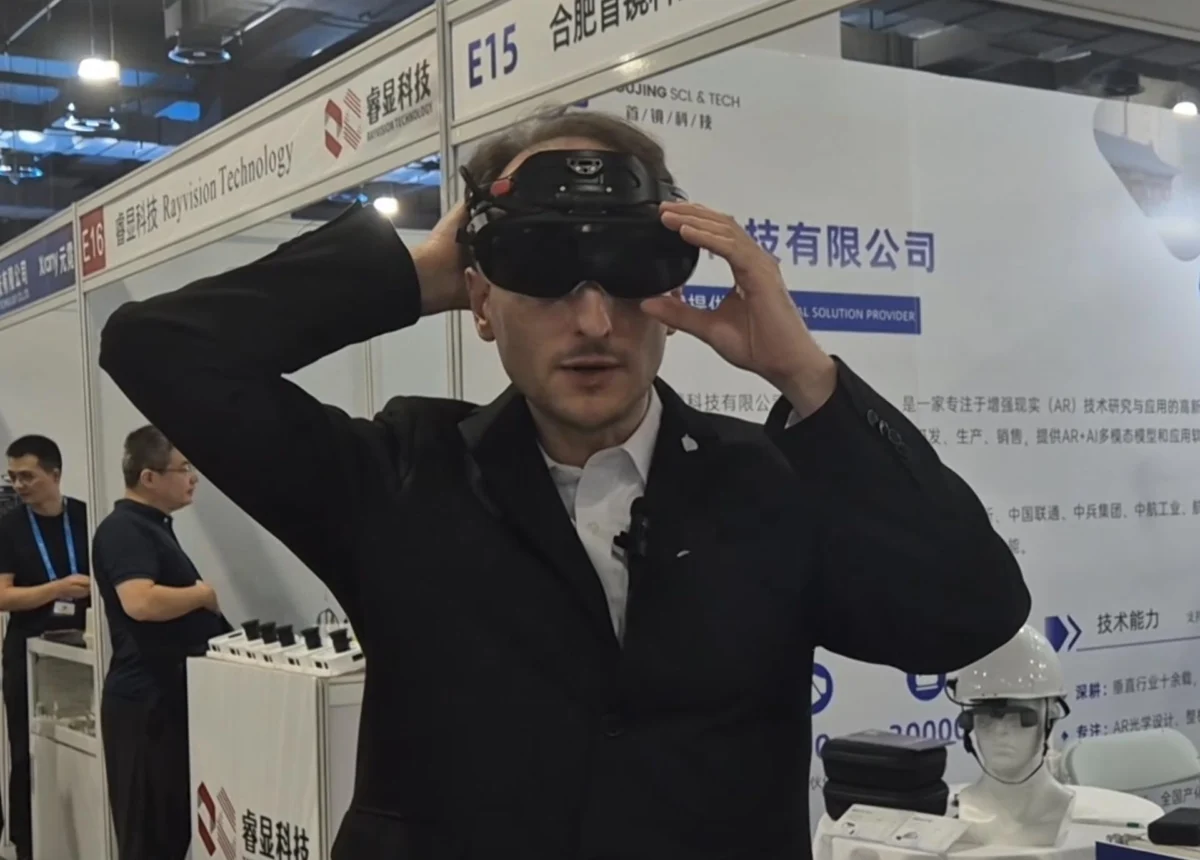
SHANGHAI — The global industrial augmented reality (AR) sector is currently facing a hardware crisis. For years, the enterprise market was anchored by two titans: Microsoft’s HoloLens and the Magic Leap series. However, with the discontinuation of the HoloLens 2 and Magic Leap’s pivot away from its original hardware-centric trajectory, companies that have integrated AR into their manufacturing, training, and maintenance workflows now find themselves in a precarious position. The "Next Big Thing" in professional AR has remained elusive—until now.
At the recent VR AR Expo China in Shanghai, a relatively unknown player, Shoujing Science & Technology, unveiled a suite of devices that suggest the next era of industrial AR may not emerge from Silicon Valley or Redmond, but from the specialized hardware hubs of China. Leading the charge is the Shoujing AR-MX2, a device explicitly positioned by its creators as the definitive successor to the HoloLens.
Main Facts: A New Contender in the Enterprise AR Market
The Shoujing AR-MX2 is a standalone, six-degree-of-freedom (6DOF) augmented reality headset designed specifically for B2B applications. While the Western market has seen a shift toward "pass-through" AR (using cameras to project the world onto a VR screen, as seen in the Apple Vision Pro and Meta Quest 3), Shoujing is doubling down on "see-through" optical waveguide technology—the same foundational tech that made the HoloLens a staple in sterile environments and high-precision engineering.

Key highlights of the discovery include:
- Direct Competition: Shoujing representatives confirmed their intent to capture the market share vacated by Microsoft.
- Technological Architecture: The device utilizes a Snapdragon XR2 platform, 5G connectivity, and optical waveguides.
- Aggressive Pricing: With an estimated target price of 10,000 RMB (approximately $1,500 USD), the AR-MX2 aims to be less than half the cost of its predecessors.
- Industrial Versatility: Beyond the flagship MX2, the company showcased military-grade Head-Up Displays (HUDs) and lightweight 3D viewers.
Chronology: From Military Prototypes to Enterprise Solutions
The emergence of the AR-MX2 was not the result of a high-profile keynote, but rather a boots-on-the-ground discovery at the VR AR Expo China. The progression of the reveal provided a clear look into the company’s developmental roadmap.
The "Chinese IVAS"
The investigation began at the Shoujing booth with a striking visual: a military ballistic helmet equipped with a ruggedized AR attachment. This device bore a resemblance to the Integrated Visual Augmentation System (IVAS) developed for the U.S. Army. Upon testing, the device revealed itself to be a high-performance 2D HUD. Despite its 2D nature, the clarity was remarkable, featuring integrated night vision and thermal detection. Testers reported a "Predator-style" thermal visualization of the event floor, albeit with minor latency. This military-first approach suggests Shoujing has deep roots in high-stakes sensor integration.

The AR-MX1: A Stepping Stone
Following the military display, the company showcased the AR-MX1. This lightweight headset served as a proof-of-concept for 3D visualization. While it lacked the sophisticated 6DOF tracking required for complex industrial tasks, it demonstrated the company’s ability to produce clear, three-dimensional overlays in a compact form factor.
The Reveal of the AR-MX2
The climax of the demonstration was the introduction of the AR-MX2. Unlike the previous models, the MX2 is designed for full spatial computing. While the units on the floor were non-functional prototypes (the company cited "finalization of software" for the lack of a live demo), the physical architecture revealed a device built for the rigors of the workplace.
Supporting Data: Technical Specifications and Comparison
To understand if the AR-MX2 can truly replace the HoloLens 2, one must look at the raw data. Shoujing has provided a specification sheet that targets the current industry standard for enterprise-grade hardware.

Hardware Specifications:
- Processor: Qualcomm Snapdragon XR2
- Operating System: Android 12
- Memory/Storage: 8GB RAM / 128GB ROM
- Display: 1080p resolution per eye via Optical Waveguides
- Field of View (FOV): 46 degrees
- Connectivity: 5G, Wi-Fi 6, Bluetooth 5.2
- Tracking: 6DOF Spatial Positioning
Technical Analysis
The choice of optical waveguides is critical. Unlike "Birdbath" optics found in consumer glasses (like Xreal), waveguides allow for a thinner lens and better transparency, which is essential for safety in industrial environments. While the 46° FOV is slightly narrower than the HoloLens 2’s 52°, it remains within the "usable" range for guided assembly and remote assistance.
The inclusion of 5G connectivity is perhaps the most significant differentiator. Most current AR headsets rely on local Wi-Fi, which is often unavailable on construction sites or in sprawling outdoor infrastructure projects. A native 5G headset allows for real-time data streaming and remote expert consultation in the field without the need for external hotspots.
Ergonomics and Design
The AR-MX2 adopts the "Halo" headband design, popularized by the HoloLens and the PlayStation VR. Crucially, the battery is positioned at the rear of the head-strap. This counterweights the front-heavy optics, a design choice that industry experts agree is vital for "all-day" wearability in a 40-hour work week.

Official Responses: Positioning and Global Strategy
During the expo, Shoujing Science & Technology’s leadership was candid about their ambitions. When asked directly if the AR-MX2 was intended as a substitute for the HoloLens, the response was an unequivocal "Yes."
The company emphasized that their goal is not just to replicate existing technology but to improve upon the price-to-performance ratio. "We believe that for AR to be truly adopted at scale in the B2B sector, the hardware must be accessible," a spokesperson noted via a translator.
Timeline and Availability:

- Official Launch: Scheduled for August 2026.
- Market Reach: While the initial launch will focus on the Chinese domestic market, Shoujing confirmed they are establishing logistics for worldwide shipping to accommodate international enterprise demand.
- Pricing Strategy: The projected $1,500 price point is intended to encourage "bulk" purchasing, with further discounts available for large-scale corporate deployments.
Implications: The Geopolitical Shift in Spatial Computing
The potential success of the Shoujing AR-MX2 carries significant implications for the future of the XR (Extended Reality) industry.
1. The Decentralization of AR Innovation
For the past decade, the narrative of AR has been dominated by American big-tech firms. However, as these companies pivot toward consumer-facing "Mixed Reality" (MR) or retreat from hardware altogether, a vacuum has formed. Shoujing’s emergence suggests that the future of work-centric AR may be driven by agile Chinese manufacturers who can iterate quickly and maintain lower production costs.
2. The Reliability Gap
The primary hurdle for Shoujing will not be hardware, but trust. The HoloLens was backed by Microsoft’s Azure cloud ecosystem and a robust global support network. For a Chinese startup to win over Western enterprises, they must prove they can provide:

- Long-term Support: Will the company exist in five years to provide firmware updates?
- Software Ecosystems: Does the AR-MX2 support standard enterprise SDKs (like Unity or OpenXR)?
- Data Security: How will international companies handle data privacy on a 5G-enabled device manufactured in China?
3. A Precedent for Success
History shows that this "clone-to-competitor" pipeline has worked before. Years ago, the Chinese firm Shadow Creator produced a "rougher" version of the HoloLens that found a niche in education and local industry. Shoujing appears to be the next evolution of this trend—offering a more refined, higher-spec alternative at a time when the market is desperate for hardware.
Conclusion: A High-Stakes August
The industrial world is watching. If Shoujing delivers on its August 2026 launch with a functional, 6DOF waveguide headset for $1,500, it could effectively reset the enterprise AR market. While the "non-functional" status of the floor units at the Shanghai expo warrants a healthy degree of skepticism, the physical build quality and strategic focus on 5G and ergonomics suggest that Shoujing is a company that understands the specific needs of the industrial worker.
For now, the AR-MX2 remains a "potential" savior. The true test will come when the first units ship, and the industry determines if this device is a true HoloLens successor or merely another ambitious prototype in a field littered with them.


Leave a Comment