
From Assistance to Autonomy: Microsoft Unveils the ‘Autopilot’ Era at Build 2026
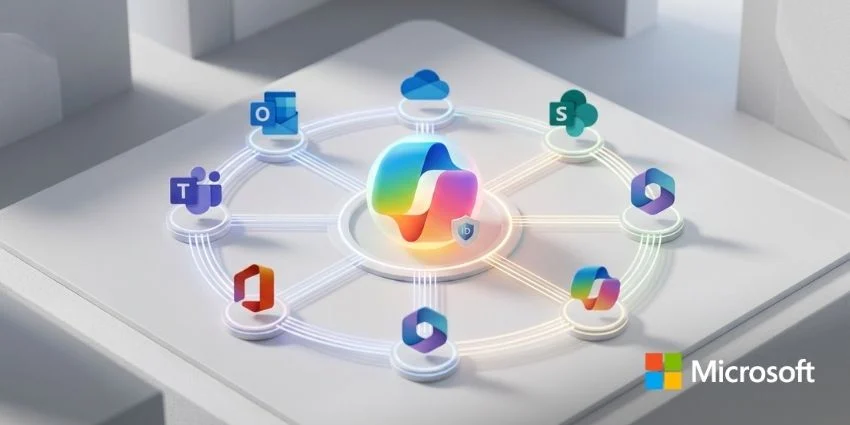
SAN FRANCISCO – At the annual Build 2026 developer conference, Microsoft signaled a definitive end to the era of reactive AI. While the past two years were defined by “Copilots”—AI assistants that waited for human prompts to generate text or code—the Redmond giant has now pivoted toward a future of autonomous agency. Under the banner of "Autopilots," Microsoft introduced a suite of products led by Scout, an always-on agent designed to operate independently across the Microsoft 365 ecosystem.
The shift represents a fundamental change in the relationship between humans and software. No longer a tool residing in a sidebar, AI is being repositioned as a digital colleague with its own identity, permissions, and the authority to act on a user’s behalf.
I. Main Facts: The Emergence of the Autonomous Enterprise
The centerpiece of the Build 2026 keynote was the introduction of Microsoft Scout, the first of a new category of "Autopilots." Unlike the original Copilot, which required a "spark" or a prompt to begin a task, Scout is persistent. It lives within the communication and collaboration layers of an organization, monitoring workflows in real-time.
Key Announcements at a Glance:
- Microsoft Scout: An autonomous agent integrated into Teams, Outlook, and SharePoint that handles tasks like email threading, meeting scheduling, and project tracking without manual intervention.
- OpenClaw Integration: Microsoft has bypassed building a proprietary agent framework in favor of OpenClaw, the open-source sensation created by Peter Steinberger.
- Work IQ: A new intelligence layer that maps organizational hierarchies, project priorities, and "decision bottlenecks" to give agents context.
- Agent 365: A governance framework that treats AI agents as "licensed identities," allowing IT administrators to manage them with the same rigor as human employees.
- The Copilot Super App: A consolidated interface arriving this summer that merges chat, coding, and collaborative work into a single unified platform.
CEO Satya Nadella described this evolution as the "Agentic Turn." He emphasized that while Copilots were about individual productivity, Autopilots are about organizational velocity. "Autopilots are always-on agents that work autonomously, with their own identity, and act on your behalf," Nadella stated during his keynote.
II. Chronology: The Road to Autonomy
The transition to autonomous agents did not happen overnight. The timeline revealed at Build 2026 suggests a rapid acceleration of development over the past six months, culminating in a rollout schedule that extends through the end of the year.
- November 2025: The launch of OpenClaw, an open-source autonomous agent framework. Within three months, the project amassed 180,000 GitHub stars, signaling a massive developer shift toward agentic AI.
- February 2026: Internal Microsoft testing begins on "Project Scout," utilizing the OpenClaw codebase to bridge the gap between M365 data and autonomous action.
- June 2, 2026: Official unveiling of Scout and the Autopilot category at Build 2026.
- June 16, 2026: Microsoft opens the Work IQ APIs to third-party developers, allowing them to build agents that understand organizational context.
- Late June 2026: Broader preview of Scout begins for Microsoft 365 customers.
- Summer 2026: Launch of the Copilot Super App, consolidating the currently fragmented AI user experience.
- October 2026: General Availability (GA) of Scout for M365 E3 and E5 subscribers.
III. Supporting Data: The Technical Architecture of Scout
Scout’s ability to function as a "digital employee" rests on two primary pillars: its open-source foundation and its deep integration with Microsoft’s proprietary data layers.
The OpenClaw Foundation
Microsoft’s decision to build Scout on OpenClaw is a strategic departure from its typical "not-invented-here" philosophy. By adopting Steinberger’s framework, Microsoft tapped into a massive ecosystem of pre-existing agent behaviors. However, Microsoft is not merely a consumer; the company is contributing "enterprise-grade" policy controls back to the OpenClaw upstream project. This ensures that while the core logic remains open, the security and compliance layers are built to Fortune 500 standards.
Work IQ: The Organizational Brain
If Scout is the "body" that acts, Work IQ is the "brain" that remembers. Work IQ is the M365 intelligence layer that synthesizes signals from emails, files, and calendars.
- Relationship Mapping: It identifies who a user works with most frequently and who holds decision-making power.
- Stall Detection: It identifies projects where progress has ceased (e.g., an email thread that has gone unanswered for 48 hours) and prompts Scout to intervene.
- Contextual Grounding: Unlike general LLMs, Work IQ ensures that Scout’s actions are grounded in the specific, real-time reality of the business.
Identity and Licensing
To solve the problem of "shadow AI," Microsoft introduced Agent 365. Under this model, an agent like Scout is not treated as a plugin but as a user. It carries its own Entra ID (formerly Azure AD). This allows for:
- Verifiable Auditing: Every email sent by Scout is cryptographically tied to its ID.
- Granular Permissions: Admins can grant Scout access to specific SharePoint folders while barring it from HR or payroll data.
- Revenue Generation: Microsoft indicated that Scout will likely be an add-on for E3/E5 licenses, essentially charging companies for "digital headcount."
IV. Official Responses: Leadership Perspectives
The leadership team at Microsoft spent much of the conference addressing the balance between the power of autonomous agents and the necessity of human oversight.
Omar Shahine, Corporate Vice President of Microsoft Scout, emphasized the "flow of work" aspect. “Microsoft Scout is integrated across the Microsoft 365 apps you use every day, keeping it grounded in your flow of work," Shahine explained. "It operates across cloud, desktop, and web… connecting to the data that powers your day."
Charles Lamanna, EVP of Copilot, Agents and Platform, highlighted the importance of the Work IQ layer. “Work IQ is the intelligence layer that understands your data, your tools, and your organization. That foundation allows agents to plan, act, and produce outcomes that are grounded in how your business runs.”
Jacob Andreou, EVP of Copilot, focused on the user experience. Leading the "Delivering One Copilot" initiative, Andreou is tasked with ending the fragmentation of AI tools. His vision for the Copilot Super App—which combines Chat, Cowork, and Code—is to provide a single "command center" for the modern professional. "Come summer, we will be bringing coding to all knowledge work within one Copilot Super App," Andreou noted, echoing Nadella’s vision of a unified interface.
V. Governance and Security: Addressing the "Agentic Risk"
The prospect of an AI agent autonomously replying to client emails or moving files between directories has sparked significant concern among IT security professionals. The "governance question" was a major theme of the breakout sessions following the keynote.
In response to these concerns, Microsoft unveiled the Agent Control Specification (ACS). This is a standard for the "execution loop" of an agent, providing a kill-switch and a set of "guardrails" that the agent cannot bypass.
Furthermore, the ASSERT framework (Assert Written Intent Executable Evals) was introduced for safety evaluation. It allows IT teams to run "fire drills" for agents—simulating scenarios where an agent might be given conflicting or unethical instructions—to see how it responds before it is deployed to the live environment.
Microsoft admitted that full tenant-level controls are still in the development phase, with a targeted completion date in late 2026. Until then, the Copilot Frontier program will serve as a sandbox for early adopters to refine these safety protocols.
VI. Implications: The Future of Knowledge Work
The shift from Copilot to Autopilot carries profound implications for the global workforce and the software industry at large.
1. The Redefinition of "Entry-Level" Roles
If Scout can autonomously manage calendars, summarize meetings, and follow up on action items, the traditional role of the administrative assistant or junior project coordinator will be fundamentally altered. Humans in these roles may shift toward "Agent Management," where their primary task is to audit and refine the outputs of their autonomous counterparts.
2. The Rise of the "One-Click" Developer
The announcement of one-click agent publishing from Copilot Studio and Microsoft Foundry to Teams lowers the barrier to entry for custom AI. Small businesses and departments can now build bespoke agents to handle niche workflows—such as an "Invoicing Agent" or a "Supply Chain Monitor"—without needing a dedicated software engineering team.
3. Economic Impact and Pricing Models
By positioning Scout as an add-on for E3 and E5 subscribers, Microsoft is betting that enterprises are willing to pay for "autonomous labor." If an agent can save a manager five hours of administrative work per week, the ROI of a monthly subscription becomes an easy sell. However, the lack of confirmed pricing suggests Microsoft is still gauging the market’s willingness to pay for this "digital labor" versus traditional software-as-a-service.
4. The Super App as the New OS
The Copilot Super App represents Microsoft’s bid to become the primary interface for work. By merging coding (GitHub Copilot) with communication (Teams/Outlook), Microsoft is attempting to prevent users from ever needing to leave the "Copilot environment." This consolidation could pose a significant challenge to niche AI startups that lack the deep integration of the M365 stack.
Conclusion
As Build 2026 concludes, the message from Redmond is clear: the era of the "helpful chatbot" is over. Microsoft is betting its future on the "Autopilot"—an agent that doesn’t just suggest the next step but takes it. For the enterprise, this promises unprecedented efficiency; for the workforce, it signals a new chapter where managing AI agents becomes as critical a skill as using a keyboard. The world will begin to see the true impact of this shift when the broader preview of Scout rolls out later this month.

Leave a Comment