
The Luminous Past: New York Public Library Unveils Hand-Colored Glimpses of 19th-Century Japan
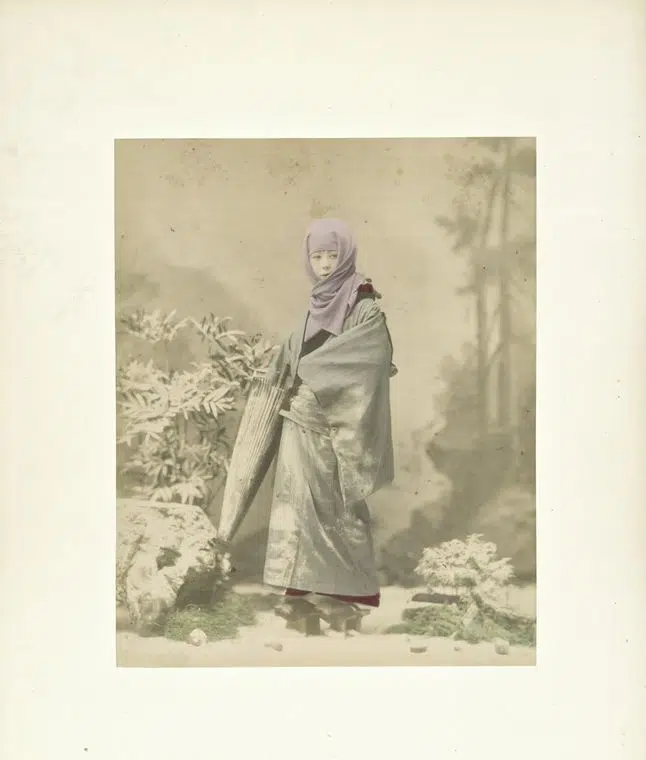
In an era where digital photography and artificial intelligence can generate or colorize images in a fraction of a second, the New York Public Library (NYPL) Digital Collections has invited the public to step back into a more deliberate age. Through the release of a meticulously curated archive of hand-colored photographs from 19th-century Japan, the institution has highlighted a rare intersection of early technological innovation and traditional artistry. These images do more than record the faces and landscapes of a bygone era; they capture a nation in the throes of a profound socio-political metamorphosis, frozen in the delicate pigments of a hand-applied palette.
The collection serves as a visual bridge between the feudal isolation of the Edo period and the rapid modernization of the Meiji Restoration. By digitizing these works, the NYPL provides a global audience with access to scenes that were once the exclusive domain of wealthy travelers and scholars, offering a vivid, nostalgic, and ethnographically rich window into the birth of modern Japan.
Chronology: The Arrival and Evolution of Photography in the Shogun’s Realm
To understand the significance of these hand-colored images, one must look at the timeline of photography’s introduction to the Japanese archipelago. The medium did not arrive as a sudden explosion, but rather as a slow, persistent trickle through the only gate then open to the West.
1848: The First Glimmer
The first daguerreotype camera was imported into Japan in 1848. This was a time of strict isolationism (sakoku), where the Tokugawa Shogunate limited foreign interaction to specific ports. The camera arrived via the Dutch trading post at Dejima, a small artificial island in Nagasaki harbor. For the Japanese elite, this "shadow-catching" technology was initially viewed with a mixture of suspicion and intense scientific curiosity.
The 1850s: The Dutch Influence and the End of Isolation
Throughout the 1850s, Dutch photographers and scientists continued to refine the practice within Japan. They introduced newer techniques, moving away from the singular, non-reproducible daguerreotype toward the wet-plate collodion process, which allowed for multiple prints. This decade also marked the arrival of Commodore Matthew Perry and the forced opening of Japan, which catalyzed a hunger for visual documentation—both from Westerners wanting to see "Exotic Japan" and Japanese officials wanting to understand Western technology.
1870s–1900s: The Golden Age of the Yokohama School
By the 1870s, photography had taken firm root. This period saw the rise of the "Yokohama School" of photography, characterized by high-quality albumen prints that were meticulously hand-colored. This was the era of the "tourist photograph," where studios catered to the growing number of Western visitors. It was during this window—spanning the late 19th century to the early 20th century—that the bulk of the NYPL’s newly released collection was produced.
Supporting Data: The Technical Artistry of Hand-Coloring
The "hand-colored" nature of these photographs is not a mere footnote; it is the defining aesthetic that elevates these records into the realm of fine art. Before the invention of reliable color film (such as Autochrome or Kodachrome), the only way to replicate the vibrant hues of a kimono or the soft pink of a cherry blossom was through manual intervention.
The Process of Illumination
The process began with an albumen print—a photograph made using egg whites to bind the light-sensitive chemicals to the paper. Once the black-and-white or sepia-toned image was fixed and dried, it was handed over to a colorist. In Japan, these colorists were often former ukiyo-e (woodblock print) artists who had lost their traditional livelihoods due to the rise of photography.
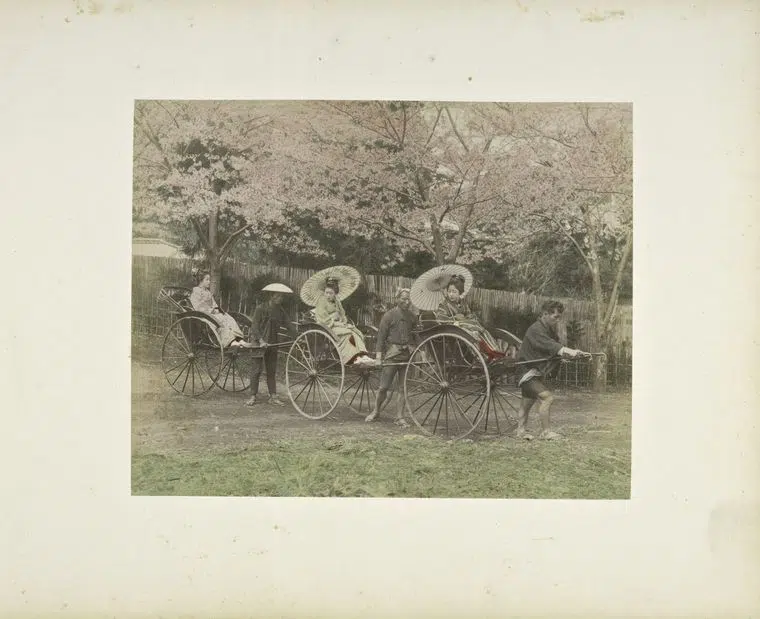
Using fine brushes and water-soluble pigments or aniline dyes, these artists applied color with microscopic precision. They did not simply "fill in the blanks"; they used gradients and washes to create depth, mimicking the natural play of light on silk, skin, and foliage. The result was a hybrid medium—something that possessed the structural accuracy of a photograph but the soulful, interpreted beauty of a painting.
Subject Matter Distribution
The NYPL collection highlights several key themes that were dominant in 19th-century Japanese photography:
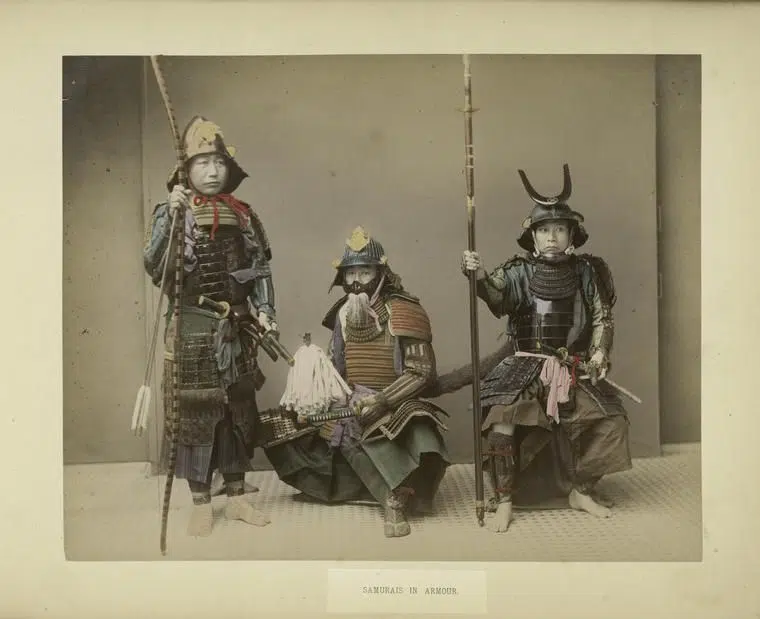
- Military Heritage: Images like "Samurais in Armor" depict the warrior class at a time when their traditional roles were being abolished by Meiji-era reforms.
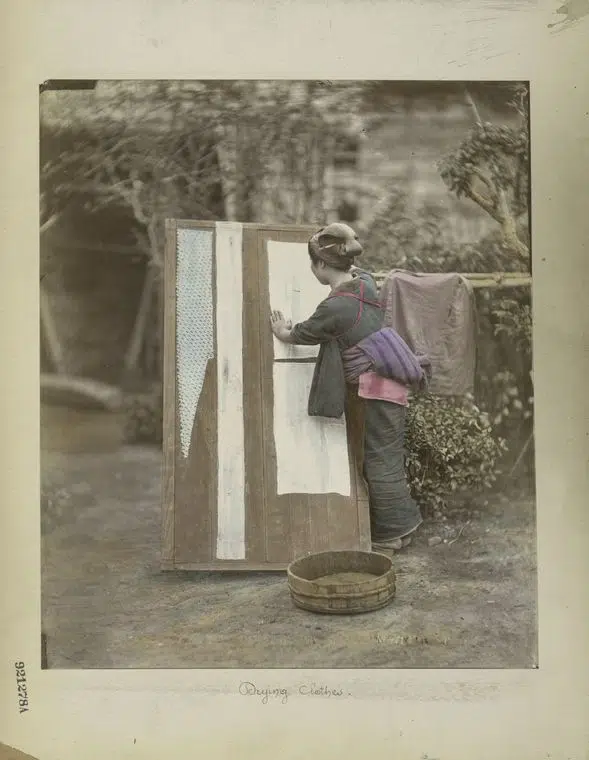
- Domestic Life: "Drying Clothes" and "Herb Picking" showcase the rhythmic, daily labor of the working class.
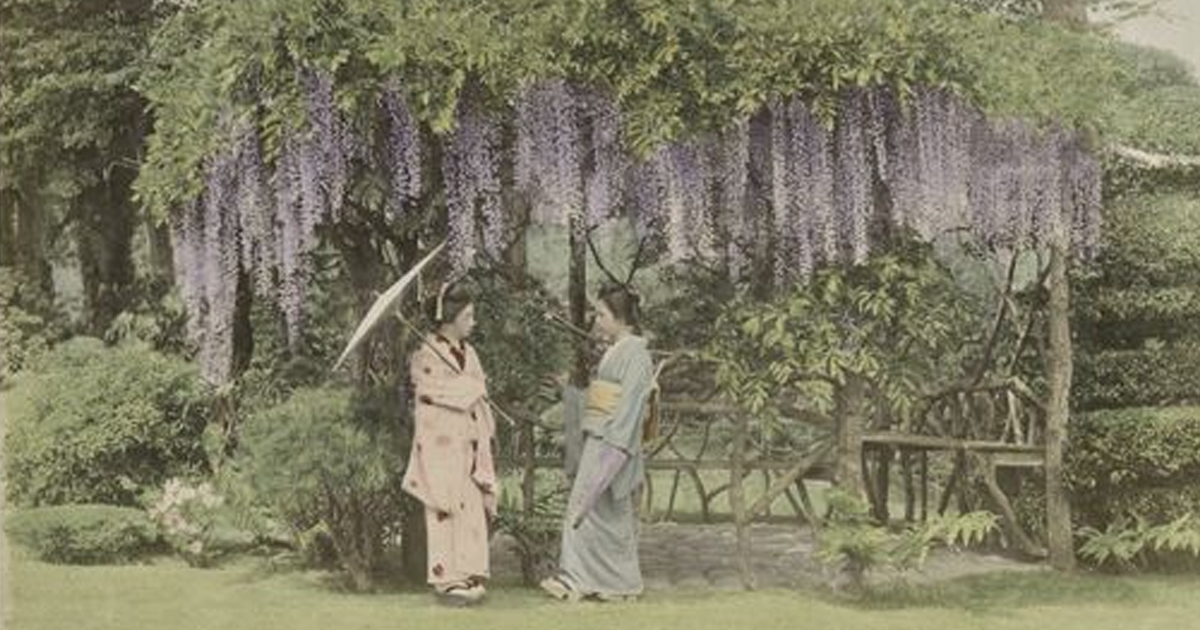
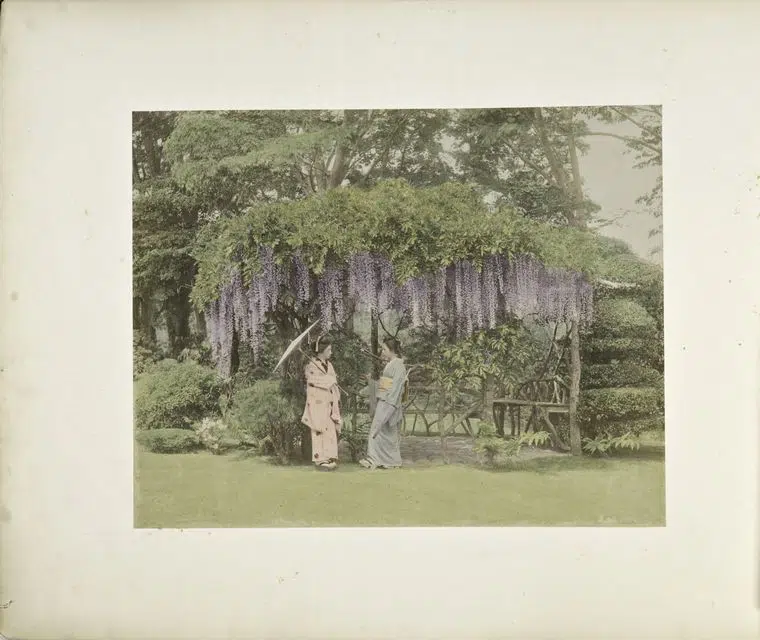
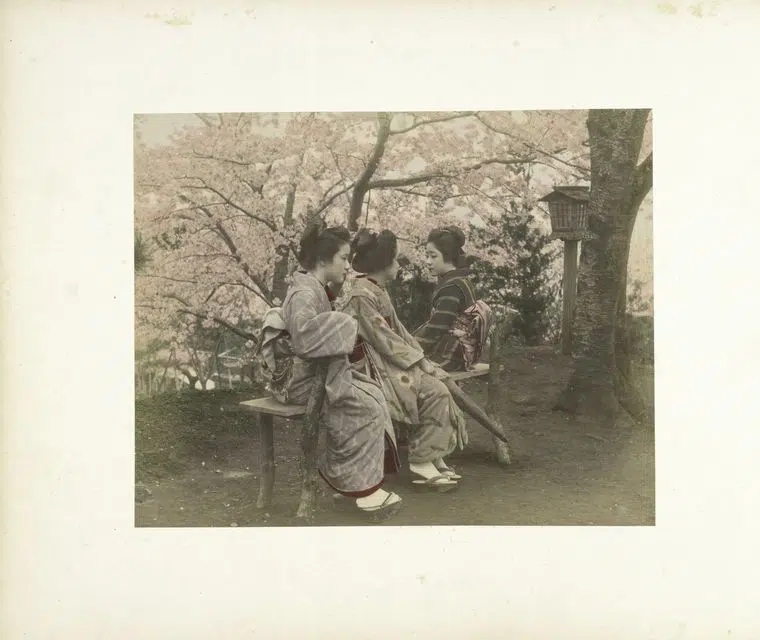
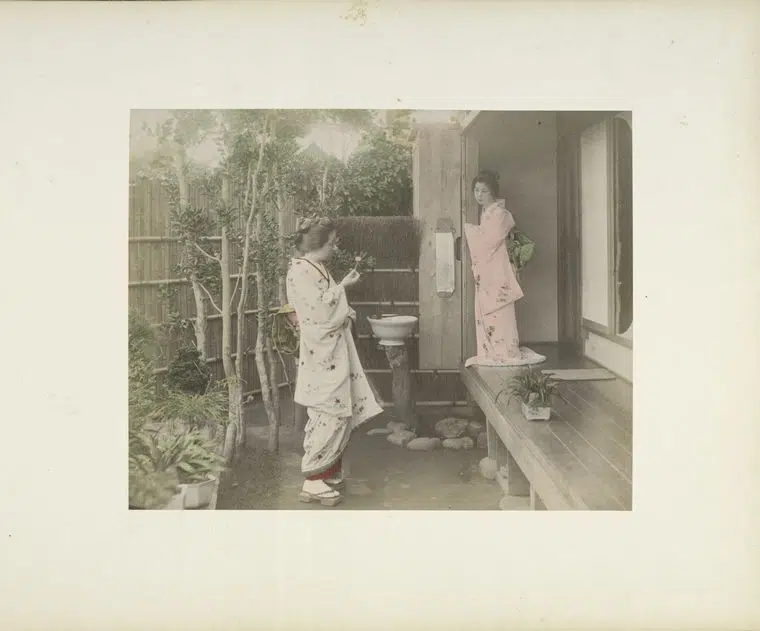
- The "Bijin" (Beautiful Women): Portraits such as "Woman using cosmetic" or "Women in The Garden" were highly sought after for their grace and the intricate detail of their attire.
- Landscape and Transit: Scenes involving rickshaws and cherry blossoms provided the "scenic" backdrop that defined the Western imagination of Japan.
Official Responses: Insights from the NYPL Digital Collections
The New York Public Library has emphasized that this collection is more than just an aesthetic gallery; it is a vital scholarly resource. According to statements from the NYPL Digital Collections, the archive provides a "rich resource for the understanding of the political, social, economic, and artistic history of Asia from the 1870s to the early 20th century."
Curators note that while photography entered Asia largely through the machinery of Western colonialism—brought by military personnel, merchants, and travelers—it was quickly "localized." The library points out that local photographers "soon took root in those regions," learning the craft from European and American mentors before opening their own studios.
The Legacy of Kusakabe Kimbei
A central figure mentioned in the NYPL’s documentation is Kusakabe Kimbei. A protégé of the legendary Italian-British photographer Felice Beato, Kimbei represents the pinnacle of Japanese photographic entrepreneurship in the 19th century. After apprenticing with Beato and the Austrian photographer Baron Raimund von Stillfried, Kimbei opened his own studio in Yokohama in 1881.
His work is heavily represented in the digital archive. Kimbei was a master of the commercial studio, blending Western technical standards with a Japanese sense of composition. His studio became one of the most successful in the country, proving that by the late 1800s, the Japanese had not only mastered the foreign technology but were also leading the market in its artistic application.

Implications: The Construction of Identity and Memory
The release of these images carries significant implications for how we perceive historical Japan and the role of archival preservation in the digital age.
The "Constructed" Reality
One must approach these images with a nuanced understanding of their original purpose. Many of the scenes depicted were "staged" for a Western audience. The samurais posing in full regalia were often doing so years after the samurai class had been officially disbanded. These photographs were, in many ways, the first "travel brochures," creating a romanticized version of Japan that satisfied the Western craving for the "exotic Orient."
However, this does not diminish their value. Instead, it adds a layer of complexity: they represent how Japan chose to present itself to the world and how the world chose to see Japan. They are a record of a nation’s brand-building during its debut on the global stage.
The Ethics of Digital Preservation
By making these high-resolution images available for free, the NYPL is participating in the "democratization of history." In the past, such fragile artifacts were kept in climate-controlled vaults, accessible only to credentialed researchers. Digitization ensures that the delicate colors—which are prone to fading when exposed to light—are preserved in their current state for eternity.
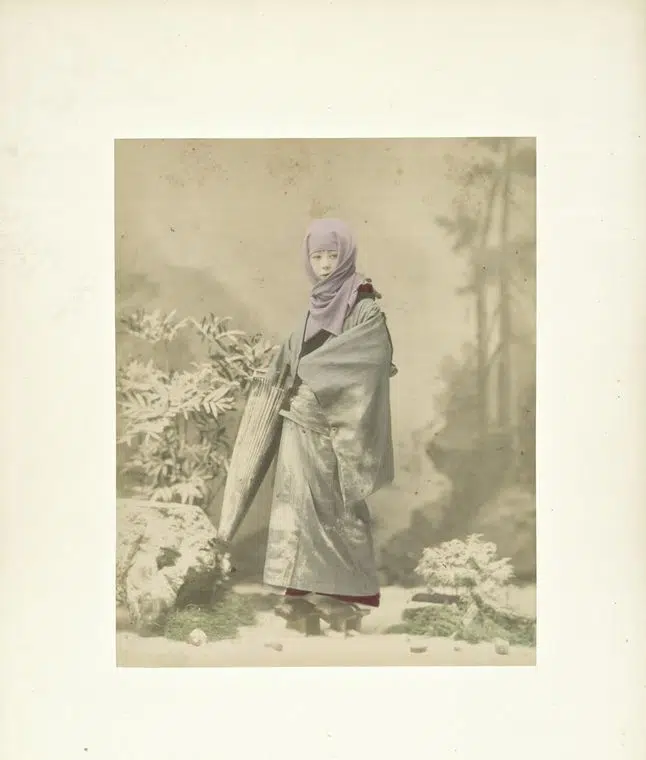
Furthermore, these images provide a counter-narrative to the monochrome version of history we often hold in our minds. By seeing the 19th century in color, the subjects feel more immediate and human. The "Girls Feelings" image, depicting two young women in conversation, or the "Dancing Party" scene, bridge the temporal gap, reminding the viewer that these were not just historical figures, but people with vibrant lives and social connections.
Conclusion
The NYPL’s collection of hand-colored Japanese photographs is a testament to a period of "profound transformation." It captures a country standing with one foot in the feudal past and the other in the industrial future. As these luminous images circulate through the digital world, they serve as a reminder of the painstaking labor of the artists who first colored them and the enduring power of the lens to capture the spirit of an age. For historians, artists, and the general public, this archive is not just a collection of pictures; it is a vivid, pigmented heartbeat of the 19th century.




Leave a Comment