
Hammurabi: The Architect of Ancient Law and Unifier of Mesopotamia
BABYLON, Mesopotamia – In the annals of ancient history, few figures loom as large or cast as long a shadow as Hammurabi, the sixth king of the Amorite First Dynasty of Babylon. Reigning from 1792 to 1750 BCE, Hammurabi transformed a minor city-state into the dominant power of Mesopotamia, crafting an empire through shrewd diplomacy, relentless military campaigns, and a groundbreaking legal code that would influence civilizations for millennia, including the famed Mosaic Law of the Bible. His remarkable achievement was not merely conquest but the unprecedented feat of governing a unified Mesopotamia without widespread revolt for the duration of his rule.
Often cited, though incorrectly, as the originator of the first legal code, Hammurabi’s contributions transcended mere innovation. He refined and expanded upon existing legal frameworks, presenting a code so clear, comprehensive, and widely disseminated that it became the quintessential model for state-administered justice in the ancient world. Beyond his legislative prowess, Hammurabi was an astute administrator and a formidable military strategist, earning him the title of "builder of the land" and securing his place as one of Mesopotamia’s most significant rulers.
The Geopolitical Landscape Before Hammurabi
Before Hammurabi’s ascent, Mesopotamia was a patchwork of warring city-states, each vying for dominance and control over vital trade routes and agricultural lands. The Amorites, a nomadic Semitic people originating from the coastal regions of Eber Nari (modern-day Syria), had gradually migrated into Mesopotamia, establishing several dynasties, including the First Dynasty of Babylon. By the early 18th century BCE, Babylon was one among many regional powers, overshadowed particularly by the influential southern city of Larsa.
Larsa, strategically positioned as the primary trade center on the Persian Gulf, enjoyed immense wealth and exerted control over much of southern Mesopotamia. Rivalries were fierce, and alliances were fluid. Hammurabi’s father, Sin-Muballit (reigned 1812-1793 BCE), had made significant strides in stabilizing Babylon and initiating public works projects. However, he faced formidable opposition from Larsa’s powerful king, Rim Sin I, who had decisively defeated Sin-Muballit’s attempts at expansion. This defeat is believed to have prompted Sin-Muballit’s abdication, paving the way for his son, Hammurabi, to inherit a kingdom confined to the cities of Babylon, Kish, Sippar, and Borsippa, yet imbued with potential.
Ascension to the Throne: From Sin-Muballit to Hammurabi
Hammurabi, also known by variants such as Ammurapi and Khammurabi, inherited a throne in a precarious regional balance. Historian Will Durant vividly describes the young king: "At the outset of [Babylonian history] stands the powerful figure of Hammurabi, conqueror and lawgiver through a reign of forty-three years. Primeval seals and inscriptions transmit him to us partially – a youth full of fire and genius, a very whirlwind in battle, who crushes all rebels, cuts his enemies into pieces, marches over inaccessible mountains, and never loses an engagement." This early portrayal hints at the formidable personality that would soon reshape the ancient Near East.
Initially, Hammurabi’s actions gave rival powers, particularly Larsa, little cause for immediate alarm. He shrewdly spent the first few years of his reign consolidating his domestic power and strengthening his kingdom from within.
Early Reign and Administrative Reforms
Hammurabi’s early focus was on centralizing and streamlining his administration, laying a robust foundation for future expansion. He continued and expanded his father’s ambitious building programs, enhancing the defensive walls of Babylon and investing in critical infrastructure. Crucially, he paid meticulous attention to the welfare of his populace, improving irrigation systems to boost agricultural output and maintaining the existing urban infrastructure. Opulent temples were constructed, not only demonstrating devotion to the gods, particularly Marduk, Babylon’s patron deity, but also serving as potent symbols of the city’s growing prestige and power.

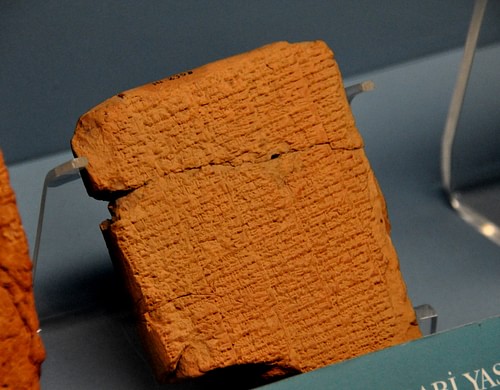
During this period, circa 1772 BCE, Hammurabi promulgated his renowned law code. While its immediate impact was on social order and justice within his burgeoning kingdom, it also served a deeper purpose: to project an image of a just and divinely appointed ruler, ensuring stability and loyalty among his subjects. As Stephen Bertman notes, Hammurabi was "an able administrator, an adroit diplomat, and canny imperialist, patient in the achievement of his goals." His proclamation forgiving people’s debts and pious renovation of sanctuaries further solidified his popularity, securing his home front before embarking on his grander ambitions. These administrative and social reforms were not merely acts of benevolence but strategic moves designed to foster internal cohesion and provide a stable base for his meticulously planned military campaigns.
The Master Strategist: Unifying Mesopotamia
With his internal affairs in order and his military forces honed, Hammurabi began a systematic and patient campaign to expand Babylonian control. His strategy was characterized by opportunistic alliances, calculated betrayals, and innovative military tactics.
Southern Campaigns: Larsa’s Fall
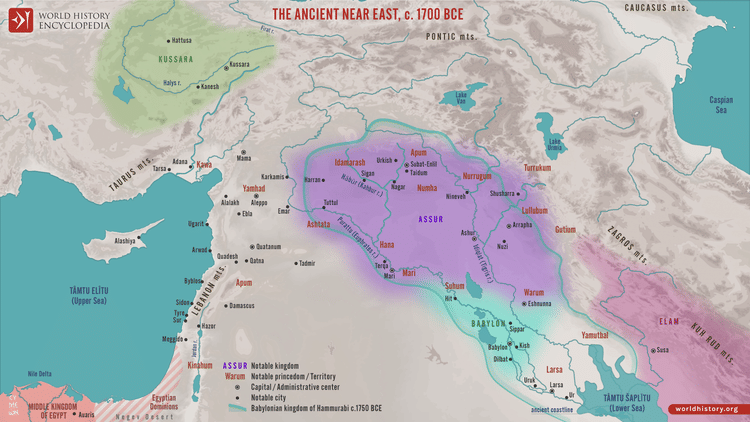
Hammurabi’s expansion began with a series of campaigns against rival states to the south and east. A pivotal moment arose when the Elamites, from the east, invaded the central Mesopotamian plains. Hammurabi seized this opportunity, forming a temporary alliance with his primary rival, Rim Sin I of Larsa, to repel the common threat. Once the Elamites were defeated and no longer a concern, Hammurabi swiftly dissolved the alliance, turning his forces against Larsa.
Employing a strategy of forming new alliances with city-states like Nippur and Lagash, he first captured Uruk and Isin, cities previously under Larsa’s sway. His tactical brilliance lay in his willingness to break alliances when expedient, a pattern that, remarkably, other rulers seemed to overlook, repeatedly entering into pacts with him despite his track record.
The final confrontation with Larsa saw Hammurabi employing a devastating tactic: the manipulation of water resources. This method, previously used with less success by his father, involved damming up the water sources vital to the enemy city, either to force surrender through thirst or to unleash destructive floods, softening defenses before an assault. Larsa, Rim Sin I’s last stronghold, fell, and with it, the most significant opposition to Babylonian dominance in the south was eliminated.
The Enigma of Mari: Northward Expansion
With southern Mesopotamia firmly under his control, Hammurabi shifted his gaze northward and westward. The Amorite Kingdom of Mari, located in modern-day Syria on the Euphrates River, had long been an ally of Babylon. Its king, Zimri-Lim, had achieved considerable military success and amassed great wealth, making Mari a magnificent city renowned for one of the largest and most opulent palaces in the region.
The decision to attack Mari remains a subject of scholarly debate, but the motive appears clear: Mari’s strategic location, its immense wealth, and its control over crucial trade routes and water rights made it an irresistible prize for a king determined to make Babylon the preeminent city of Mesopotamia. Hammurabi struck swiftly in 1760 BCE. However, the outcome was peculiar: unlike other conquered cities, which were absorbed, repaired, and improved, Mari was utterly destroyed. This act of destruction, rather than simple conquest, is a greater mystery to historians. Perhaps Mari’s splendor and status as a rival for "greatest city" was a direct threat to Hammurabi’s vision for Babylon. Zimri-Lim disappears from the historical record that year, presumed killed in the engagement.
Consolidation of Power Across Mesopotamia
From Mari, Hammurabi’s armies continued their relentless march. He conquered Ashur, securing the region of Assyria, and finally Eshnunna, again employing the devastating damming tactic. By 1755 BCE, Hammurabi had achieved the unprecedented: he ruled all of Mesopotamia, from the Persian Gulf to the upper reaches of the Tigris and Euphrates rivers. His military genius lay not just in battlefield prowess but in his patient, methodical approach, allowing rivals to weaken each other before moving in for the decisive strike.
The Code of Hammurabi: Justice and Social Order
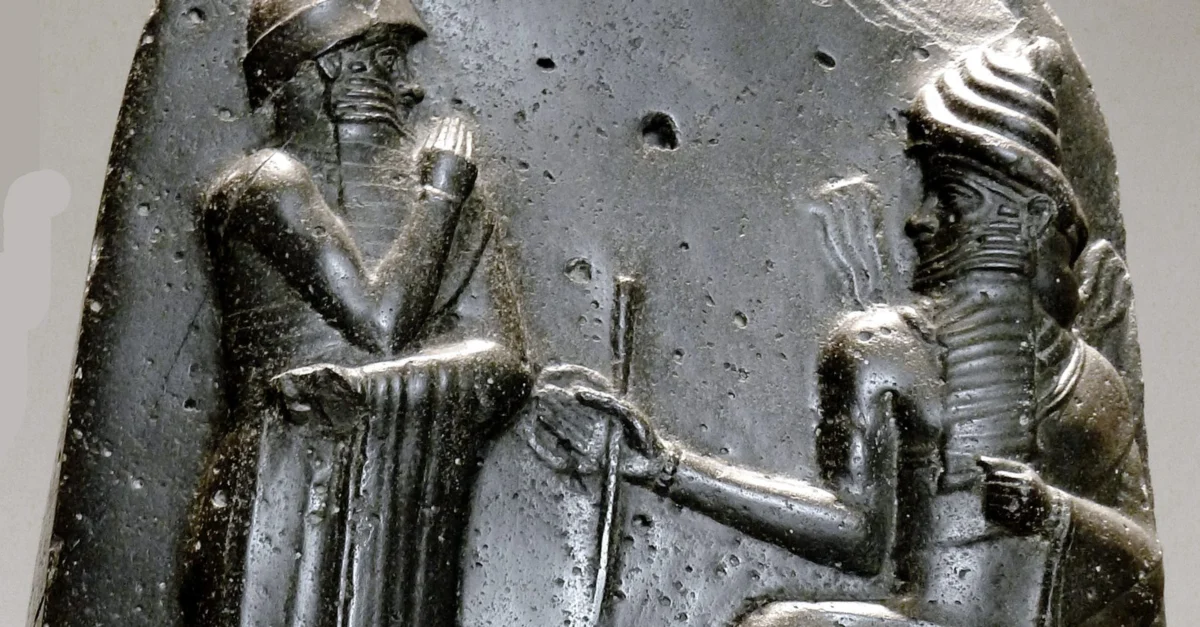
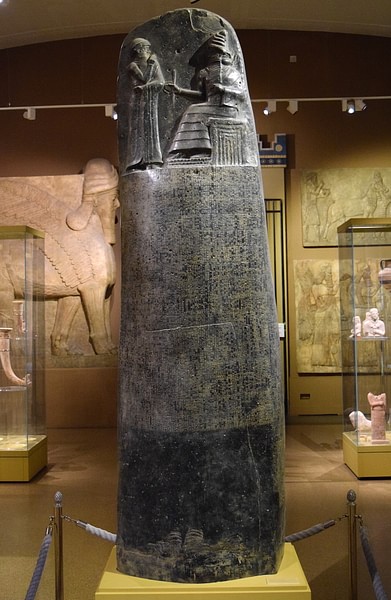
While his military achievements were monumental, Hammurabi is universally remembered for his comprehensive law code. This stele, discovered in Susa in 1901 (where it had been carried off as spoils of war by the Elamites centuries after Hammurabi’s death), depicts Hammurabi receiving the laws from the sun god Shamash, underscoring the divine legitimacy of his rule and his legal pronouncements.
Setting a New Standard: Beyond Ur-Nammu
Though often mistakenly called the first law code, earlier codes existed, notably the Code of Ur-Nammu (circa 2100-2050 BCE). However, Hammurabi’s code differed significantly, reflecting the changing societal landscape of his time. As Paul Kriwaczek explains, Hammurabi’s laws addressed "the shock of an unprecedented social environment: the multi-ethnic, multi-tribal Babylonian world." Earlier Sumerian-Akkadian societies operated on a communal understanding of divine will and collective identity, where disputes might be settled with restitution.
By Hammurabi’s era, with diverse Amorite, Akkadian, and Sumerian populations, a uniform understanding of justice was critical to prevent feuds and maintain order across a vast empire. Karen Rhea Nemet-Najat highlights that "The king was directly responsible for administering justice on behalf of the gods, who had established law and order in the universe." Hammurabi’s code aimed to provide clear, state-enforced penalties, removing ambiguity and tribal variation.
Lex Talionis and the Ordeal
The Code of Hammurabi is famously associated with the principle of Lex Talionis, "an eye for an eye, a tooth for a tooth," a concept later echoed in the Mosaic Law of the Old Testament (Exodus 21:22-25). This retributive justice system mandated punishments that directly corresponded to the crime, particularly for offenses against equals:
- "If a man put out the eye of another man, his eye shall be put out."
- "If he break another man’s bone, his bone shall be broken."
- "If a builder build a house for someone, and does not construct it properly, And the house which he built fall in and kill its owner, then that builder shall be put to death."
This strict, class-based application of justice (where penalties varied based on the social status of both offender and victim) represented a significant departure from earlier codes that often favored fines. It aimed to deter crime and ensure that vengeance, when sought, was regulated and administered by the state, not by private individuals, thereby preventing escalating blood feuds.
Alongside these written laws, Hammurabi’s code also incorporated the ancient practice of the "ordeal" for certain serious crimes, particularly adultery and sorcery. In these cases, the accused would be subjected to a divinely supervised test, often involving plunging into a sacred river. Survival signified innocence, leading to the accuser being punished for false witness. This system reflected the deeply religious nature of Mesopotamian society, where divine judgment was sought for infractions believed to undermine the very fabric of social stability.
A Vision for His People: The "Builder of the Land"
Beyond legislation, Hammurabi’s administrative documents and personal inscriptions reveal a ruler genuinely concerned with the welfare of his subjects. He earned the popular title bani matim, "builder of the land," for his extensive public works. These included the construction of new canals and the maintenance of existing irrigation networks, crucial for agricultural prosperity in Mesopotamia. He directed food distribution, initiated beautification projects, and ensured the functioning of urban infrastructure.
The prologue to his law code powerfully articulates his self-perception and his divine mandate: "When the lofty Anu, King of the Annunaki and Bel, Lord of Heaven and Earth… committed the rule of all mankind to Marduk… at that time Anu and Bel called me, Hammurabi, the exalted prince, the worshipper of the gods, to cause justice to prevail in the land, to destroy the wicked and the evil, to prevent the strong from oppressing the weak, to enlighten the land and to further the welfare of the people." This wasn’t mere rhetoric; his administrative correspondence supports a reign dedicated to tangible improvements in his people’s lives.
Legacy and the Inevitable Decline
By 1755 BCE, Hammurabi was the undisputed master of Mesopotamia, but he was also an old and ailing man. In his final years, his son, Samsu-Iluna, gradually assumed greater responsibilities of the throne, formally taking full reign in 1749 BCE. Hammurabi died in 1750 BCE, leaving behind a vast, multi-ethnic empire, but one that faced immediate and significant challenges.
The Challenges of Succession
The conquest of Eshnunna, while completing Hammurabi’s empire, had inadvertently removed a crucial buffer state to the east, exposing Babylon to aggressive nomadic tribes such as the Hittites and Kassites. News of the great king’s weakening health and eventual death emboldened these eastern forces, who began preparing for invasion.
Samsu-Iluna proved unable to maintain the intricate balance of power and alliances that his father had masterfully orchestrated. Within a year of Hammurabi’s death, his vast kingdom began to unravel. Cities and regions that had been incorporated as vassal states declared their autonomy, their loyalty often tied more to Hammurabi’s formidable personality than to the Babylonian state itself. None of Hammurabi’s successors could replicate his unifying genius.
The empire he had built through decades of strategic brilliance and ruthless efficiency collapsed with surprising speed. The Hittites sacked Babylon in 1595 BCE, followed by the Kassites, who subsequently inhabited and renamed it. Even the Elamites, who Hammurabi had decisively defeated, had their final revenge by carrying off the stele of Hammurabi’s Law Code, a testament to its enduring symbolic power.
Enduring Impact on Law and Governance
Despite the rapid fragmentation of his empire, Hammurabi’s legacy endured. He is primarily remembered as a lawgiver, whose comprehensive code served as a foundational standard for subsequent legal systems, including those of the Hebrews. However, in his own time, he was equally revered as the ruler who, like Sargon of Akkad centuries before him, had united Mesopotamia under a single governing body. Hammurabi consciously linked himself to great imperialists, proclaiming himself "the mighty king, king of Babylon, king of the Four Regions of the World, king of Sumer and Akkad, into whose power the god Bel has given over land and people, in whose hand he has placed the reins of government," thereby claiming divine ordination for his rule.
Crucially, unlike Sargon’s multiethnic empire, which was frequently plagued by internal strife, Hammurabi’s kingdom enjoyed relative peace after its initial conquest. Gwendolyn Leick aptly summarizes: "Hammurabi remains one of the great kings of Mesopotamia, an outstanding diplomat and negotiator who was patient enough to wait for the right time and then ruthless enough to achieve his aims without stretching his resources too far." His genius lay not just in conquest but in the subsequent administration and cultivation of his territories, a genuine interest in improving the lives of his inhabitants (with the notable exception of Mari).
Conclusion
Hammurabi stands as a titan of ancient history, a figure whose reign marked a pivotal moment in the development of both statecraft and jurisprudence. His legacy as a lawgiver, enshrined in the iconic stele depicting him receiving divine sanction for his code, speaks to his profound impact on the concept of justice. Yet, his achievements extend far beyond legal reform. He was a military strategist of unparalleled cunning, transforming a regional power into an empire that encompassed all of Mesopotamia. His administrative reforms and genuine concern for the welfare of his people fostered a period of remarkable stability and prosperity.
While his empire proved ephemeral after his death, the model of unified governance and the principles embedded in his law code established precedents that resonated through subsequent civilizations. Hammurabi’s reign remains a compelling study of ambition, strategic brilliance, and the enduring quest for order and justice in a complex world. His name continues to evoke the foundations of law and the sophisticated political maneuvering that characterized the ancient Near East.




Leave a Comment