Reassembly: Bard MFA Class of 2027 Marks a Milestone 45th Anniversary with Landmark Exhibition
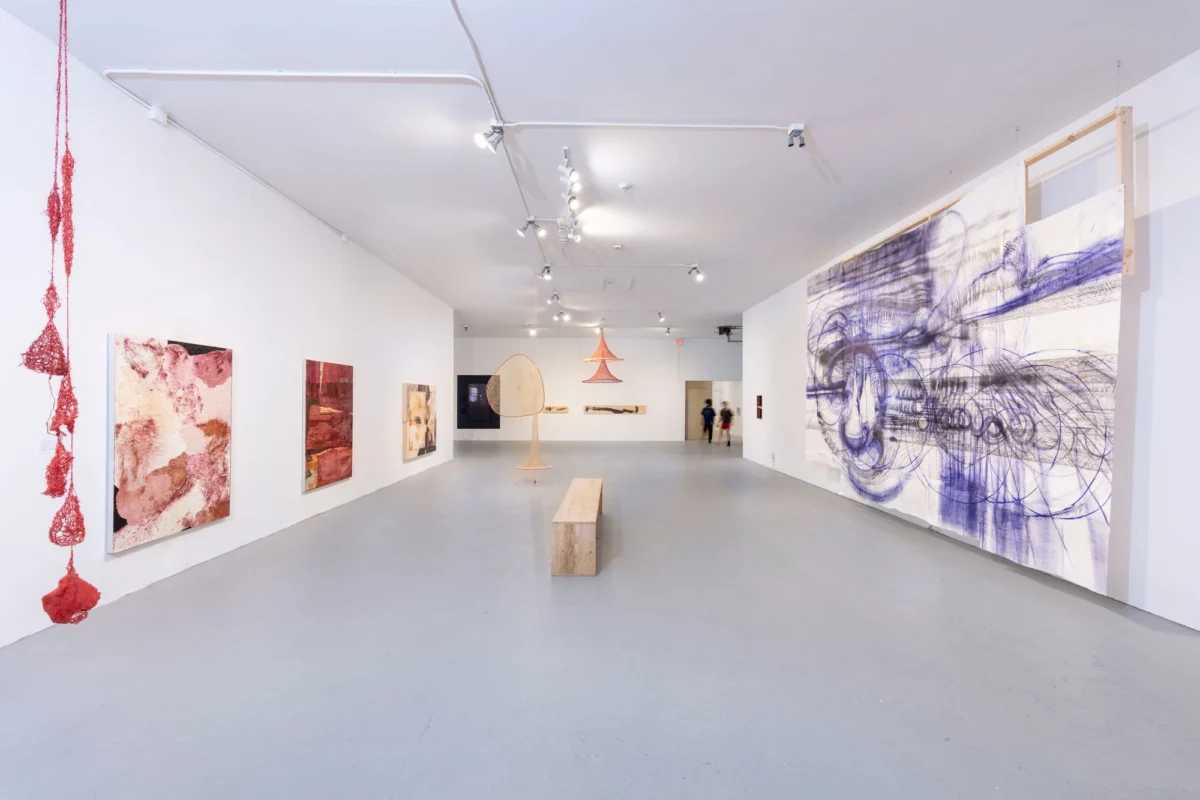
ANNANDALE-ON-HUDSON, NY — The Milton Avery Graduate School of the Arts at Bard College, an institution long regarded as a vanguard of interdisciplinary artistic education, has announced its highly anticipated summer showcase. Titled "Reassembly: The Class of 2027 Thesis Performances and Exhibition," the event represents the culmination of three years of intensive research, experimentation, and creative labor by 28 MFA candidates.
Scheduled to run from July 11 through July 19, 2026, the exhibition is more than a mere graduation requirement; it is a sprawling, multi-site intervention that spans the historic Bard College campus in Annandale-on-Hudson and the college’s newly acquired Massena Exhibition Center in Barrytown, New York. This year’s presentation carries additional weight as it coincides with the 45th anniversary of the Milton Avery Graduate School, a program that revolutionized art education when it debuted its low-residency model in 1981.
Main Facts: A New Chapter at the Massena Campus
The 2026 thesis exhibition, Reassembly, serves as a critical debut for the Massena Exhibition Center. Located at 30 Seminary Drive in Barrytown, the center is a recent addition to Bard’s architectural and pedagogical footprint. The choice of venue is symbolic, reflecting the exhibition’s core theme of "reassembling" existing structures into new, functional forms of expression.
Under the curatorial coordination of Mike R. Curran, a 2026 graduate of the Center for Curatorial Studies (CCS Bard), the exhibition features work from six distinct disciplines: Moving Image, Music/Sound, Painting, Photography, Sculpture, and Writing. However, true to the program’s ethos, these boundaries are frequently blurred, with soundscapes informing sculptural installations and cinematic techniques bleeding into the written word.
Event Schedule and Locations:
- Thesis Performances: Friday, July 10, 2026, at 7:00 PM (Olin Hall, Annandale-on-Hudson).
- Opening Reception: Saturday, July 11, 2026, from 1:00 PM to 4:00 PM (Massena Campus, Barrytown).
- Public Viewing: July 11–19, 2026.
The Class of 2027 includes a diverse cohort of international and domestic artists, including Ihab S. Balla, Nico Cadena, Madeline Casteel, Cydne Jasmin Coleby, Dominic Coles, Michael Dikta, ruby aiyo gerber, Alexis Gideon, Brooke Holm, Joselia Rebekah Hughes, Maite Iribarren Vázquez, Maren Jensen, Kehan Lai, Audrey Landgren, Weihui Lu, Shea Lynch, marlow magdalene, Leila Mesdaghi, Saiya Miller, Ankita Mishra, Sean Morel, Dainesha Nugent-Palache, Marina Papazyan, Río Sofia, Helena Tan, Robbie Wing, JinJin Xu, and Syd Yocom.
Chronology: The Three-Year Journey to "Reassembly"
The road to Reassembly began in the summer of 2024, when the Class of 2027 first arrived on the Bard campus. Unlike traditional MFA programs that require two years of continuous residency, the Milton Avery School operates on a "low-residency" model. This format consists of three intensive eight-week summer sessions on campus, interspersed with two years of independent studio work in the artists’ home environments.
Phase I: Foundations and Disruption (Summer 2024)
The first year is traditionally defined by a disruption of the artists’ established practices. Students are encouraged to engage with faculty and peers outside their primary discipline. A painter might find themselves in the sound lab, or a poet might experiment with industrial sculpture. This period of "unlearning" is critical to the Bard MFA philosophy.
Phase II: Independent Synthesis (2024–2025)
During the intervening months, students return to their professional lives, maintaining contact with mentors through independent study periods. This allows the academic rigor of Bard to collide with the "real world," ensuring that the work remains grounded in contemporary social and political realities.
Phase III: Reassembly and Public Debut (Summer 2026)
The final summer session is the "assembly" phase. The Class of 2027 returns to the Hudson Valley to refine their thesis projects. The 2026 exhibition represents the final stage of this process—a public "reassembly" of three years of fragmented study into a cohesive, large-scale presentation.
Supporting Data: 45 Years of the Milton Avery Model
To understand the significance of Reassembly, one must look at the data and history of the Milton Avery Graduate School. Founded in 1981, it was the first program of its kind to offer an MFA through a low-residency structure. This was a radical departure from the MFA "factory" models of the late 20th century.
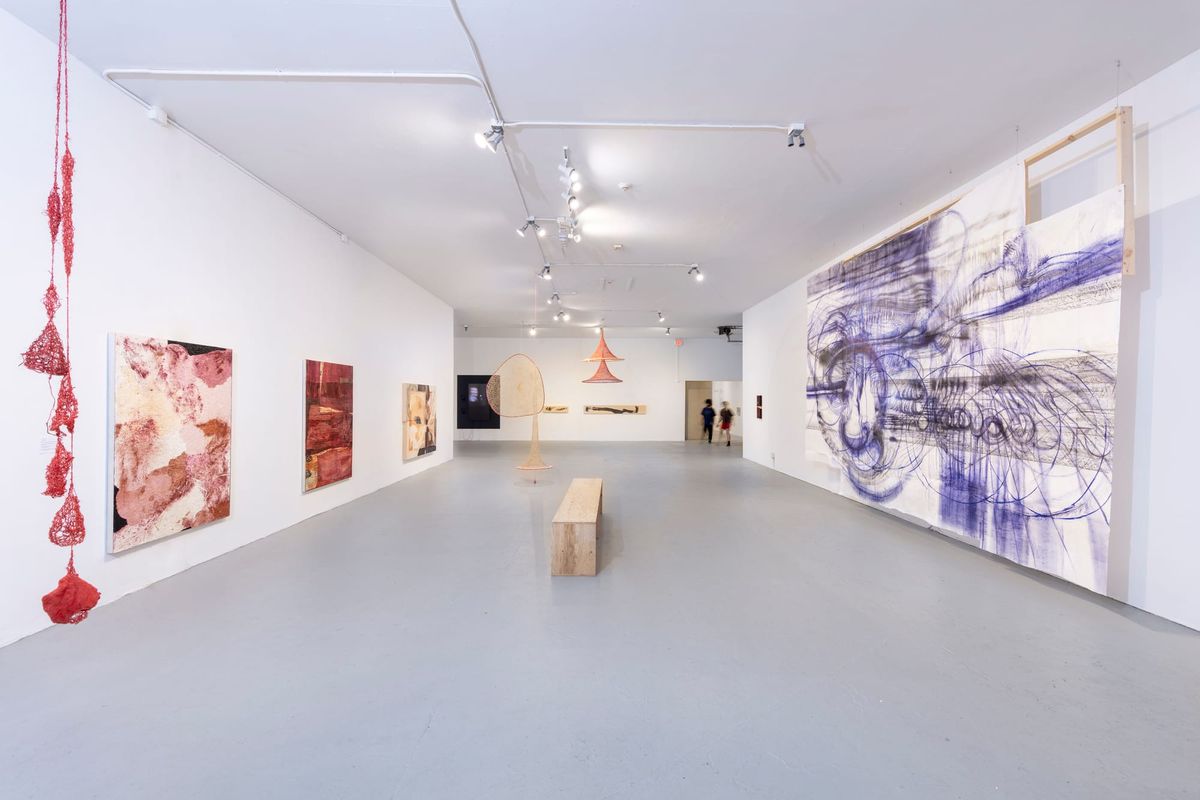
- Longevity and Influence: Celebrating its 45th year in 2026, the program has produced a significant percentage of the artists currently featured in major biennials (Whitney, Venice) and museum collections worldwide.
- Interdisciplinary Breadth: The program maintains a strict balance across six disciplines. This year’s cohort of 28 artists is nearly equally divided among these fields, ensuring a polyphonic exhibition environment.
- The Hudson Valley Hub: Bard College has become a central node in a "creative corridor" that includes DIA Beacon, Storm King Art Center, and Magazzino Italian Art. The acquisition of the Massena Exhibition Center marks a significant expansion of the college’s capacity to host large-scale contemporary art, moving beyond the traditional white-cube gallery space.
Official Responses: Curatorial Vision and Institutional Goals
Exhibition coordinator Mike R. Curran has framed Reassembly as a response to the chaotic nature of the mid-2020s. In his curatorial statement, Curran emphasizes that the work does not aim to provide easy answers to complex global problems.
“The exhibition demonstrates a wide breadth of contemporary approaches to art-making,” Curran notes. “But among their common interests are a remaking of seemingly stable artistic conventions, a reimagining of social structures, and a remixing of inherited grammars. Within this framework, the Massena Campus itself has become a site of reassembly.”
Curran’s vision suggests that the artists of the Class of 2027 are moving away from the "art-as-activism" tropes that defined the early 2020s, opting instead for a more nuanced, "provocative" stance. “In a context where political, social, and ecological crises accelerate at a rapid speed, the demands placed on art to act as an antidote have become increasingly incoherent,” Curran explains. “Resisting these conditions, the works invite you to move through the exhibition with intention and invest in their provocations.”
The administration at Bard College has also highlighted the importance of the 45th anniversary. The program continues to honor the legacy of Milton Avery—the American modern painter known for his color-driven, semi-abstract style—by fostering an environment where "the artist’s voice" is prioritized over market trends.
Implications: The Future of Contemporary Art Education
The Reassembly exhibition arrives at a turning point for the American MFA. As the cost of higher education rises and the viability of a career in the fine arts is questioned, the Bard model offers a potential path forward. By allowing artists to maintain their professional lives while pursuing a degree, the program attracts a more mature, diverse, and socio-economically varied student body than traditional residential programs.
The Massena Center as a Cultural Catalyst
The permanent integration of the Massena Exhibition Center into the Bard MFA program suggests a shift toward site-specific and large-scale environmental works. The 2026 exhibition will likely be remembered as the moment the program fully embraced its expansion into Barrytown, utilizing the industrial and historic character of the Massena site to challenge the clean aesthetics of modern galleries.
Challenging the "Antidote" Narrative
Perhaps the most significant implication of Reassembly is its rejection of art as a simple "antidote" to crisis. By focusing on "remixing inherited grammars," the Class of 2027 signals a return to formal experimentation as a means of political resistance. If the "grammars" of our current social and political systems are broken, these artists suggest that the solution is not to fix them, but to dismantle and reassemble them into something unrecognizable.
Impact on the Hudson Valley
The July exhibition is expected to draw thousands of visitors to the Red Hook and Barrytown area, further solidifying the Hudson Valley’s reputation as a "second capital" for the New York art world. For the students, it is the beginning of their professional legacy; for the college, it is a reaffirmation of its role as an incubator for the next generation of the avant-garde.
As the doors open on July 11, 2026, Reassembly will stand as a testament to 45 years of educational innovation and the enduring power of the artistic imagination to build something new from the fragments of the old.
For more information on the exhibition and the Milton Avery Graduate School of the Arts, visit bard.edu/mfa.