
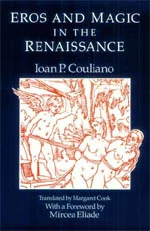
Reclaiming the Enchanted Mind: Ioan P. Couliano’s "Eros and Magic in the Renaissance" Challenges Modernity’s Flat Worldview
Main Facts
In an era increasingly defined by the objective, the measurable, and the purely rational, the notion that human imagination and desire could possess tangible power over reality seems, at best, a quaint historical curiosity, at worst, an archaic superstition. Yet, according to Ioan P. Couliano’s groundbreaking work, Eros and Magic in the Renaissance, this modern reductionist view is not only a recent development but also a "relatively ill-considered aberration." This seminal book, far from being a mere historical account, offers a profound philosophical critique of Western thought, charting the dramatic intellectual and spiritual chasm that opened between the vibrant, animistic worldview of the Renaissance and the mechanistic, disenchanted cosmos we largely inhabit today.
Couliano, a scholar of extraordinary breadth and a practitioner of what he studied, presents a meticulously researched argument: the transition from a world imbued with magic and spiritual agency to one governed by material forces was not a simple triumph of reason over unreason. Instead, he posits it as a complex cultural shift, heavily influenced by the puritanical impulses of the Protestant Reformation, which systematically stripped Christianity of its last vestiges of animism and, in doing so, laid the groundwork for modern scientific materialism. The book’s central thesis challenges the triumphalist narrative of scientific progress, suggesting that the victory of the mechanistic worldview was less about inherent superiority and more about its congruity with the prevailing moral and religious sentiments of the time.
At its core, Eros and Magic in the Renaissance delves into the Renaissance understanding of the imagination (Latin: vis phantastica) and desire (eros), revealing how these faculties were perceived as potent, active forces capable of shaping the world. This perspective stands in stark contrast to our contemporary psychological frameworks, where imagination and desire are largely confined to the realm of subjective internal states, devoid of any direct external causality. Couliano argues that this historical amnesia regarding the objective power attributed to these human capacities has left modern thought impoverished, severing our connection to a richer, more nuanced understanding of the human psyche and its place within a living cosmos.
Chronology: From Enchantment to Disenchantment
Couliano’s narrative skillfully guides the reader through a critical period of Western intellectual history, beginning with the flourishing of an enchanted worldview in the Renaissance and meticulously tracing its decline under the pressures of the Protestant Reformation and the subsequent rise of mechanism.
The Renaissance: A World Alive with Spirit
The late Middle Ages and the Renaissance witnessed a remarkable synthesis of classical thought, Christian mysticism, and esoteric traditions. Figures like Marsilio Ficino, Pico della Mirandola, and Giordano Bruno were not merely philosophers; they were magi, deeply engaged with Neoplatonism, Hermeticism, and Kabbalah. For them, the cosmos was a living, interconnected entity, teeming with sympathetic forces and occult influences.
- Vis Phantastica (Imagination) and Eros (Desire): In this worldview, the human imagination was no mere faculty for conjuring internal images; it was considered a potent magical tool, capable of projecting forms and intentions onto the world, thereby influencing events and even healing. The vis phantastica was understood as an intermediary between the spiritual and material realms, allowing the magician to imprint intentions onto the subtle fabric of reality. Similarly, eros, often translated as desire or love, transcended mere carnal longing. It was seen as a cosmic force of attraction and bonding, a principle that could draw disparate elements together, shaping destinies and influencing the will of others. Renaissance thinkers believed that by cultivating and directing these forces, individuals could participate actively in the ongoing creation and transformation of the world. This was the essence of "natural magic," not a defiance of nature, but a profound understanding and manipulation of its hidden sympathies and powers.
The Reformation’s Ultraconservative Turn
Couliano argues provocatively that the Protestant Reformation, far from being a liberalizing movement that freed humanity from medieval dogma, was in many respects an "ultraconservative movement." Its core impulse was a fundamentalist desire to purify Christianity, stripping it of what it perceived as pagan remnants – the "last vestiges of animism" that had "surreptitiously survived under the comparatively lax auspices of the medieval church."
This puritanical drive had profound consequences for the enchanted worldview. Any notion of a world imbued with spirits, or of human faculties like imagination and desire having magical efficacy, was cast under deep suspicion. The Reformation emphasized God’s singular omnipotence and absolute transcendence, creating a stark dualism between a remote, omnipotent deity and a fallen, inert material world. This left little room for the semi-autonomous spiritual agencies or the active participation of human magical will that characterized Renaissance thought. Miracles became the sole prerogative of God, not something that could be influenced or enacted by human agency, however divinely inspired.
The Rise of the Mechanistic Worldview
Concurrent with, and significantly propelled by, the Reformation’s intellectual climate, a new scientific paradigm began to emerge. Couliano meticulously outlines the schism that developed within the sciences of the period:
- Natural Magicians: On one side stood figures like Paracelsus, who, though often iconoclastic, still operated within an animistic framework. They believed in a living cosmos, where diseases were spiritual imbalances and remedies involved understanding the subtle, energetic connections between humans and nature. They sought to uncover nature’s secrets through direct observation and esoteric understanding, often blurring the lines between science and magic.
- Proto-Mechanists: On the other side were the nascent proponents of a mechanistic worldview. These thinkers began to conceptualize the world as a giant, intricate machine, devoid of inherent will, spirit, or consciousness. Qualities such as will and spirit were progressively confined solely to the human brain (or the immaterial human soul) and the distant, dualistic Christian spirit world. This view, championed by figures who would pave the way for modern science, sought to explain phenomena through material causes and efficient forces, effectively "disenchanting" the cosmos. The universe became a clockwork mechanism, predictable and controllable, but ultimately lifeless.
Couliano’s critical insight is that the "victory" of this mechanistic worldview over the magical, animistic one was not solely due to its inherent "better" or more "rational" nature, as the triumphalist narratives of scientific history often claim. Instead, he argues, it won the debate because it was "more congruous with the puritanical sentiments of the period." The intellectual battle was not between reason and unreason, but between "two different and incompatible ways of perceiving and experiencing the world, two different mythologies, two different sets of premises." The mechanistic view, with its emphasis on an inert, predictable world governed by divine laws, resonated deeply with a reformed theology that sought order, control, and the eradication of any perceived spiritual chaos or human hubris.
Supporting Data: Architects of Enchantment and the Seeds of Disenchantment
To substantiate his claims, Couliano draws extensively from the works and lives of pivotal Renaissance figures, providing concrete examples of the enchanted worldview he describes.
Giordano Bruno and the Power of Bonding
Central to Couliano’s analysis is the figure of Giordano Bruno (1548–1600), the Dominican friar, philosopher, mathematician, poet, and cosmological theorist, who was ultimately burned at the stake for heresy. Bruno’s magnificent On Bonding in a General Sense (De vinculis in genere) serves as a cornerstone for Couliano, offering an unparalleled insight into the Renaissance understanding of persuasive magic. Bruno explored how individuals could "bond" others to their will through various means, including the manipulation of imagination, desire, and affections. He saw the universe as a living organism, infused with a universal soul, and believed that humans, through their own internal powers, could tap into and direct these cosmic sympathies. His work was a sophisticated treatise on influence, persuasion, and the active role of human consciousness in shaping reality, a stark contrast to the passive observer role later assigned to humanity by mechanistic science.
Pico della Mirandola and Human Dignity
Giovanni Pico della Mirandola (1463–1494), another luminary of the Renaissance, is celebrated for his Oration on the Dignity of Man. Pico championed the idea of humanity’s unique position in the cosmos, gifted with the freedom to shape its own nature – to ascend to the divine or descend to the beastly. This self-fashioning, for Pico, was not a purely rational exercise but deeply intertwined with the powers of imagination and will. He saw the human being as a microcosm, capable of engaging with and influencing the macrocosm. His syncretic approach sought to unite diverse philosophical and religious traditions, including Kabbalah, to uncover universal truths and empower human agency, a stark contrast to the later fragmentation of knowledge.
Marsilio Ficino and Astral Magic
Marsilio Ficino (1433–1499), the head of the Florentine Platonic Academy, played a crucial role in reviving Neoplatonism and Hermeticism. His work, particularly Three Books on Life, explored the connections between human health, the cosmos, and the influence of the stars. Ficino’s concept of amor platonicus (Platonic love or eros) was far more than romantic affection; it was a cosmic force, a principle of attraction and unity that permeated the universe. He practiced a form of "astral magic," believing that by aligning oneself with specific planetary influences through music, talismans, and focused intention, one could draw down beneficial energies and harmonize one’s soul with the cosmos. This intricate system demonstrates the profound belief in the active, responsive nature of the universe and the human capacity to interact with it.
Ioan P. Couliano and Mircea Eliade’s Legacy
Couliano’s unique perspective stems significantly from his intellectual lineage. He was both a scholar of religion and a practitioner of what might be termed esoteric knowledge, deeply influenced by his mentor, the famed historian of religions Mircea Eliade. Eliade’s work on sacred and profane space, myth, ritual, and the experience of the holy provided a framework for understanding diverse religious phenomena not as mere psychological projections but as genuine expressions of human encounter with the sacred. Couliano extended this non-reductive approach to magic, viewing it not as primitive science or superstition, but as a distinct "mythology" or "set of premises" for experiencing and interacting with the world. This academic rigor, combined with an insider’s perspective on esoteric traditions, granted Couliano a "freshness and vitality" often absent in purely academic studies of magic. He understood magic not just as a historical artifact, but as a coherent, albeit alternative, system of thought and action.
Official Responses: Challenging the Dominant Narrative
Couliano’s work, while widely respected, implicitly challenges the foundational narratives of modern Western thought, particularly those concerning the Enlightenment and the history of science. It’s less about "official responses" to Couliano himself, and more about how his analysis directly confronts and deconstructs the prevailing "triumphalist idea" that the mechanistic worldview won out over the magical and animistic one because it was inherently superior or more rational.
The Myth of Rational Superiority
The dominant historical narrative often portrays the rise of modern science as a heroic march of reason, systematically dismantling superstition and irrationality. In this narrative, Renaissance magic is relegated to the dustbin of history, a primitive precursor to true scientific inquiry. Couliano forcefully rejects this simplistic dichotomy. He argues that the debate between the magical and the mechanistic was "not between reason and unreason," but rather between "two different and incompatible ways of perceiving and experiencing the world, two different mythologies, two different sets of premises."
The triumph of mechanism, Couliano suggests, was not an inevitable outcome of intellectual progress but a culturally contingent victory. It aligned with the ascendant puritanical ethos, which craved a world stripped of ambiguous spiritual influences and subjected to clear, divine (or divinely ordained) laws. A mechanistic cosmos, devoid of capricious spirits or human magical agency, was a more orderly and theologically acceptable universe for the reformed mind. This re-framing of history compels a critical re-evaluation of the very foundations of modern scientific thought, suggesting that its success is tied not just to empirical validity but also to its historical and cultural resonance.
The Disenchantment of the World
Max Weber famously spoke of the "disenchantment of the world" as a hallmark of modernity, a process where magic is eliminated, and the world becomes a rationalized, impersonal system. Couliano provides a detailed historical genealogy for this disenchantment, linking it directly to the theological and philosophical shifts he describes. By removing spirit and agency from the natural world and confining them to a transcendent God or a subjective human mind, the mechanistic worldview effectively drained the cosmos of its inherent vitality and meaning. This historical process, according to Couliano, has left us with a powerful, technologically advanced civilization but one that often struggles with a sense of alienation and meaninglessness, precisely because its foundational premises deny the very interconnectedness and animating spirit that once defined human experience.
Implications: The Enduring Legacy of Enchantment in a Disenchanted World
The implications of Couliano’s work extend far beyond historical revisionism. They force us to confront our own modern assumptions about reality, subjectivity, and the nature of human agency.
The Underground Survival of Magic
Perhaps one of Couliano’s most provocative claims is that "magic had to go underground, and survives today under different names." He identifies these modern guises as "psychology," "marketing," "advertising," and "personal development." This assertion is not meant to imply that these fields are literally practicing spells, but rather that they operate on principles analogous to the subtle influence, persuasion, and manipulation of imagination and desire that characterized Renaissance magic.
- Psychology: Modern psychology, particularly its depth-oriented branches, delves into the subconscious, archetypes, and the power of belief. Techniques like psychotherapy, cognitive behavioral therapy, and hypnotherapy all rely on the premise that internal mental states, perceptions, and narratives can profoundly affect an individual’s reality, health, and behavior. This echoes the Renaissance belief in the vis phantastica‘s power to shape internal and external worlds.
- Marketing and Advertising: These industries are, in essence, sophisticated systems for influencing collective desire and imagination. They meticulously craft narratives, images, and emotional appeals to "bond" consumers to products and brands, shaping perceptions and driving behavior on a massive scale. The art of persuasion, the creation of emotional resonance, and the manipulation of symbols to evoke specific responses are direct descendants of the Renaissance magician’s understanding of how to influence the human psyche.
- Personal Development: The vast personal development industry, with its focus on manifesting goals, positive thinking, visualization, and self-transformation, directly taps into the power of directed intention and imagination. From "law of attraction" philosophies to techniques for building self-efficacy, these practices implicitly acknowledge the profound connection between internal states and external outcomes, a connection that was central to the Renaissance understanding of human magical capacity.
Couliano’s analysis suggests that while the language has changed, the underlying mechanisms of influence, persuasion, and the shaping of reality through non-material means have never truly vanished. They have merely adapted to a world that no longer openly acknowledges their "magical" nature.
Re-evaluating Our "Modern Aberration"
By exposing the historical contingency of our current worldview, Couliano compels us to critically examine our own "modern aberration" – the belief that imagination and desire are purely subjective and without bearing on reality. What if our dismissal of these powers has inadvertently limited our understanding of human potential and the very fabric of existence? His work encourages a more holistic and nuanced perspective, one that might reintegrate the subjective and objective, the spiritual and the material, into a richer understanding of the cosmos.
The Call for a Broader Perspective
Eros and Magic in the Renaissance is more than a historical text; it is a profound philosophical challenge. It calls for an acknowledgment that the "rational" worldview is but one mythology among many, a powerful and effective one, but nonetheless built upon specific, historically determined premises. By understanding how we arrived at our current intellectual landscape, we gain the capacity to question its limitations and explore alternative ways of perceiving and experiencing the world.
Couliano’s legacy is a reminder that history is not a linear progression towards an inevitable truth, but a complex interplay of ideas, values, and power dynamics. His work invites us to look beyond the surface of modernity and recognize the deep, enduring currents of human thought that continue to shape our present, often in ways we no longer consciously perceive. After engaging with Eros and Magic in the Renaissance, one is indeed left with an altered perspective, never quite seeing "magic or science in the same way again." It is a vital contribution to understanding not just our past, but also the hidden forces that continue to animate our contemporary world.


Leave a Comment