
Candace Caston: Weaving Memory and Place into Intimate Collage Archives
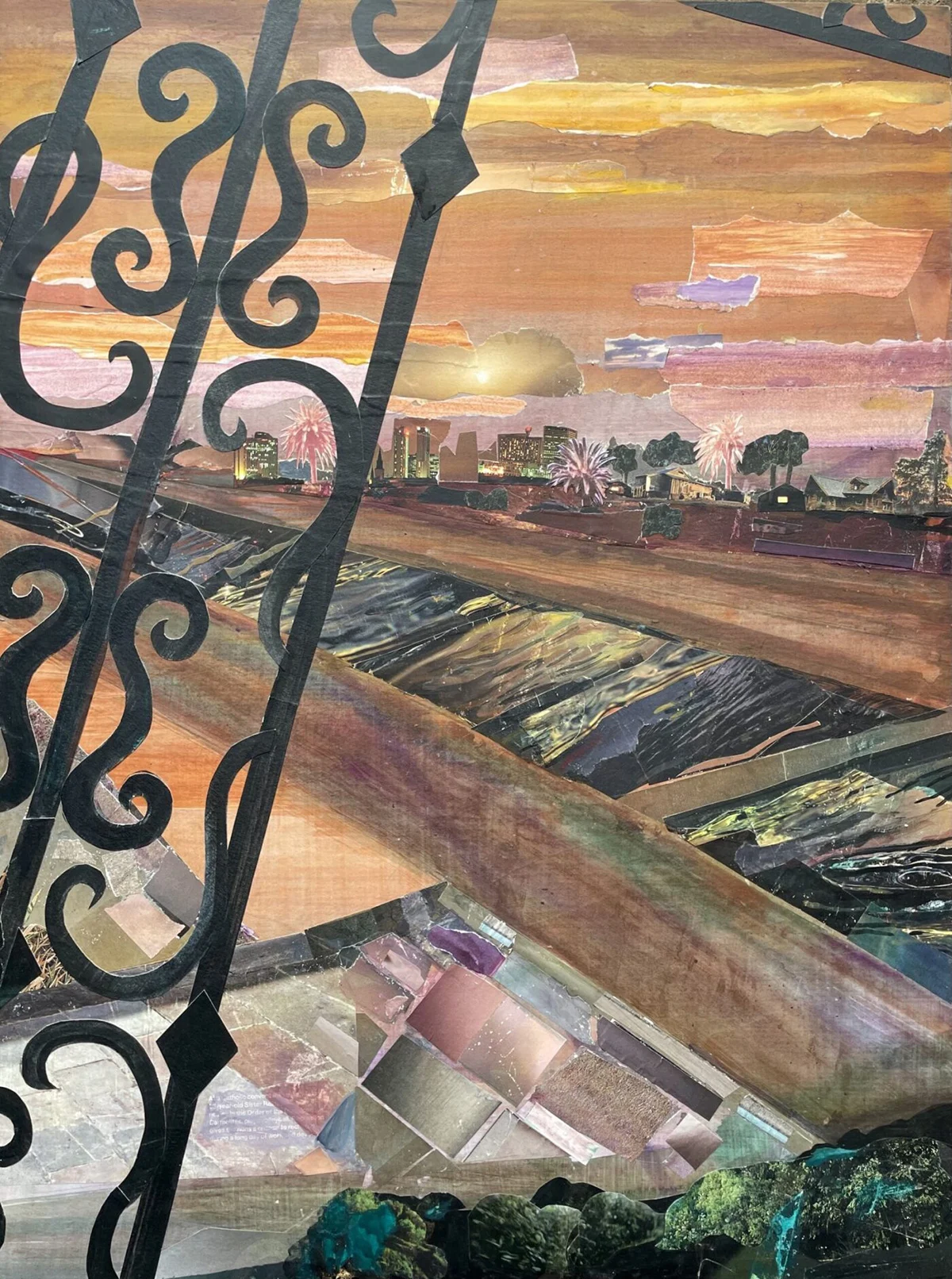
Atlanta, GA – In the evocative realm of contemporary collage, Candace Caston emerges as a compelling voice, meticulously crafting visual narratives that delve into the profound connection between place and memory. Born in the verdant landscapes of Louisiana and now firmly rooted in the artistic hub of Georgia, Caston’s artistic journey is marked by a BFA from the esteemed Savannah College of Art and Design (SCAD) in Atlanta. Her work, primarily rendered in water-based media, acts as an intimate archive, meticulously piecing together fragments of remembered spaces, drawn from both the ethereal landscapes of dreams and the tangible experiences of lived reality.
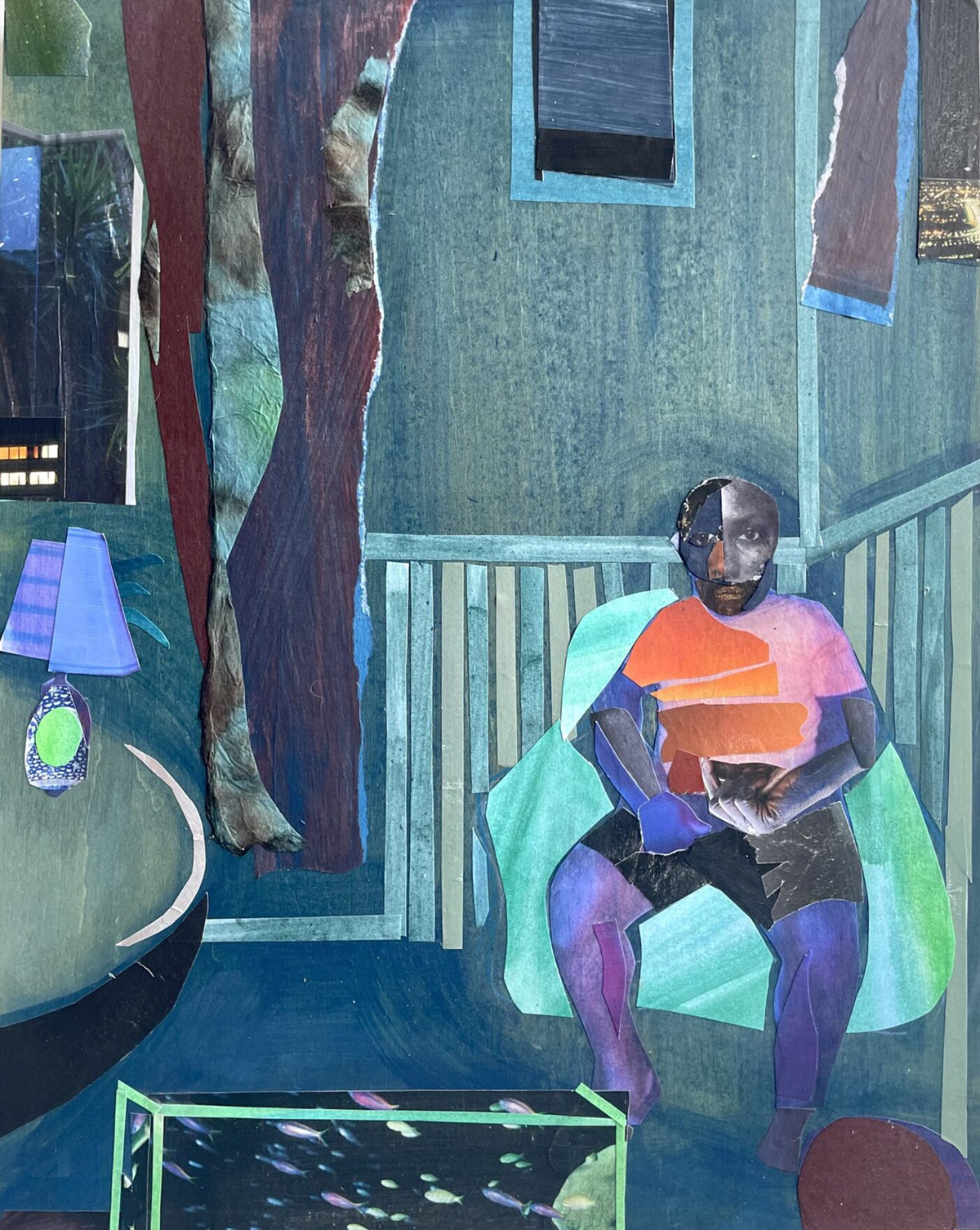
Caston’s artistic philosophy is deeply rooted in the power of sensory recall and the subtle yet profound ways in which our environments shape our internal worlds. She articulates this connection with poignant clarity: "Eyes look through the blinds towards the neighborhood, as the heat from outside seeps into the interior. I recall this as I reflect on the home I grew up in. Memories are captured in the windows, objects, and arrangements of a room or exterior space. They’re evoked by small details—the furniture, the weather outside, how the light moves through and around the house, or the shapes the blinds make as you part them to peek out. In reflecting on moments of solitude, seemingly small scenes become significant." This introspective approach imbues her collages with a palpable sense of nostalgia and personal history, inviting viewers to engage with their own mnemonic landscapes.
The Genesis of a Visual Archivist: Caston’s Artistic Trajectory
Candace Caston’s artistic development, while not explicitly detailed in the provided text, can be inferred through her educational background and her chosen medium. The acquisition of a BFA from SCAD signifies a rigorous immersion in artistic principles, techniques, and critical discourse. This foundational training likely provided her with the technical proficiency and conceptual framework necessary to translate her introspective explorations into a cohesive artistic practice.
Her decision to focus on collage, particularly with water-based media, is significant. Collage, by its very nature, involves the appropriation and recontextualization of existing imagery. This act of deconstruction and reconstruction mirrors the way memory itself functions – piecing together fragments, sometimes disjointed, to form a coherent, albeit subjective, narrative. Water-based media, such as watercolor or gouache, offer a fluidity and transparency that can lend themselves to the delicate layering and nuanced blending often found in Caston’s work, further enhancing the dreamlike and ethereal quality of her memoryscapes.
The geographical journey from Louisiana to Georgia also plays a role. Louisiana, with its rich cultural tapestry, unique architectural styles, and distinct atmospheric qualities, likely provided an early and indelible imprint on Caston’s developing aesthetic. Georgia, particularly Atlanta, as a vibrant center for art and education, would have offered a stimulating environment for her to hone her craft and engage with a broader artistic community. This transition may have also introduced new spatial and sensory influences that further enriched her artistic vocabulary.
The Alchemy of Memory: Deconstructing Caston’s Collage Techniques
Caston’s collages are not merely assemblages of disparate images; they are carefully orchestrated dialogues between personal experience and visual representation. Her emphasis on "water-based media" suggests a deliberate choice to imbue her collages with a specific textural and visual quality. This could involve:
- Layering and Transparency: Watercolors can be layered to create depth and translucency, allowing underlying elements to subtly inform the surface imagery. This technique could be used to represent the overlapping and often indistinct nature of memories.
- Textural Exploration: Different water-based media, such as diluted inks or gouache washes, can create a variety of textures, from smooth and ethereal to more granular and grounded. These textures can evoke the tactile sensations associated with specific places or moments.
- Integration of Found Imagery: While the specifics of her source material are not detailed, it is reasonable to assume Caston employs a range of found imagery – perhaps vintage photographs, architectural fragments, botanical illustrations, or even fragments of text – which she then manipulates and integrates with her painted elements.
- The Evocation of Light and Atmosphere: Caston’s description of "how the light moves through and around the house" and the "heat from outside seeping into the interior" highlights her keen observation of environmental nuances. Water-based media are particularly adept at capturing the ephemeral qualities of light and atmosphere, allowing her to translate these sensations into her collages.
Her statement, "Memories are captured in the windows, objects, and arrangements of a room or exterior space," reveals a meticulous attention to detail. This suggests that each element within her collages is chosen not for its inherent visual appeal alone, but for its associative power. A particular piece of furniture, the angle of a window blind, or the pattern of sunlight on a wall – these are not incidental; they are the anchors that tether the viewer to a specific emotional or mnemonic resonance.
The act of "parting the blinds to peek out" is a particularly potent metaphor. It signifies a moment of intentional observation, a conscious effort to engage with the external world and, by extension, to access and process internal memories. This gesture, repeated in various forms throughout her work, underscores the artist’s role as a keen observer and interpreter of the human experience of place.
The Significance of Solitude and Seemingly Small Scenes
Caston’s reflection, "In reflecting on moments of solitude, seemingly small scenes become significant," is central to understanding the emotional core of her art. In an era often characterized by constant connectivity and external stimulation, the deliberate exploration of solitude offers a space for introspection and the rediscovery of the profound within the ordinary.
- The Intimacy of Solitude: Solitude, for Caston, is not necessarily loneliness but a fertile ground for self-discovery and the retrieval of deeply personal experiences. It is in these quiet moments that the subtle details of our surroundings, often overlooked in the hustle of daily life, begin to assert their significance.
- Elevating the Mundane: Her work suggests that the most profound memories are not always tied to grand events but are often rooted in the quotidian – the quiet rituals, the familiar vistas, the sensory impressions of everyday spaces. By focusing on these "small scenes," Caston elevates them, imbuing them with a weight and significance that resonates universally.
- The Archive of the Interior Life: Her collages function as an intimate archive of the interior life. They are not just depictions of places but distillations of the emotional and psychological states associated with those places. The viewer is invited to connect with the universal human experience of belonging, nostalgia, and the enduring power of formative environments.
This emphasis on solitude and the seemingly insignificant allows Caston’s work to transcend mere representation. It becomes a meditative practice, both for the artist and for the viewer, encouraging a deeper appreciation for the often-unacknowledged richness of our lived experiences.
Supporting Data and Artistic Context
While direct supporting data in the form of critical reviews or exhibition history is not provided, the artistic context of collage itself offers valuable insights. Collage has a rich and varied history, evolving from its Cubist origins as a radical artistic gesture to its current status as a versatile and widely embraced medium.
- Historical Precedents: Artists like Hannah Höch, Kurt Schwitters, and Robert Rauschenberg, pioneers of collage, utilized the medium to comment on society, deconstruct traditional notions of art, and explore new visual languages. Caston, while working in a contemporary context, inherits this legacy of innovation and reappropriation.
- Contemporary Collage: The contemporary collage scene is vibrant and diverse, with artists employing a vast array of techniques and subject matter. Caston’s focus on memory, place, and personal narrative positions her within a lineage of artists who use collage to explore subjective experience and emotional resonance. Her use of water-based media, however, may offer a unique textural and tonal approach that distinguishes her work.
- The Power of the Archive: The concept of the "archive" is increasingly prevalent in contemporary art, with artists engaging with personal and collective histories through various media. Caston’s self-proclaimed "intimate archive of remembered spaces" aligns with this trend, offering a deeply personal and introspective contribution to the broader dialogue surrounding memory and representation.
The provision of links to "Booooooom" publications, such as the "2025 Photo Awards Winners" and "Tomorrow’s Talent 5 Book," suggests that Caston’s work may be featured or recognized within platforms that champion emerging and contemporary artists. These platforms often serve as crucial conduits for artists to reach a wider audience and engage with critical discourse. The "Secret Email Club" link further indicates a contemporary artist actively participating in the digital art landscape, utilizing online platforms for dissemination and community building.

Official Responses and Critical Reception (Inferred)
Without specific critical reviews or official statements regarding Candace Caston’s work, we can infer the potential nature of "official responses" and critical reception based on the artist’s stated intentions and the context of contemporary art.
- Curatorial Interest: An artist whose work delves into themes of memory, place, and subjective experience, rendered with skilled technique, is likely to attract the attention of curators. Exhibitions focusing on themes of domesticity, nostalgia, autobiography, or the psychological impact of environment would provide a natural platform for her collages.
- Art Critics’ Perspectives: Critics might engage with Caston’s work on several levels:
- Technical Prowess: The skillful application of water-based media and the sophisticated integration of disparate elements would likely be noted.
- Thematic Depth: The exploration of memory and place, particularly through the lens of solitude, offers rich ground for critical analysis, potentially drawing parallels to psychological theories or literary explorations of nostalgia.
- Emotional Resonance: The ability of her collages to evoke a sense of familiarity, longing, or introspection in the viewer would be a key aspect of critical evaluation.
- Contribution to Collage Practice: Critics might consider how Caston’s unique approach to materials and subject matter expands or reinterprets the possibilities of collage as a medium.
- Academic Discourse: Her BFA from SCAD suggests an engagement with academic art criticism. Her work could be a subject of study within art history or studio art programs, where its thematic and technical aspects are analyzed.
The very act of presenting her work on platforms like Boooooooom, which is known for showcasing contemporary art, indicates a proactive approach to seeking recognition and engaging with the art world. The inclusion of her website further allows for direct engagement with her portfolio, facilitating a more informed "official response" from collectors, gallerists, and critics alike.
Implications and the Enduring Power of Place and Memory
Candace Caston’s art carries significant implications for how we understand ourselves and our relationship with the spaces we inhabit.
- Re-evaluating the Ordinary: In a world that often prioritizes the extraordinary, Caston’s work serves as a potent reminder of the profound beauty and emotional weight contained within the ordinary. Her collages encourage us to look closer at our own environments, to recognize the stories embedded in familiar objects and spaces.
- The Subjectivity of Experience: Her focus on "remembered spaces" highlights the inherently subjective nature of our experiences. The same physical location can hold vastly different meanings and emotional resonances for different individuals, shaped by personal histories, dreams, and moments of quiet contemplation.
- The Archive as a Form of Self-Preservation: In an increasingly ephemeral world, the creation of personal archives, whether visual, written, or otherwise, becomes an act of self-preservation. Caston’s collages are not just records of the past; they are active engagements with it, a way of holding onto and making sense of formative experiences.
- Bridging the Dream and the Real: The seamless integration of dream and lived experience in her work suggests that these two realms are not mutually exclusive but are intricately interwoven in the fabric of our consciousness. Her collages become portals, allowing us to glimpse the landscapes of both the external and internal worlds.
- A Call to Introspection: Ultimately, Candace Caston’s art is an invitation to introspection. By offering glimpses into her own mnemonic landscapes, she prompts viewers to explore their own, to consider the places that have shaped them, and to recognize the enduring power of memory in constructing our identities. Her work stands as a testament to the quiet, yet profound, ways in which our environments imprint themselves upon our souls, creating a rich and indelible tapestry of lived experience.


Leave a Comment