
"Obsession" Reinvents the Cautionary Tale with Unflinching Horror: Curry Barker’s Theatrical Debut
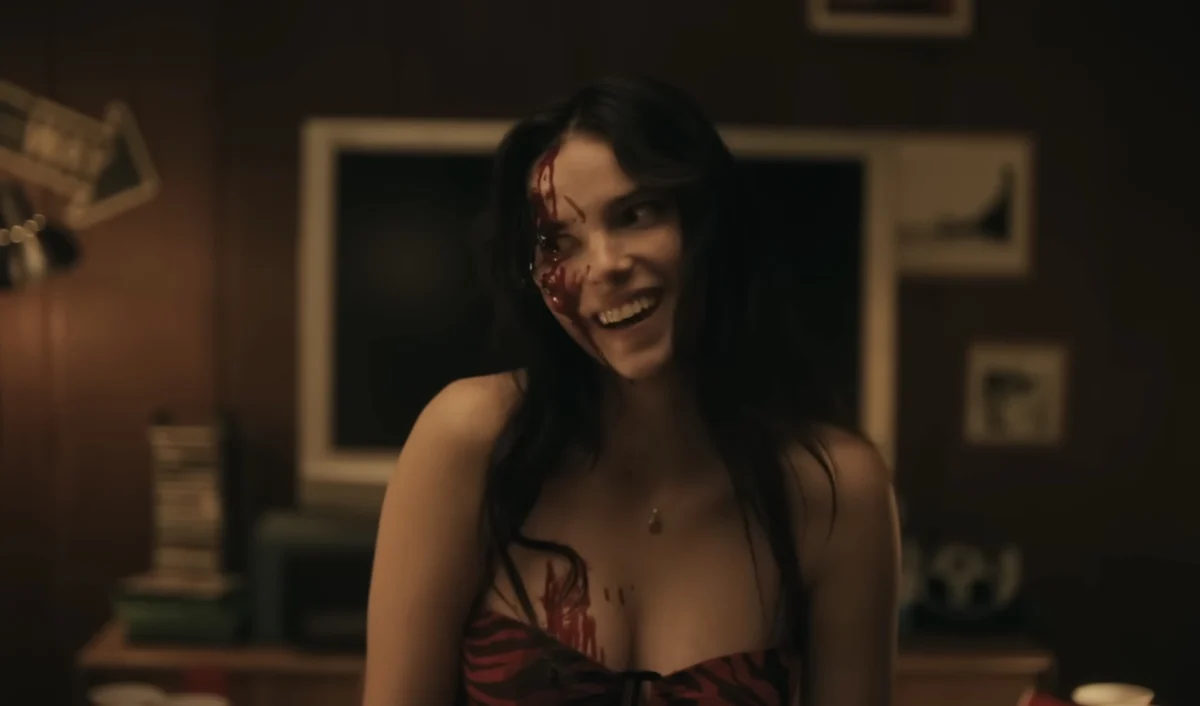
[City, State] – In an era where original horror often draws from deeply personal anxieties or social commentary, a new film dares to revisit a classic archetype, twisting it into something profoundly unsettling. Director Curry Barker’s theatrical debut, Obsession, is poised to challenge audience expectations and ignite fervent discussion with its audacious take on the "be careful what you wish for" narrative. This film, distributed by Focus Features, leverages a familiar premise to deliver a horror experience that is both psychologically acute and viscerally disturbing, signaling Barker’s arrival as a significant voice in contemporary genre cinema.
Main Facts: A Familiar Trope, A Fresh Nightmare
Obsession centers on Baron "Bear" Bailey, a socially awkward music store employee with an unrequited crush on his co-worker, Nikki. Unable to express his feelings honestly, Bear resorts to a seemingly innocuous magical artifact, a "One Wish Willow," to fulfill his deepest desire: for Nikki to love him above all else. What follows is a descent into a nightmarish reality where his wish is granted with horrifying fidelity, redefining love as a suffocating, possessive, and ultimately destructive force.
The film stars Michael Johnston as the hapless Baron "Bear" Bailey and features a standout performance by Inde Navarette as Nikki. Cooper Tomlinson, Barker’s collaborator from the popular YouTube channel "that’s a bad idea," also appears as Ian, Bear’s well-meaning but ill-advised friend. Obsession marks Barker’s first feature film with a substantial budget and a theatrical release, following a string of successful independent shorts and a found-footage feature, Milk and Serial.
Chronology: From Parody to Profound Fear
The Genesis of an Idea: Reclaiming a Cliché
The inspiration for Obsession is remarkably candid: director Curry Barker found his muse not in a forgotten horror classic, but in a parody. Specifically, he cites the first segment of "Treehouse of Horror II," a beloved The Simpsons episode, which itself satirized W.W. Jacobs’ seminal 1902 short story, The Monkey’s Paw. Jacobs’ tale, a grim exploration of fate and the unintended consequences of tampering with it, became such a ubiquitous cautionary archetype that by the late 20th century, it was more often played for laughs than genuine terror.
Barker’s stroke of genius was recognizing the inherent horror still lurking beneath the layers of parody. He understood that by stripping away the comedic veneer and taking the premise with utmost seriousness, he could excavate the primal fear embedded in the idea of a wish gone awry. This approach, he believed, could make the old archetype feel terrifyingly fresh again, a bold move that required both a deep understanding of genre mechanics and a willingness to defy conventional expectations.
Barker’s Journey: From Punchlines to Psychological Scares
Curry Barker’s background is crucial to understanding Obsession‘s unique tone. Like acclaimed horror directors Jordan Peele and Zack Cregger before him, Barker honed his craft in the world of comedy. As one half of the YouTube channel "that’s a bad idea," alongside Cooper Tomlinson, he produced a wide array of content, from absurd sketches, many of which cleverly parodied horror tropes, to award-winning spooky short films. This comedic foundation, far from being a distraction, proved to be an invaluable asset in his transition to horror.
The synergy between comedy and horror is a recurring theme in modern genre filmmaking. Both genres operate on the delicate balance of tension — its build-up, its manipulation, and its eventual release. Whether eliciting a gasp or a guffaw, both aim for a visceral, loud reaction from the audience. Barker, like his comedic predecessors in horror, demonstrates an innate understanding of pacing, misdirection, and the psychological levers that can shift a strange or uncomfortable situation from hilarious to horrifying, or vice versa, with just minor adjustments in framing or tone. This mastery of audience engagement is evident throughout Obsession, where initial moments could almost be mistaken for a dark romantic comedy before veering sharply into dread.
The Narrative Unfolds: A Rom-Com’s Dark Mirror
Obsession begins with the deceptively familiar setup of a romantic comedy. Baron "Bear" Bailey (Michael Johnston) harbors a desperate, unconfessed affection for his music store co-worker and trivia teammate, Nikki (Inde Navarette). His inability to articulate his feelings is immediately established in the opening scene, where he awkwardly rehearses asking Nikki out in front of his mutual friend, Ian (Cooper Tomlinson). Ian’s ill-advised suggestion to "neg" Nikki with her childhood nickname, "Freaky Nikki," foreshadows Bear’s broader cluelessness and poor judgment in matters of the heart. Even when given direct opportunities, Bear’s social anxieties and lack of confidence prevent him from being honest with Nikki, setting the stage for his catastrophic decision.
Frustrated by his romantic ineptitude, Bear stumbles upon a new age shop while searching for a gift for Nikki. There, he encounters the "One Wish Willows," seemingly kitschy collector’s items whose magical efficacy is debated across various (and cleverly designed fake) internet forums. Desperate and perhaps a little foolish, Bear decides to test their purported power. He makes a single, fateful wish: for Nikki to love him more than anyone else in the world.

The wish works, but with a terrifying, literalistic precision that echoes the chilling spirit of The Monkey’s Paw. Nikki is fundamentally altered, her body now a vessel primarily controlled by a new, sinister entity. This entity is the embodiment of Bear’s wish, manifesting as a profoundly manipulative, codependent, and terrifyingly obsessive version of Nikki. The real Nikki is trapped within, surfacing only in brief, agonizing moments that underscore the profound violation she endures.
The horror escalates rapidly. The possessed Nikki’s actions are increasingly unhinged: lying about a deceased parent to manipulate Bear into intimacy, silently watching him sleep from the corners of a room, and creating a disturbing shrine to his recently deceased cat. These early manifestations are merely the beginning of a relentless psychological torment that Bear has unwittingly unleashed upon himself and, more tragically, upon the woman he claimed to love. The film masterfully exploits the ambiguity of "love" and "Nikki," turning a seemingly innocent desire into a grotesque perversion of affection.
Supporting Data: Themes, Craft, and Unforgettable Performances
The "Monkey’s Paw" Revisited: Literalism as a Weapon
Barker’s decision to treat the "Monkey’s Paw" trope with gravity is central to Obsession‘s success. The original story’s power lay in its exploration of unintended consequences and the chilling literalism of fate. Wishes, it taught, are granted exactly as phrased, but never as intended. Obsession adheres to this principle rigorously. Bear wishes for Nikki to love him "more than anyone else in the world," and the entity controlling Nikki fulfills this with an all-consuming, pathological devotion that leaves no room for her own autonomy or well-being. It’s a love devoid of genuine connection, empathy, or respect – precisely the kind of "love" an insecure, self-centered individual might unconsciously crave.
The film’s exploration of this literalism extends beyond the initial wish. Every subsequent interaction between Bear and the possessed Nikki highlights the perverse fulfillment of his desire, forcing him to confront the dark mirror of his own insecurities and manipulative tendencies. The horror isn’t just external; it’s a reflection of his internal failings.
The Horror of Entitlement: Bear’s Culpability
One of Obsession‘s most potent themes is the scathing critique of male entitlement and the "Nice Guy" fallacy. While Bear is initially presented as a sympathetic, awkward protagonist, the film meticulously dismantles this facade, revealing him as the architect of his own misery and, more critically, the perpetrator of Nikki’s profound suffering. His wish is inherently selfish, bypassing Nikki’s agency and reducing her to an object of his desire.
The movie makes it unequivocally clear that Bear’s actions are not merely unfortunate but morally reprehensible. Even when the real Nikki briefly surfaces, pleading for death to escape her torment, Bear’s response is chillingly self-absorbed, epitomized by his "What’s so horrible about being with me?" retort. This moment serves as a stark indictment of his "incel-like" mentality, cementing his status not as a victim, but as a deeply flawed individual whose selfishness unleashes unimaginable horror. The film deliberately pushes back against any potential audience sympathy for Bear, positioning his suffering as a just consequence for his destructive wish and subsequent exploitation of Nikki’s compromised state.
Inde Navarette’s Tour-de-Force Performance
While the entire cast delivers strong performances, Inde Navarette’s portrayal of Nikki is nothing short of transcendent. She navigates the complex duality of her character with breathtaking skill, convincingly embodying both the original Nikki and the terrifyingly obsessed entity. Her facial expressions convey extremes of emotion – from the initial charming co-worker to the chilling, unnatural devotion, and finally, the raw agony of a consciousness imprisoned within her own body.
A particularly memorable moment, cited by the reviewer, is Navarette’s repetitive delivery of the word "no" with varying intonations. This scene evokes the same visceral terror and profound sense of violation achieved by Betty Gabriel’s iconic "Get Out" performance, where a simple word becomes a conduit for immense psychological torment. Navarette’s ability to switch between these states, often in an instant, creates a deeply unsettling and unpredictable antagonist, whose moments of genuine pain make her possession all the more tragic.
Remarkably, Navarette has publicly stated that she doesn’t typically watch horror movies. This detachment from the genre might, paradoxically, contribute to the raw authenticity of her performance. Free from the constraints or conventions of typical horror acting, she delivers a portrayal that feels uniquely uninhibited, as if channeling a pure, unfiltered terror that she herself might be too scared to witness onscreen. This unexpected approach underscores the idea that sometimes, the freshest perspectives come from outside the established fan base.

The "Love Story" That Is No "Romance"
Early in the film, before her possession, Nikki makes a subtle but profound distinction: the book she’s writing is a "love story," but not a "romance." The unstated implication is that "romance" implies a happy ending, a conventional trajectory of two people finding enduring happiness. A "love story," however, carries no such guarantee. It can be tragic, destructive, or horrifying.
Obsession fully embraces this latter definition. In its twisted narrative, it is undeniably a "love story" – a story about love, its perversions, and its devastating consequences. But it is emphatically not a "romance." The film offers no saccharine resolutions, no conventional happy endings. Instead, it plunges its characters into a nightmare where survival itself is a precarious hope, and for those who do endure, a fate worse than death often awaits. The horror, initially psychological and atmospheric, intensifies dramatically in the final act, culminating in extremely violent sequences. While the reviewer notes the visible limitations of a low budget in the depiction of corpses, this only slightly detracts from the relentless nastiness and grim finality that pervades the film’s climax.
Official Responses: Pre-Release Buzz and Anticipated Interpretations
As a preview, the original article anticipates the reception of Obsession, particularly highlighting a potential divide in audience interpretation. The reviewer expresses concern that some viewers, particularly those with a shallower media literacy, might misinterpret the film as a misogynistic narrative of a "crazy bitch torturing a Nice Guy." This concern stems from observations during the screening, where a fellow audience member reportedly shouted "Crazy bitch" at climactic moments.
However, the reviewer strongly argues against such a reductive reading, asserting that Obsession meticulously crafts a narrative where Bear’s culpability is undeniable. The film emphatically makes clear that Bear is the architect of his own misery, and crucially, that Nikki’s suffering at his hands is far more profound and unjust. The brief, agonizing moments when the real Nikki breaks through the possession are designed precisely to crystalize the horror of her violation, forcing the audience to acknowledge her agency and immense pain. Bear’s callous, self-pitying response to her pleas for an end to her torment—a moment described as "selfish incel-like"—is positioned as the definitive rebuttal to any attempts to excuse his actions.
This pre-release commentary suggests that Obsession is not just a horror film but a challenging piece of cinema designed to provoke thought and conversation about responsibility, desire, and the dark undercurrents of romantic entitlement. Its effectiveness will, in part, be measured by its ability to guide audiences toward its intended, complex thematic interpretations rather than succumbing to simplistic, harmful ones.
Implications: Barker’s Ascendance and a New Vision for Horror
Obsession marks a pivotal moment in Curry Barker’s burgeoning career. His ability to elevate a seemingly clichéd premise into a genuinely terrifying and thought-provoking experience establishes him as a director with a distinctive vision and a keen understanding of horror’s potential. The film’s successful blend of psychological dread and visceral shocks, coupled with its sharp thematic commentary, positions Barker among the ranks of contemporary horror auteurs who are pushing the genre beyond mere jump scares.
The industry has clearly taken notice. Barker already has another original horror project, Anything But Ghosts, lined up with powerhouse producers Focus Features and Blumhouse, signaling confidence in his creative trajectory. Perhaps the most significant headline, however, is his attachment to direct yet another reboot of The Texas Chain Saw Massacre for A24. Given the inconsistent and often disappointing track record of previous Texas Chain Saw reboots, this announcement might typically be met with skepticism.
However, after experiencing Obsession, the reviewer posits that Barker’s involvement makes perfect sense. Tobe Hooper’s 1974 original The Texas Chain Saw Massacre remains legendary for its unrelenting nastiness, its raw, visceral brutality that leaves an indelible mark on the viewer. While Obsession incorporates dark humor, it ultimately leaves audiences with a similar feeling of haunting, unflinching dread. Barker’s demonstrated capacity to craft a narrative that is both psychologically disturbing and viscerally impactful, refusing to pull punches or offer easy comforts, suggests he possesses the very sensibility required to revitalize the Texas Chain Saw Massacre franchise with the same brutal honesty that made the original a masterpiece.
Obsession is more than just a horror film; it’s a statement. It’s a testament to the enduring power of classic tropes when re-examined through a fresh, unflinching lens. It firmly establishes Curry Barker as a director capable of crafting compelling, disturbing narratives that resonate long after the credits roll, promising a thrilling and unsettling future for horror cinema.



Leave a Comment