
The Enduring Nightmare: Unpacking the Century-Long Legacy of The Cabinet of Dr. Caligari
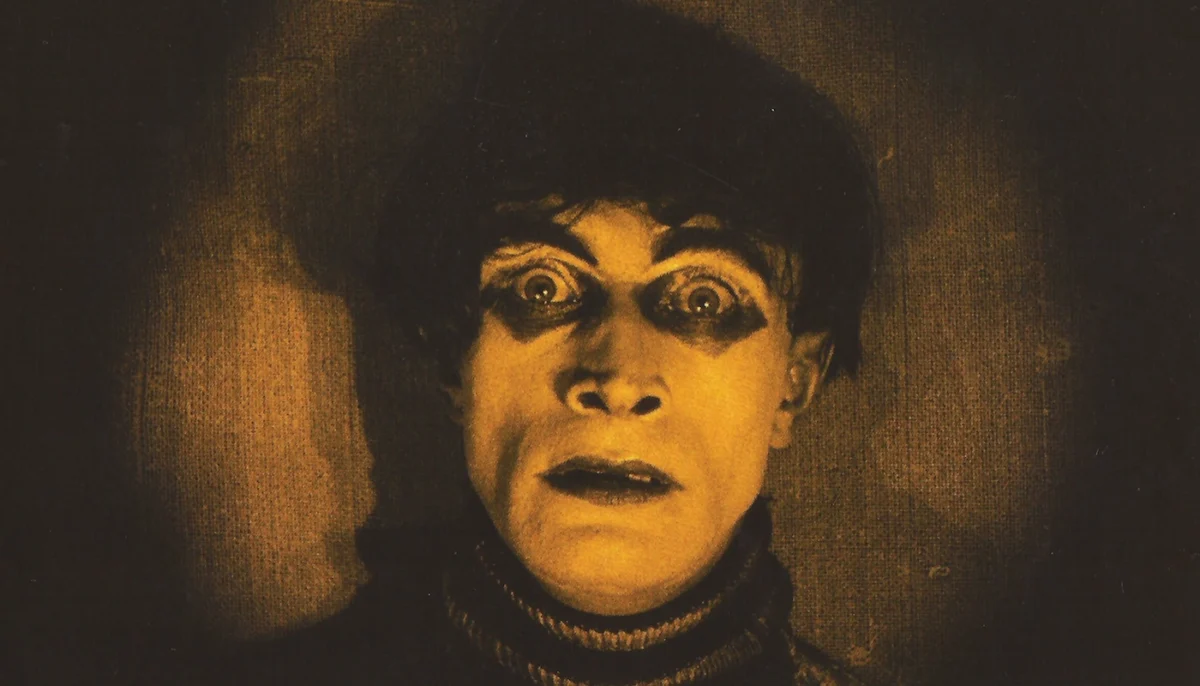
BERLIN, GERMANY – One hundred and four years after its premiere, Robert Wiene’s The Cabinet of Dr. Caligari (1920) remains an unsettling, visually audacious, and fiercely debated masterpiece of cinema. Starring Conrad Veidt, Werner Krauss, and Friedrich Feher, this silent German film transcended conventional storytelling to deliver a nightmarish allegory that continues to captivate audiences and confound scholars. Often cited as the quintessential work of German Expressionist cinema and a foundational text of the horror genre, Caligari‘s twisted aesthetic and ambiguous narrative have cemented its place as one of the most influential films ever made.
A Masterpiece of German Expressionism
The Cabinet of Dr. Caligari is more than just a film; it is a cultural artifact, born from the ashes of World War I and reflecting the profound disillusionment of a nation grappling with its identity. Its stark, angular sets, painted shadows, and disorienting perspectives created a visual language unlike anything seen before, setting a new benchmark for cinematic artistry.
Birth of a Cinematic Revolution
The journey of Caligari began in the tumultuous summer of 1918. Europe was still embroiled in the Great War, but its end was nearing. In Germany, two young writers, Hans Janowitz and Carl Mayer, met through mutual friends. Both had served in the German military, an experience that forged in them a deep-seated pacifism and a profound sense of betrayal by their nation. Penniless and adrift, they turned their hand to screenwriting, a relatively nascent art form still finding its footing.
Cinema itself was a rapidly evolving medium. Just over two decades prior, Auguste and Louis Lumière had held the world’s first public film screening in Paris. From simple documentaries of workers leaving a factory or swimmers diving into the sea, film had exploded into a global phenomenon, simultaneously popular entertainment, emerging art, and a lucrative industry. However, the outbreak of World War I severely disrupted this international exchange. Nations at war ceased importing each other’s films, forcing countries like Germany to develop their domestic industries. The German government, recognizing the power of film for both morale and propaganda, partially nationalized the industry, leading to the consolidation and growth of studios like UFA (Universum Film AG), which would later become a powerhouse.
The Disillusioned Architects
According to Janowitz’s later accounts, the idea for Caligari was sparked by a suggestion from silent film actress Gilda Langer. Drawing inspiration from their harrowing wartime experiences, the prevailing political climate, and smaller, unsettling incidents like a circus sideshow and a woman’s murder, Janowitz and Mayer conceived a story that, in its initial draft, was a straightforward tale of hypnosis and murder. However, it would later be reinterpreted as a potent allegory for authoritarian control and the terror it inflicts upon the vulnerable.
It is crucial to approach the origins of Caligari with a degree of critical distance. Janowitz’s primary account, written in 1941, more than two decades after the film’s release, is colored by memory, potential embellishment, and the shifting political landscape of the time. This makes separating verifiable facts from popular myth a continuous challenge for film historians. As scholar Mike Budd noted, "The myth is entertaining and memorable, and some of it is probably true, but it resembles too much all those other stories coming out of Hollywood, [German production studio] UFA, and other commercial film industries." The allure of a good origin story often overshadows the complex realities of collaborative art.
Janowitz himself admitted that the profound political implications of their script were not fully conscious during its creation. In his 1941 monograph, "Caligari – The Story of a Famous Story," he wrote, "It was years after the completion of our screenplay that we realized our subconscious intention… the corresponding connection between our Doctor Caligari, and the great authoritative power of a government that we hated, which had subdued us into an oath, forcing conscription on those in opposition of its official war aims, compelling us to murder and be murdered…" This retroactive realization, while potentially convenient for later popular interpretation, is a common experience for writers reflecting on early works, recognizing deeper anxieties and influences that were unconsciously at play.
From War’s Aftermath to Cinematic Innovation
With their screenplay in hand, Janowitz and Mayer sought a producer. Erich Pommer, co-founder and production head of Decla-Film, acquired the script, reportedly seeing it as a fast and inexpensive melodramatic thriller with broad audience appeal. Their initial choice for director, the renowned Fritz Lang (then busy with The Spiders), was unavailable, leading them to Robert Wiene, a prolific but now largely forgotten director and screenwriter.
Weimar Germany’s Artistic Crucible
The period following World War I, known as the Weimar Republic, was a time of immense political instability, economic hardship, and profound social change in Germany. Paradoxically, this era also witnessed an explosion of artistic creativity across all mediums. German Expressionism, a movement that had begun in painting and theatre before the war, found fertile ground in this anxious environment. Expressionist artists sought to convey subjective emotions and internal states rather than objective reality, often through distortion, exaggeration, and vivid color. It was an art of inner turmoil, perfectly suited to a nation traumatized by war and facing an uncertain future.
The isolation of the German film industry during the war, coupled with the artistic ferment of the Weimar era, created a unique space for experimentation. Filmmakers were less constrained by international commercial conventions and more open to exploring radical aesthetics. This cultural backdrop was crucial to Caligari‘s distinctive look.
Crafting a Distorted Reality: The Visual Language
The film’s striking visual style became a point of contention among its creators, with Wiene, Janowitz, and Pommer all later claiming primary credit. What is certain is that the look was the collaborative genius of three avant-garde artists: Hermann Warm, Walter Reimann, and Walter Röhrig. These three had extensive experience in set design for Expressionist plays and films, suggesting that their hiring was a deliberate choice by the filmmakers, who understood the artistic direction they would bring.
From the outset, there was no intention of a naturalistic aesthetic. The team agreed that the film would be "weird, stylized, and nightmarish." While Expressionism was prevalent in German art and theatre, its application to cinema was revolutionary. The producers and Wiene embraced the idea, believing the distinctive style would make the film stand out.
Caligari is visually breathtaking and profoundly disorienting. Rooms are not rectangular; doorways and windows are skewed into exaggerated trapezoids. Perspective is consistently warped, creating a pervasive sense of unease. Shadows, often painted directly onto the sets, appear in unnatural places, further detaching the world from reality. Sets are often disproportionate to the actors, enhancing the dreamlike, almost hallucinatory quality. The characters, largely moving and acting with conventional realism, serve only to highlight the utter abnormality of their surroundings. It is a world brought to life from a disturbed drawing, a two-and-a-half-dimensional dreamscape that challenges conventional perception. This was not a result of budgetary constraints or lack of skill; the designers were masters of their craft, deliberately crafting an unnatural environment to reflect psychological states.
A World of Shadows and Tinted Dreams
Beyond its distorted architecture, Caligari‘s visual impact was significantly enhanced by its use of color. While many modern viewers may have seen the film in black and white, the original nitrate reels exhibited in 1920 were meticulously hand-tinted.
The Uncanny Aesthetics of Expressionism
German Expressionism in cinema sought to externalize internal psychological states, transforming the physical world into a reflection of mental anguish. Caligari‘s sets, designed by artists who declared, "Films must be drawings brought to life," perfectly embodied this principle. Every jagged line, every painted shadow, every askew angle was a deliberate choice to convey madness, oppression, and fear. This deliberate rejection of realism was a radical departure from mainstream filmmaking of the era, which largely aimed for convincing illusion. The filmmakers understood that this extreme stylization would generate immense attention, and they were proven correct.
The Lost Colors of Caligari
The original exhibition prints were bathed in a spectrum of hues: murky yellow for interior scenes, sickly green for moonlit nights, burnished orange for dramatic moments. These tints added another layer of unreality, deepening the film’s psychological impact. Unfortunately, much of the film’s subsequent preservation history saw these crucial color elements lost, leading to generations of viewers experiencing Caligari solely in grayscale.
The painstaking work of film restorationists has, over the decades, sought to reclaim these lost colors. The most significant restoration, completed in 2014, utilized six differently tinted copies of the film from around the world, all dating from the 1920s. Film restorationist Barbara Flueckiger details this arduous process, highlighting the effort to reconstruct the original chromatic experience, thereby unveiling a richer, even more disorienting version of the film. This restoration underscored how integral color was to Caligari‘s intended aesthetic and psychological effect.
The Enduring Narrative: Plot, Characters, and the Infamous Frame
Beyond its revolutionary visuals, Caligari‘s narrative structure and thematic depth have ensured its lasting prominence, particularly the infamous "twist ending" that has fueled decades of academic debate.
Archetypes of Terror
The core plot of Caligari is deceptively simple: Dr. Caligari (Werner Krauss), a sinister carnival showman, hypnotizes the somnambulist Cesare (Conrad Veidt) into committing murders. A young man named Francis (Friedrich Feher) recounts how his friend Alan (Hans Heinrich von Twardowski) was killed and his love interest Jane (Lil Dagover) abducted by Cesare, prompting Francis to expose Caligari’s evil.
The film’s characters are less developed individuals and more broad archetypes, a stylistic choice that complements the dreamlike, detached atmosphere. The most iconic is Cesare, portrayed with chilling intensity by Conrad Veidt. Veidt’s gaunt physique, exaggerated makeup, and uncanny, almost balletic movements through the distorted sets created a terrifying yet pitiable figure, a puppet of malevolent authority. (Veidt, a Jewish actor, would later flee Nazi Germany and notably play Major Strasser in Casablanca, often typecast as the very villains he opposed in real life.)
The Great Frame Debate: Kracauer’s Thesis
What complicates the narrative is the film’s framing device. It begins with Francis recounting his story to an attentive listener. The climax of the film reveals that Francis is, in fact, a patient in a mental asylum, Jane and Cesare are fellow patients, and Dr. Caligari is the benevolent director treating them. This "it’s-all-in-his-head" twist, while perhaps not shocking to audiences familiar with Gothic melodrama, became the epicenter of a passionate academic controversy.
The most influential interpretation of this frame was put forth by Siegfried Kracauer in his seminal 1947 book, From Caligari to Hitler: A Psychological History of the German Film. Kracauer, drawing heavily from Janowitz’s 1941 account, argued that the frame story was a cynical addition by director Robert Wiene and producer Erich Pommer, inserted without the screenwriters’ consent, to defang the film’s radical political message. Janowitz’s original script, Kracauer contended, was a direct critique of absolute authority, with Caligari representing the tyrannical German state and Cesare the manipulated populace. By making Francis insane and Caligari a benevolent authority figure, the frame inverted this critique, transforming a revolutionary film into a conformist one, and, in Kracauer’s broader thesis, foreshadowing Germany’s cultural trajectory towards totalitarianism and the rise of Nazism.
Kracauer’s argument resonated deeply, becoming a cornerstone of film studies and a widely accepted "myth" of Caligari‘s production. It provided a compelling narrative of artistic betrayal and a powerful connection between art and the terrifying political realities of the 20th century.
Unraveling the "Myth": New Evidence and Nuanced Interpretations
However, the "Kracauer myth" has faced significant scrutiny over the decades. A key problem was the lack of definitive evidence regarding the frame’s origins. For years, no original script was known to exist. That changed after the death of actor Werner Krauss (Dr. Caligari) in 1959, when his estate sold a copy of the screenplay to the Museum of Film and Television in Berlin.
This discovery did not, however, provide a clear answer. The script found was not the frame-free version Janowitz described, nor was it the final shooting script. Instead, it presented a third variation: one that began with Francis telling his story at a bourgeois garden party, but lacked the twist ending suggesting his delusion. This ambiguous find further muddied the waters, suggesting that multiple versions of the narrative frame were considered. While some scholars saw this as disproving Janowitz’s account and Kracauer’s interpretation, others argued it merely added another layer of complexity. It remains unclear when, how, or by whom the final, filmed narrative frame was conceived and implemented, or what their precise intentions were.
One curious observation, often overlooked, is that the "real" world within Caligari‘s frame scenes, particularly the asylum courtyard, shares the same distorted, Expressionist visual characteristics as Francis’s recounted nightmare. The uncomfortable perspectives, painted shadows, and unnatural architecture persist. This visual consistency suggests that the filmmakers may have intended to portray a "madness inside madness," or simply aimed for a uniformly nightmarish aesthetic, rather than a clear demarcation between delusion and reality. The "real" world doesn’t look very real at all.
The persistent debate surrounding the narrative frame underscores a fundamental question: Does it matter? Does the precise intent of the frame’s addition, or the accuracy of Janowitz’s recollections, truly alter the film’s impact? Perhaps not in the way one might expect. The academic desire to trace a direct line from artistic decisions to historical outcomes, to pinpoint moments where political messages are "defanged" to soothe popular tastes, is understandable. It speaks to a profound human need to find clear causality in the complex interplay of art and politics. Yet, the reality of artistic creation and reception is often far more ambiguous.
The Indelible Legacy of Dr. Caligari
Ultimately, whether the frame was an ideological subversion, a commercial compromise, or merely a "wouldn’t it be fucked up if…" moment of creative inspiration, The Cabinet of Dr. Caligari transcends its disputed origins.
Shaping Horror and Beyond
Its impact on cinema is undeniable. Caligari‘s visual language was immediately influential, inspiring contemporaries like Yakov Protazanov’s Aelita (1924) and Fritz Lang’s Metropolis (1927). Its dark aesthetic and psychological tension laid groundwork for the German horror films of the 1920s (like F.W. Murnau’s Nosferatu), the Universal monster movies of the 1930s, and the shadowy, off-kilter visuals of film noir in the 1940s and 50s. Generations of filmmakers, from Tim Burton to Guillermo del Toro, have paid homage to its unique visual grammar. It is a rare film so distinct that while it cannot be precisely replicated, its spirit permeates countless works.
Caligari is widely regarded as the first true horror film, establishing tropes that remain familiar today: the stalking killer, the violent deaths, the imperiled maiden, and the pervasive sense of dread. Its psychological terror, derived from a world gone mad, prefigures much of modern horror.
Art, Politics, and Perpetual Reinterpretation
The film serves as a powerful reminder that art is inherently political, regardless of authorial intent. Once released into the world, a work takes on a life of its own, interpreted and reinterpreted by audiences through the lens of their own historical and social contexts. The audiences of 1920, fresh from the devastation of WWI, viewed Caligari differently than those who watched it after WWII, or in the Cold War era, or today amidst new global anxieties.
For all the debate about its narrative frame, what truly resonates is the film’s visceral imagery: the terrifying villain who incites violence, the crushing helplessness of his human weapon, and the overwhelming sense of a world gone utterly, terrifyingly wrong. Few viewers today perceive Caligari as a benevolent psychiatrist; the core message of malevolent authority and psychological manipulation shines through with undeniable force.
The Cabinet of Dr. Caligari is a testament to the enduring power of unconventional storytelling. It is an unsettling, weird, and beautiful film whose themes of authority, control, madness, reality, violence, and fear remain uncomfortably relevant. In its distorted glory, it stands as a unique and unwavering beacon in cinematic history, a nightmare that continues to haunt and inspire.


Leave a Comment