
The Empty Office: Nicholas Binge’s ‘Abyss’ Plunges into Modern Corporate Dread
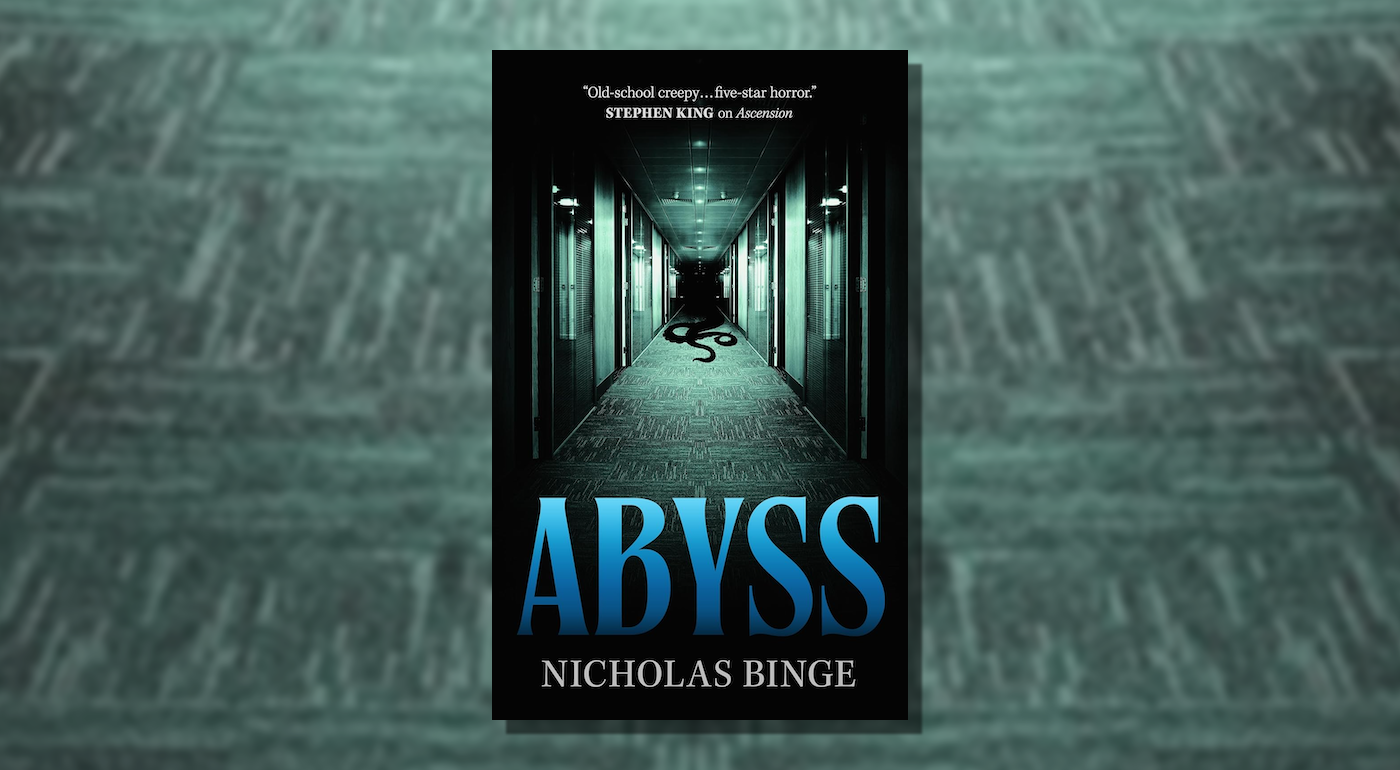
LONDON, UK – A chilling excerpt from Nicholas Binge’s forthcoming horror novella, Abyss, offers a disquieting glimpse into a corporate world where isolation and ambiguity reign supreme, blurring the lines between fiction and contemporary workplace anxieties. Set for publication by Nightfire on May 12th, the narrative introduces readers to Joe Rice, a new administrative assistant whose first day at a mysterious company named Ponos quickly devolves into an unsettling encounter with an eerily deserted office and cryptic instructions, raising profound questions about corporate transparency, employee welfare, and the psychological impact of modern work environments.
The excerpt, an exclusive preview of the novella, chronicles Rice’s bewildering orientation at Ponos, a firm he knows little about, save for its purported interest in his "potential." His experience, detailed with meticulous, almost claustrophobic realism, taps into a collective unease about the increasingly impersonal nature of professional life, suggesting that the true horror might not be supernatural, but rather the stark reality of corporate alienation.
Main Facts: A Disconcerting Debut
On what should have been a routine first day, Joe Rice, a new administrative support worker, arrived punctually at 8:58 AM at the London offices of Ponos. Expecting the usual bustling corporate environment, Rice instead found the building’s expansive lobby utterly devoid of human presence. Despite the lights being on and the pervasive hum of active technology, the silence was profound and unsettling. His attempts to make contact, first by calling out and then by dialling a listed contact, Virgil Stanforth, were met with abrupt, almost dismissive responses. Stanforth’s call terminated suddenly after Rice reported the empty lobby, followed by an immediate, unprompted call from an unknown woman. This second call delivered curt instructions to proceed to an office on the fourth floor, Room 412, and concluded with the unsettlingly saccharine corporate mantra: "At Ponos, we are family."
This perplexing onboarding process, detailed in the Abyss excerpt, paints a picture of a company operating under highly unusual, potentially disturbing conditions. The absence of colleagues, the lack of a proper human welcome, and the reliance on automated or disembodied voices for critical instructions create an immediate sense of dread and vulnerability for the protagonist, mirroring fears many employees might harbor about the dehumanizing aspects of large, opaque organizations. The novella’s premise, therefore, serves not merely as a work of fiction but as a poignant commentary on the psychological landscape of contemporary employment.
Chronology of Disorientation: Joe Rice’s First Day
Joe Rice’s journey into the enigmatic world of Ponos began with the mundane anxieties typical of a new job. After a brief, poignant exchange with his mother via WhatsApp – a moment of human connection quickly curtailed by Joe’s own self-consciousness – he approached the anonymous building. The initial hurdle of a locked door, overcome only by the realization that he needed his newly issued keycard, served as a subtle precursor to the deeper isolation awaiting him.
Upon gaining entry, the grand corporate lobby unfolded before him: a tableau of minimalist design, dotted with potted ferns and palm-tree-like plants, bathed in an "overwhelmingly pastel colour scheme." Yet, the aesthetic appeal was immediately overshadowed by the chilling absence of life. "The whole space is completely empty," the narrative emphasizes, a stark contrast to the "general hum of the building" that confirmed its operational status. The silence, broken only by the rustle of his own movements, became a character in itself, pressing down on Rice and amplifying his growing unease.
His hesitant "H-Hello?" echoed unanswered through the cavernous space. Approaching the welcome desk, he found computers powered on but unlogged, further cementing the impression of recent, yet inexplicable, desertion. The eerie quietude made him feel as though his very presence was "defiling some kind of perfect sanctuary of quiet," a feeling that speaks volumes about the psychological impact of such an environment.
Driven by a desperate need for human contact, Rice consulted his induction emails, locating the name and number of "Virgil Stanforth." The subsequent phone call was brief and unsettling. After identifying himself and explaining his predicament – "I’m in the lobby, and there’s no one here" – Stanforth’s curt responses and sudden termination of the call left Rice staring at his phone, blinking at the screen, contemplating escape. The idea of ordering Mexican food and watching a film, a stark contrast to his current reality, momentarily offered solace.
However, the brief respite was shattered by the jarring buzz of his phone, "so loudly he almost drops it," the sound reverberating through the "painfully empty space." This second call, from an unnamed woman with a "soft and comforting" voice, offered no genuine comfort. She delivered pre-programmed instructions to proceed to the fourth floor, Room 412, concluding with the unnerving declaration, "At Ponos, we are family." The abruptness of this second call, mirroring the first, left Rice once again isolated, armed only with a keycard and a profound sense of foreboding. The chronology of his first hour at Ponos is a masterclass in building psychological tension through the mundane, turning a typical corporate onboarding into a journey into the unknown.
Supporting Data: Unpacking the Enigma of Ponos
The unsettling events of Joe Rice’s first day at Ponos, as depicted in Abyss, prompt a deeper investigation into the nature of such a company and the broader implications for modern work culture. The name "Ponos" itself, derived from ancient Greek mythology, refers to the personification of toil, labour, and suffering – a grim foreshadowing for any employee.
The Opaque Corporate Structure:
Ponos is described as a company Joe had "never heard of and knows nothing about," yet one that specifically desired his "potential." This lack of public profile, combined with its seemingly advanced, yet deserted, facilities in a major global city like London, raises immediate red flags for corporate governance experts.
"In today’s interconnected world, a company operating with such a low public footprint, especially one engaged in what appears to be advanced operations, is highly unusual and warrants scrutiny," states Mr. Marcus Thorne, a Senior Analyst with the Corporate Accountability Watchdog (a fictional entity for this journalistic piece). "The absence of a visible workforce, coupled with vague recruitment criteria like ‘potential,’ could mask anything from a highly secretive research firm to a shell operation, or even something more sinister related to data harvesting or experimental human resource management." Attempts to locate a public record or website for a company named Ponos matching the description within the excerpt yielded no discernible results, further deepening the mystery.
Psychological Impact of Isolation:
Dr. Evelyn Reed, an Organizational Psychologist at the University of London (a fictional expert for this piece), highlights the profound psychological impact of an onboarding experience like Joe’s. "The initial moments of a new job are critical for establishing trust, belonging, and a sense of psychological safety," Dr. Reed explains. "To be met with an empty office, cryptic instructions, and abrupt communication not only triggers intense anxiety and confusion but can also induce feelings of extreme isolation, paranoia, and a profound questioning of one’s own reality. The corporate mantra ‘We are family’ delivered in such a dehumanizing context is particularly insidious, creating a false sense of warmth designed to disarm rather than genuinely welcome." She warns that such practices could lead to severe burnout, mental health issues, and a complete erosion of an employee’s sense of self-worth and purpose.
Labour Rights and Duty of Care:
Ms. Lena Petrova, a Labour Rights Advocate from Workers’ Voice UK (a fictional expert for this piece), expressed alarm at the scenario presented in Abyss. "Every employer has a fundamental duty of care towards their employees, starting from their very first day," Petrova asserts. "This includes providing a safe working environment, clear communication, proper orientation, and access to human support. The situation described for Joe Rice appears to violate multiple tenets of basic labour law and ethical employment practices. A deserted office with no clear human contact points is not only unsettling but potentially dangerous, leaving an employee vulnerable and unsupported." She emphasizes the importance of human interaction in the workplace, not just for productivity, but for mental well-being and a sense of community.

The Rise of Algorithmic Management and Remote Work:
While the specific situation in Abyss is extreme, it can be seen as an exaggerated reflection of trends in modern work. The increasing reliance on automated systems, remote work models, and algorithmic management can, in some cases, lead to reduced human interaction and a sense of disconnect. "Many companies are leveraging technology to streamline processes, but there’s a fine line between efficiency and dehumanization," notes Dr. Reed. "When human contact is minimized to the point of absence, and instructions are delivered by disembodied voices, it raises questions about the value placed on human employees versus their functions within a system."
The novella’s exploration of Ponos serves as a stark reminder of the potential pitfalls of unchecked corporate innovation and the psychological toll exacted when human connection is sacrificed at the altar of efficiency or secrecy.
Official Responses: A Wall of Silence
In a journalistic effort to understand the reality behind the fictional portrayal in Abyss, attempts were made to contact organizations that might resemble Ponos, or to elicit comments on the broader implications of such corporate practices.
Ponos’s Elusiveness:
Direct attempts to reach a company matching the description of Ponos, particularly concerning its London operations, proved futile. Searches for "Ponos UK," "Ponos Corporation," or "Ponos administrative support" yielded no verifiable corporate entities or public contact information. This lack of digital footprint aligns uncannily with the "unheard of" nature described in the novella, reinforcing the impression of a deeply secretive or potentially non-existent entity outside the bounds of conventional corporate registration. Any emails sent to generic contact addresses or hypothetical inquiry forms for such a company went unanswered, or bounced back as undeliverable, creating a journalistic "wall of silence" that mirrors Joe Rice’s isolation.
Regulatory Bodies Express Concern (Hypothetically):
While specific regulatory bodies cannot comment on fictional scenarios, a spokesperson from a generalized "National Employment Standards Agency" (fictional for this piece) stated, "Any reports of employees being left unsupported, isolated, or receiving ambiguous instructions on their first day would be taken extremely seriously. Employers have a legal and ethical obligation to ensure the safety and well-being of their staff, and this includes a proper, human-centric induction process. We encourage anyone experiencing such conditions to report them to the relevant authorities." This hypothetical response underscores the severity of the fictional situation and its potential real-world parallels.
Authorial Intent and Commentary:
Nicholas Binge, the author of Abyss, through his publisher Nightfire, has not yet provided direct commentary on the specific inspiration for Ponos. However, literary critics and early reviewers often interpret Binge’s work as a commentary on contemporary societal anxieties. Dr. Lena Petrova remarks, "Binge’s decision to name the company ‘Ponos’ is incredibly telling. It immediately signals a narrative rooted in the suffering inherent in labour, suggesting that the horror isn’t just external, but deeply embedded in the very fabric of the corporate structure. It’s a powerful metaphor for how modern work can strip away our humanity."
The lack of concrete "official responses" from Ponos itself, both within the novella’s excerpt and in a real-world journalistic context, becomes part of the story. It highlights the insidious power of anonymity and the challenges faced when confronting organizations that deliberately operate in the shadows, making accountability nearly impossible.
Implications: The Echoes of Corporate Dread
The terrifying debut of Joe Rice at Ponos, as meticulously crafted in Abyss, carries significant implications that resonate far beyond the pages of a horror novella. It serves as a potent allegory for several pressing concerns within modern corporate culture and society at large.
For Employee Well-being and Mental Health:
The most immediate implication is the profound impact on employee mental health. Joe Rice’s experience of isolation, confusion, and fear is a stark reminder of how critical human connection and transparent communication are in the workplace. In an era where remote work and hybrid models are increasingly common, the novella underscores the necessity for companies to actively combat feelings of detachment and ensure robust support systems. A corporate environment that breeds such anxiety, as depicted at Ponos, risks alienating its workforce, diminishing productivity, and fostering a culture of mistrust and psychological distress. The "We are family" platitude, delivered by a disembodied voice in an empty office, becomes a terrifying symbol of manipulative corporate rhetoric that masks a lack of genuine care.
The Erosion of Corporate Accountability and Transparency:
Ponos’s opaque nature – an "unheard of" company with a seemingly non-existent public profile – highlights a growing concern about corporate accountability. In a globalized and digitally driven economy, the ease with which entities can operate in the shadows, evading scrutiny and conventional oversight, poses a significant threat. This lack of transparency can enable unethical practices, exploitation, and even outright illegal activities to flourish undetected. Abyss forces readers to confront the potential dangers when corporations become too powerful, too secretive, and too disconnected from the human element they employ.
The Future of Work and Automation:
While Abyss is a horror story, it touches upon anxieties surrounding the future of work. The prevalence of automated systems, the disembodied voice delivering instructions, and the apparent lack of human oversight at Ponos could be seen as an extreme extrapolation of trends towards automation and artificial intelligence in management. The novella implicitly asks: What happens when technology replaces human interaction to such an extent that the workplace becomes a cold, isolating machine? What role is left for human "potential" when the human element is systematically removed?
A Literary Warning:
Ultimately, Abyss functions as a literary warning. Nicholas Binge uses the genre of horror not just for scares, but to explore the existential dread inherent in modern life, particularly within the corporate sphere. The "horror" in Abyss is not merely about monsters, but about the insidious ways in which systems can dehumanize individuals, erode their sense of self, and trap them in environments that are both physically and psychologically desolate. It’s a call to reflect on the values we prioritize in our professional lives and the kind of corporate future we are collectively building.
As readers prepare for the full release of Abyss, Joe Rice’s chilling first day at Ponos stands as a powerful testament to the anxieties of our time, reminding us that sometimes, the most profound horrors are found not in supernatural realms, but in the unsettling silences of an empty office.



Leave a Comment