
The Unruly Path of a Visionary: Mary Lovelace O’Neal (1942–2026)
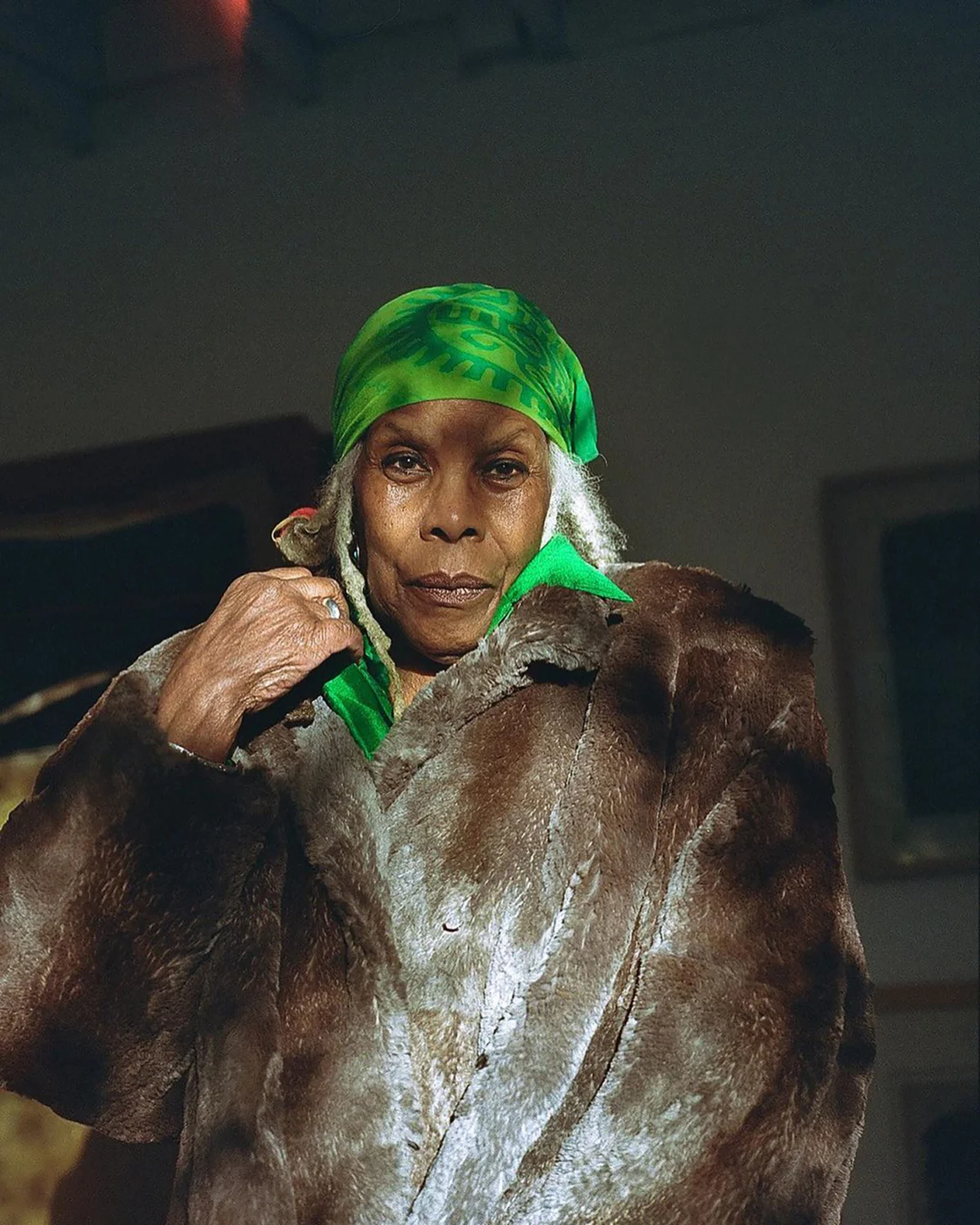
The art world mourns the loss of Mary Lovelace O’Neal, a titan of American abstraction, a tireless civil rights activist, and a barrier-breaking educator who died on May 10, 2026, in Mérida, Mexico. She was 84.
Known for her monumental scale, visceral materiality, and a refusal to bow to the prevailing dogmas of either the Black Arts Movement or the white-dominated Minimalist establishment, O’Neal leaves behind a six-decade legacy that redefined the possibilities of the canvas. Despite being long described as an "artist’s artist"—a term often used for those whose influence exceeds their commercial fame—O’Neal lived to see a global resurgence of interest in her work, culminating in major retrospectives and inclusion in the world’s most prestigious biennials.
A Life Forged in the Crucible of the Deep South
Mary Lovelace was born on February 10, 1942, in Jackson, Mississippi, a setting that would provide the atmospheric and political backdrop for her life’s work. Her father, a choir director and college music professor, was a pivotal figure who encouraged her creative pursuits from childhood. He provided her with a sense of "the palace"—a world of intellectual and cultural richness—even amidst the oppressive "cypress swamps" of the Jim Crow South.
O’Neal’s formal education began at Howard University in Washington, D.C., during one of the most transformative eras in American history. At Howard, she studied under the legendary David Driskell, who helped shape her understanding of the African Diaspora’s contribution to the Western canon. However, O’Neal’s education was not confined to the studio. She became a central figure in the civil rights movement on campus, helping to found the Non-Violent Action Group (NAG), Howard’s affiliate of the Student Non-Violent Coordinating Committee (SNCC).
Alongside classmates like Stokely Carmichael, she ventured back into the dangerous territory of Mississippi to organize voter registration drives and labor protests. This period of activism was not a distraction from her art; rather, it forged the "unruly" spirit that would later define her aesthetic. She refused to see a separation between the struggle for human rights and the struggle for artistic expression.
The Discovery of Lampblack: A Technical Revolution
In the summer of 1963, just before her graduation from Howard, O’Neal attended the Skowhegan School of Painting and Sculpture in Maine. It was here that she discovered lampblack—a deep, soot-like pigment that would become her signature medium.

Moving to New York in 1965 to attend Columbia University, O’Neal began to experiment with lampblack in earnest. While her peers were gravitating toward the clean lines of Minimalism or the didactic narratives of the Black Arts Movement, O’Neal charted a third path. She applied the raw, powdered lampblack to unstretched canvases using her hands or chalkboard erasers. The resulting surfaces were velvety, matte, and intensely black, yet they were often striated with "shards" of vivid acrylics, oils, and pastels.
The Struggle for Identity at Columbia
O’Neal was the only African American student in Columbia’s MFA program, graduating in 1969. Her time there was marked by a dual pressure: her professors urged her to abandon gestural abstraction for the "cool" detachment of Minimalism, while her friends in the Black Arts Movement, including Amiri Baraka, criticized her for not creating work that directly depicted the Black struggle.
O’Neal resisted both. "The black pigment paintings were as black as they could be," she told the New York Times in 2020. "They can also be seen as my response to my friends in the Black Arts Movement." For O’Neal, the blackness of the pigment was a political statement in itself—an exploration of depth, presence, and power that didn’t need a figurative narrative to be revolutionary.
Chronology of a Master: From the Bay Area to Morocco
In the 1970s, O’Neal relocated to the San Francisco Bay Area, a move that heralded a new phase of environmental and lyrical exploration. It was here that she conceived one of her most famous and provocatively titled series: Whales Fucking.
The "Whales Fucking" Series (1970s–1980s)
The inspiration for this series came from a walk on a San Francisco beach. Watching whales breach, O’Neal was struck by the sheer volume of water displaced by the massive creatures—a phenomenon she described as "diamonds being thrown out across the sea." The series featured sweeping, gestural forms and fields of mixed-media ornamentation, capturing the raw power and beauty of nature. When asked about the provocative title in a 2024 interview with Interview magazine, she characteristically remarked, "It ain’t deep," emphasizing her focus on the physical sensation of the sight rather than an abstract metaphor.
"Panthers in My Father’s Palace" (1980s–1990s)
In 1984, a trip to Morocco profoundly shifted O’Neal’s palette and iconography. The resulting series, Panthers in My Father’s Palace, synthesized her childhood memories of her father with the "biblical presence" of North Africa. These works were characterized by bold, expressive forms, mosaics, and a sense of moonlight reflecting off the ocean. The series cemented her reputation for being able to bridge the gap between personal memory and universal abstraction.

Academic Leadership and Institutional Milestones
While O’Neal’s studio practice was her primary focus, her impact as an educator was equally historic. In 1979, she began teaching in the art department at the University of California, Berkeley. In 1985, she became the first Black woman to receive tenure in the department, a milestone that signaled a shifting tide in academia.
She didn’t stop at tenure; she rose to become the chair of the department in 1995, a position she held with distinction until her retirement as professor emeritus in 2006. Her tenure at Berkeley was marked by a commitment to fostering "unruly" talent and ensuring that the art department reflected a broader range of voices and styles.
Late-Career Recognition and Global Impact
For many decades, O’Neal’s work was largely overlooked by the mainstream white art market, but the 2020s brought a long-overdue correction.
- 2020: A mini-retrospective at New York’s Mnuchin Gallery reintroduced her "Lampblack" series to a new generation of critics and collectors.
- 2024: O’Neal enjoyed a banner year, with major solo exhibitions at Marianne Boesky Gallery in New York and the San Francisco Museum of Modern Art (SFMOMA). She was also a featured artist in the Whitney Biennial.
- 2025: Her work was included in the landmark "Paris Noir" exhibition at the Centre Pompidou, cementing her status as an international figure of abstract modernism.
Throughout this period of fame, O’Neal remained steadfastly independent. She famously told the Times, "I call myself a painter… Galleries want to codify you. Every time you move away from the doctrine, you get questioned. Being unruly is my nature."
Legacy and Implications
The death of Mary Lovelace O’Neal marks the end of an era, but her influence continues to ripple through the art world. Her work is held in the permanent collections of the world’s most prestigious institutions, including:
- The Art Institute of Chicago
- The Brooklyn Museum
- The National Gallery of Art (Washington, D.C.)
- The Smithsonian Institution
- The San Francisco Museum of Modern Art
- The National Museum of Fine Arts (Santiago, Chile)
Official Responses and Current Exhibitions
The Virginia Museum of Fine Arts (VMFA), which is currently hosting her exhibition Blacker Than a Hundred Midnights Down in a Cypress Swamp, released a statement honoring her as "a fearless explorer of the human spirit whose canvases contained the weight of history and the lightness of grace." The exhibition, which runs through August 6, has become a site of pilgrimage for those wishing to pay their respects to her genius.

O’Neal is survived by her second husband, the Chilean American artist Patricio Moreno Toro.
The Future of Her Work
The implications of O’Neal’s career are profound for the next generation of abstract painters, particularly artists of color. She proved that abstraction is not a "white" or "neutral" space, but a field where the most intense personal and political battles can be fought. By refusing to be "doctrinaire," she blew up the boundaries of what a Black woman’s art was "supposed" to look like.
As O’Neal herself told Vogue in 2024: "I don’t categorize my work… I just hope that in the future people see and know that this was a life’s work." In the wake of her passing, that "life’s work" stands as a monumental testament to the power of staying true to one’s own unruly nature.


Leave a Comment