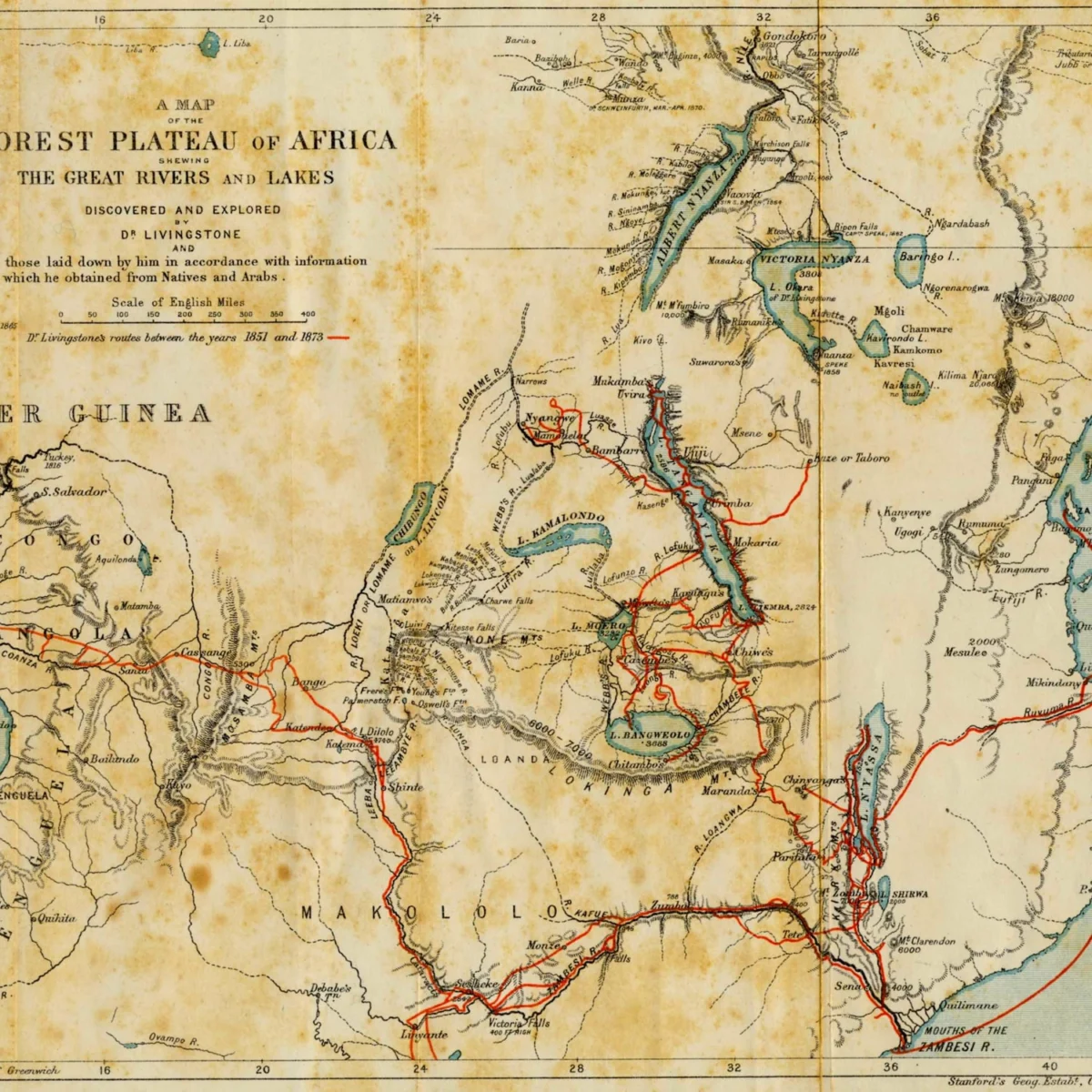
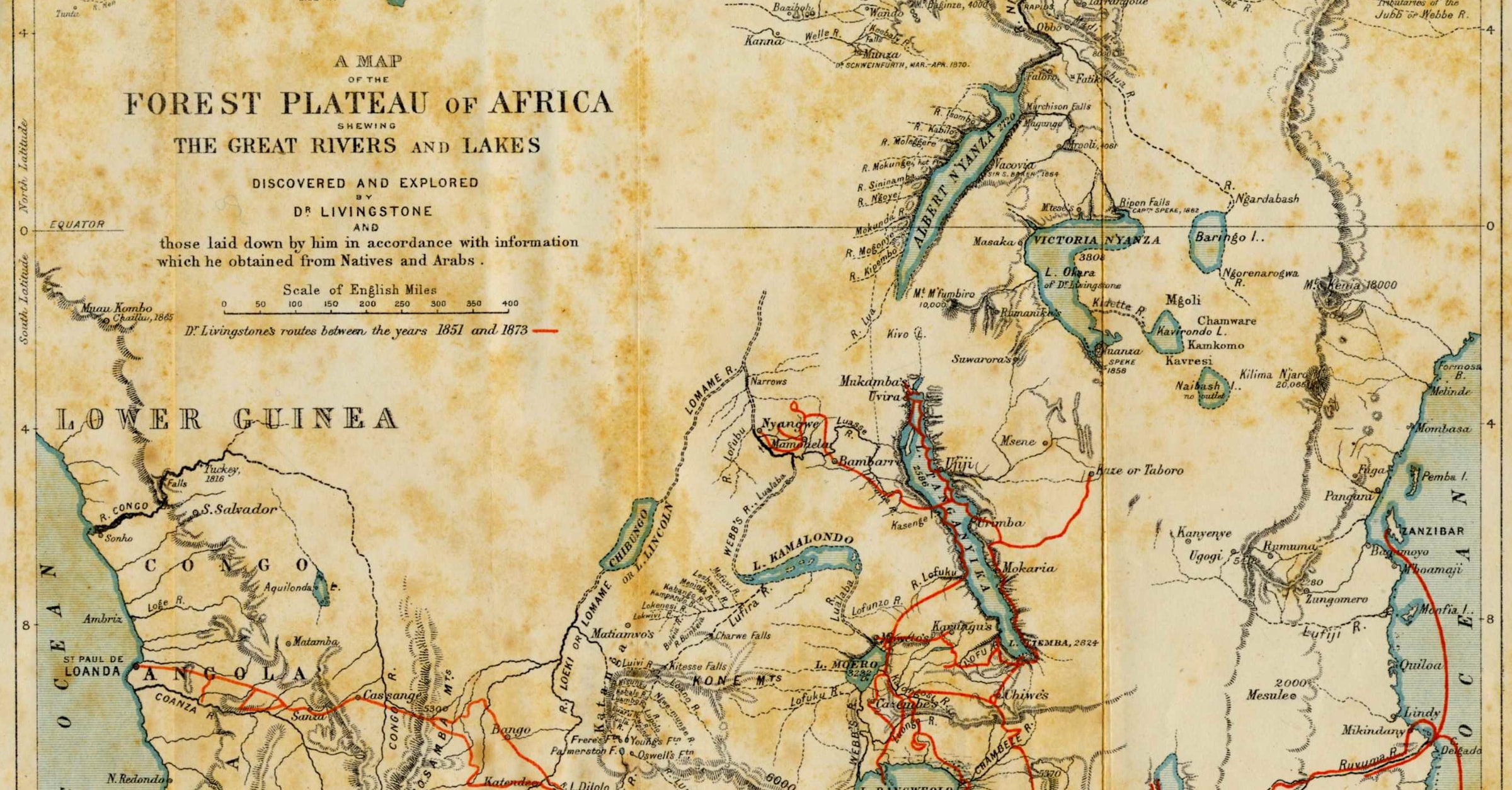
London, UK – The 19th century witnessed one of the most fervent geographical pursuits in history: the relentless search for the source of the Nile River. This epic endeavor, driven by a potent mix of scientific curiosity, economic ambition, and imperial zeal, captivated European imagination and profoundly reshaped the understanding and future of East Africa. Figures like David Livingstone, Richard Francis Burton, John Hanning Speke, and Henry Morton Stanley embarked on perilous expeditions, pushing the boundaries of known geography and laying the groundwork for the eventual European colonization of the continent.
The Great Mystery: Filling the "Blank on the Map"
For millennia, the Nile River, lifeline of ancient Egypt and a cradle of civilization, had flowed with an enigmatic origin. While its lower and middle reaches were well-charted, the true source remained one of the last great geographical mysteries of the 19th century. European cartographers faced a vast, intimidating blank space on the map of Africa’s interior, a void that beckoned explorers. Beyond the sheer intellectual challenge, discovering and charting the Nile’s upper reaches was deemed crucial for a confluence of interests: facilitating trade, establishing missionary outposts, and ultimately, paving the way for political influence and colonization.
Early attempts to penetrate Africa’s heartland were largely thwarted by formidable obstacles, primarily the prevalence of deadly diseases like malaria. Pioneers such as Mungo Park, who sought the source of the Niger River in the late 18th and early 19th centuries, often succumbed to these dangers. However, the advent of new medicines, particularly quinine, around the 1820s, dramatically shifted the odds. This medical breakthrough enabled explorers to venture deeper and survive longer, gradually peeling back the layers of the continent’s interior and beginning the meticulous process of filling in the blanks.
The Nile, with its immense historical significance to Egypt, presented the most tantalizing puzzle. Early Egyptian-sponsored expeditions had pushed south through Sudan, reaching the cataract at Juba by 1842. It was understood that the Nile bifurcated near Khartoum, forming the Blue Nile, whose source lay in the Ethiopian highlands, and the White Nile, which flowed from the unexplored south into the heart of East Africa. Rumors, long held by Arab traders from Zanzibar who had traversed deep into the interior in search of slaves, spoke of vast, interconnected lakes in this mysterious region. The challenge was to follow the White Nile upstream, connect it to these rumored lakes, and definitively identify its ultimate origin. Speculation even suggested that these lakes might form a single, colossal inland sea, a mythical "Unyamwezi."
The motivations transcended mere cartographical precision. European powers envisioned a network of navigable waterways that would unlock Africa’s perceived vast natural resources. The dream was to establish steamship routes along the Nile, enabling the efficient transport of European manufactured goods into new markets and the extraction of precious raw materials like gold, ivory, and rubber back to the coast and ultimately to Europe. This vision, however, collided with the harsh realities of mid-19th century Africa. Travel was arduous, dangerous, and entirely reliant on the cooperation of diverse African communities, from powerful chiefs to indispensable porters. While often driven by prejudice and self-interest, the European explorers of this era also displayed remarkable bravery and resourcefulness in an alien environment where external assistance was non-existent.
Chronology of Discovery: A Race to the Source
The quest for the Nile’s source unfolded as a dramatic series of expeditions, marked by triumphs, tragedies, and intense rivalries.
David Livingstone: Missionary, Explorer, Icon (1855-1873)
The Scottish missionary David Livingstone embodied the dual ambitions of 19th-century European exploration: spiritual enlightenment and geographical discovery. He firmly believed that opening Africa through cartography and fostering European-led commerce would facilitate the spread of Christianity and, crucially, aid in his second great ambition: the abolition of the brutal slave trade.
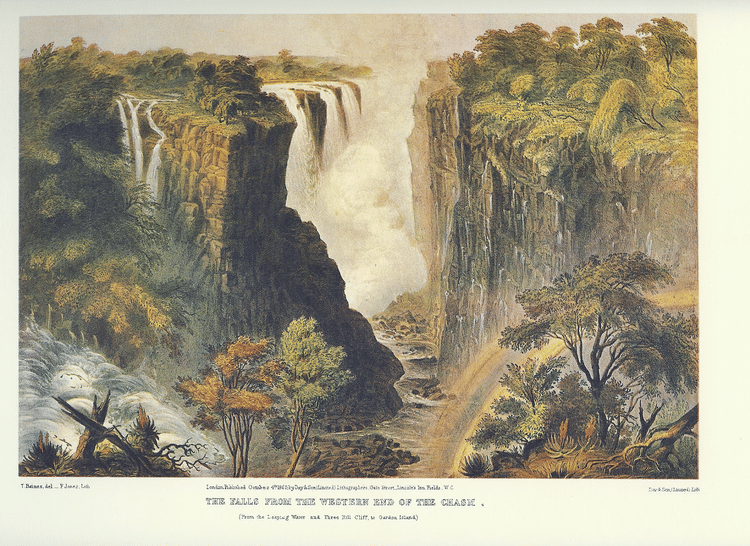
Livingstone’s initial renown stemmed from his monumental Zambezi expedition between 1855 and 1856. Embarking from the Cape Colony, he traversed northwards to Portuguese Angola on the west coast, then pushed eastward across the continent, following the Zambezi River to reach the east coast in Portuguese Mozambique. It was during this epic journey, in November 1855, that he became the first European to witness the breathtaking cascade he christened Victoria Falls, honoring the reigning British monarch, though it was known locally as Mosi-oa-Tunya – "the Smoke that Thunders."
His detailed account, Missionary Travels, published in 1857, became an instant bestseller, cementing his celebrity status. Livingstone’s powerful advocacy for the "three Cs" – Christianity, Civilization, and Commerce – resonated deeply with the Victorian public and the British government, securing him further funding for subsequent expeditions. In 1858, he explored Lake Nyasa (now Lake Malawi), again marking a European "first." He revisited Victoria Falls, offering a vivid and memorable description of its grandeur:
"We reached, on the 4th of August, Moachemba…and could see distinctly with the naked eye, in the great valley spread out before us, the columns of vapour rising from the Victoria Falls, though upwards of 20 miles distant…We proceeded…9th August, 1860, to see the Victoria Falls. Mosi-oa-tunya is the Makololo name and means smoke sounding; Seongo or Chongwé, meaning the Rainbow, or the place of the Rainbow, was the more ancient term they bore. We embarked in canoes…for some miles the river was smooth and tranquil, and we glided pleasantly over water clear as crystal, and past lovely islands densely covered with a tropical vegetation…Many flowers peeped out near the water’s edge…But our attention was quickly called from the charming islands to the dangerous rapids….To confess the truth, the very ugly aspect of these roaring rapids could scarcely fail to cause some uneasiness in the minds of new-comers….Into this chasm, of twice the depth of Niagara-fall, the river, a full mile wide, rolls with a deafening roar….The whole body of water rolls clear over, quite unbroken; but, after a descent of ten or more feet, the entire mass suddenly becomes like a huge sheet of driven snow. Pieces of water leap off it in the form of comets with tails streaming behind, till the whole snowy sheet becomes myriads of rushing, leaping, aqueous comets….every drop of Zambesi water appears to possess a sort of individuality….racing down till lost in clouds of spray….The morning sun gilds these columns of watery smoke with all the glowing colours of double or treble rainbows." (Livingstone, Ch. VI)
To further satisfy the insatiable Victorian appetite for African wonders, Livingstone brought landscape artist Thomas Baines on his second Zambezi expedition. Baines’s illustrations, alongside Livingstone’s evocative prose, transported readers to an utterly alien world. Historian L. James aptly describes this phenomenon:
"The new wave of explorers captured the public imagination with colourful and sometimes lurid accounts of whom and what they had discovered. Europeans were fascinated by the revelation of a primordial world full of natural marvels, strange races such as the pygmies and exotic animals, in particular the gorillas of the Congo forests. Many readers wondered whether they were being transported back in time, if not to the Garden of Eden then to the world in its infancy. In terms of stirring the imagination, mid-Victorian exploration in Africa was similar to space travel a century later." (63)
Explorers like Livingstone were not merely authors; they were international celebrities, embarking on hugely popular lecture tours, mesmerizing audiences with magic lantern slides, specimens, and exotic curiosities. The Nile quest, therefore, became a magnet for ambitious individuals eager for public acclaim and historical recognition.
Burton, Speke & Baker: Rival Claims to the Source (1857-1864)
The late 1850s marked a new, more dynamic phase in African exploration, fueled by public fascination and entrepreneurial hopes. The British government, alongside the prestigious Royal Geographical Society, sponsored two contrasting but equally driven explorers: Richard Francis Burton and John Hanning Speke. Burton, a polyglot adventurer fluent in 35 languages and famed for his clandestine pilgrimage to Mecca in 1853, was a formidable intellectual. Speke, an army officer and big-game hunter, was more straightforwardly adventurous.
In 1857-1859, Burton and Speke followed an established Arab slave trade route from Zanzibar to Ujiji on Lake Tanganyika. Their journey highlighted the complex dynamics of European penetration, often reliant on pre-existing African trade networks and the goodwill (or coercion) of local rulers. Speke’s diary entries reveal the pragmatic, often precarious, nature of their progress:
"The present was then opened, and everything in turn placed upon the red blanket. The googles created some mirth; so did the scissors…but the king [Kamrasi] was scarcely moved or uttered any remarks till all was over, when, at the instigation of the courtiers, my chronometer was asked for and shown. This wonderful instrument, said the officers (mistaking it for my compass), as the magic horn by which the white men found their way everywhere…The chronometer, however, I said, was the only one left, and could not possibly be parted with; though if Kamrasi liked to send men to Gani, a new one could be obtained for him."
The interaction quickly escalated, with the king refusing to yield. Speke was forced to invent excuses, claiming the watch was essential for his eating schedule, which failed to convince.
"I can get nothing out of him until he has got it – the road to the lake, the road to Gani, everything seemed risked on his getting my watch – a chronometer worth £50, which would be spoilt in his hands in one day…When I told him that to purchase another would cost five hundred cows, the whole party were more confirmed than ever as to its magical powers." (Fleming, 84-5)
Speke ultimately conceded, though the king, Kamrasi, promised to return the watch thrice daily so the explorer could maintain his schedule. This anecdote vividly illustrates the cultural misunderstandings and the constant need for negotiation, bribery, and even concession that characterized these expeditions.
In 1858, Burton and Speke became the first Europeans to reach Lake Tanganyika. However, Speke harbored doubts about it being the Nile’s true source. Leaving a ailing Burton behind, he pressed northwards, discovering the vast expanse of Lake Ukerewe, which he immediately renamed Lake Victoria Nyanza, convinced he had found the elusive source. Burton, upon their reunion, remained unconvinced, leading to a bitter personal and professional rift that would define their return journey to Zanzibar. Yet, the riddle seemed tantalizingly close to being solved, and the fertile lands around these Great Lakes were already noted as ideal for European settlement and cash-crop plantations.
Speke, steadfast in his conviction, returned to Lake Victoria in 1860 with James Grant. There, he discovered and christened Ripon Falls, confidently declaring it the Nile’s true origin. His pronouncement, however, was soon challenged. Samuel Baker, a formidable explorer and big-game hunter, accompanied by his Hungarian partner Flóra Sass (whom he had controversially purchased from a slave market), arrived on the scene in 1864. Baker discovered another vast body of water, which he named Lake Albert (after Queen Victoria’s consort), claiming it to be the Nile’s source. Baker’s expedition was large and well-equipped, yet Flóra Sass’s letter to Baker’s daughter eloquently captures the immense hardships:
"At last we have arrived here – after a fearful struggle and weary journey in dragging a flotilla of 59 vessels including a steamer of thirty two horsepower over high grass and marshes…It would be quite impossible by any description to give you an idea of the obstacles to navigation through which we have toiled with the fleet, but you can imagine the trouble when you hear that we were thirty two days with 1,500 men in accomplishing a distance of only 2 miles…Our vessels drew four feet of water but in many places the depth of the river was only two feet." (Fleming, 88)
Despite these new claims, Speke remained resolute. In 1863, he published his Journal of the Discovery of the Source of the Nile. Tragically, Speke died the following year in a shooting accident while hunting partridges – on the very morning he was scheduled to publicly debate Burton at the British Association regarding their conflicting theories. By 1864, the "source of the Nile" had become a confusing triumvirate: Burton advocated for Lake Tanganyika, Speke for Lake Victoria, and Baker for Lake Albert. Another expedition was desperately needed to resolve the profound conundrum.
Stanley and the Final Confirmation (1871-1877)
In 1866, David Livingstone, ever determined, embarked on his final journey, heading towards Lake Tanganyika from Lake Nyasa. Then, he vanished. Five years passed without a trace, fueling public concern and speculation.
It was the American journalist Henry Morton Stanley, commissioned by the New York Herald, who set out in 1871 to find the lost explorer. Their iconic meeting in Ujiji in November 1871, marked by the legendary phrase "Dr. Livingstone, I presume," became a global sensation. Livingstone, having explored the Lualaba River, remained convinced, like Burton, that Lake Tanganyika was the Nile’s source. He continued his explorations, pushing further south, but his monumental journey ended on May 1, 1873, in the upper Lualaba basin. His loyal servants, Susi and Chuma, buried his heart in Africa, but meticulously preserved his body, transporting it an extraordinary distance back to the coast and then to Britain via Zanzibar. Livingstone’s remains received a state funeral in Westminster Abbey, with Stanley serving as a pallbearer. Susi and Chuma also saved his invaluable diaries, published in 1874, which revealed Livingstone’s poignant wish to be buried in the quiet solitude of the African forest, a stark contrast to his posthumous national hero status.
Livingstone’s legacy was complex. Unlike many contemporaries, he held a more empathetic view of Africans, believing them to be no different from uneducated Europeans, and advocating for dignity and respect. He became a Victorian icon, a Christian martyr battling the evils of slavery and geographical ignorance, immortalized in textbooks and statues – one in Edinburgh famously depicts him holding a Bible, yet wearing a pistol on his belt, symbolizing the era’s blend of spiritual and pragmatic conquest.
Stanley, a man who "craved fame and adulation" (James, 64), was determined to surpass Livingstone’s achievements. He returned to Africa from 1874 to 1877, embarking on a monumental circumnavigation of Lake Victoria using a steel boat, the Lady Alice. His meticulous charting revealed the enormous scale of the lake and, more importantly, confirmed its outlet into the Nile system. He then journeyed along the Lualaba River, eventually reaching the west coast of Africa near the northern border of modern Angola. Stanley’s expedition, alongside a separate journey by Verney Lovett Cameron in 1875, definitively confirmed that the Lualaba was, in fact, the Congo River or one of its tributaries. This crucial discovery settled the long-standing debate: Lake Victoria, as Speke had originally asserted, was indeed the true source of the Nile River.
Stanley’s extensive travels were documented in several influential books, including How I Found Livingstone (1872), Through the Dark Continent (1878), and In Darkest Africa (1890). Despite his monumental contributions to geography, Stanley’s controversial methods, including his documented racism and often brutal treatment of Africans, ultimately denied him the honor of burial in Westminster Abbey alongside Livingstone.
Official Responses and Public Fascination
The official responses to these expeditions were multifaceted, ranging from direct governmental sponsorship to the fervent public consumption of explorer narratives. The British government, spurred by the Royal Geographical Society and public enthusiasm, actively funded expeditions, particularly after Livingstone’s initial successes. These endeavors were not merely scientific; they were also investments in national prestige and potential economic gain. Egyptian Khedives, too, had sponsored earlier efforts, recognizing the strategic importance of the Nile.
The Victorian public’s fascination bordered on obsession. Explorers were the celebrities of their age, their exploits devoured in books, newspapers, and popular lectures. The "colourful and sometimes lurid accounts" of exotic lands, strange peoples, and natural marvels fed a collective imagination, offering a vicarious escape to a "primordial world." The academic and scientific communities, particularly the Royal Geographical Society, provided intellectual backing, organizing debates (like the ill-fated Burton-Speke confrontation) and disseminating findings, albeit sometimes with nationalistic biases. These official and public responses collectively created an environment that encouraged, funded, and celebrated the perilous journeys into the African interior.
Implications: The "Fourth C" – Colonization
With East Africa’s major waterways, including the Nile, Congo, Zambezi, and Niger, now mapped, the trickle of Europeans into the continent transformed into a steady stream. Missionaries arrived in greater numbers, followed by individual traders and then larger trading companies. Initially, these Europeans were few, and African leaders often viewed them opportunistically, leveraging their knowledge and trade goods to their own advantage. Explorers, in their retrospective narratives, often inadvertently dismissed the rich and complex African societies they encountered, reducing local populations to mere curiosities alongside the flora and fauna.
However, from around 1885, a dramatic shift occurred. European governments began to take a much more aggressive and active interest in Africa. The Berlin Conference of 1884-1885 formalized the "Scramble for Africa," carving up the continent among European powers. Well-equipped and technologically superior armies were dispatched to establish "protectorates" and colonies. The initial exploitation by traders and explorers reversed and intensified, reaching a far more sinister and systemic level. By the dawn of the 20th century, the vast majority of Africa, with the sole exceptions of Ethiopia and Liberia, had fallen under direct European colonial control.
The quest for the Nile’s source, initially a geographical and scientific endeavor, proved to be a critical catalyst for this imperial expansion. The maps produced, the knowledge gathered about resources and navigable routes, and the "civilizing mission" narratives propagated by figures like Livingstone, all played a role in justifying and facilitating the colonization of Africa. The explorers, often lauded as heroes in their home countries, became unwitting (or sometimes willing) agents of an imperial project that would profoundly impact the continent for generations, leaving a complex and often painful legacy that continues to be debated and re-evaluated today.
In the ancient lands of Mesopotamia, where civilization first bloomed and the written word was forged, a deity emerged whose very essence intertwined with the burgeoning power of knowledge and communi
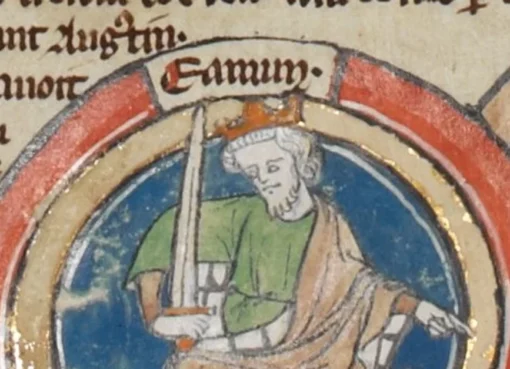
King Edmund I, who reigned over the Kingdom of the English from 939 to 946, stands as a pivotal yet often overshadowed figure in the tumultuous 10th century. Ascending to the throne at a mere 18, Edmu
FOR IMMEDIATE RELEASE London, UK – July 23, 2024 – A decade-long journey into the heart of global storytelling culminates this August with the release of "The Treasury of Folklore: Waterlands, Wo







Leave a Comment