
Lenovo Unveils the Legion P5 10000: A High-Wattage Portable Power Solution for the Modern Gamer
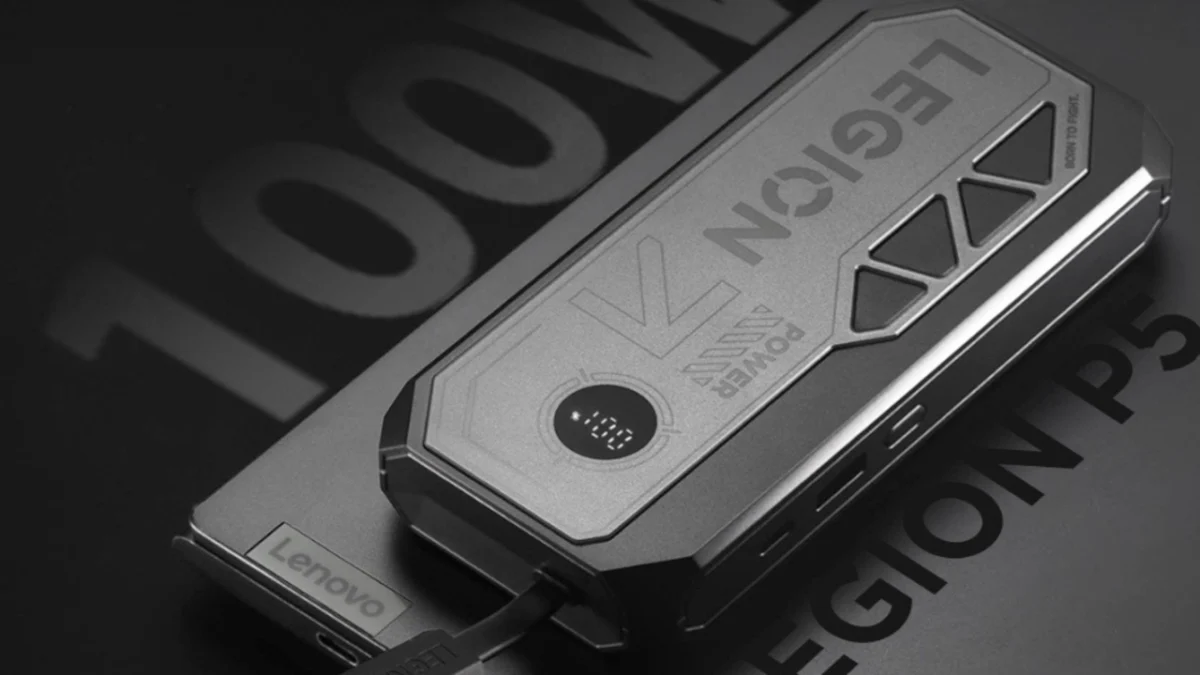
Lenovo has officially expanded its renowned Legion ecosystem with the introduction of the Legion P5 10000, a compact yet remarkably powerful portable charger designed to bridge the gap between high-performance computing and mobile convenience. While the Legion brand is traditionally associated with high-end gaming laptops and the recently launched Legion Go handheld console, this latest accessory signals a strategic move by the Chinese tech giant to dominate the peripheral market.
The P5 10000 is not merely another entry in the saturated power bank market; it represents a technical feat, offering a 100W power output within a 10,000 mAh form factor—a power-to-size ratio that is rarely seen in consumer electronics. However, despite the excitement surrounding its technical specifications and aggressive pricing, international enthusiasts may find themselves facing a significant hurdle: the device is currently slated for an exclusive release within the Chinese domestic market.
Main Facts: High-Performance Charging in a Compact Frame
The Lenovo Legion P5 10000 is engineered to serve as a versatile "one-device solution" for a wide array of hardware, ranging from low-power wearables to high-demand gaming laptops. The headline feature is undoubtedly its 100W high-power output capability. This level of wattage allows the device to support Power Delivery (PD) fast charging for modern ultrabooks and handheld gaming PCs, which typically require at least 45W to 65W to charge while in use.
Technical Specifications at a Glance
- Capacity: 10,000 mAh (Lithium-ion polymer).
- Maximum Output: 100W (with smart dynamic power distribution).
- Connectivity: Integrated USB-C cable, one additional USB-C port, and one USB-A port.
- Compatibility: Supports Lenovo’s proprietary fast-charging protocols, alongside Huawei’s SCP/FCP and Apple’s 2.4A/PD protocols.
- Safety Standards: 3C (China Compulsory Certificate) certified, ensuring compliance for air and rail travel.
- Special Features: Low-current mode for wearables and a built-in circular status display.
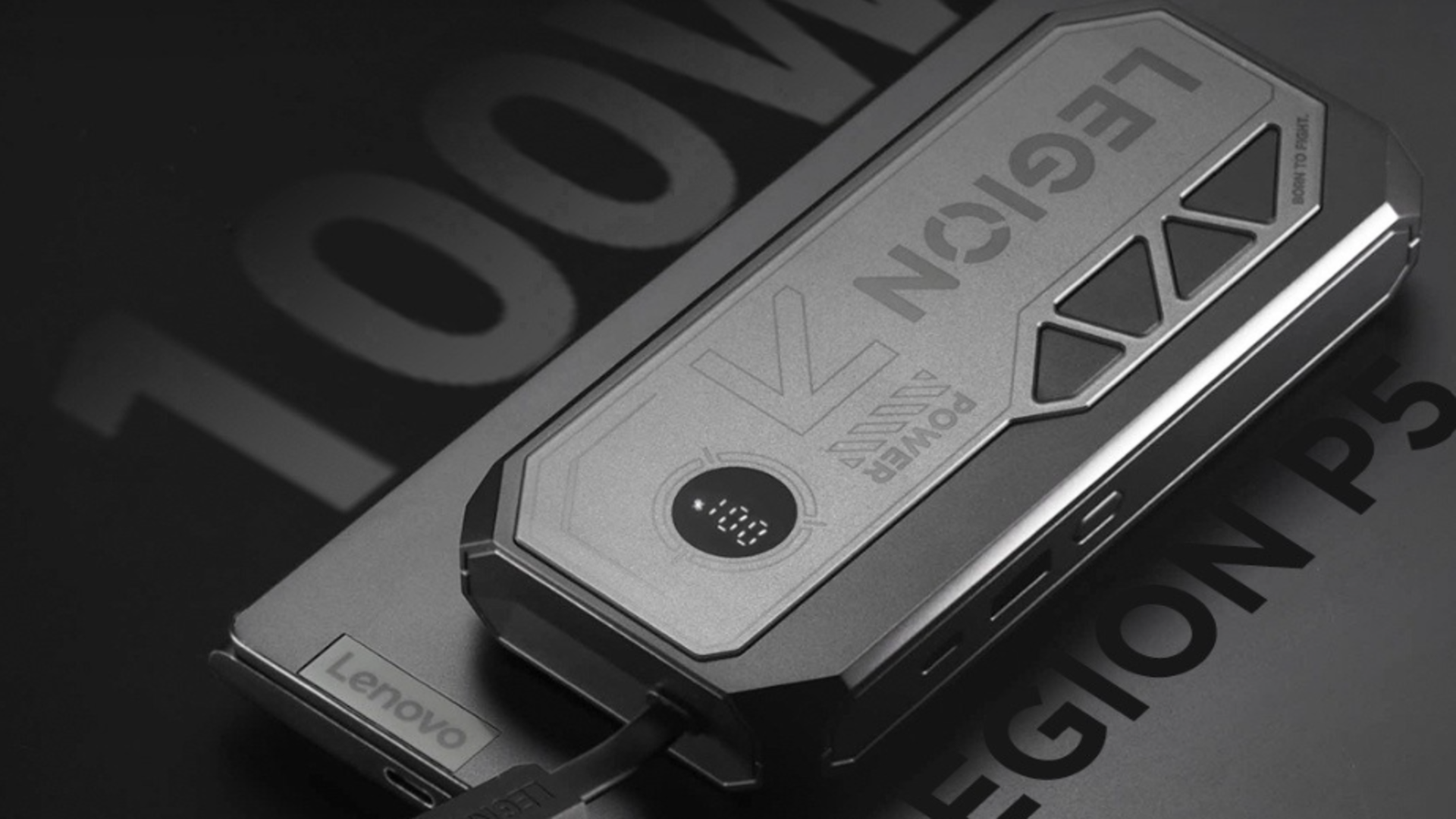
The aesthetic of the P5 10000 follows the "mech-style" design language that has become a staple of the Legion brand. The chassis features sharp lines, a compact footprint for easy commuting, and a rugged build quality intended to withstand the rigors of travel. Furthermore, the inclusion of a built-in USB-C cable addresses one of the primary pain points of portable charging: the tendency to forget or lose charging cables while on the move.
Chronology: From Handheld Ambitions to Accessory Ecosystem
The development and launch of the Legion P5 10000 follow a clear trajectory in Lenovo’s hardware strategy. Over the past 24 months, Lenovo has shifted from being a traditional PC manufacturer to a lifestyle gaming brand.
- Late 2023: Lenovo launched the Legion Go, a Windows-based handheld gaming PC designed to compete with the Steam Deck and ASUS ROG Ally. This move highlighted the need for high-wattage portable power solutions, as handheld gaming devices are notorious for their limited battery life under heavy loads.
- Early 2024: Lenovo began refreshing its "Go" and "Legion" accessory lines, focusing on USB-C integration and GaN (Gallium Nitride) technology to shrink the size of power adapters.
- May 2024: Lenovo utilized its official Weibo account to tease a new "performance-tier" power bank. The announcement emphasized that the device would not just be for phones, but for "performance tools."
- May 19, 2024: The official launch date for the Legion P5 10000 in China. The device appeared on JD.com (Jingdong), one of China’s largest e-commerce platforms, with a retail price of CNY 169.
This timeline suggests that the P5 10000 is a direct response to the feedback from the Legion Go community, where users demanded a more portable charging solution than the bulky 20,000 mAh bricks currently available in the Western market.
Supporting Data: Efficiency, Power Distribution, and the 10,000 mAh Trade-off
The decision to limit the capacity to 10,000 mAh is a calculated trade-off between portability and total energy reserves. While 20,000 mAh is the industry standard for laptop-capable power banks, those units often weigh over 500 grams and are too bulky for pocket carry. By utilizing high-density cells, Lenovo has managed to keep the P5 10000 lightweight while still providing enough "burst" power to keep a laptop running during a critical meeting or a gaming session.
Smart Dynamic Power Distribution
One of the more sophisticated elements of the P5 10000 is its smart dynamic power distribution. When multiple devices are connected—for instance, a smartphone via the built-in cable and a pair of wireless earbuds via the USB-A port—the internal circuitry intelligently negotiates the wattage. This prevents overheating and ensures that the device requiring the most power (the smartphone) receives the lion’s share of the 100W ceiling.
The Low-Current Mode
Modern high-wattage power banks often struggle to charge low-power devices like the Apple Watch or Sony WF-1000XM5 earbuds. These devices draw so little current that the power bank’s safety sensors assume charging is complete and shut off the flow. Lenovo has addressed this by implementing a dedicated "Low Current Mode." By holding the power button for three seconds, the P5 10000 bypasses its high-wattage logic to provide a steady, low-amperage trickle charge, ensuring that delicate wearables are charged safely and completely.
Comparative Market Analysis
To understand the value proposition of the P5 10000, one must look at the current market:
- Lenovo Go USB-C Laptop Power Bank (Western Market): 20,000 mAh, 65W output, priced at $140.
- Anker 737 (PowerCore 24K): 24,000 mAh, 140W output, priced at approximately $130-$150.
- Lenovo Legion P5 10000 (China): 10,000 mAh, 100W output, priced at approximately $25.
The price-to-performance ratio of the P5 10000 is nearly four times better than its Western counterparts, assuming the currency conversion holds true.
Official Responses and Regional Availability
As of the current reporting cycle, Lenovo’s official communication regarding the P5 10000 has been confined to Chinese social media and retail channels. On Weibo, Lenovo representatives highlighted the device’s 3C certification, aiming to reassure travelers that the 100W output does not violate airline safety regulations, which generally cap portable batteries at 100Wh (the P5 10000 is well below this limit at approximately 37-40Wh).
When questioned about a potential global rollout, Lenovo has remained tight-lipped. Historically, many of Lenovo’s most innovative "Legion" accessories—including specific mechanical keyboards and high-refresh-rate monitors—remain exclusive to the Chinese market or arrive in the West months later under different branding and significantly higher price points.
The listing on JD.com confirms a retail price of CNY 169 (roughly $25 USD / €21 EUR). This aggressive pricing strategy is likely intended to undercut competitors like Xiaomi and Shargeek in the domestic market, where high-speed charging is a primary selling point for consumers.
Implications: The Future of Mobile Power and the Gaming Ecosystem
The launch of the Legion P5 10000 has broader implications for the tech industry and consumer habits.
1. The "Handheld PC" Companion
Devices like the Steam Deck, ASUS ROG Ally, and Lenovo’s own Legion Go have changed how users perceive portable power. A standard 5W or 10W phone charger is useless for these machines, which can drain their internal batteries in under 90 minutes. The P5 10000 represents a new category of "emergency" chargers—small enough to fit in a carrying case but powerful enough to provide a meaningful 30-40% charge boost in a matter of minutes.
2. The Standardization of High-Wattage USB-C
By including support for Huawei and Apple protocols alongside its own, Lenovo is acknowledging the reality of the "multi-device" user. The P5 10000’s ability to fast-charge an iPhone 15 Pro, a Huawei Mate 60, and a MacBook Pro simultaneously (within its 100W limit) suggests a move toward a universal charging standard that ignores brand silos.
3. The Pricing Disparity Gap
The most glaring implication for Western consumers is the massive pricing disparity. A $25 power bank with 100W output is virtually non-existent in North American or European retail markets, where similar specs often command a $60 to $80 premium. This disparity highlights the efficiency of the Chinese supply chain and the competitive nature of its domestic market, but it also leaves Western "Legion" fans in a difficult position, forced to choose between expensive local alternatives or the risks of importing unverified hardware.
4. Technical Concerns and Recommendations
While the P5 10000 is a marvel of engineering, some experts advise caution. A 10,000 mAh battery being pushed to output 100W will face significant thermal stress. While Lenovo claims "smart dynamic distribution" keeps the device cool, the laws of physics suggest that such a small unit will likely throttle its speeds during extended use. Furthermore, for users looking to fully charge a large gaming laptop, 10,000 mAh (roughly 37Wh) is insufficient, as most modern gaming laptops have internal batteries ranging from 70Wh to 99Wh. Therefore, the P5 10000 is best viewed as a "bridge" charger rather than a total power solution.
Conclusion
The Lenovo Legion P5 10000 is a testament to how far portable power technology has come. It successfully packs laptop-grade charging speeds into a chassis that can be easily carried in a jacket pocket. For the Chinese market, it is a budget-friendly powerhouse that complements the mobile-first lifestyle of the modern gamer.
For the rest of the world, the P5 10000 serves as a tantalizing glimpse of what is possible. Until Lenovo decides to bring this "mech-style" charger to international shores, Western users will have to rely on the more expensive, higher-capacity Lenovo Go series or wait for third-party exporters to bridge the gap. Regardless of its availability, the P5 10000 has set a new benchmark for what consumers should expect from a 10,000 mAh power bank in 2024.


Leave a Comment