
"A Trifle, But an Interesting Trifle": Re-examining the 1992 Buffy the Vampire Slayer Film in the "Century of the Vampire"
Introduction: Unearthing the Proto-Slayer
In the ever-expanding universe of vampire lore, few franchises loom as large as Buffy the Vampire Slayer. Before its acclaimed seven-season run as a groundbreaking television series, however, the story of the chosen teenage girl tasked with battling the forces of darkness first flickered across cinema screens in 1992. As part of Tabletop Battles’ ongoing "Century of the Vampire" series, managing editor Jonathan Bernhardt recently revisited this cinematic precursor, offering a critical lens on its artistic merit and its peculiar place within the broader tapestry of Western pop culture’s fascination with the undead.
Bernhardt’s review positions the 1992 Buffy the Vampire Slayer film not as a forgotten masterpiece, but rather as an "interesting trifle." This seemingly innocuous description belies a deeper analysis, particularly when viewed through the prism of its turbulent production and the subsequent, indelible impact of its original screenwriter, Joss Whedon, on American scriptwriting. The film, directed by Fran Rubel Kuzui and starring Kristy Swanson as the titular Slayer, often receives a lukewarm reception, overshadowed by the television phenomenon it inspired. Yet, its existence provides a fascinating case study in the evolution of intellectual property, the friction between creative visions, and the unforeseen consequences of studio intervention. This article will delve into the film’s genesis, its execution, and its lasting implications, exploring why, in 2026, its "un-Whedonesque" qualities might just be its most enduring charm.
Chronology: From Script to Screen – A Muddled Birth
The Genesis of a Slayer: Whedon’s Original Vision
The journey of Buffy the Vampire Slayer from concept to film began with Joss Whedon’s original screenplay. Whedon envisioned a smart, feminist horror-comedy that subverted classic genre tropes, particularly the helpless female victim in horror films. His script aimed to empower a seemingly superficial blonde cheerleader, imbuing her with extraordinary strength and agency, while navigating the very real anxieties of high school life. This blend of supernatural action, sharp dialogue, and coming-of-age drama was a fresh take on the vampire mythos, promising a heroine who was both formidable and relatable. Whedon’s original draft was reportedly much darker and more nuanced, with a stronger emphasis on character development and the emotional toll of Buffy’s calling.
Creative Differences and Production Woes
Upon acquiring Whedon’s script, 20th Century Fox entrusted the directorial reins to Fran Rubel Kuzui. However, what followed was a significant divergence from Whedon’s initial vision. Kuzui, alongside her husband and producer Kaz Kuzui, opted for a lighter, more overtly comedic tone, emphasizing the valley girl aspects of Buffy’s character over her latent heroism and the script’s darker undertones. This creative clash became a defining feature of the film’s production. Whedon himself has often spoken publicly about his profound disappointment with the final cut, feeling that his script was stripped of its core essence and transformed into a generic teen comedy with supernatural elements.
The production was further hampered by practical constraints. Casting proved to be a mix of established and rising stars. Kristy Swanson, known for roles in Pretty in Pink and Ferris Bueller’s Day Off, was cast as Buffy Summers. Luke Perry, a teen idol at the height of his fame from Beverly Hills, 90210, took on the role of Pike, the brooding love interest. His demanding schedule for the popular television series famously rushed the film’s shooting, adding pressure to an already strained production. Veteran actors Donald Sutherland and Rutger Hauer were brought in as Merrick, Buffy’s Watcher, and Lothos, the primary vampire antagonist, respectively, lending a degree of gravitas to the ensemble. However, Whedon’s complaints about Sutherland ad-libbing much of his dialogue highlight the lack of adherence to the script that permeated the set. This tension between the writer’s original intent, the director’s interpretation, and the practicalities of filmmaking ultimately shaped the "trifle" that emerged.
Release and Initial Reception
Buffy the Vampire Slayer premiered on July 31, 1992. While it performed modestly at the box office, grossing around $16.6 million against a $7 million budget, critical reception was largely mixed to negative. Reviewers often found the film tonally inconsistent, lacking in genuine scares, and failing to fully commit to either its comedic or horror elements. Many noted its generic adherence to 1980s teen movie tropes, with some comparing it unfavorably to more successful genre blends of the era. Despite the presence of a burgeoning ensemble cast and an intriguing premise, the film struggled to carve out a distinct identity, leaving many, including its creator, feeling that a significant opportunity had been missed.
Supporting Data: A Deep Dive into the Film’s Fabric
Character Archetypes and Narrative Divergences
Bernhardt rightly points out the fundamental plot similarities between the 1992 film and the subsequent television series, while also highlighting crucial differences. The core premise remains: Buffy Summers, a seemingly ordinary high school student, discovers she is the "Slayer," destined to fight vampires with the guidance of an ancient Watcher. However, the film’s execution of these archetypes is markedly different.
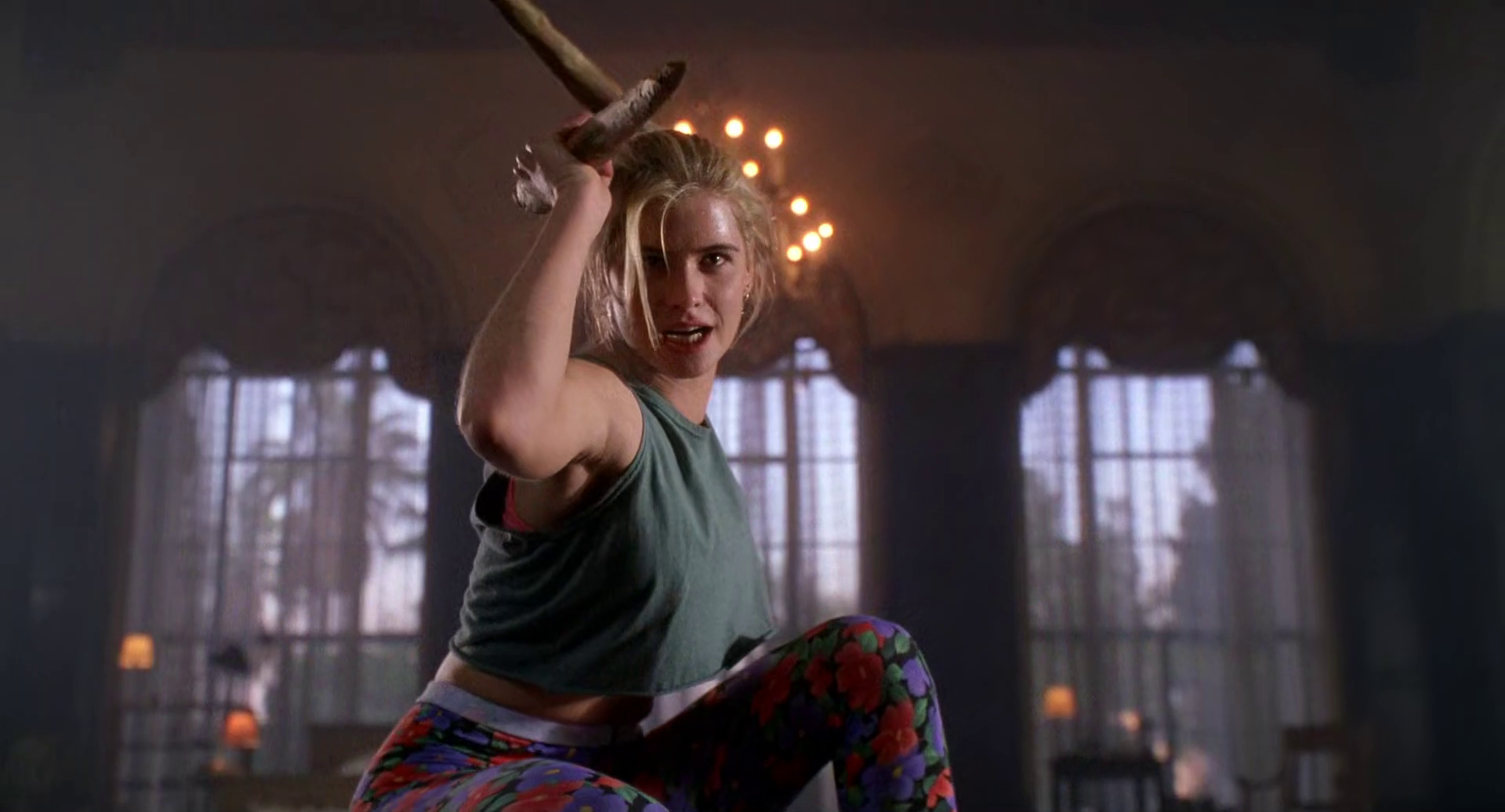
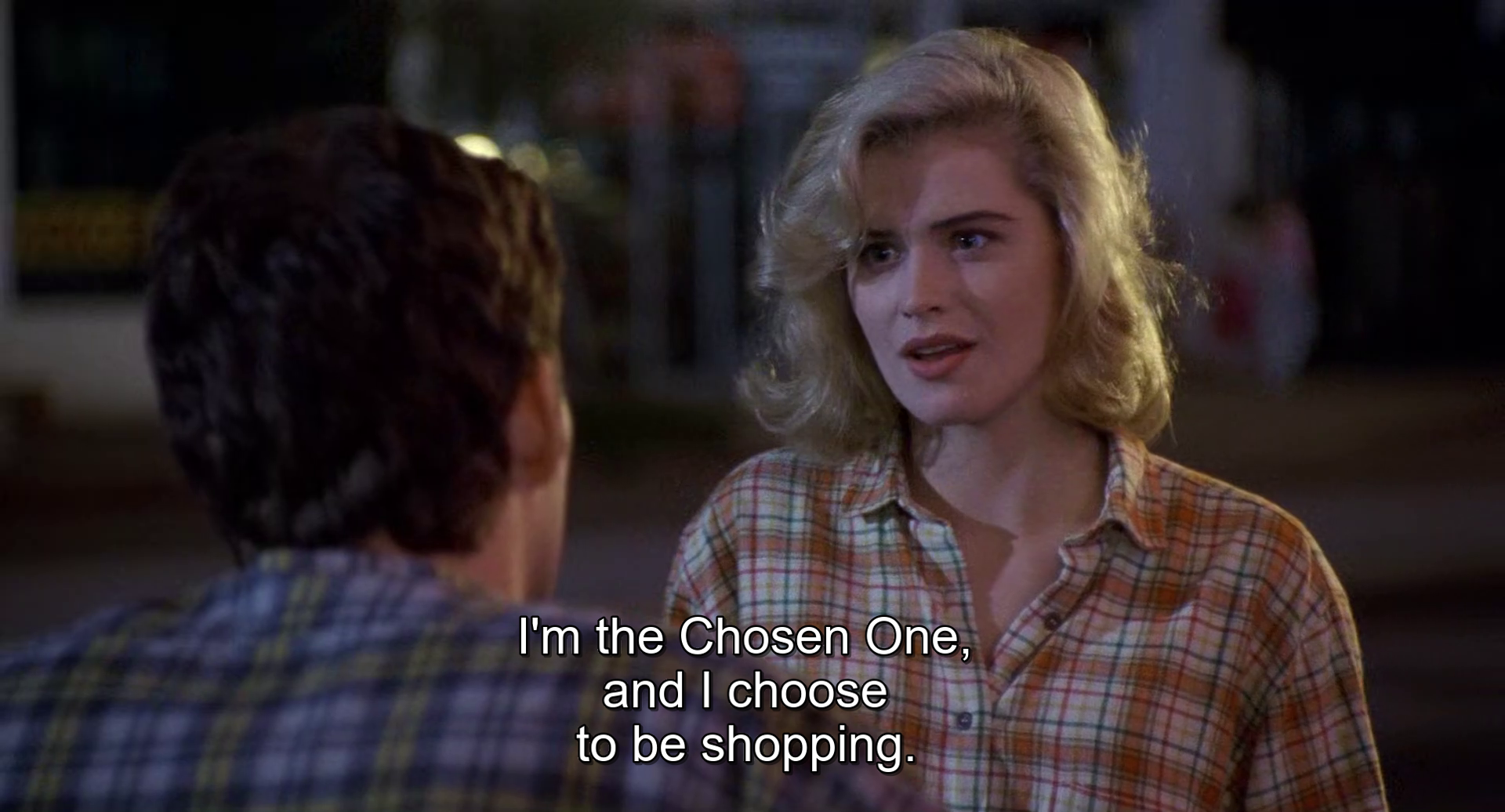
Kristy Swanson’s Buffy is portrayed as a "super-powered ditz," a California valley girl whose primary concerns are fashion, popularity, and her boyfriend. While the TV series’ Buffy (Sarah Michelle Gellar) also grappled with these issues, her character quickly evolved, displaying layers of wit, vulnerability, and a profound sense of duty. Swanson’s Buffy, by contrast, largely retains her superficiality, her victory ultimately being "getting to have it all" – the hunky boyfriend and the California lifestyle alongside her newfound vamp-slaying duties. This lack of deeper character arc is a significant departure from the emotionally complex heroine who would later define a generation.
The supporting characters also underwent substantial transformations. Donald Sutherland’s Merrick is a more cynical, less paternal figure than Anthony Head’s Rupert Giles, who became the beloved surrogate father and mentor in the series. Luke Perry’s Pike, the bad-boy love interest, is a composite character that would later be fragmented into Xander’s sidekick loyalty, Angel’s brooding outsider romance, and even Spike’s name and certain rebellious fashion sensibilities. The film’s portrayal of Buffy’s parents as caricatures of wealthy, absent figures stands in stark contrast to Joyce Summers, the single mother in the series, who, despite some "least interesting bottle episodes," provided a grounded emotional anchor for Buffy.
The Aesthetics of the Undead: Vampires of the 80s
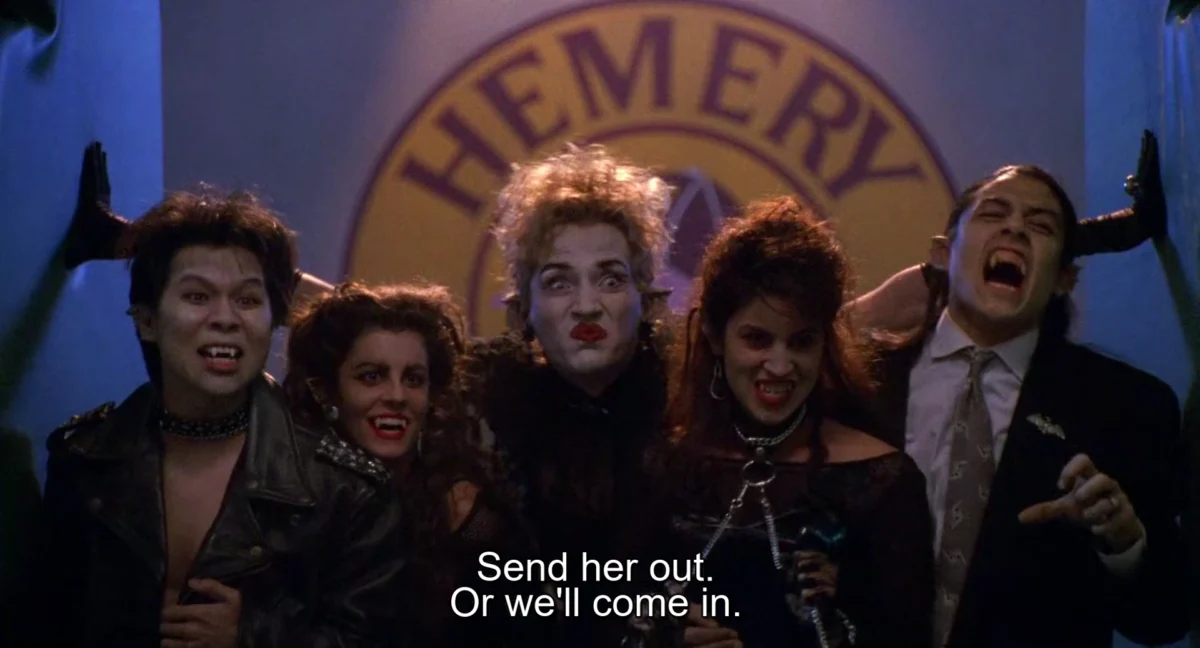
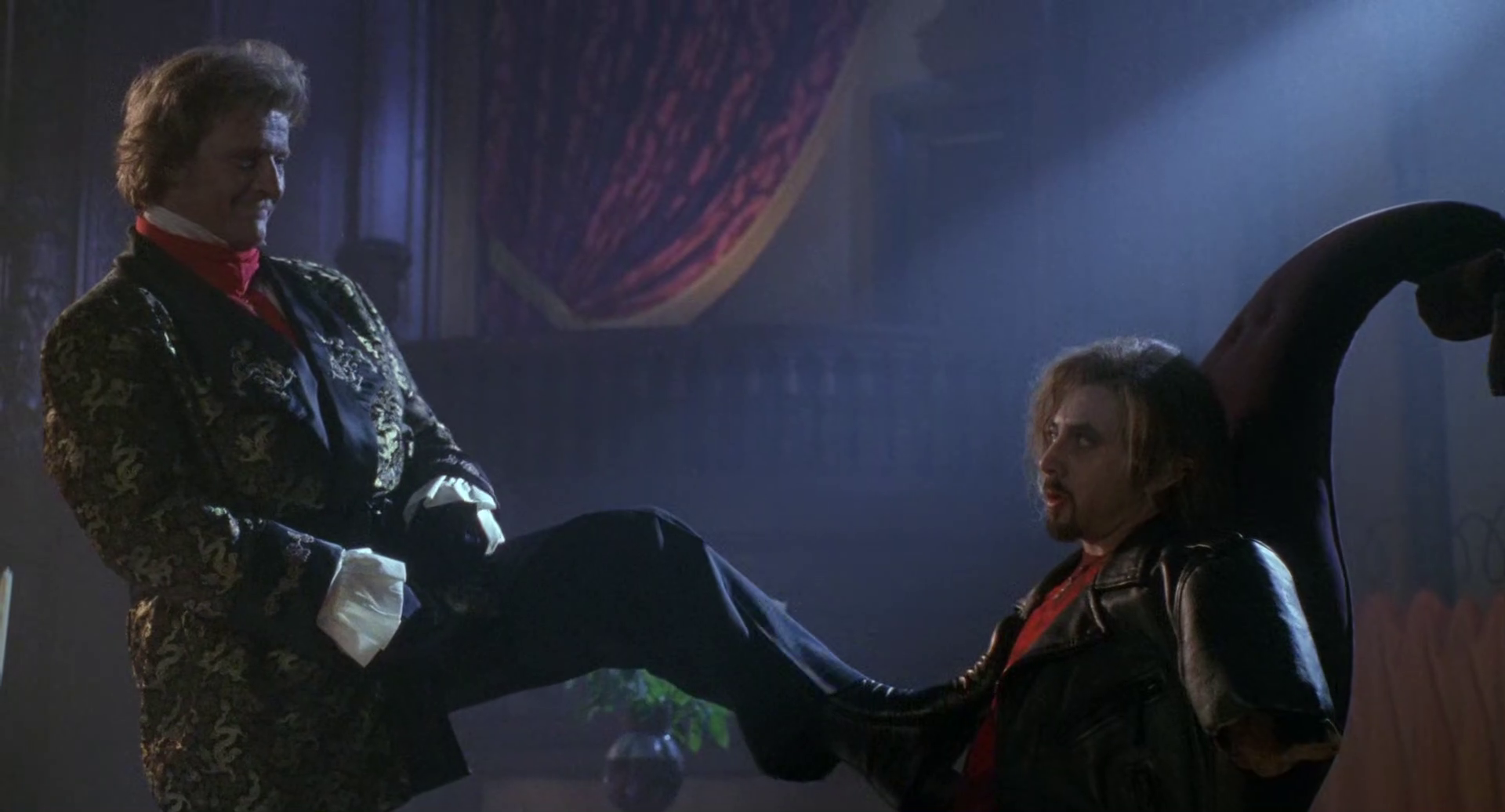
One of the most striking differences between the film and the series lies in their depiction of vampires. Bernhardt observes that the film’s vampires are "from the 1980s wearing corpse paint and plastic fangs." This aesthetic aligns with a more traditional, almost theatrical horror sensibility, reminiscent of films like Fright Night or The Lost Boys. While some glimpses of Whedon’s later vision—such as the "elf ears" that emerge when a vampire shows its true nature—are present, the iconic "transforming monstrous faces" and the dramatic "corpses that explode into CGI dust" are notably absent. The film’s vampires are more human-like, relying on makeup and prosthetics rather than the more dynamic and grotesque transformations that would become a hallmark of the TV show, visually signaling their inhumanity and the finality of their demise.
A Secretly Stacked Cast
Despite its narrative shortcomings, the film boasts a remarkably impressive ensemble cast, many of whom were either on the cusp of stardom or already established. Paul Reubens delivers a memorable, albeit campy, performance as Amilyn, the principal villain Lothos’s second-in-command. His distinct glam metal hair and painted-on goatee offer a departure from his more famous Pee-wee Herman persona, yet his comedic timing shines through the henchman-type bickering.
Beyond Reubens, the cast features future Oscar winner Hilary Swank as one of Buffy’s friends, and a young David Arquette as Pike’s buddy Benny, who quickly succumbs to vampirism. Character actor Stephen Root appears as a teacher, already embodying his signature everyman persona. Thomas Jane has a blink-and-you’ll-miss-it role as "Zeph." Furthermore, uncredited extras purportedly include future stars like Ben Affleck, Seth Green (who would, ironically, become a much larger part of the Buffy universe as Oz in the TV series), and Ricki Lake. This "secretly stacked cast" highlights the talent pool the production attracted, even if many of their roles were minor or underdeveloped.
The veteran presence of Donald Sutherland and Rutger Hauer is also notable. Sutherland’s "charming and checked-out" performance, coupled with his alleged ad-libbing, adds an improvisational energy that, while perhaps frustrating for Whedon, provides some of the film’s more distinct moments. Hauer, as the primary antagonist Lothos, brings his characteristic intensity, though his character is ultimately underutilized, reduced to a relatively generic big bad rather than the nuanced, menacing figure Whedon might have intended.
Official Responses: The Battle for Buffy’s Soul
Whedon’s Enduring Disappointment
The 1992 film’s legacy is inextricably linked to Joss Whedon’s public and enduring dissatisfaction with its outcome. His oft-quoted lament, "They ruined my Buffy movie," became a driving force for the next decade of his career. This profound sense of creative betrayal fueled his determination to reclaim and redefine his creation. When the opportunity arose to develop Buffy the Vampire Slayer as a television series, Whedon seized it, using the film as a crucial "negative example" of what not to do. The TV show became his chance to fully realize his original vision: a smarter, darker, more emotionally resonant narrative that celebrated female strength and explored complex themes through the lens of supernatural horror.
Whedon’s criticisms extended beyond the general tone to specific creative decisions, such as Sutherland’s ad-libbing and the perceived simplification of his nuanced script. This public stance has, over the years, solidified the narrative that the film was a compromised version of a brilliant idea, a necessary misstep that paved the way for a cultural phenomenon.
The Director’s Perspective and IP Rights
While Joss Whedon’s complaints are widely known, Fran Rubel Kuzui’s perspective on the creative process and the final product is less frequently publicized. However, as Bernhardt notes, the agreement struck for Whedon to use the Buffy intellectual property for his TV series included a crucial stipulation: Kuzui (and her husband) would receive an executive producer credit on every subsequent Buffy-related project. This ongoing credit, extending even to attempted reboots in recent years, underscores her foundational involvement in the property and highlights the complex negotiations around intellectual property rights in Hollywood. It suggests a recognition, at least legally, of her role in bringing the concept to the screen, regardless of the creative disagreements. While her artistic vision differed from Whedon’s, her contribution ensured the property’s initial cinematic outing, which in turn opened the door for its television incarnation.
Implications: From "Un-Whedonesque" Charm to Pervasive Influence
The Unlikely Catalyst for a Franchise
Despite its perceived flaws and its creator’s disapproval, the 1992 Buffy the Vampire Slayer film served as an indispensable stepping stone for the massively successful television franchise. It proved the viability of the core concept – a high school girl fighting vampires – and allowed Whedon to learn from its shortcomings. The film provided him with a concrete example of how not to adapt his script, giving him clear parameters to avoid when developing the TV series for The WB (the precursor to The CW, a detail Bernhardt clarifies for younger readers). Without the film, the television show, which arguably redefined teen drama and supernatural storytelling for a generation, might never have existed. It was, in essence, a proof of concept, albeit one that necessitated a radical reinterpretation to unlock its full potential.
The Shadow of Whedon’s Screenwriting Legacy
Bernhardt’s most profound observation revolves around Joss Whedon’s pervasive and now often-maligned influence on American screenwriting. The "too-pat, too-knowing jokes" and the "empty, comfortable rhythm of characters that know how each other talk really well dancing through conversations like stage-play fencers" have become ubiquitous. This distinctive style, characterized by rapid-fire banter, self-aware dialogue, and a blend of humor and pathos, was once celebrated as groundbreaking. However, in 2026, as Bernhardt notes, it has become "part of the scenery."
This "Whedonesque" style, often derisively labeled "Marvel writing" when executed poorly, permeated countless television shows and films. While Whedon himself contributed to the Marvel Cinematic Universe (directing The Avengers and Avengers: Age of Ultron), the article argues that the MCU didn’t "steal" the style from him as much as he was brought in to apply his already established, now somewhat diluted, approach. The style’s ubiquity has led to a critical re-evaluation, with many finding it formulaic, emotionally manipulative, or even cloying. What was once fresh and innovative is now seen by some as a default, a comfortable but often superficial mode of storytelling that can hinder genuine character development and emotional depth.
Re-evaluating the "Un-Whedonesque" in 2026
In light of Whedon’s later career controversies and the subsequent critical re-examination of his creative output and workplace conduct, Bernhardt’s perspective from 2026 takes on added significance. He concludes that the most "interesting thing" and "most charming thing" about the 1992 film is precisely "how un-Whedonesque it is." This statement carries a dual meaning. On one hand, it acknowledges the film’s departure from the original script and the elements that Whedon would later perfect in the TV series. On the other, it subtly praises this divergence, suggesting that the film’s lack of Whedon’s now-overly-familiar stylistic fingerprints allows it a certain nostalgic innocence, a reprieve from a writing style that has, for many, become tiresome or even problematic.
The 1992 Buffy the Vampire Slayer film, therefore, stands as a curious artifact. It is a cinematic footnote, a largely forgotten predecessor to a cultural phenomenon. Yet, it offers invaluable insight into the messy realities of creative production, the evolution of pop culture archetypes, and the long shadow cast by influential creators. It is a testament to the idea that sometimes, even a "trifle" can, through its very imperfections and divergences, illuminate the path to something truly iconic. Its "un-Whedonesque" charm, ironically, ensures its unique place in the "Century of the Vampire."


Leave a Comment