
"Legions of Hell" and "The Book of Fiends": A Retrospective on a D20 Masterpiece That Redefined RPG Bestiaries
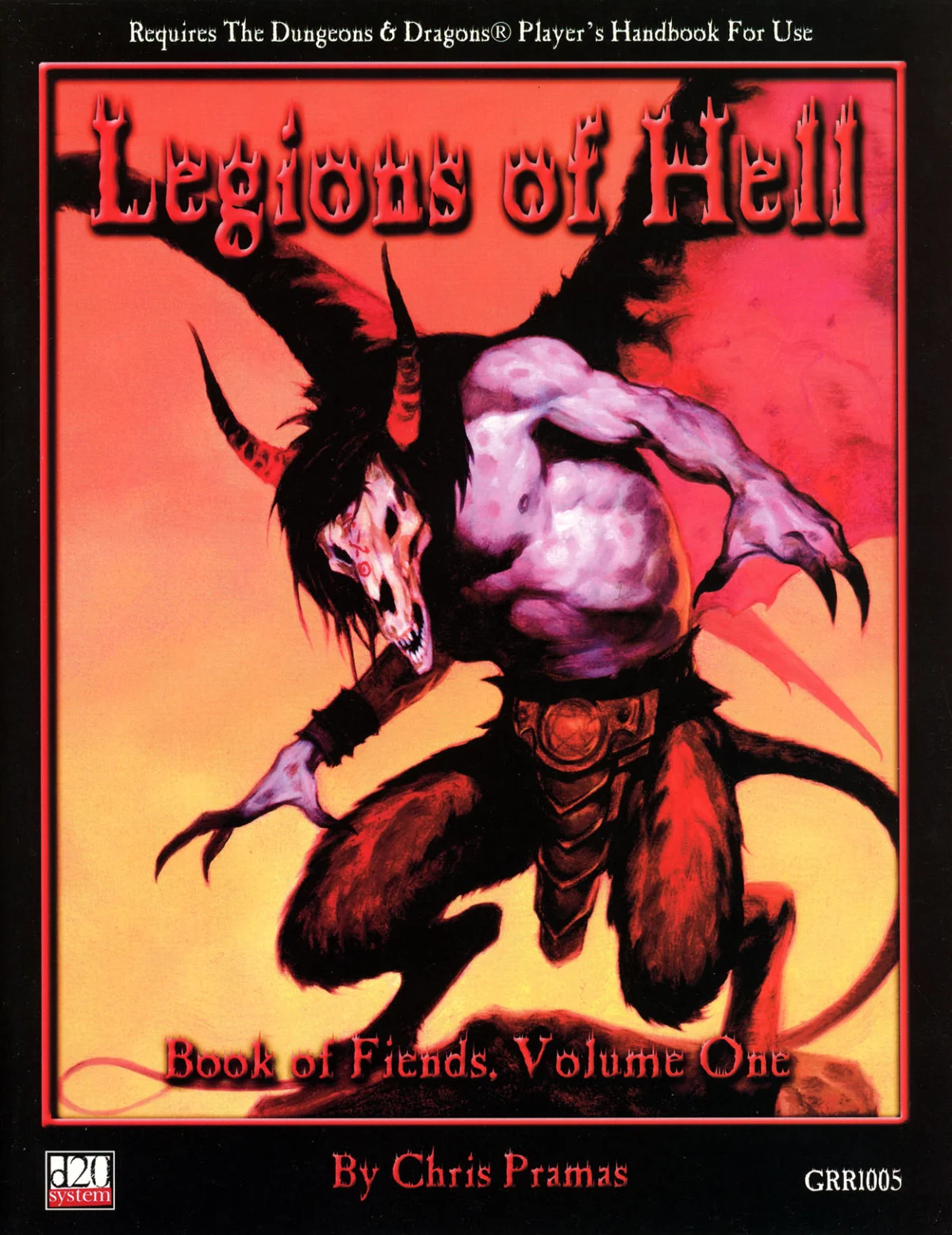
Originally published October 13th, 2001, an impassioned review declared Legions of Hell "Excellent. Easily one of the Top 10 D20 supplements released to date." More than two decades later, this assertion has not only stood the test of time but has been reinforced by the product’s evolution into The Book of Fiends series, becoming a foundational text for Game Masters exploring the infernal planes across multiple Dungeons & Dragons editions and beyond. Green Ronin Publishing’s seminal work, spearheaded by Chris Pramas, distinguished itself in a crowded market through unparalleled creativity, depth, and artistic integrity, setting a new benchmark for creature compendiums.
In the bustling era of the D20 System, when game store shelves groaned under the weight of countless supplements, many of which offered little more than re-skinned, generic fantasy monsters, a truly exceptional product was a rare and precious find. It was against this backdrop of market saturation and creative fatigue that Legions of Hell emerged, not just as another monster manual, but as a vibrant, meticulously crafted exploration of the infernal, offering GMs and players alike an unprecedented plunge into the darkest realms of D&D lore. The initial review, published over two decades ago, served as an urgent clarion call, alerting the gaming community to a product that transcended its contemporaries, promising not just new stat blocks, but entirely new narratives and challenges.
The Genesis of a Hellish Masterpiece: Context and Creation
The early 2000s marked a golden age of third-party content for the Dungeons & Dragons 3rd Edition D20 System. The open game license fostered an explosion of creativity, leading to a vast array of new classes, settings, and, perhaps most abundantly, monster books. However, this proliferation often came at the cost of originality. Many supplements recycled familiar tropes, presenting creatures that felt like slight variations of existing ones, adorned with little more than a new coat of paint or a slightly altered stat block. Game Masters, accustomed to this predictable churn, often approached new monster manuals with a sense of weary resignation, their eyes glazing over at the prospect of yet another "orc-like creature, but neon pink."
It was into this environment that Green Ronin Publishing, already making a name for itself with acclaimed products like the Freeport modules (including the Origins Award-winning Death in Freeport), launched Legions of Hell. The timing was ripe for a product that could genuinely break through the noise, and the publisher had a secret weapon: lead author Chris Pramas. Pramas was no stranger to the infernal, having previously authored Guide to Hell for AD&D 2nd Edition, a definitive reference for the planes of damnation. His profound understanding of hellish lore, combined with a fresh creative vision, promised a depth and authenticity rarely seen in D20 monster supplements.
The collaboration extended to a team of talented co-authors, including Jim Bishop, Brian Kirby, and Erik Mona, ensuring a diverse yet cohesive approach to the complex subject matter. The challenge was not merely to create new devils, but to build an entire ecosystem of infernal beings, each with its own history, purpose, and terrifying allure, deeply integrated into the cosmology of the Nine Hells and the overarching narrative of Asmodeus’s dominion.
Unveiling the Legions: A Deep Dive into the Infernal Host
Legions of Hell delivered precisely what its title promised: an exhaustive and imaginative journey through the nine circles of the Pit. The core of the 64-page book was a rich bestiary of approximately forty-five distinct monster entries, each meticulously detailed and designed to inspire awe and terror in equal measure. This was not a collection of generic fiends; these were creatures born of infernal malice and dark ingenuity, each capable of serving as a unique encounter or the linchpin of an entire adventure arc.
The book showcased an impressive range, from the foot soldiers of hell to its most ancient and powerful rulers:
-
The Infernal Rank and File: The book introduced a chilling array of creatures that formed the backbone of Asmodeus’s armies and served as his agents across the planes.
- Akop: An entire race tragically ensnared and transformed into ethereal shadows, their very existence a testament to infernal treachery.
- Bonedreg: Horrifying constructs animated from the undigested remains of the Leviathan’s victims, embodying the grotesque recycling of life within the Abyss.
- Chamagon: Gaunt, swift, and cunning infiltrators, these creatures specialized in magical sabotage and espionage, making them ideal for subtle, destructive operations.
- Darksphinx: Twisted versions of the enigmatic gynosphinxes, their wisdom corrupted into cruel riddles and their power turned to malevolent ends.
- Distender: Foul devils resembling bloated stomachs, capable of attacking with sickening precision using the four classical humors, a truly unique and unsettling concept.
- Faceless: Assassins who literally adopt the countenances of their victims, wearing their faces as trophies, a stark and disturbing signal of their deadly success.
- Hellwardens: Living scarecrows, animated by dark magic to serve as tireless, silent guardians of infernal domains.
- Spinders: Monstrous-sized creatures that moved in devastating swarms, a bane even to the devils themselves, highlighting the chaotic and destructive aspects of hell.
- Soulsniffer: Creatures uniquely attuned to the ethereal trail of escaped souls, serving as relentless trackers across the planes, ensuring no damned spirit finds true escape.
- And many others, each contributing to a vivid tapestry of infernal life.
-
Princes and Dukes of Hell: Beyond the common fiends, Legions of Hell delved into the terrifying hierarchy of the Pit, presenting unique, named entities whose power and influence could shape entire campaigns. These were not mere bosses; they were characters with their own motivations, domains, and sinister agendas.
- Balan, Master of the Infernal Hunt: A formidable figure commanding legions of hellish beasts in relentless pursuit.
- Furcas, Duke of Rhetoric: A master manipulator, wielding words as weapons, capable of corrupting minds and twisting truths.
- Hadriel, Duchess of Domination: A powerful overlord, exercising absolute control through sheer force of will and infernal might.
- Iblis, Duke of Pride: A tragic and powerful figure, revealed as a Fallen Solar, whose story provided a poignant yet terrifying example of celestial corruption.
- The Lich Fiend: A horrific fusion of undeath and infernal power, combining the worst aspects of both.
- Krotep, Pharaoh of Axor, and Nekhet, Prophet of Set: These unique entities, believing themselves the divine offspring of the god Set, introduced elements of ancient Egyptian mythology twisted by infernal influence, showcasing the book’s broad imaginative scope.
-
Expanding the Lore: The book was more than just a collection of monsters. It provided a wealth of supplementary material designed to integrate these fiends seamlessly into any D20 campaign. This included:
- Prestige Classes: Designed for those who would serve Hell, offering new avenues for character development steeped in infernal power and loyalty.
- Templates for Fallen Celestials: Allowing GMs to create their own corrupted angels and archons, exploring the tragic fall from grace.
- Information on Angelic Choirs: Providing context for the celestial beings from which Fallen Celestials might descend, and deepening the cosmic conflict between good and evil.
- An Overview of Hell Itself: Offering insights into the geography, politics, and daily horrors of the infernal planes, equipping GMs with the tools to build immersive hellish adventures.
A Beacon of Excellence: Critical Acclaim and Enduring Strengths
The original review’s effusive praise was not hyperbole; Legions of Hell genuinely stood out for several compelling reasons, which would later become hallmarks of The Book of Fiends series.
Volume and Utility
Despite its modest 64-page count, the book was incredibly dense with content. Every page felt packed with new ideas, adventure hooks, and actionable material that GMs could immediately drop into their games. It wasn’t just providing statistics; it was providing inspiration, fostering creativity, and offering solutions to common GM challenges related to infernal encounters. The sheer quantity of distinct, well-developed concepts within its covers made it an indispensable resource.
The Visionary Behind the Veil
Chris Pramas’s expertise was arguably the product’s greatest asset. His prior work on Guide to Hell meant he approached Legions of Hell not as a novice but as a seasoned cartographer of damnation. This deep well of knowledge allowed him to avoid clichés and delve into unexplored facets of infernal lore. The creatures and concepts in the book were not merely rehashes of existing D&D devils; they felt distinct, fresh, and authentically hellish, drawing from a wide range of mythological and literary sources while maintaining a coherent internal logic. This commitment to originality and meticulous research made Legions of Hell a standout.
Artistry Beyond Reproach
One of the most immediate and striking features of Legions of Hell was its breathtaking artwork. The book featured contributions from industry titans such as Brom, Sam Wood, Raven Mimura, and Toren Atkinson. These artists, celebrated for their dark fantasy aesthetics and masterful rendering, brought the infernal creatures to vivid, terrifying life. The original review unequivocally stated, "There is, literally, not a single weak piece of art in the entire book." This uniform standard of excellence in illustration not only enhanced the aesthetic appeal but also significantly contributed to the book’s immersive quality, inspiring dread and wonder with every turn of the page. The artwork was not merely decorative; it was integral to the storytelling, conveying the malice and grandeur of Hell in a way that words alone could not.
A Flawless Execution?
Perhaps the most astonishing aspect highlighted by the original review was the declared absence of weaknesses. In an industry where even the most beloved products often have minor flaws or areas for improvement, Legions of Hell was presented as a near-perfect product. This isn’t just a testament to its quality but to its focused scope and meticulous execution. By concentrating specifically on the infernal, and doing so with such depth and creative vigor, the authors managed to craft a book that felt complete, polished, and utterly devoid of wasted space or uninspired content. This rare level of perceived perfection cemented its status as an instant classic.
From "Legions of Hell" to "The Book of Fiends": A Legacy Unfolding
The initial success and critical acclaim of Legions of Hell were just the beginning of its journey. Recognizing the enduring appeal of its infernal content, Green Ronin Publishing expanded the concept into a broader series, eventually consolidating it into The Book of Fiends. This evolution ensured its continued relevance across subsequent editions of D&D.
Adapting to New Editions
Legions of Hell was originally designed for the D20 System (D&D 3rd Edition). As D&D evolved, so too did Green Ronin’s commitment to this seminal work. The content was revised and adapted for D&D 3.5, and later, significantly, for D&D 5th Edition. This iterative process allowed the powerful concepts and unique creatures to remain accessible to new generations of players and GMs, demonstrating the timelessness of its core design. The transition to 5E was particularly crucial, bringing the comprehensive infernal bestiary to the most popular iteration of the game to date, allowing its influence to ripple through countless modern campaigns.
Green Ronin’s Continued Commitment
The decision by Green Ronin to not only complete the Book of Fiends series but also to revise it into a single hardback collection for D&D 3.5 and then again for D&D 5E, speaks volumes about the product’s enduring quality and commercial success. It represents an implicit official response to the overwhelming positive reception: a commitment to nurture and update a beloved product, ensuring its longevity and accessibility. This ongoing support from the publisher solidified The Book of Fiends as a cornerstone of infernal lore in D&D.
Profound Implications for the RPG Landscape
The impact of Legions of Hell (and subsequently The Book of Fiends) extends far beyond its initial release, leaving a lasting imprint on the RPG industry and countless individual campaigns.
Raising the Bar for Bestiaries
By demonstrating that a monster manual could be a work of art, deeply researched, and creatively original, Legions of Hell set a new standard. It challenged other publishers to move beyond simple stat blocks and towards creating creatures with rich backstories, unique abilities, and compelling reasons for existence. It proved that niche, thematically focused content, when executed with excellence, could achieve greater resonance than broad, generic offerings. Its influence can be seen in subsequent high-quality monster books that prioritize narrative and thematic coherence alongside combat mechanics.
Empowering Game Masters
For GMs, Legions of Hell was a godsend. It provided not just monsters, but entire narrative frameworks. The detailed descriptions, the unique abilities, and the inherent adventure hooks embedded in each creature’s entry allowed GMs to easily craft engaging and terrifying encounters. The book became a reliable source of inspiration, saving GMs from the tedious task of inventing truly original infernal threats from scratch. The reviewer’s personal experience underscores this, having used the series "extensively" for campaigns like Avernus Remix and In the Shadow of the Spire, and even adapting its monsters to entirely different systems like Mothership and Numenera. This adaptability highlights its fundamental strength as a source of pure, unadulterated creative fuel.
A Timeless Source of Inspiration
The fact that The Book of Fiends series continues to be sung praises for over two decades after its initial release is a testament to its timeless quality. Its concepts have not aged; the fear of the unknown, the allure of infernal power, and the sheer terror of creatures born from pure evil remain potent forces in fantasy storytelling. Its influence is evident in how it has shaped specific campaign lore, such as the Chaos Lorebooks series, which directly draws from its concepts. For many, including the original reviewer who considers it a contender for "favorite RPG bestiary of all time" alongside the legendary AD&D 2nd Edition Monstrous Manual, The Book of Fiends represents the pinnacle of monster design and world-building.
Conclusion: An Unrivaled Infernal Compendium
Legions of Hell, and its expanded form The Book of Fiends, stands as a monumental achievement in tabletop roleplaying. Its release in 2001 was a significant event, offering a beacon of originality and quality in a crowded market. Two decades on, its legacy endures, celebrated for its rich content, the visionary authorship of Chris Pramas, and its consistently stunning artwork.
This is not merely a collection of stat blocks; it is a meticulously crafted compendium of infernal lore, designed to challenge, inspire, and terrify. For any Game Master with even a passing interest in incorporating demonic presences into their D20 (or any other) campaign, The Book of Fiends remains an absolutely essential resource. Its continued relevance, adaptation across editions, and unwavering critical acclaim underscore its status as an unrivaled infernal bestiary, a product that players and GMs will never regret investing in. It is, unequivocally, a masterclass in how to bring the horrors of hell to the gaming table with unparalleled depth and creative flair.
Product Details:
- Legions of Hell (later part of The Book of Fiends series)
- Authors: Chris Pramas (with Jim Bishop, Brian Kirby, and Erik Mona)
- Publisher: Green Ronin Publishing
- Line: D20
- Original Price: $14.95
- ISBN: 0-9701048-4-7
- Product Code: GRR1005
- Pages: 64



Leave a Comment