
Orloj: The Prague Astronomical Clock – A Masterpiece of Mechanical Board Game Design
Introduction:
In a world increasingly dominated by digital distractions, board games offer a cherished refuge, a tactile escape that brings people together around a shared physical space. Yet, even within this analog realm, some creations transcend mere entertainment, becoming intricate mechanical marvels in their own right. Orloj: The Prague Astronomical Clock, a new Euro-style board game from designers Paloma J. Pascual and Abraham Sánchez Hermida, published by Devir Games, is one such extraordinary example. It not only provides a captivating strategic experience but also serves as a profound homage to one of humanity’s most breathtaking feats of medieval engineering: the Prague Astronomical Clock itself.
This game demands attention from the very first mention of its inspiration. Imagine a device born of 15th-century ingenuity, a clock so complex it depicts not just the hour, but the positions of the sun and moon, the zodiac, and even the "Walk of the Apostles" – a mesmerizing hourly procession featuring a skeletal figure representing Death. To translate such a magnificent, multi-faceted artifact into a board game is an audacious feat. That Orloj: The Prague Astronomical Clock succeeds in doing so with such elegance and depth is nothing short of phenomenal. It’s a game that challenges players to think like medieval artisans, meticulously planning and constructing, all while navigating a dynamic, clockwork-inspired game board.
Main Facts: Unveiling a Clockwork Masterpiece
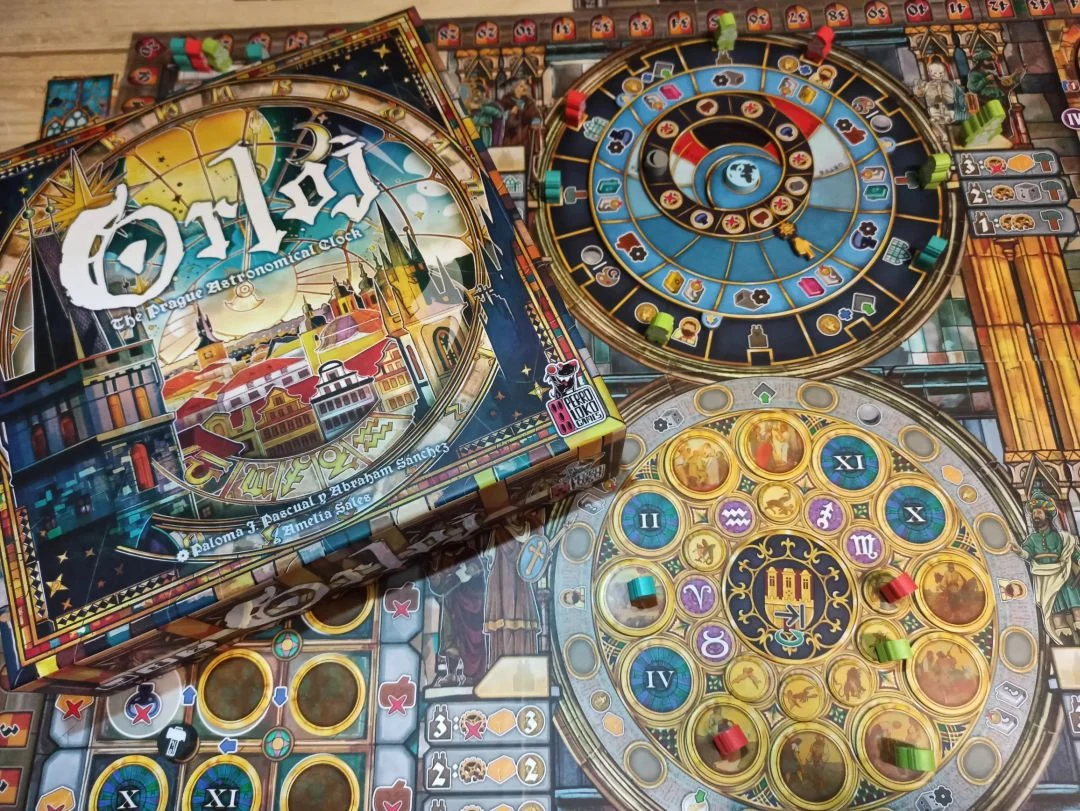
Orloj: The Prague Astronomical Clock is a worker-placement game distinguished by its innovative use of a rotating rondel mechanism, designed to mirror the intricate movements of its namesake. Players are tasked with contributing to the construction and maintenance of this grand astronomical calendar, dispatching workers to various sections of the dial to trigger actions, gather essential resources, and ultimately piece together the components of the celestial display. The game, recommended for 1-4 players aged 14 and above, boasts a playtime ranging from a brisk 40 minutes to a more contemplative two hours, reflecting its scalable depth and strategic possibilities.
At its heart, the game is a vibrant tapestry of interlocking systems. Beyond the central task of calendar construction, players will find themselves recruiting skilled assistants, developing their personal workshops, and advancing along crucial knowledge tracks. These tracks are not mere linear progressions; they unlock new abilities, enhance efficiency, and open up potent scoring opportunities, ensuring that each decision ripples through the entire game. The designers, Paloma J. Pascual and Abraham Sánchez Hermida, have crafted a game that offers multiple viable strategies, allowing players to focus on efficient building, track advancement, or complex combo optimization. This strategic flexibility is a hallmark of well-designed Eurogames, and Orloj delivers it in spades, wrapped in a visually stunning package published by Devir Games, renowned for their commitment to quality and thematic depth. The game retails for an RRP of £69.99, a price point indicative of its robust component quality and comprehensive gameplay experience.
Chronology: From Medieval Marvel to Modern Board Game
The journey of Orloj: The Prague Astronomical Clock from concept to tabletop is a testament to the power of inspiration and meticulous design. While specific development diaries or public chronologies from the designers are not widely available, we can infer a significant process, beginning with the sheer awe inspired by the real Prague Orloj.
The Enduring Legacy of the Prague Astronomical Clock:
The story begins in 1410, when clockmaker Mikuláš of Kadaň and mathematician Jan Šindel unveiled the original mechanism in Prague’s Old Town Square. This wasn’t merely a time-telling device; it was a cosmic model, a public display of scientific understanding and artistic craftsmanship. Over centuries, it was damaged, repaired, and enhanced, notably by Master Hanuš, whose legend suggests he was blinded to prevent him from replicating his work elsewhere. This rich history, filled with innovation, dedication, and a touch of folklore, provides fertile ground for creative interpretation. The clock’s astronomical dial, depicting the relative positions of the sun and moon, its hourly "Walk of the Apostles," and its calendar dial with medallions representing the months – each element is a miniature story waiting to be told.

The Spark of Inspiration:
It’s not difficult to imagine Paloma J. Pascual and Abraham Sánchez Hermida encountering this marvel, perhaps during a visit to Prague, and feeling the irresistible urge to capture its essence in a game. The challenge would have been immense: how to translate the clock’s rotating gears, its symbolic figures, its intricate layers of information, and its sense of ongoing construction and maintenance into interactive game mechanics? This likely began with numerous conceptual sketches, brainstorming sessions, and attempts to distill the clock’s core functions into abstract, yet thematic, game actions.
Design and Development Iterations:
The creation of a complex Eurogame is an iterative process. Early prototypes would have focused on the central rondel mechanism, experimenting with how workers interact with the rotating dial and how actions are triggered. The designers would have had to balance thematic integrity with gameplay clarity and strategic depth. This would involve:
- Core Mechanic Definition: Solidifying the worker placement on a rotating board.
- Resource Economy: Designing the flow of resources (cogs, gears, knowledge) needed to build calendar parts and advance tracks.
- Action Pacing: Ensuring that turns feel impactful and lead to satisfying progress.
- Player Interaction: Introducing elements of indirect competition, where players affect each other’s available options without direct conflict.
- Scalability: Adapting the game for different player counts, including a robust solo mode.
- Asymmetrical Elements: Developing the distinct roles of assistants and workshop upgrades to offer varied strategic paths.
Partnership with Devir Games:
Once the core design was stable, the designers would have sought a publisher. Devir Games, known for titles that combine deep strategy with often historical or culturally rich themes, would have been an ideal partner. Devir’s editorial team would then collaborate with Pascual and Sánchez Hermida, providing feedback on rules clarity, component design, and market positioning. This phase often involves extensive playtesting with a wider audience to refine balance, eliminate ambiguities, and ensure a smooth player experience.
Artistic Realization and Component Production:
The visual identity of Orloj is critical to its thematic appeal. The game’s vibrant and detailed board, with its bold colors and intricate illustrations, is clearly designed to evoke the ornate beauty of the real clock. This would have involved close collaboration between the designers, the publisher, and the game’s artist(s) to ensure that the artwork not only looks stunning but also clearly communicates gameplay information. The choice of high-quality components – durable boards, well-produced pieces – reflects Devir’s commitment to delivering a premium product that matches the game’s ambitious design. The meticulous detail required for manufacturing these components, from custom-shaped pieces to high-quality card stock, would have been a significant part of the pre-release "chronology."
From the first glimmer of an idea sparked by a medieval marvel to its polished release, Orloj: The Prague Astronomical Clock represents a harmonious blend of historical inspiration, creative design, and professional production, culminating in a board game that truly feels like a work of art itself.
Supporting Data: The Intricacies of Clockwork Strategy
The brilliance of Orloj: The Prague Astronomical Clock lies in its ability to marry thematic resonance with profound strategic depth. Every element of the game seems meticulously crafted to reflect the complexity and majesty of the real Orloj, while simultaneously providing engaging gameplay.
The Core Rondel Mechanism: A Dynamic Heartbeat:
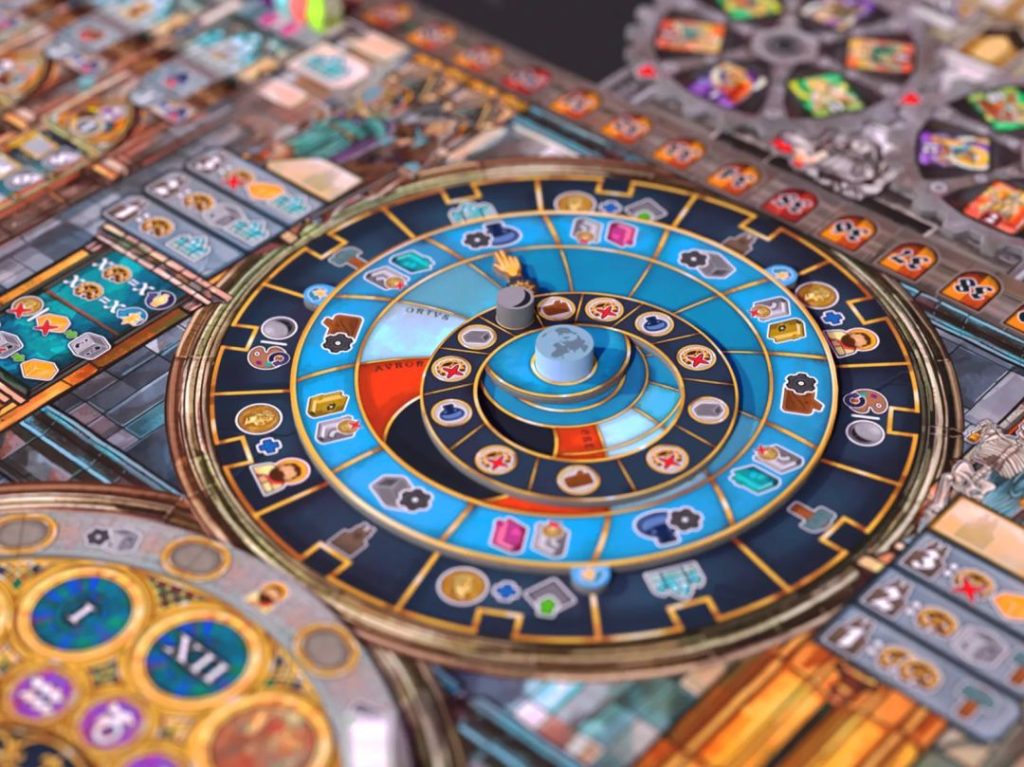
At the game’s very core is the rotating rondel, a worker-placement mechanism that sets Orloj apart. Unlike static action spaces found in many Eurogames, the rondel constantly shifts, meaning the availability and cost of actions change with each turn. Players assign workers to specific segments of the dial, triggering actions that might include gathering resources (such as gears, crystals, or knowledge), advancing on various tracks, or initiating the construction of calendar parts. This dynamic element creates a compelling puzzle: players must not only consider their immediate needs but also anticipate how the rondel will rotate and how their actions might open up or block opportunities for opponents. This introduces a delightful layer of tactical foresight and adaptation.
Layered Systems and Strategic Depth:
Orloj is not a game of simple, isolated actions. Its gameplay is rich with interlocking systems that demand careful planning and resource management:
- Building the Astronomical Calendar: This is the primary objective, requiring specific combinations of resources and actions. Each completed section of the calendar contributes victory points and often unlocks further benefits. The visual progression of building the clock face is deeply satisfying and thematically immersive.
- Recruiting Assistants: These provide valuable passive abilities or one-time bonuses, allowing players to customize their engine and specialize in certain strategies. Deciding which assistants to recruit and when adds another layer of strategic choice.
- Developing Workshops: Players can upgrade their personal workshops, enhancing their efficiency, increasing storage capacity, or providing additional action opportunities. This personal engine-building aspect is crucial for scaling up operations as the game progresses.
- Advancing Knowledge Tracks: Perhaps the most impactful strategic element, these tracks represent different scientific and artisan disciplines. Progressing along them unlocks powerful permanent abilities, reduces action costs, or grants bonus resources. Mastering these tracks is key to executing efficient combo plays and maximizing scoring potential. For instance, reaching a certain level on a "Engineering" track might allow a player to use fewer gears for a construction action, while a "Astronomy" track might grant extra resources when specific celestial events occur on the rondel.
The Art of the Combo Play:
One of the most rewarding aspects of Orloj is the escalating complexity of turns. As players develop their workshops and advance on knowledge tracks, their individual actions become more potent and interconnected. This allows for impressive "combo plays" – sequences of actions where one action triggers another, leading to a cascade of benefits and significant progress in a single turn. Achieving these combos requires careful long-term planning, resource stockpiling, and a keen eye for synergistic opportunities. The transition from simple worker placement to intricate, multi-step turns is incredibly satisfying and provides a strong sense of player agency and growth.
Indirect Player Interaction:
While not a confrontational game, Orloj incorporates subtle yet impactful player interaction. Occupying a key position on the rotating dial can block an opponent’s desired action, forcing them to adapt their plans. Furthermore, certain actions might influence the rotation of the clock mechanism itself, subtly shifting the available action spaces for subsequent players. This indirect competition keeps all players engaged, forcing them to consider not only their own optimal path but also the potential actions and reactions of their rivals. It ensures that no strategy can be executed in complete isolation, adding a crucial layer of dynamism to the game.
Visual and Component Excellence:
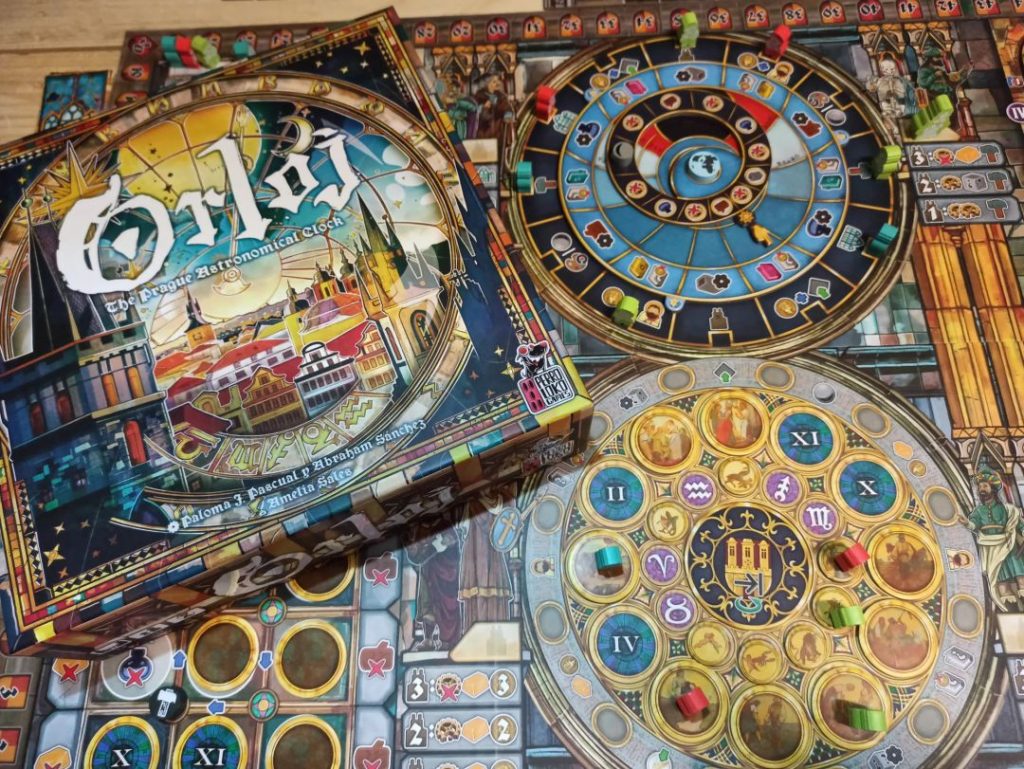
Beyond its mechanics, Orloj is a visual feast. The review accurately notes its "visually stunning" nature. The board is busy but not cluttered, a delicate balance achieved through thoughtful graphic design and intricate illustrations. Bold colors differentiate sections, while detailed artwork captures the ornate, almost magical quality of the real Prague Astronomical Clock. Component quality is consistently high, with durable boards and pieces that are satisfying to handle. This attention to detail in production enhances the overall immersive experience, making the act of playing the game as aesthetically pleasing as it is strategically challenging.
Accessibility and Learning Curve:
While the initial setup can be time-consuming, and the rulebook might seem daunting at first glance due to the multitude of interlocking systems, the gameplay itself is surprisingly accessible. The core loop of assigning workers and triggering actions is straightforward, allowing players to grasp the basics within a few rounds. The "mastery" comes from understanding the nuances of track progression, combo optimization, and player interaction. This gentle learning curve, contrasted with significant strategic depth, makes Orloj a game that can appeal to both seasoned Eurogame enthusiasts and more casual players willing to invest a little initial effort.
Official Responses: The Philosophy Behind the Clockwork
While direct quotes from the designers or publisher regarding Orloj‘s reception might not be readily available in the initial article, we can infer their design philosophy and the publisher’s intent based on the game’s execution and Devir Games’ established reputation.
Designers’ Vision: Bridging Theme and Mechanism:
Paloma J. Pascual and Abraham Sánchez Hermida clearly embarked on this project with a deep respect for the Prague Astronomical Clock itself. Their "official response," as it were, is embedded in the game’s very structure: a commitment to thematic integration that goes beyond mere window dressing. The rotating rondel is not just a clever mechanic; it is the clock. The actions players take directly relate to the functions and construction of such a device. This suggests a design philosophy centered on:

- Thematic Fidelity: Ensuring that gameplay mechanics genuinely reflect the source material, rather than simply applying a theme to existing mechanics.
- Elegant Complexity: Creating a game with multiple layers of strategy that remain intuitive to learn, even if challenging to master.
- Player Empowerment: Providing players with diverse strategic avenues and the tools to build satisfying combo engines, fostering a sense of accomplishment.
The incredible positive reception, bordering on "phenomenal" as described in the original review, serves as a powerful validation of their vision. It indicates that their intricate translation of a medieval marvel into a modern board game resonates deeply with players who appreciate both thematic immersion and strategic depth.
Publisher’s Commitment: Devir Games’ Standard of Excellence:
Devir Games, as the publisher, has a track record of bringing well-regarded Eurogames to market. Their "official response" is evident in the high production values and meticulous attention to detail seen in Orloj. Publishing such an ambitious title aligns with Devir’s known commitment to:
- Quality Production: Investing in premium components, vibrant artwork, and clear graphic design to enhance the player experience.
- Strategic Depth: Curating a catalog that appeals to discerning board game enthusiasts who seek engaging and challenging gameplay.
- Global Reach: Bringing unique and compelling designs from various creators to a wider international audience.
The decision to publish Orloj suggests Devir recognized the game’s potential to be a standout title, a testament to its innovative mechanics and strong thematic hook. Their support would have been crucial in bringing the designers’ vision to fruition, from manufacturing to marketing, ensuring the game reached the hands of players in its polished form.
Community Reception and Analogies:
While not an "official response" from the creators, the board game community’s embrace of Orloj provides crucial feedback. The comparison to Tzolk’in: The Mayan Calendar is particularly telling. Tzolk’in, a highly acclaimed game known for its innovative gear-based worker placement, sets a high bar. For Orloj to be favorably compared and even suggested as a successor or a similar experience, speaks volumes about its quality and originality. This indicates that Orloj is not just good, but potentially genre-defining in its approach to rotating action spaces. Players who enjoy complex engine-building, strategic planning, and unique mechanics are likely to find Orloj a compelling addition to their collections, solidifying its place as a significant release in the Eurogame landscape.
Implications: The Legacy of Orloj
The release and critical reception of Orloj: The Prague Astronomical Clock carry several significant implications for the board gaming landscape, its designers, and the broader appeal of tabletop experiences.
Elevating Thematic Integration in Eurogames:
Orloj stands as a prime example of how thematic integration can be achieved in Eurogames without sacrificing strategic depth. Often, Eurogames are criticized for their abstract themes, but Orloj proves that complex mechanics can be beautifully interwoven with a rich narrative and historical context. The game’s success will likely encourage other designers to push the boundaries of thematic representation in their designs, moving beyond generic settings to explore more specific and unique inspirations. This could lead to a new wave of Eurogames that are not only strategically brilliant but also deeply immersive and evocative.
Innovation in Worker Placement Mechanics:
The rotating rondel system is not entirely new to board gaming, but Orloj‘s implementation is particularly elegant and central to its identity. By making the clock’s movement dictate action availability, the game revitalizes a familiar mechanic, adding layers of anticipation and tactical planning. This innovative approach could inspire further exploration of dynamic action spaces in future worker-placement games, moving away from static boards and towards more fluid, evolving game states. It challenges designers to think about how the board itself can be an active participant in the gameplay, rather than merely a backdrop.
The Role of Historical and Cultural Inspiration:
The game’s direct inspiration from the Prague Astronomical Clock highlights the rich tapestry of history and culture available for board game adaptation. Orloj doesn’t just borrow a name; it meticulously translates the clock’s functions and symbolism into gameplay. This success could encourage more designers to delve into specific historical artifacts, architectural wonders, or cultural phenomena as direct sources of inspiration, leading to games that are not only entertaining but also subtly educational, sparking curiosity about the real-world marvels they represent.
Expanding the Market for Complex Games:
While initially daunting due to its component count and rulebook, Orloj‘s surprisingly accessible core gameplay loop, combined with its strong thematic appeal and high production values, makes it a gateway for more casual players to explore the "dark side" of complex Eurogames. Its ability to onboard new players relatively quickly, despite its depth, positions it as a potential bridge, demonstrating that intricate games can be learned and enjoyed without an overwhelming initial investment of time. This broadens the market for heavier games, encouraging publishers to continue investing in ambitious designs.
A Testament to Designer Talent:
The game’s critical acclaim firmly establishes Paloma J. Pascual and Abraham Sánchez Hermida as significant voices in modern board game design. Their ability to conceive and execute such a complex yet cohesive game suggests a promising future for their work. Orloj serves as a strong portfolio piece, indicating their skill in blending mechanics, theme, and player experience, and will undoubtedly garner attention for their subsequent projects.
Lasting Replayability and Community Engagement:
With multiple viable strategies, a dynamic board, and a rich array of knowledge tracks and assistants, Orloj promises immense replayability. Each game will unfold differently, challenging players to adapt their plans and explore new tactical approaches. This depth ensures that the game will continue to engage players for years to come, fostering a dedicated community eager to discuss strategies, share insights, and delve deeper into its intricate clockwork.
In conclusion, Orloj: The Prague Astronomical Clock is more than just a board game; it’s a meticulously crafted experience that pays fitting tribute to its medieval muse. It represents a triumph of design, proving that complex themes can be translated into engaging, innovative, and visually stunning tabletop adventures. For those seeking a strategic challenge wrapped in a rich historical tapestry, Orloj is an unequivocally "must-play" title, destined to leave a lasting impression on the world of board gaming. It stands as a shining example of how inspiration, ingenuity, and careful execution can transform a historical marvel into a modern masterpiece.



Leave a Comment