
Virgin Fandango: A Revolution in Tile Animation Reimagines the Divine Feminine
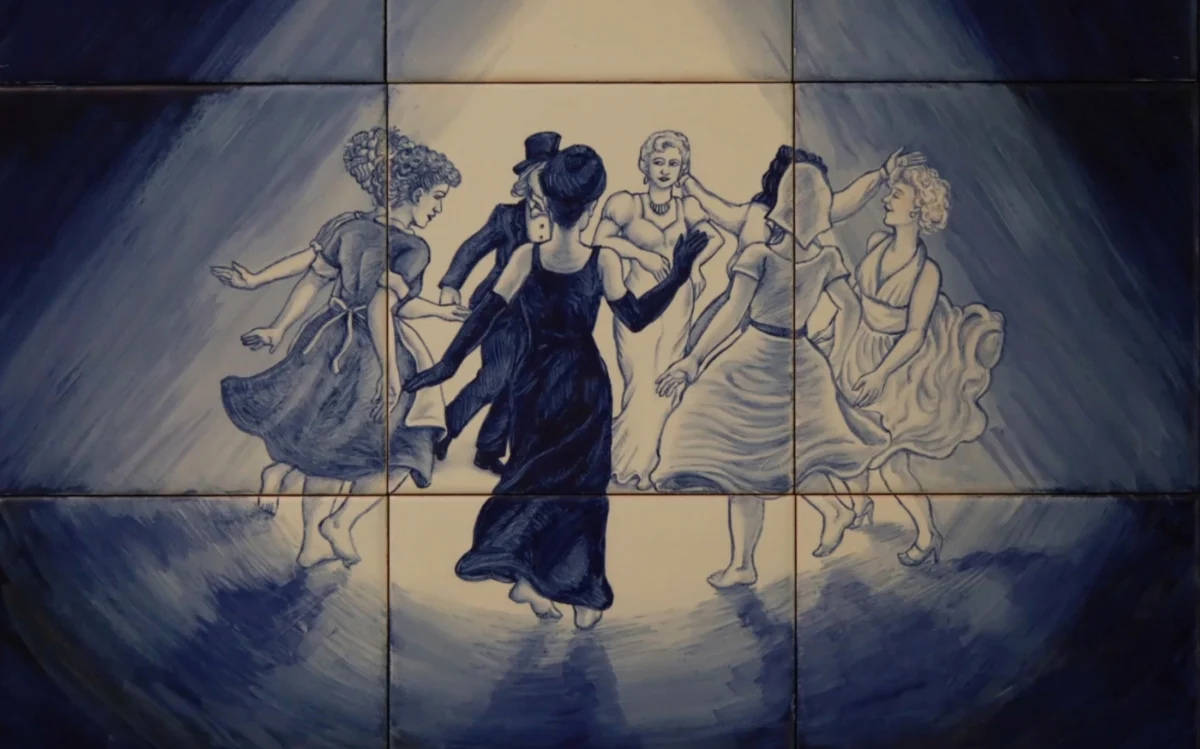
The distinctive beauty of Portuguese azulejo tiles, traditionally static and decorative, has been brought to vibrant, animated life in Marcy Page’s groundbreaking short film, Virgin Fandango. This ambitious 11-minute musical, set to premiere at the prestigious Annecy International Animation Film Festival, offers a visually stunning and thematically rich reinterpretation of the Virgin Mary, transforming her into a symbol of female empowerment and historical defiance. The film is a testament to Page’s artistic vision, her deep connection with Portugal, and the collaborative spirit required to push the boundaries of animation.
The article, originally published by Kevin Giraud on Cartoon Brew on May 13, 2026, delves into the intricate process behind Virgin Fandango, exploring the genesis of its unique visual style, its powerful narrative, and the collaborative efforts that brought it to fruition. This enriched version expands on these elements, providing a comprehensive look at a film that promises to be a significant contribution to the world of animated cinema.
A Fusion of Tradition and Innovation: The Genesis of Virgin Fandango
Marcy Page, an American-Canadian producer, animator, and director with a distinguished career, found inspiration for Virgin Fandango during an extended stay in Portugal. The ubiquitous presence of azulejo, the iconic painted ceramic tiles adorning Portuguese and Spanish architecture, captivated her. These tiles, often depicting religious scenes, historical events, or decorative patterns, are typically fixed elements of the landscape. Page, however, saw their potential for dynamic storytelling.
"I wanted to do something with them, to see how an animated painted-tile film could work," Page explains in an interview with Cartoon Brew. Her vision was to imbue these static artworks with movement and narrative, transforming them into a living canvas. This desire to animate the inanimate, coupled with her lifelong passion for animation, laid the foundation for Virgin Fandango.
The film’s thematic core is a radical reimagining of the Virgin Mary. Traditionally portrayed as a figure of quiet devotion and maternal sacrifice, Page sought to present her as a "dancing, rebellious, empowering female figure." This choice was deeply rooted in Page’s observations of Portuguese culture and her personal experiences.
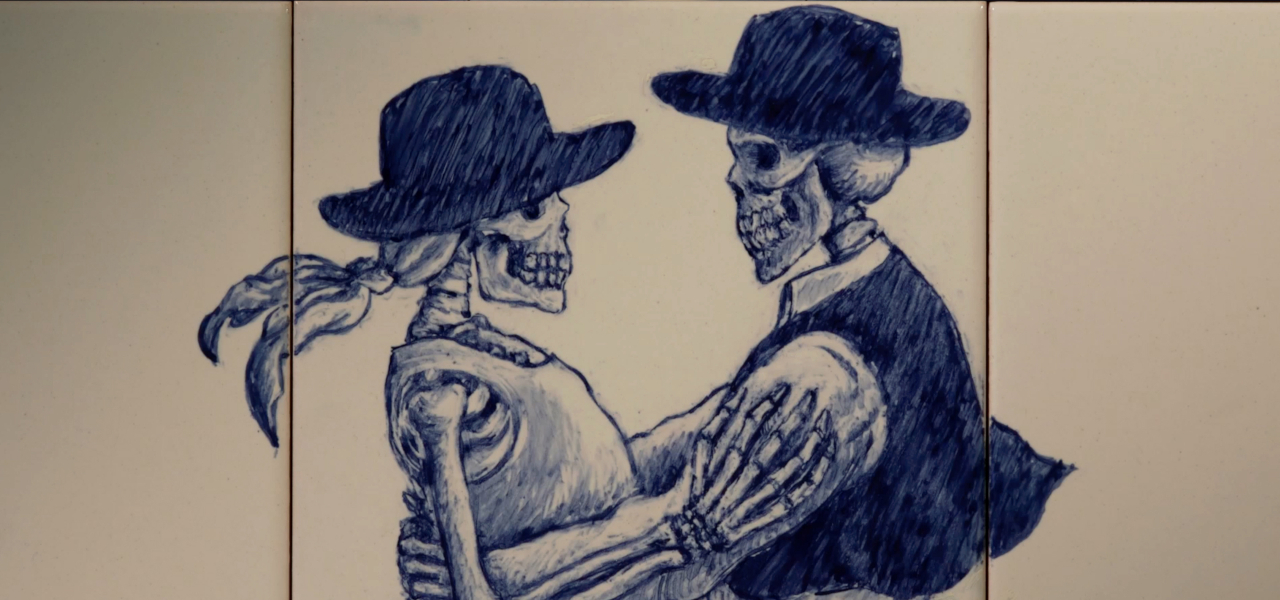
"These murals are mostly used to deify saints, kings, and men, so I thought: what if I could use them to celebrate women throughout history, who are often less recognized?" Page states. The strong cult of Mary in Portugal, particularly during May, a month often coinciding with Page’s visits, provided a focal point. Witnessing "candlelit processions crossing the valley," Page felt compelled to re-examine Mary’s narrative.
A Rebellious Prophetess: Mary as a Political Figure
Page’s interpretation of Mary transcends her traditional religious role, elevating her to a figure of political resonance. "The story we know about her, being forced to become a refugee, fleeing to Egypt with a newborn child, and then raising a son who grew up to become this rebel prophet, all sounded to me like the story of a woman who would actually have a lot to say about politics," Page elaborates.
This recontextualization is deeply personal for Page, who identifies as an immigrant in Canada and a former resident of the United States during a period of significant political upheaval. "Coming from the United States and being an immigrant in Canada, I started working on this film during Trump’s first presidency. Seeing the repeated attacks on women’s rights was heartbreaking, and I felt a real urgency to address that topic."
The film thus becomes a powerful ode to the ongoing struggle for women’s rights. It celebrates "the vast history of women who stood up for themselves, blending historical, artistic, and political figures alike." This broader historical and political context imbues Virgin Fandango with a timely and urgent message.
A Mosaic of Inspiration: Honoring Women Through Art
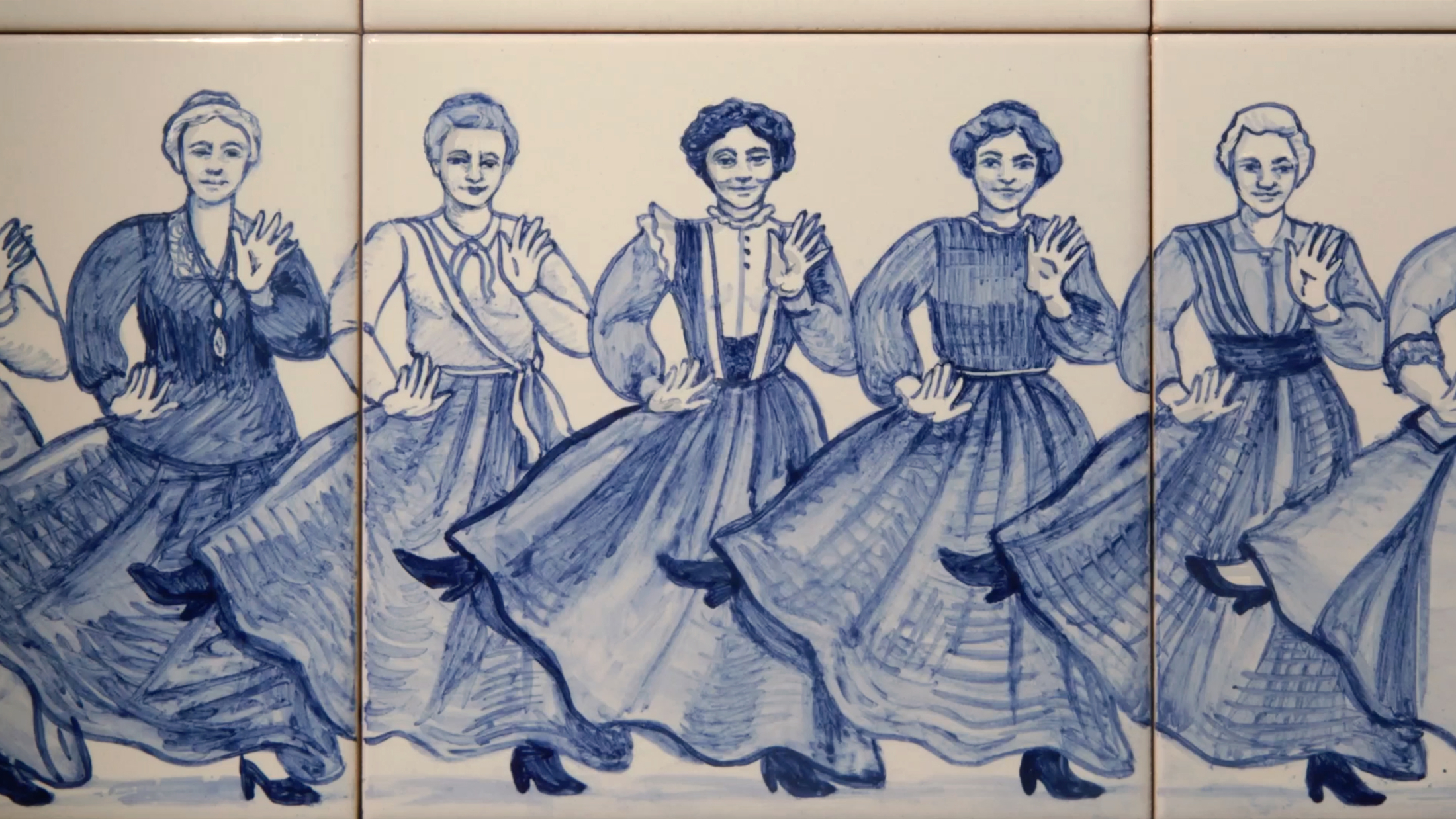
Virgin Fandango is not just a reimagining of Mary; it is a comprehensive tribute to women throughout history. The film weaves together dance, music, and a "mosaic of visual references," explicitly nodding to "around 170 historical women and female animation artists." This deliberate inclusion signifies a profound act of recognition and celebration, bringing to the forefront figures who have often been marginalized or overlooked in mainstream narratives.
The creative process involved a deep dive into the contributions of women across various fields, from art and activism to science and politics. By incorporating these diverse influences, Page ensures that Virgin Fandango resonates as a multi-layered exploration of female resilience, creativity, and impact.
The Technical Alchemy: Animating Over 12,000 Tiles
The most striking aspect of Virgin Fandango is its pioneering animation technique. The film utilizes stop-motion animation applied to over 12,000 individual, hand-painted azulejo tiles. This monumental undertaking represents a significant technical innovation in the field of animation.
"When I did my first tile tests back in 2018, I don’t think I had seen the technique used before," Page recalls. While she later discovered a small commercial film with a similar approach, she felt it was "wasted on an industrial product." Her vision was to explore the full artistic potential of animating tiles.
The process involved developing a unique visual language. "It’s about developing a language, because not only do you have animation on the surface, but you can also move these objects physically through space, bring them off the walls, place them in other environments, and even animate them on a three-dimensional level. They can be broken apart and put back together. It’s very playful, but also a crazy undertaking."
The Collaborative Symphony: Music and Production
The film is also a powerful musical, with music composed by the legendary Normand Roger. The collaboration between Page and Roger was integral to the film’s success. "Marcy started with some lyrics, and by the time I joined the project, she had about three-quarters of the main song written," Roger explains. He then composed the music around her lyrics, creating a cohesive musical narrative.
Interestingly, Page herself provided the initial vocal recordings for the songs. This decision, initially a practical one for editing and timing, evolved into a deliberate artistic choice. "It eventually made more sense for the author to sing the story. It feels very natural and adds genuine value to the film," Roger notes.
The production itself was a complex co-production between Ciclopes Filmes (Portugal) and Blue Dada Productions (Canada), with distribution handled by Agência – Portuguese Short Film Agency. Page candidly admits that the director’s ambitious vision often presented challenges for the producer within her. "I’d say the producer was very frustrated with the director, because I think I made every director’s mistake that would have driven me absolutely crazy as a producer!" she laughs.
The project benefited from the expertise of producers like Abi Feijó, who played a crucial role in navigating the technical demands of stop-motion animation, particularly for Page, who came from a 2D background. "Abi is especially good at working with animators, and because I had never done stop-motion before… he pushed me into the deep end with his experience working with children, and that helped a lot too," Page acknowledges.
The film’s scope also evolved significantly during production. What began as a five-minute short expanded into an eleven-minute narrative, allowing for greater exploration of its themes and visual possibilities.
Overcoming Production Hurdles: Innovation in the Face of Challenge
The creation of Virgin Fandango was fraught with unique production challenges, pushing the team to innovate at every turn. One of the primary hurdles was transferring Page’s animation drawings onto the ceramic tiles.
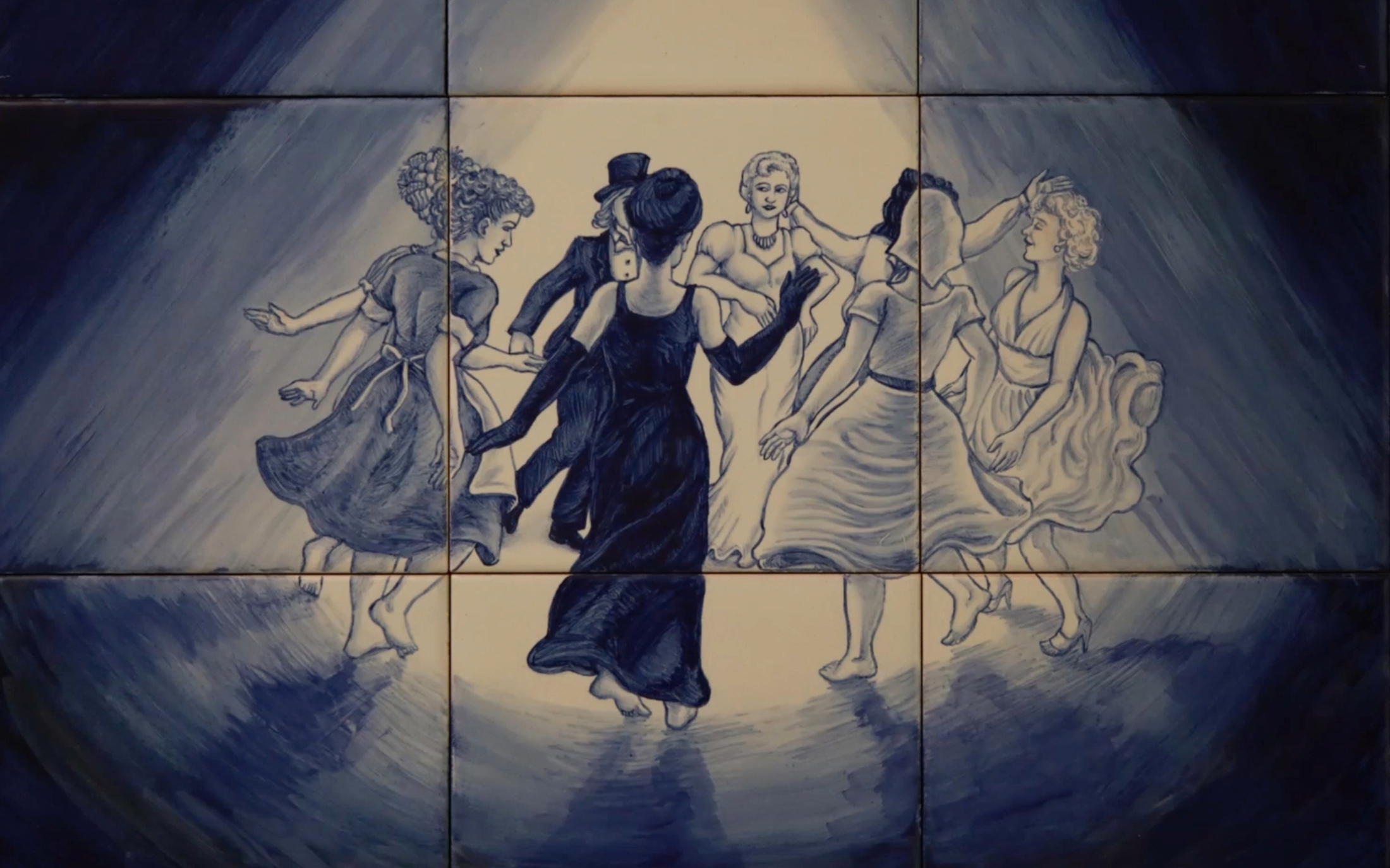
"Fortunately, Regina [Pessoa], who is a great problem solver, animator, and collector of gadgets, had this mini projector that I ended up using to project my drawings from a computer onto the tile," Page recounts. This ingenious solution allowed for precise frame-by-frame projection, enabling the team to meticulously paint over the projected lines. This method also facilitated collaboration, allowing other artists to contribute to the tile painting process.
Painting on the tiles themselves presented its own set of difficulties. The process was both additive (applying paint) and subtractive (scratching away paint), requiring a steep learning curve for the artists. "From what we observed, every artist had their own approach, so it was a major learning curve for us," Page explains.
Another significant technical challenge, as highlighted by Normand Roger, was the tile registration process during shooting. Unlike traditional animation where cels are placed on sprockets for precise alignment, animating tiles required a more complex and varied approach.
"With tiles, things became much more complicated, especially because some scenes involved multiple tiles," Roger states. The team had to construct custom frames for each "set" of tiles to ensure perfect alignment when swapping them out. "There was essentially a different setup for every scene." This involved intricate rigging, including attaching cameras to ceilings and using green screens on floors for specific shots, demonstrating a remarkable blend of ingenuity and physical effort.
A Resonant Return to the Magic of Animation
For Marcy Page, the creation of Virgin Fandango represented a profound personal journey. It was a return to the core of what she loves most about animation: the act of drawing, the magic of bringing images to life, and the profound connection formed with the subject matter.
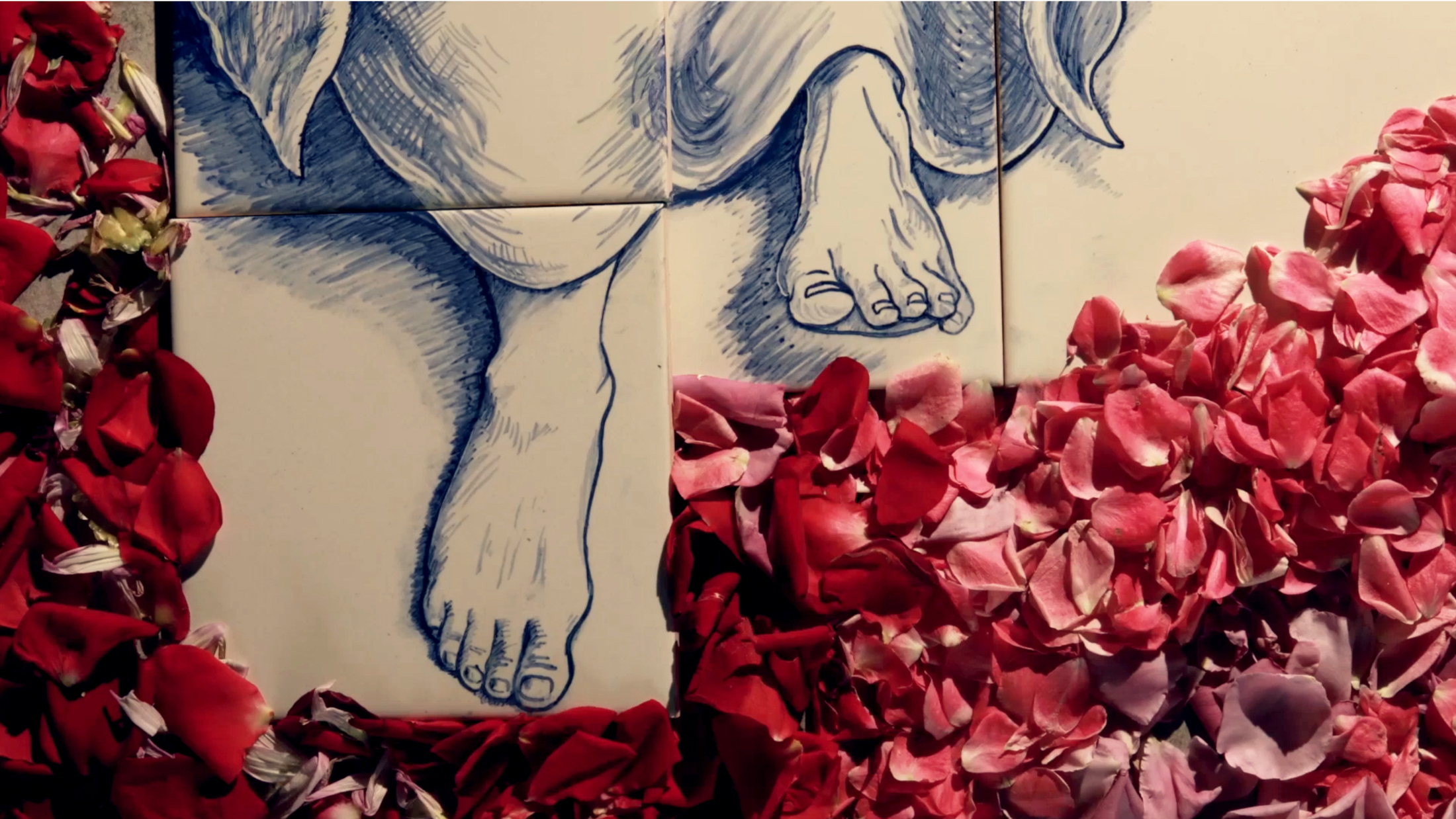
"When you’re drawing, you feel a connection to your subject. Drawing all these women from history was a profound experience," she shares. The collaborative aspect of inviting animator friends to contribute their own interpretations of Mary further enriched the project, transforming it into a shared artistic endeavor.
Page views animation as a "transcendent art form" that harmonizes dance, drawing, song, and music. Virgin Fandango, with its vibrant visuals, compelling narrative, and musical score, embodies this holistic vision of animation. The film serves as a powerful reminder of animation’s capacity to explore complex themes, challenge conventions, and celebrate the diverse tapestry of human experience, all while pushing the boundaries of artistic expression. The world premiere at Annecy is poised to introduce audiences to a truly unique and inspiring work of art.


Leave a Comment