
Nat Meade’s "Franklin" at Hesse Flatow: A Profound Exploration of Paternal Legacy, Mortality, and Renewal
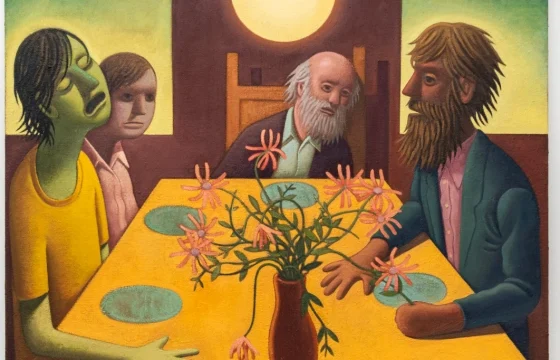
New York, NY – Hesse Flatow gallery is currently hosting "Franklin," a compelling exhibition of new paintings and works on paper by artist Nat Meade, marking his third solo presentation with the esteemed gallery. The exhibition, which opened to critical acclaim, offers a deeply personal and universally resonant exploration of familial bonds, the inescapable realities of mortality, and the profound journey towards reconciliation and renewal. "Franklin" will be on view through April 18, 2026, providing ample opportunity for visitors to immerse themselves in Meade’s evocative and thought-provoking artistic universe.
Meade’s figurative works, imbued with an undeniable emotional weight, serve as a visual testament to the complex tapestry of human experience. Through his distinctive artistic lens, he captures the everyday struggles and triumphs that define his existence as a father, son, partner, and academic. These are not mere portraits of individuals, but rather powerful allegories that tap into timeless archetypes. Viewers will encounter figures grappling with existential quests for validation, as well as narratives that illuminate the intricate dynamics of intergenerational relationships. Meade masterfully employs an allegorical distance in his paintings, creating a unique space where personal challenges are explored through a potent blend of absurd, somber, and humorous tropes. This approach not only offers a profound reflection on human nature but also fosters an unequivocal sense of connection and resonance with the viewer.
The Genesis of "Franklin": A Confrontation with Loss and Legacy
The exhibition is deeply rooted in Meade’s recent personal experiences, particularly the profound impact of his father’s passing and the subsequent reevaluation of his own role as a parent. This poignant juncture in his life has infused the works in "Franklin" with a palpable vulnerability, a frank confrontation with pain, and an unflinching contemplation of mortality. Yet, amidst these weighty themes, Meade introduces younger male figures who inject a vital sense of hope, acceptance, reconciliation, and renewal into the narrative. This dynamic interplay between the burdens of the past and the promise of the future forms the emotional core of the exhibition.
One striking example is the painting Poise, which depicts a pair of dangling legs suspended from a cloud. This arresting image prompts immediate contemplation: is the figure ascending or descending from the heavens? Meade uses this ambiguity to suggest the potential interchangeability of birth and death, both in a physical and spiritual sense. The presence of ghostly specters hovering over certain individuals serves as a potent metaphor for inherited trauma and the arduous process of release. In a manner reminiscent of classic cartoons where a soul detaches from a dying body, Meade’s spectral figures appear to look back upon themselves, leaving the viewer to ponder whether their gaze is one of happiness or regret.
The exhibition’s title, "Franklin," carries a subtle yet significant allusion to the 1974 horror film The Texas Chainsaw Massacre. This reference, while seemingly jarring in the context of Meade’s introspective work, highlights his engagement with the inherent turmoil of confronting one’s own darker impulses. The film’s infamous portrayal of a deranged patriarchal family serves as a backdrop against which Meade explores the "inner turmoil of contending with one’s violent and antagonistic impulses." In his paintings, these impulses are not depicted in a literal or gratuitous manner, but rather are sublimated or brought under control, as his characters visibly grapple with and ultimately reassert their agency.
The symbolic language employed by Meade is both rich and multifaceted. A recurring motif of a vulture picking away at a corpse evokes the eternal punishment of Prometheus by Zeus, a powerful symbol of enduring suffering and the consequences of transgression. Similarly, a bearded figure on his hands and knees echoes William Blake’s iconic portrayal of Nebuchadnezzar, a king condemned for his insatiable lust for power. These references ground Meade’s personal narrative within a broader context of historical and mythological struggles, underscoring the universality of human ambition, fallibility, and the search for redemption.
A Shifting Tide: From Turbulent Seas to Harmonious Shores
In stark contrast to the often fraught journeys of the adult figures, Meade’s younger protagonists radiate a sense of burgeoning harmony and unburdened exploration. A young boy is depicted steering a boat with a radiant torch, charting his own course unhindered by the pressures of societal expectations or familial legacies. This image captures a pure sense of childlike wonder and an adventurous spirit. Another poignant work features an adolescent standing ankle-deep in a secluded cove, reaching down to touch the vibrant seabed teeming with starfish, anemones, and mussels. This scene is imbued with a palpable sense of discovery and innocent engagement with the natural world.
A related painting further deepens this exploration of familial connection, presenting two pairs of legs – those of a father and son – in the same shallow pool. The image is tender, depicting a father’s gentle guidance of his son. This imagery marks a significant departure from Meade’s earlier works, where his figures were often depicted wrestling with or succumbing to the forces of nature, overwhelmed by turbulent winds and crashing waves. The focus on calmer seas in "Franklin" signifies a pivotal turning point in his artistic trajectory. Meade implicitly acknowledges the necessity of confronting one’s "rocky histories" as a prerequisite for healing and for liberating future generations from similar burdens.
Despite the thematic weight and the potential for overwhelming heaviness, Meade’s exhibition ultimately delivers a message of enduring optimism. He reminds us of the "stubborn resilience of human nature," a quality that makes progress not only possible but attainable. This profound insight, delivered through the eloquent language of paint, solidifies "Franklin" as a significant and deeply moving exhibition that resonates long after the viewer has left the gallery.
Supporting Data and Artistic Context
Nat Meade’s artistic practice is characterized by a meticulous engagement with traditional painting techniques, often blended with a contemporary sensibility that allows for profound psychological and symbolic exploration. His figurative style, while rooted in observational drawing and a deep understanding of anatomy, often distorts and exaggerates forms to enhance emotional impact and narrative depth. The works in "Franklin" exemplify this approach, with figures rendered with a raw, almost visceral energy that captures the intensity of their internal struggles and triumphs.
The use of color in "Franklin" is also noteworthy. Meade employs a palette that ranges from muted, earthy tones that evoke a sense of somber introspection to brighter, more luminous hues that signal moments of hope and clarity. This deliberate modulation of color contributes significantly to the emotional arc of the exhibition, guiding the viewer through Meade’s complex thematic landscape. The juxtaposition of light and shadow, often dramatic, further amplifies the sense of internal conflict and the eventual emergence from darkness.
Meade’s engagement with art historical references, as seen in the nods to Blake and the mythological tales of Prometheus, is not merely academic. These references serve as a powerful visual shorthand, allowing him to tap into a shared cultural understanding of certain archetypal human experiences. By weaving these familiar narratives into his contemporary context, he imbues his personal explorations with a timeless quality, making them relevant to a broad audience.
The thematic exploration of paternal relationships and the confrontation with mortality is a recurring element in contemporary art. However, Meade’s unique approach, characterized by its unflinching honesty, its embrace of allegory, and its ultimate message of hope, sets "Franklin" apart. His ability to translate deeply personal experiences into universally relatable narratives speaks to his maturity as an artist and his profound understanding of the human condition.
Official Responses and Critical Reception
Hesse Flatow’s decision to present "Franklin" underscores their commitment to showcasing artists who engage with complex and timely themes. The gallery’s statement highlights Meade’s "powerful and evocative" work and their anticipation of the exhibition’s impact on visitors. Early critical responses to "Franklin" have been overwhelmingly positive, with many praising Meade’s technical skill, his emotional depth, and the exhibition’s compelling narrative.
Art critics have lauded Meade’s ability to imbue his figurative paintings with a potent psychological charge. The exhibition has been described as "a profound meditation on legacy," "a powerful exploration of grief and healing," and "a testament to the enduring strength of the human spirit." The allegorical nature of Meade’s work has been particularly noted, with reviewers appreciating how he navigates sensitive themes of mortality and familial trauma with both sensitivity and a touch of dark humor.
The subtle yet impactful references, such as the title’s connection to The Texas Chainsaw Massacre, have been recognized as a key element of Meade’s artistic strategy, allowing him to engage with darker aspects of human nature in a nuanced and thought-provoking manner. The contrast between the struggles of the adult figures and the uninhibited joy of the younger characters has been a consistent point of praise, with many finding the latter to be a source of particular optimism and inspiration.
Implications and the Enduring Resonance of "Franklin"
The exhibition "Franklin" carries significant implications, both for the art world and for individual viewers. For the art world, it reinforces the importance of figurative painting as a powerful medium for exploring contemporary anxieties and universal human experiences. Nat Meade’s work demonstrates that traditional approaches to art can be recontextualized and imbued with new meaning to address the complexities of modern life.
On a personal level, "Franklin" offers a cathartic experience for viewers who have navigated similar journeys of loss, grief, and familial reconciliation. The exhibition provides a visual language for emotions that are often difficult to articulate, offering solace and a sense of shared understanding. Meade’s unflinching honesty about vulnerability and pain, coupled with his ultimately hopeful outlook, can serve as a powerful reminder of the resilience inherent in the human spirit.
The exhibition’s extended run through April 2026 ensures that a wide audience will have the opportunity to engage with Meade’s powerful body of work. In a world often characterized by rapid change and uncertainty, "Franklin" offers a space for contemplation, introspection, and a renewed appreciation for the enduring bonds of family and the profound capacity for healing and renewal. Nat Meade’s "Franklin" is not just an exhibition of paintings; it is an invitation to confront our own legacies, to embrace vulnerability, and to find hope in the ongoing journey of life.



Leave a Comment