
The Shadow of the Tolling Bell: An Ancient Chaos Threat Awakens in New RPG Adventure
FOR IMMEDIATE RELEASE
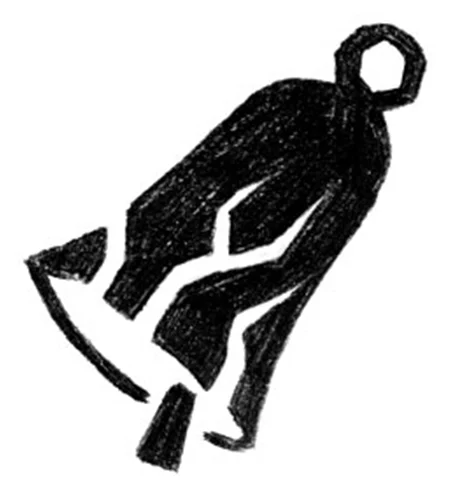
A new and foreboding threat is emerging from the depths of forgotten lore, promising to plunge tabletop role-playing game campaigns into an apocalyptic struggle against cosmic chaos. "The Night of Dissolution," a recently released adventure module, introduces players to the ominous "Brotherhood of the Tolling Bell" and their terrifying manifesto, a chilling prophecy of an ancient evil poised to reawaken and reshape reality itself. Drawing upon established fantasy mythologies and introducing novel gameplay mechanics, this module is set to challenge adventurers with moral dilemmas and existential dread on an unprecedented scale.
At the heart of this unfolding narrative is a meticulously crafted lorebook, presented as "The Manifesto of the Tolling Bell," penned by a cryptic figure known only as Wuntad. This manifesto serves not merely as background information but as a central artifact for player characters to discover, decipher, and ultimately confront. It details a cosmic history of conflict, banishment, and the slow, inexorable march towards an prophesied "Night of Dissolution"—a cataclysmic event designed to shatter the bonds of existence and usher in an age of unbridled chaos.
Main Facts: A Prophecy of Cosmic Annihilation
"The Night of Dissolution" module positions the Brotherhood of the Tolling Bell as the primary antagonist, a zealous cult dedicated to accelerating the end of the known world. Their ideology is rooted in a dark prophecy outlined in Wuntad’s manifesto, which speaks of an ancient darkness, the "Shadow King," banished long ago to the fringes of time and space within the "Demonweb." This king, and his "Princes," were defeated in a primordial war that reshaped the world, but their influence persists through their lesser lords, the "Galchutt," also known as the "Dukes of Chaos" or "Natharl’nacna" in elven tongues.
These Galchutt, though not drawn into the Demonweb with their masters, had their power inextricably linked to the banished Princes. Consequently, they retreated into "Caverns of Slumber," where they have lain dormant for millennia, waiting for the opportune moment to awaken. The manifesto explicitly states that this awakening will occur when the "ties between the Dukes and the Princes shall be forever broken," a condition that the Brotherhood of the Tolling Bell actively seeks to bring about by sowing seeds of chaos across the land. Their ultimate goal is to facilitate the Galchutt’s return, unleashing them upon the earth to blossom chaos into the "end of days," culminating in the titular Night of Dissolution.
The cult’s methods are insidious, focusing on the systematic destabilization of established order and the propagation of anarchic thought and action. To aid in their dark mission, the module introduces a potent spell, "Mark of Chaos," a transmutation spell available to Clerics and Sorcerer/Wizards. This spell, detailed within the manifesto, offers a glimpse into the direct magical tools at the cult’s disposal, designed to corrupt individuals and compel them towards chaotic acts.
Chronology: A History Forged in Primal Chaos
The narrative arc of "The Night of Dissolution" is deeply intertwined with the ancient chronology laid out in Wuntad’s manifesto. This in-game historical account paints a vivid picture of a universe perpetually teetering on the brink of cosmic destruction, a conflict that began long before the memory of mortal races.
The Primordial Darkness and the Shadow King: In the genesis of existence, the manifesto posits, a fundamental "darkness at the heart of the world" manifested as the "Shadow King – He Who Was Banished." This entity, intrinsically linked to the ethereal, reality-warping "Demonweb," represented an primal force of disorder and dissolution. It was not merely an evil being but a cosmic principle, seeking to unravel the very fabric of creation.
The Rise of the Demon Court and the Galchutt: From this Shadow King emerged his "Demon Court," a hierarchy of powerful entities. The "Princes" served as his direct lieutenants, who in turn "did furnish forth their Dukes." These Dukes, known by various names across different cultures—the Galchutt in the Dark Tongue, Natharl’nacna to the elves, and the Dukes of Chaos to men—were the tangible agents of the Shadow King’s will, embodying lesser but still immense power.
The Ancient War and Banishing: A titanic "War was fought," the manifesto recounts, a conflict of cosmic proportions that fundamentally altered the shape of the world. Details of this war are scarce, but its outcome was clear: it was "lost" by the forces of chaos, at least temporarily. The Shadow King and his Princes were vanquished, banished "to serve their King in the webs that lie beyond the edge of time and space"—implying their imprisonment within the Demonweb, an extradimensional prison or nexus of chaotic power.
The Slumber of the Galchutt: Unlike their masters, the Galchutt were not fully drawn into the Demonweb. However, their power remained inextricably "bound to their masters." This connection, while preventing their complete banishment, also rendered them inert without their Princes. Thus, they "retreated to their Caverns of Slumber," vast, hidden domains where they entered a deep, magical hibernation. "And there they sleep. And they wait." This period of slumber represents a ticking clock, a deferred apocalypse hanging over the world.
The Prophecy of Dissolution: The manifesto concludes with a chilling prophecy: the Galchutt’s sleep will end when the "ties between the Dukes and the Princes shall be forever broken." This breaking of ties is not an act of liberation but a severing of their current dependency, allowing them to manifest their full, unleashed power directly upon the prime material plane. The Brotherhood of the Tolling Bell believes that by sowing chaos, they are weakening the world’s structure, creating the conditions for this severing and enabling the Galchutt to "walk the earth," bringing forth the "end of days" and the "Night of Dissolution." This chronology provides a rich tapestry for DMs to weave intricate plots, delving into ancient ruins, forgotten prophecies, and the machinations of a zealous cult determined to hasten the end.
Supporting Data: Tools of Corruption and Narrative Immersion
Beyond the lore, "The Night of Dissolution" offers concrete gameplay elements that reinforce its thematic core. The "Mark of Chaos" spell is a prime example of how the module translates the cult’s ideology into mechanical terms.
The Mark of Chaos Spell:
- Description: A Transmutation [Chaotic] spell, Level 2 for Clerics and Sorcerer/Wizards. Requires verbal, somatic, material (a burning smokestick), and divine focus components. Casting time is a standard action with a touch range.
- Effect: The target gains a prominent physical mark – one of the many symbols of chaos or a specific chaos cult. For the duration (one hour per level), the target suffers a -2 penalty on any check or die roll involved with non-chaotic acts. Conversely, they gain a +2 bonus on any check involved with chaotic acts. A Fortitude save negates the effect, and spell resistance applies.
- DM Adjudication: The spell explicitly places the DM as the "final arbiter" of what constitutes a chaotic or non-chaotic act. While some examples are provided (attacking lawful creatures, casting chaotic spells, using chaotic weapons as chaotic; building, repairing as non-chaotic), many actions like "destruction, in general," "murder, defying authority, lying, and cheating" are left to the DM’s discretion.
This spell is not merely a combat debuff or buff; it’s a profound narrative device. It forces players to confront the nature of chaos, potentially pushing their characters towards morally ambiguous actions or punishing them for adhering to their principles. It serves as a tool for the Brotherhood to subtly corrupt and influence individuals, turning them into unwitting agents of dissolution, or to punish those who resist. Imagine a character marked by this spell struggling to perform a healing act or repair a broken bridge, suffering penalties, while finding their attacks against an orderly guard suddenly more potent. The spell embodies the cult’s goal: to make chaos not just appealing, but mechanically advantageous, and order inherently difficult.
The "Lorebook" Design Philosophy:
The module’s creator, known as The Alexandrian (Scott Rehm), employs a sophisticated design methodology by presenting chunks of lore, such as Wuntad’s manifesto, as in-game artifacts. As the design notes clarify, this approach involves "taking chunks out of the Chaositech sourcebook and parceling it out via the lorebooks, creating an additional layer of lore for the PCs to slowly peel back." This is a deliberate choice aimed at enhancing immersion and providing GMs with dynamic narrative tools.
Instead of simply providing exposition to the players, the lorebooks act as tangible clues, fragments of a larger truth that player characters must actively discover, interpret, and piece together. This method transforms lore from passive background information into an active plot element. It allows for a gradual revelation of the cosmic stakes, building suspense and a sense of discovery as players delve deeper into the cult’s secrets. The mention of Chaositech as a source also highlights the module’s connection to a broader, established cosmology of chaos, enriching the world-building for those familiar with it, while still making the content accessible to new players. Furthermore, the explicit note about some material being covered by the Open Gaming License (OGL) underscores the collaborative and open-source spirit prevalent in much of the TTRPG design community, allowing for wider adoption and adaptation of these dark concepts.
Official Responses: Designer Intent and Creative Process
While "The Night of Dissolution" is a fictional product, the "Design Notes" section serves as the direct voice of the creator, offering insights into the module’s conceptualization and its intended impact. These notes function as the "official response" from the developer, elucidating the pedagogical and artistic choices behind the adventure.
The creator, The Alexandrian, clearly articulates the central role of Wuntad’s cult as the "central antagonist" of The Night of Dissolution. This explicit statement guides Dungeon Masters (DMs) on how to frame the adventure, emphasizing the cult’s overarching influence and the importance of their manifesto. It signals that players should feel the persistent threat of the Brotherhood of the Tolling Bell, not just as isolated encounters, but as part of a larger, coordinated effort to bring about the apocalypse.
The most significant insight comes from the explanation of the "lorebook" method. By stating, "you can see how I’m taking chunks out of the Chaositech sourcebook and parceling it out via the lorebooks, creating an additional layer of lore for the PCs to slowly peel back," the designer reveals a sophisticated approach to world-building and narrative pacing. This isn’t about simply copying and pasting existing material; it’s about recontextualizing it. Chaositech provides the raw, foundational mythos of chaos, but The Night of Dissolution refines it into digestible, in-game artifacts that players can discover.
This method serves several critical purposes:
- Player Agency and Discovery: Instead of the DM lecturing players on lore, players actively engage with it, discovering scrolls, tomes, and manifestos. This makes the lore feel earned and more impactful.
- Gradual Revelation: The "peeling back" metaphor is key. Not all information is available at once, allowing the DM to control the flow of exposition and build suspense. This prevents information overload and ensures that each new piece of lore feels significant.
- Authenticity: Presenting lore as in-world documents, such as Wuntad’s manifesto or cultist spellbooks, adds a layer of verisimilitude to the game world. It feels like the characters are uncovering genuine secrets of their reality.
- DM Support: This design choice provides DMs with readily usable handouts and plot hooks. A lorebook isn’t just a paragraph in the DM’s guide; it’s a physical (or digital) object that can be given to players, sparking discussion, research, and further adventure.
The reference to the Open Gaming License (OGL) also signifies a commitment to the broader RPG community. By utilizing OGL content, the module potentially benefits from a wider audience and facilitates easier integration into existing campaigns that might already employ OGL-compatible material. It’s a nod to the collaborative spirit of tabletop gaming, allowing creators to build upon shared foundations while adding their unique spin. These design notes collectively demonstrate a thoughtful and player-centric approach to adventure creation, prioritizing immersion and dynamic storytelling.
Implications: Gameplay, Ethics, and the Future of Chaos
The introduction of "The Night of Dissolution" and its core elements carries significant implications for both gameplay experience and the broader landscape of fantasy role-playing.
Gameplay Implications:
- Moral Quandaries: The "Mark of Chaos" spell is a prime example of how the module pushes players into ethical grey areas. It challenges the traditional D&D alignment system by making chaotic acts mechanically advantageous. This could force players to make difficult choices: adhere to their character’s alignment and suffer penalties, or embrace chaos for power. This encourages deeper role-playing and introspection.
- Investigative Adventures: The lorebook approach fosters investigative gameplay. Players aren’t just hacking and slashing; they are deciphering ancient texts, researching obscure cults, and piecing together a cosmic puzzle. This offers a refreshing change of pace from purely combat-focused modules.
- Escalating Threat: The concept of the Galchutt "waiting" and the Brotherhood "sowing seeds of chaos" allows for a campaign that starts small (local cult activity) and gradually escalates to world-shattering stakes. DMs can introduce minor chaotic events, slowly revealing their connection to the larger apocalyptic plot.
- World-Altering Stakes: The Night of Dissolution isn’t just about defeating a big bad; it’s about preventing the fundamental unraveling of reality. This raises the stakes considerably, giving player actions a profound impact on the entire game world.
Ethical and Thematic Implications:
- The Nature of Chaos: The module provides a nuanced view of chaos not merely as "evil" but as a primordial, potentially existential force. It forces players to consider the philosophical implications of order versus disorder, creation versus dissolution.
- Free Will vs. Compulsion: The "Mark of Chaos" spell directly confronts themes of free will. Can a character truly be good if mechanically incentivized towards evil? How much of their actions are their own, and how much is influenced by external magic? This can lead to powerful character arcs exploring redemption or descent.
- Cult Psychology: The Brotherhood of the Tolling Bell offers a deep dive into cult psychology. What drives individuals to seek the end of the world? Is it despair, nihilism, or a twisted belief in a "better" chaotic future? Exploring these motivations can add psychological depth to the antagonists.
- Cosmic Horror Elements: The Shadow King, the Demonweb, and the slumbering Galchutt introduce elements of cosmic horror, where the antagonists are ancient, incomprehensible, and vastly powerful, threatening not just life but sanity and the very fabric of reality. This shifts the focus from simple good-vs-evil to a struggle against forces beyond mortal comprehension.
Broader RPG Industry Implications:
- Creative Reuse of Lore: The module’s integration of Chaositech demonstrates effective creative reuse of existing lore. This practice not only honors previous works but also enriches new content by providing a deep, established foundation, showcasing how to build upon the vast library of OGL content.
- Innovation in Narrative Delivery: The "lorebook" method highlights an ongoing trend in TTRPG design towards more immersive and interactive storytelling techniques. This moves away from purely descriptive modules towards those that actively engage players in the discovery and interpretation of narrative elements.
- Depth for DMs: By providing a detailed, layered antagonist and a rich, ancient history, the module offers DMs a wealth of material to draw upon, reducing preparation time while increasing the potential for complex, memorable campaigns.
- The Enduring Appeal of Apocalypse: The module taps into the enduring appeal of apocalyptic narratives in fiction and gaming. The idea of preventing or witnessing the end of the world remains a powerful motivator for both players and storytellers, offering ultimate stakes and heroic potential.
In conclusion, "The Night of Dissolution" is more than just another adventure module; it is a meticulously crafted piece of interactive storytelling that delves into the profound implications of cosmic chaos. By presenting its lore as discoverable artifacts, challenging player ethics with its unique spell mechanics, and building upon a rich, established mythology, it promises to deliver a truly unforgettable and potentially terrifying experience for those brave enough to answer the ominous tolling of its bell. As the Galchutt stir in their slumber, and the Brotherhood of the Tolling Bell sows its seeds, the stage is set for a desperate struggle that will test the very limits of order and heroism in the face of absolute dissolution.


Leave a Comment