
The Architect of Literary Manga: The Life, Legacy, and Lasting Influence of Yoshiharu Tsuge (1937–2026)
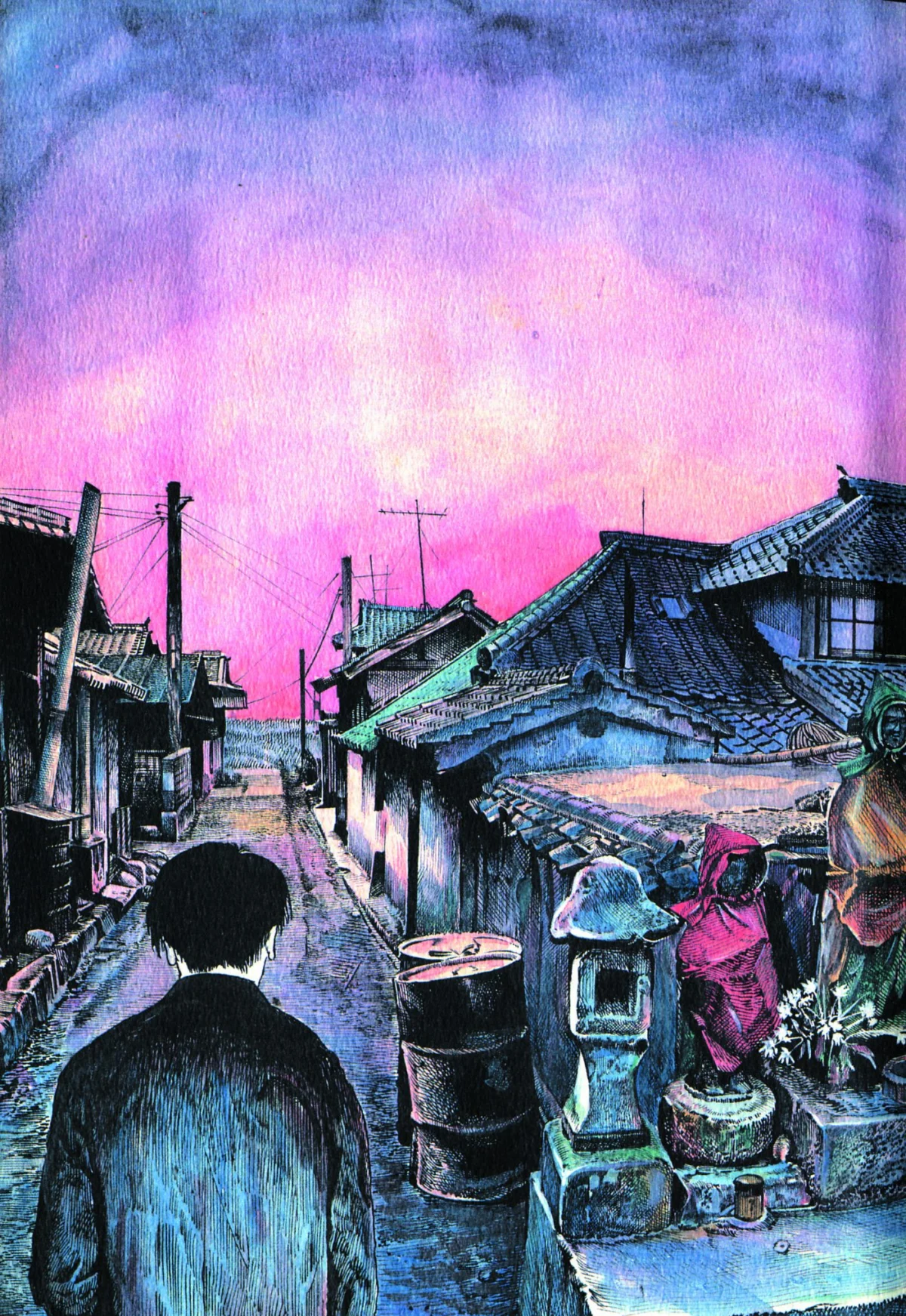
The world of international literature and visual arts mourns the passing of Yoshiharu Tsuge, a titan of Japanese manga whose work transcended the boundaries of the medium. As The Comics Journal revisits its archives—specifically the seminal 2005 analysis by Béatrice Maréchal—the industry reflects on a man who didn’t just draw stories but pioneered an entire psychological landscape. Tsuge, who passed away in early 2026 at the age of 88, remains the most enigmatic and influential figure in the history of gekiga (dramatic pictures) and the father of the "I-manga" genre.
Main Facts: The Passing of a Reclusive Giant
Yoshiharu Tsuge’s death marks the end of an era for the medium of comics. While many global audiences associate manga with high-octane action or saccharine romance, Tsuge’s work was the antithesis of commercialism. He was the vanguard of the "literary manga" movement, utilizing the page to explore existential dread, the surrealism of dreams, and the quiet desperation of post-war Japanese life.
The recent tribute by The Comics Journal, featuring the archival work of Béatrice Maréchal, highlights how Tsuge’s 1968 masterpiece, Neji-shiki (Screw-Style), acted as a "Big Bang" for adult-oriented comics. His passing has triggered a global re-evaluation of his bibliography, which, though relatively small compared to his contemporaries, carries a weight that redefined the artistic potential of sequential art.
Tsuge was a man of contradictions: a recluse who lived in the shadows of the industry he helped build, and a storyteller who used his own vulnerabilities and failures as the primary source material for his art. His legacy is now being preserved through comprehensive translations by publishers like Drawn & Quarterly, ensuring that his "private" world remains open to the public he often shunned.
Chronology: From Poverty to Artistic Apotheosis
To understand Tsuge is to understand the scars of 20th-century Japan. His life and career followed a trajectory of struggle, innovation, and eventual withdrawal.
1. The Early Years and the Rental Manga Era (1937–1955)
Born in Tokyo in 1937, Tsuge’s childhood was defined by the deprivation of the Second World War and its aftermath. Following the death of his father, he was thrust into labor at a young age to support his family. These early experiences with poverty and manual labor would later become the backbone of his "I-manga" (autobiographical manga). He entered the industry during the kashihon (rental manga) era, producing dark, gritty stories for a working-class audience that couldn’t afford to buy magazines outright.
2. The Garo Revolution (1965–1970)
Tsuge’s true artistic awakening occurred when he began contributing to Garo, an avant-garde monthly magazine founded by Katsuichi Nagai. Garo was the only venue that allowed for complete creative freedom, and it was here that Tsuge abandoned traditional genre tropes. In 1968, he published Neji-shiki. The story of a young man bitten by a jellyfish who wanders a dreamlike village seeking a doctor to fix his veins, it was an immediate sensation. It signaled that manga could be surreal, Freudian, and high-art.
3. The Shift to "I-Manga" and Travelogues (1970s–1980s)
Throughout the 1970s, Tsuge moved away from surrealism toward a stark, sometimes painful realism. He focused on travelogues—stories of a lonely traveler visiting decaying hot spring resorts—and autobiographical tales of his own depression and family struggles. His work became increasingly introspective, mirroring the "I-novel" tradition in Japanese literature.
4. Retirement and Reclusion (1987–2026)
In 1987, following the publication of Muga-no-Hito (The Man Without Talent), Tsuge effectively retired from drawing manga. He spent the next four decades living in near-total reclusion, refusing most interview requests and shunning the spotlight, even as his international reputation began to skyrocket in the 21st century.
Supporting Data: The Pillars of Tsuge’s Aesthetic
Tsuge’s influence is not merely anecdotal; it is grounded in specific narrative and visual innovations that scholars like Béatrice Maréchal have dissected for decades.
The Invention of the "I-Manga"
Before Tsuge, manga was primarily character-driven or plot-driven. Tsuge introduced the concept of the Watakushi (Self) manga. This wasn’t just autobiography; it was a psychological exposure. By depicting himself as a "man without talent" or a "failure," he broke the heroic mold of Japanese protagonists. This approach paved the way for modern "slice-of-life" and alternative comics creators worldwide, from Hideshi Hino to North American artists like Chris Ware and Joe Sacco.
Surrealism as Social Commentary
In Neji-shiki, Tsuge utilized a "dream logic" that had never been seen in comics. The use of anachronistic imagery—tanks rolling through Edo-period streets, or a doctor using a wrench to "fix" a human vein—served as a metaphor for the disjointed identity of post-war Japan. This story alone has been the subject of hundreds of academic papers and remains a required text for students of Japanese visual culture.
The "Decaying" Landscape
Tsuge’s art was characterized by its obsession with the old, the broken, and the abandoned. His depictions of onsen (hot springs) were not the luxury resorts seen in travel brochures, but crumbling, desolate spaces. This aesthetic, often referred to as wabi-sabi in a modern context, challenged the "economic miracle" narrative of 1970s Japan, reminding readers of the people and places left behind by progress.
Official Responses: Tributes from the Global Community
The news of Tsuge’s passing has prompted a wave of official statements from the literary and publishing worlds, emphasizing the global nature of his impact.
The Angoulême International Comics Festival:
The festival, which awarded Tsuge a Lifetime Achievement Award in 2020—a rare honor for a Japanese artist—released a statement: "Yoshiharu Tsuge was not merely a cartoonist; he was a philosopher of the image. He taught us that the most profound journeys are not those taken across maps, but those taken within the human psyche."
Drawn & Quarterly (North American Publisher):
The publisher, which has been painstakingly translating Tsuge’s complete works into English, noted: "Tsuge’s voice was singular. To translate him is to translate the very essence of the human condition. We are committed to ensuring that his complete bibliography remains available to English-speaking readers as a testament to his genius."
The Japanese Ministry of Culture:
In a rare move acknowledging an "alternative" artist, a representative stated: "Yoshiharu Tsuge’s contributions to the cultural fabric of Japan are immeasurable. He captured a specific soul of the Showa era that would otherwise have been lost to time."
Zack Davisson (Historian and Translator):
In his obituary for The Comics Journal, Davisson noted that Tsuge’s death is the closing of a chapter on the most fertile period of Japanese creativity. He described Tsuge as a man who "didn’t just change the rules—he played a different game entirely."
Implications: The Future of the "Tsuge School"
The passing of Yoshiharu Tsuge raises significant questions about the preservation of manga history and the future of "literary" sequential art.
1. The Preservation of the Garo Legacy
With Tsuge’s death, the industry loses one of its last direct links to the Garo era. There is now an urgent call among historians to digitize and preserve the ephemeral publications of the 1960s and 70s, ensuring that the avant-garde roots of manga are not overshadowed by modern commercial franchises.
2. The Global Rise of Adult Manga
Tsuge’s late-career recognition in the West (largely occurring between 2015 and 2026) has opened doors for other "literary" manga artists to be translated. We are seeing a "Tsuge effect," where publishers are now looking for works that prioritize atmosphere and introspection over action. His success has proven that there is a sophisticated global market for challenging, adult-oriented graphic novels from Japan.
3. Influence on the "Gig Economy" Narrative
Modern readers have found a surprising resonance in Tsuge’s later works, such as The Man Without Talent. His depiction of a man struggling to find meaning in a world that only values economic productivity feels remarkably contemporary. As the world grapples with the pressures of the modern economy, Tsuge’s stories of "opting out" or "failing gracefully" continue to offer a radical, if somber, alternative perspective.
Conclusion: On Top of the Mountain
Béatrice Maréchal’s 2005 essay was titled "On Top of the Mountain," a fitting metaphor for an artist who stood at the peak of his craft while remaining distant from the world below. Yoshiharu Tsuge’s work was never meant to be easy. It was meant to be felt. It was meant to haunt.
As we look back at the archives of The Comics Journal and the vast, quiet landscape of Tsuge’s bibliography, we see an artist who successfully turned the "low" medium of comics into a "high" art form without ever losing his connection to the common man’s struggle. He proved that a single panel of a quiet street or a broken man could contain as much truth as a thousand-page novel. Though the man has passed, the "Screw-Style" of his imagination will continue to turn in the minds of readers for generations to come.




Leave a Comment