
Unveiling the Underworld: A Deeper Look into The Descent of Inanna
Main Facts
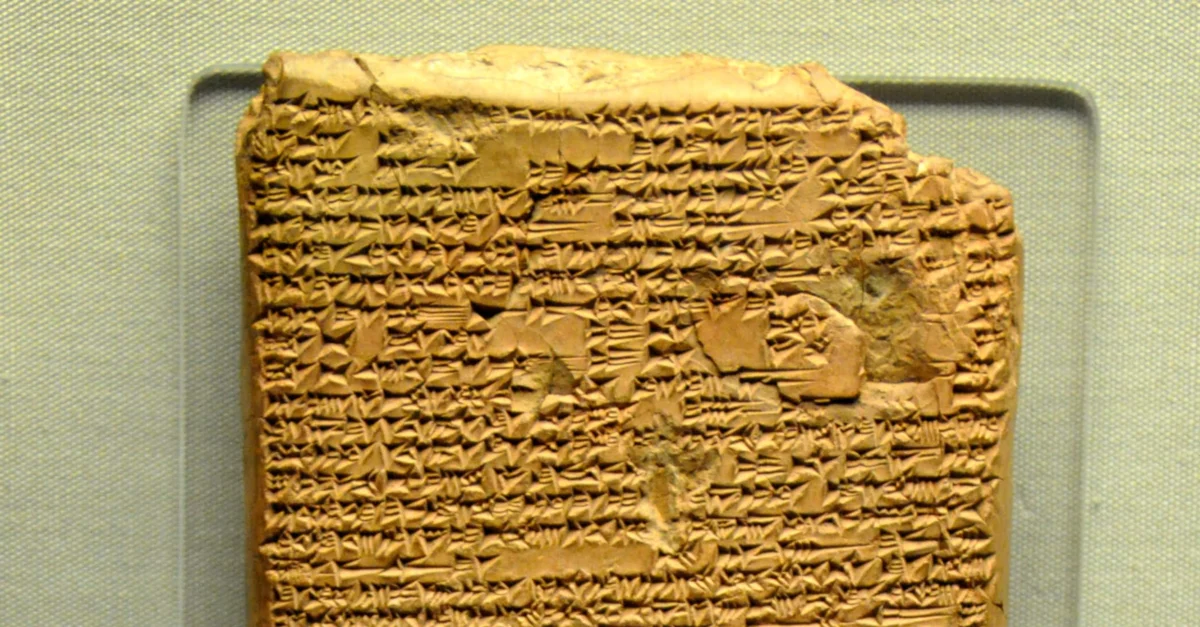
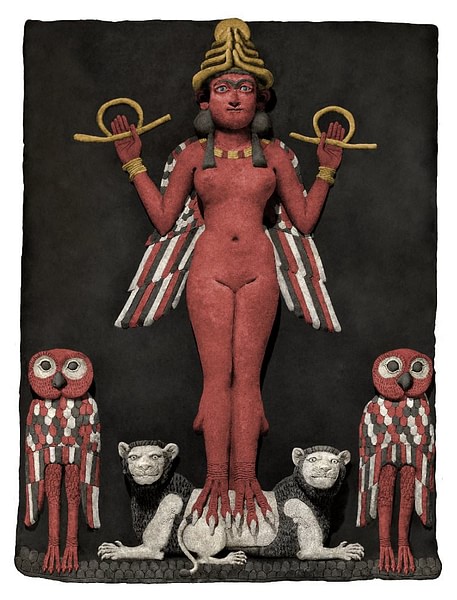
The ancient Sumerian poem, The Descent of Inanna, dating back to approximately 1900-1600 BCE, stands as a cornerstone of Mesopotamian literature and mythology. It chronicles the perilous journey of Inanna, the formidable goddess of love, war, and fertility, often known as the Queen of Heaven, from her celestial abode to the earthly plane and, most dramatically, into the shadowy depths of the Underworld. Her stated purpose: to visit her recently widowed sister, Ereshkigal, the grim Queen of the Dead. The poem famously opens with the evocative lines, "From the Great Above she opened her ear to the Great Below," immediately establishing the epic scope and profound thematic resonance of the narrative. This foundational myth delves into themes of death, rebirth, power dynamics, and the intricate web of divine justice, offering a window into the complex cosmology and moral sensibilities of ancient Sumer.
The core narrative sees Inanna, adorned in her most exquisite regalia, descend through seven gates, progressively stripped of her divine attributes. Upon reaching Ereshkigal’s throne room, she is judged, condemned, and ultimately killed, her body hung as a piece of "rotting meat." Her faithful servant, Ninshubur, initiates a rescue, leading to Inanna’s eventual resurrection with the aid of the god Enki and two unique beings, the Galla. However, her return to the living world demands a substitute, a sacrifice to the Underworld. This search culminates in the tragic fate of her lover, Dumuzi, and subsequently his sister, Geshtinanna, establishing a mythological explanation for the cycle of seasons, reminiscent of the later Greek myth of Demeter and Persephone. Yet, as modern scholarship increasingly argues, a purely seasonal interpretation, or even a psychological one, may overlook a crucial layer of meaning, intricately linked to another monumental Sumerian epic: The Epic of Gilgamesh.
Chronology of a Divine Descent and its Aftermath
Inanna’s journey begins not with sorrow, but with an almost audacious display of power and foresight. Before her descent, she meticulously prepares, donning her finest garments and the seven symbols of her divine authority: the crown of heaven, beads of lapis, her breastplate, a golden ring, a measuring rod and line (scepter), and her robe of royalty. This elaborate attire underscores her status and perhaps her overconfidence. Crucially, she instructs her loyal advisor, Ninshubur, to seek aid from the great gods Enlil, Nanna, and finally Enki, should she not return within three days and three nights. This pre-emptive measure reveals a goddess aware of the inherent dangers, yet determined to proceed.
Upon arriving at the outermost gate of the Underworld, Inanna demands entry with an imperious knock. Neti, the chief gatekeeper, questions her identity and purpose. Inanna declares herself "Inanna, Queen of Heaven," stating her intention to witness the funeral rites of her "older sister, Ereshkigal’s husband, Gugalanna, the Bull of Heaven." Neti, skeptical of a living deity’s desire to enter the "land from which no traveler returns," relays the news to Ereshkigal.
Ereshkigal’s reaction is far from welcoming. The text describes her "slapping her thigh and bit[ing] her lip," taking "the matter into her heart and dwelt on it." This vivid imagery conveys not grief, but a profound, almost visceral displeasure. She commands Neti to bolt the seven gates and admit Inanna one by one, demanding she remove one article of her sacred attire at each threshold. With each gate, Inanna is stripped – her crown, beads, breastplate, ring, scepter, and finally her royal robes – leaving her "naked and bowed low." Her protests are met with Neti’s chilling retort: "Quiet, Inanna, the ways of the underworld are perfect. They may not be questioned." This systematic divestment serves not only to weaken her power but to humiliate her, rendering her utterly vulnerable.
Stripped of all earthly and divine symbols, Inanna enters Ereshkigal’s throne room. There, the Annuna, the formidable judges of the Underworld, surround her and pass judgment. Ereshkigal then seals Inanna’s fate, fixing upon her "the eye of death," speaking "the word of wrath," uttering "the cry of guilt," and striking her. Inanna is instantly transformed into a "corpse, a piece of rotting meat," and hung from a hook on the wall – a brutal, ignominious end for the Queen of Heaven.
True to her mistress’s instructions, Ninshubur, after three days and three nights, embarks on her desperate mission. After being rejected by Enlil and Nanna, she finds solace and assistance from Enki, the god of wisdom and water. Enki, recognizing the grave imbalance Inanna’s death creates, creates two asexual beings, the Galla – the Kurgarra and the Galatur – specifically "neither male nor female." He instructs them to bypass the Underworld’s defenses "like flies" and to empathize with Ereshkigal’s suffering, mirroring her groans and cries.
Upon entering the Underworld, the Galla find Ereshkigal in profound distress, described in raw, unvarnished terms: "No linen was spread over her body, Her breasts were uncovered, Her hair swirled around her head like leeks." The poem then vividly depicts her experiencing the excruciating pains of labor. The Galla follow Enki’s counsel, echoing Ereshkigal’s lamentations. Moved by their sincere empathy, Ereshkigal offers them a gift. As instructed by Enki, they request "only the corpse that hangs from the hook on the wall." Ereshkigal, bound by her offer, grants their wish. The Galla revive Inanna with the "food and water of life," and the goddess rises from the dead.
However, the Underworld’s immutable law dictates that none may leave without a substitute. The Galla demons accompany Inanna to the surface, tasked with claiming her replacement. Inanna’s journey back is marked by a series of near-sacrifices. The demons first attempt to seize Ninshubur, but Inanna intercedes, noting her servant’s profound mourning. The same occurs with her sons, Shara and Lulal, and even her beautician, Cara, all of whom are found in sackcloth, weeping for her apparent demise.
The climax of the return journey arrives when Inanna encounters her lover, Dumuzi. To her shock and fury, Dumuzi is found "dressed in his shining garments… on his magnificent throne," showing no sign of mourning. Enraged by his perceived betrayal and lack of devotion, Inanna decrees his fate, ordering the Galla to seize him. Dumuzi desperately appeals to the sun god Utu-Shamash, who transforms him into a snake, allowing a temporary escape. Yet, the Galla eventually capture him, dragging him to the Underworld. Dumuzi’s devoted sister, Geshtinanna, volunteers to share his fate, leading to the decree that they will each spend half the year in the realm of the dead. This cyclical presence in the Underworld, as with Persephone in Greek mythology, explains the changing seasons – a period of fertility and growth when Dumuzi or Geshtinanna are on Earth, and a period of barrenness when they are below.
Supporting Data: The Echoes of Gilgamesh
To truly grasp the profound implications and underlying motivations within The Descent of Inanna, one must turn to its contemporary and culturally intertwined narrative, The Epic of Gilgamesh. While the precise textual chronology of their composition may be debated, the oral tradition linking these stories was undoubtedly strong. It is in Gilgamesh that the crucial backstory for Inanna’s fateful descent into the Underworld is revealed.
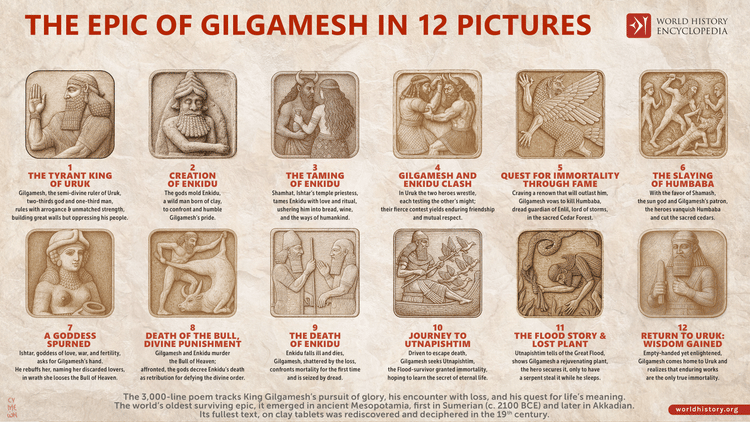
In The Epic of Gilgamesh, after the hero Gilgamesh and his companion Enkidu achieve fame by slaying the formidable demon Humbaba, Gilgamesh, newly adorned in royal splendor, captures the attention of Inanna (known by her Akkadian/Babylonian name, Ishtar). She attempts to seduce him, promising him a life of immense power and luxury as her consort. However, Gilgamesh, known for his wisdom and sharp tongue, scornfully rejects her advances. He recites a litany of her past lovers, detailing their tragic fates and the goddess’s fickle nature. He famously critiques her as "a brazier which smoulders in the cold, a backdoor which keeps out neither squall of wind nor storm, a castle which crushes the garrison, pitch that blackens the bearer, a water skin that chafes the carrier." He concludes with a pointed rhetorical question: "And if you and I should be lovers, should not I be served in the same fashion as all these others whom you loved once?"
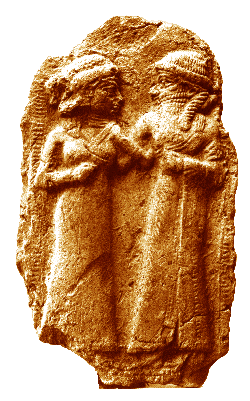
Inanna’s reaction to this public humiliation is immediate and furious. She falls into a "bitter rage" and ascends to the heavens to appeal to her father-god, Anu, demanding vengeance for Gilgamesh’s insults. Anu, however, dismisses her complaints, attributing her predicament to her own "abominable behavior." Unpacified, Inanna escalates her demands, threatening to unleash chaos upon the cosmos: "If you do not grant me the Bull of Heaven, I will break the doors of the Underworld open and… bring up the dead to eat food like the living; and the hosts of the dead will outnumber the living."
The "Bull of Heaven" Inanna demands is Gugalanna, who, critically, is identified as the husband of her sister, Ereshkigal. Anu, perhaps swayed by her terrifying threat, eventually relents. Inanna unleashes Gugalanna upon Uruk, Gilgamesh’s city. The divine bull causes immense devastation, his snorts opening chasms in the earth, claiming hundreds of young men. Gilgamesh and Enkidu heroically confront and slay Gugalanna. In a final act of defiance and insult, Enkidu tears off the bull’s right thigh and hurls it at Inanna, who stands enraged on the city walls. This audacious act of a mortal against a goddess cannot go unpunished. The gods decree Enkidu’s death, who subsequently succumbs to a lingering illness.
This backstory from Gilgamesh is the linchpin for a truly informed understanding of The Descent of Inanna. It reveals that Inanna is directly responsible for Ereshkigal’s widowhood and the subsequent grief that would have afflicted the Queen of the Dead, especially if she was pregnant with Gugalanna’s child, as the Descent suggests. Inanna’s stated reason for visiting – to "witness the funeral rites" – becomes a thinly veiled, hypocritical act of insensitivity, if not outright provocation.
Official Responses: Interpretations and Re-evaluations
For many modern readers, particularly those influenced by depth psychology, The Descent of Inanna is often viewed through a Jungian lens. This popular interpretation posits the poem as an archetypal myth of individuation, a symbolic journey each person must undertake to achieve psychological wholeness. In this framework, Inanna’s descent represents a plunge into the unconscious, a necessary confrontation with the "shadow" self (Ereshkigal), and a shedding of the ego’s trappings. Her death and rebirth symbolize a profound transformation, leading to a state of heightened awareness and integration. Scholars and popularizers, most notably Joseph Campbell, have widely championed such interpretations, finding in ancient myths universal patterns of human experience. According to this view, Inanna, through her harrowing experience, emerges as a "complete individual, wholly aware."
However, while "interesting and even enlightening," this modern Jungian perspective faces significant challenges when rigorously compared against the text itself and its ancient Mesopotamian context. A primary criticism is that this interpretation often overlooks or downplays crucial textual details, especially the poem’s concluding lines, which praise not Inanna, but Ereshkigal: "Holy Ereshkigal! Great is your renown! Holy Ereshkigal! I sing your praises!" This final reverence for the Queen of the Dead profoundly undermines the notion of Inanna achieving ultimate "wholeness" or moral superiority through her journey.
Furthermore, the Jungian interpretation struggles to adequately account for the specific sequence of events: Inanna’s stated, somewhat suspect, reason for visiting; Ereshkigal’s visceral displeasure; the formal judgment by the Annuna; and Ereshkigal’s direct execution of Inanna through a "word of wrath" and "cry of guilt." These elements suggest a punitive act, a confrontation over a transgression, rather than a mere symbolic rite of passage. Most tellingly, this psychological framework often fails to explain why innocent figures like Dumuzi and Geshtinanna, entirely unconnected to Inanna’s initial decision to visit the Underworld, ultimately bear the brunt of the consequences.
A "clearer interpretation," deeply rooted in the cultural and narrative context of ancient Mesopotamia, emerges when The Descent of Inanna is read in conjunction with The Epic of Gilgamesh. This contextual reading transforms Inanna’s visit from a benevolent or self-exploratory act into an act of profound insensitivity and possibly even deliberate provocation. Ereshkigal’s "slapping her thigh and biting her lip" upon hearing of Inanna’s arrival is no longer merely displeasure but the understandable fury of a grieving widow confronting the one directly responsible for her husband’s violent death – a death that also left her pregnant and without a partner. The "word of wrath" and "cry of guilt" uttered by Ereshkigal are, in this light, direct accusations, a righteous condemnation of Inanna’s past actions and her brazen appearance at Gugalanna’s funeral.
In this re-evaluation, Inanna appears less as a seeker of wholeness and more as a powerful, yet deeply flawed and self-serving deity. Her manipulation of Enki to secure her resurrection mirrors her earlier coercion of Anu to obtain Gugalanna. The tragic fates of Dumuzi and Geshtinanna then serve as the ultimate price for Inanna’s reckless behavior and profound lack of empathy. They are proxies, paying for a divine conflict they had no part in instigating.
Implications: Justice, Injustice, and the Mesopotamian Worldview
This contextualized understanding of The Descent of Inanna reveals profound implications for ancient Mesopotamian society and its worldview. Far from being distant, abstract entities, the gods of Mesopotamia were intimately interwoven with the daily lives of the people. Inanna resided in Uruk, Enki in Eridu; their actions had direct and tangible consequences for humanity. The narrative demonstrates that even divine beings were subject to a cosmic order, albeit one often bent by power and manipulation.
The myth, in this interpretation, becomes a powerful commentary on justice and injustice. Ereshkigal, in killing Inanna, is not acting out of petty spite but seeking a form of justice for the murder of her husband. That this justice is ultimately thwarted by Enki’s intervention, and that innocent parties (Dumuzi and Geshtinanna) are made to pay the price, would have resonated deeply with an ancient audience grappling with the often-unpredictable and unfair nature of life. If even a goddess as powerful as the Queen of the Dead could be denied full justice, and if other gods and mortals suffered for the capricious actions of a deity like Inanna, then it offered a grim but perhaps consoling explanation for the hardships faced by everyday people.
The moral lesson for an ancient listener was not about personal transformation or self-actualization, but about the enduring consequences of one’s actions, even for the gods. It underscored the inherent unpredictability of existence and the sometimes-harsh reality that the innocent often suffer due to the negligence, pride, or poor judgment of others. The Descent of Inanna thus provided a framework for understanding human suffering and the perceived arbitrariness of fate within a divinely governed cosmos.
Ultimately, the praise for Ereshkigal at the poem’s conclusion becomes a poignant affirmation of her righteous, if ultimately frustrated, pursuit of justice. It elevates her dignity and legitimate grief above Inanna’s self-serving endeavors. The Descent of Inanna, therefore, transcends a simple seasonal myth or a psychological allegory. It stands as a complex, sophisticated narrative exploring themes of power, retribution, the manipulation of divine authority, and the universal experience of injustice, offering a stark and enduring reflection on the intricate relationship between divine will and mortal suffering in the heart of ancient Mesopotamia.



Leave a Comment