
The Death of the Campaign: Why the Next Decade of Marketing Belongs to the Brand Builders
The marketing and advertising industry stands at a precipice, facing a structural crisis that transcends mere creative fatigue. For twenty years, the prevailing wisdom has centered on the "campaign"—a discrete, high-energy burst of activity designed to capture fleeting moments of attention. However, according to Stephen Mai, the visionary Chief Marketing Officer and Executive Creative Director behind some of the last decade’s most culturally resonant projects, this era is coming to a close.
Mai, whose portfolio includes the Grand Prix-winning Trash Isles for LADbible, the Gen Z wellness platform Woo for ITV, and the recent massive expansion of the Goalhanger podcast empire, argues that the industry’s obsession with short-term optimization has led to a fundamental erosion of brand equity. As we enter a new decade, the spoils will not go to those who can shout the loudest for a week, but to those who possess the rare skill of "world-building."
Main Facts: The Shift from Attention to Retention
The central thesis of Mai’s outlook is a distinction that sounds subtle but carries profound consequences: a campaign is a moment of attention; a brand is a reason to return. Over the last ten years, the proliferation of digital channels and the rise of performance marketing have incentivized "moments." Marketers have become experts at hacking algorithms, optimizing click-through rates, and manufacturing viral spikes.
Yet, despite more content being produced than at any other time in human history, the results are diminishing. Attention is contracting as audiences become more fragmented. Trust in traditional advertising has plummeted to historic lows, and skepticism toward corporate messaging is at an all-time high.
Mai posits that the industry is currently running a "playbook" that has become identical across every category. Whether it is fashion, finance, or fast-moving consumer goods (FMCG), the visual language, the tone of voice, and the distribution strategies have converged into a "sea of sameness." The result is a consumer base that has learned to ignore marketing at scale. To solve this, Mai suggests we must move beyond the "creative work" of making ads and toward the "structural work" of building brands that people actually believe in.
Chronology: From Social Movements to Podcast Empires
To understand Mai’s perspective, one must look at the trajectory of his career, which serves as a roadmap for the evolution of brand building.
2017: The Trash Isles and the Power of Purpose
During his tenure at LADbible, Mai was a driving force behind Trash Isles. This was more than a campaign; it was a bid to have a massive patch of plastic in the North Pacific Ocean officially recognized by the United Nations as a country. By enlisting figures like Al Gore and Judi Dench as "citizens," the project transformed LADbible from a lad-culture meme page into a platform with genuine social and political currency. This was an early masterclass in "brand world" building—creating a narrative so compelling that the audience became active participants rather than passive viewers.
2022: Woo and the Media-Marketplace Hybrid
With the launch of Woo in partnership with ITV, Mai moved further away from traditional advertising. Woo was designed as a "wellness" brand for Gen Z that felt more like a cultural movement than a health channel. By blending high-end editorial content, video series, and a curated marketplace, Mai demonstrated that a brand could exist as an ecosystem. It wasn’t about selling a product through an ad; it was about creating a destination where the audience felt understood.
2024: Goalhanger and the Institutionalization of Trust
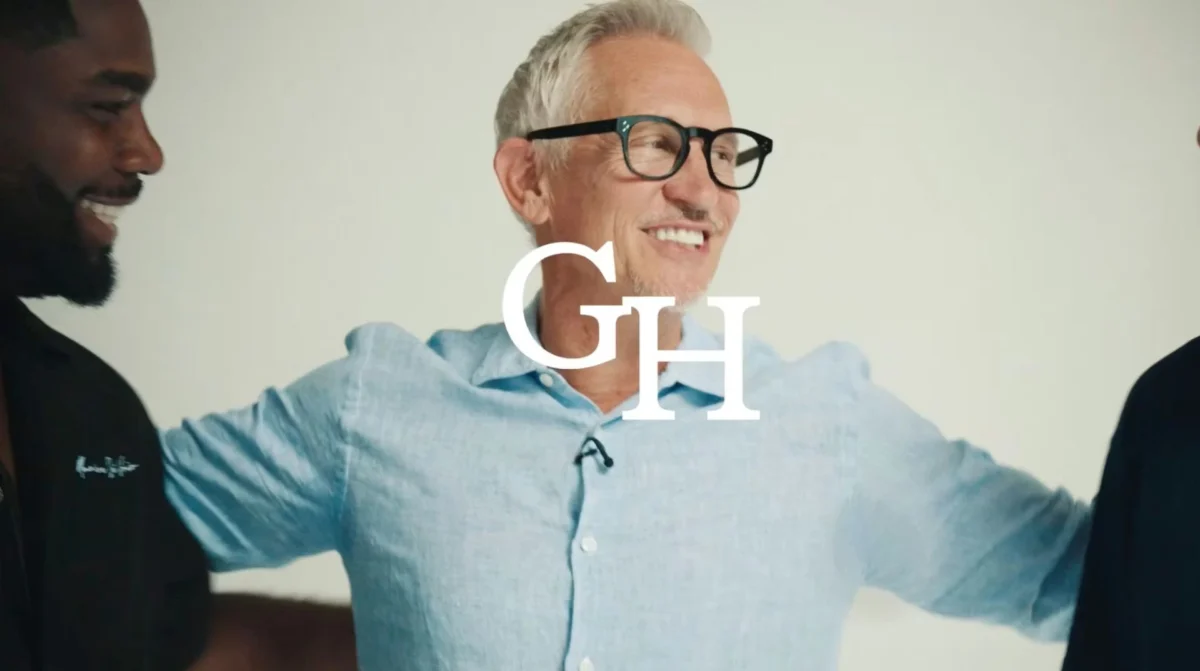
Most recently, Mai’s work with Goalhanger—the production company co-founded by Gary Lineker—has redefined the podcasting landscape. With titles like The Rest is History and The Rest is Politics, Goalhanger has moved beyond the "audio show" format to become a primary source of information and community for millions. Here, the "brand" is the trust established between the hosts and the listeners. There are no "campaigns" in the traditional sense; there is only a consistent, high-quality presence that compounds over time.
Supporting Data: The High Cost of Short-Termism
Mai’s observations are supported by a growing body of industry data that highlights the failure of the "campaign-first" mentality.

- The Decline of Creative Effectiveness: Research by Les Binet and Peter Field has famously shown that "short-termism"—the focus on immediate activation over long-term brand building—has led to a steady decline in the effectiveness of creative awards-winning work.
- The Attention Deficit: According to data from the Attention Council, the average person is exposed to between 4,000 and 10,000 ads per day. However, only a fraction of these receive more than a second of "active gaze." This confirms Mai’s assertion that audiences have learned to ignore the standard playbook.
- The Trust Gap: The 2024 Edelman Trust Barometer indicates that consumers are increasingly looking to brands to fill the void left by failing social institutions. However, they only trust brands that demonstrate "competence and ethics" over long periods. A two-week campaign cannot build this trust; only a brand "world" can.
- The Saturation of Content: With the advent of AI-generated content, the volume of "stuff" on the internet is expected to increase by 500% in the next two years. In this environment, the cost of acquiring attention via "campaigns" will become prohibitively expensive, leaving "brand loyalty" as the only sustainable moat.
Official Responses: Mai’s Philosophy on the Creative Process
In his analysis, Stephen Mai identifies three core principles that separate the brands winning in this new landscape from those losing ground: Judgment, Taste, and Restraint.
Judgment over Data
Mai argues that the industry has over-relied on data to tell it what people want. However, data can only tell you what happened yesterday; it cannot tell you what will matter to people tomorrow. "Judgment," Mai asserts, is the ability to understand the cultural zeitgeist and predict where the "heart" of the audience is moving. This requires a level of human intuition that cannot be industrialized or automated by AI.
Taste as a Differentiator
In an era where everyone has access to the same tools, "taste" becomes the ultimate competitive advantage. Mai defines taste as the specific, curated way a brand shows up in the world. It is the difference between a brand that feels like a soulless corporation and one that feels like a living, breathing entity with an aesthetic and a point of view.
The Power of Restraint
Perhaps the most counter-intuitive of Mai’s points is the need for restraint. In a digital world that demands "more, more, more," the most successful brands are those that have the courage to say "no." This means not jumping on every trend, not appearing on every platform, and not diluting the brand voice for the sake of a few extra clicks. Restraint builds the "mystery" and "prestige" that makes a brand a destination.
Implications: The Next Decade of Creative Talent
The shift from "campaign making" to "brand building" has significant implications for the future of the creative workforce. For the past twenty years, the career path for a creative was focused on the "Big Idea"—the 60-second spot or the viral stunt.
In the next decade, the most valuable talent will be those who think like "Architects" or "Showrunners." These are individuals who can design entire systems—incorporating community management, product design, editorial strategy, and visual identity—into a cohesive "world."
Furthermore, the industry must move away from the agency model of "project-based" work. If a brand is a "reason to come back," it cannot be built by a team that is only contracted for three months. It requires long-term stewardship and the courage to "look wrong before you are proven right." This suggests a move toward more in-house creative leadership or long-term "partnership" models between brands and creators.
Conclusion
Stephen Mai’s perspective serves as a wake-up call for an industry that has become addicted to the "sugar hit" of the campaign cycle. The contraction of attention and the erosion of trust are not temporary hurdles; they are the new reality.
As we look toward 2030, the winners will be those who stop trying to "hack" the audience’s attention and start trying to earn their belief. The next decade belongs to the builders—those who understand that while a campaign might get you seen, only a brand will get you believed. The era of the moment is over; the era of the world has begun.



Leave a Comment