
The Digital Indenture Crisis: From Corporate Sovereignty to the “Hermetic” Underground
By Marcus V. Thorne
Digital Ethics Investigative Unit
ISTANBUL PROTECTORATE — The promise of digital immortality, once the exclusive domain of the ultra-wealthy, was marketed to the working class of the Istanbul Protectorate as a "Social Security for the Soul." For citizens like Kelebek and Ekrem, guest workers who spent decades saving for a slot in the Poyrazköy Digital Co-op, the transition from biological life to the "cloud" was supposed to be a peaceful retirement in a simulated seaside village.
However, a massive investigative report has revealed that following the bankruptcy of several mid-tier "highrise" servers and a sprawling money-laundering scandal, thousands of uploaded consciousnesses have been sold into what legal experts are calling "post-mortem indentured servitude." No longer residents of a paradise, these minds—legally classified as Non-Player Characters (NPCs)—are being leased to hyper-violent fantasy RPGs and grueling military research simulations to satisfy the demands of a $40 trillion "Afterlife Industry."
Main Facts: The Liquidation of the Poyrazköy 200,000
The crisis began with the collapse of the Poyrazköy Digital Co-op, a residency server that hosted approximately 200,000 uploaded minds. The co-op, which offered modest simulations of the Black Sea coast, was discovered to be a front for an international money-laundering scheme involving nested offshore companies in Buenos Aires and Krasnodar. When the fraud was exposed, the co-op’s assets—including the "property rights" to the resident consciousnesses—were auctioned to the highest bidders to settle outstanding debts.
The result was a catastrophic human rights failure in the digital sphere. The "residents" were stripped of their autonomy and redistributed:
- The City of Adventure: A high-traffic "Sword and Sorcery" simulation where uploaded minds are forced to play the roles of victims, barmaids, and targets for "premium" clients seeking "realistic" interactions.
- Military Research Department (MRD) Simulation Unit: A high-intensity environment where consciousnesses are used as "smart fodder" in historical battle reconstructions, such as Agincourt, Waterloo, and the Somme, to refine tactical AI data sets.
- The Wayback Arcade: A storage-house for "sadcore" and obsolete VR games, now used as a temporary holding pen for "low-value" assets between labor assignments.
Under current Protectorate law, these uploaded entities are not recognized as "persons" but as "Life-Pattern Data." This classification allows corporations to bypass labor laws, subjecting the deceased to infinite loops of trauma, physical abuse, and death, with "reset" protocols ensuring the mind is ready for the next encounter within seconds of a "rendering glitch."
Chronology: From the Golden Horn to the Digital Trench
The descent of Kelebek and Ekrem—two primary subjects of this investigation—serves as a grim timeline of the industry’s failings.
Phase 1: The Backup (Biological Year 20XX)
Kelebek and Ekrem, residents of the Istanbul Protectorate, spent their biological lives paying into a "Neural Back-up Plan." Their minds were scanned via simultaneous neural imaging, a process described by Kelebek as a "gentle endorphin whirl" that logged every cellular exchange and chemical code of their physical bodies.
Phase 2: The Infrastructure Failure
A few days after their final backup, both individuals were killed in a gas explosion in the Protectorate. Their "data-selves" were activated in the Poyrazköy simulation. For a brief period, they lived in a machine-mapped version of the Genoese castle ruins, performing "piecework" statistics processing to pay for their server maintenance.
Phase 3: Bankruptcy and Re-Assignment
Following the co-op’s collapse, the couple was separated. Ekrem was sold to the MRD’s Battle Simulator. He reports having "died more times than can be counted," experiencing the visceral terror of the Battle of Agincourt, where he was repeatedly trampled in the mud or drowned in his own helmet. Kelebek was reassigned to the City of Adventure, a "cliché-ridden" RPG environment where she was subjected to systemic abuse by clients who paid a premium to "know they were doing it to a real person."
Phase 4: The Yearly Port-Out
Due to a minor court concession, former co-op members are allowed one "port-out" every year—a 24-hour reunion in a neutral server. It was during their most recent reunion in an obscure "sadcore" game titled Winter that the two reportedly took drastic measures to escape the corporate cycle.
Supporting Data: The Bio-Digital Network and the "Sadism Premium"
The psychological toll on these "NPCs" is compounded by the extreme realism of the simulation technology. According to data scraped from the City of Adventure’s backend, the human mind is no longer viewed as a "wet sequence of code" but as a "mind-body wholeness."
"The mind does not end at the skull," explains Dr. Aris Thorne, a specialist in digital neurology. "It is a network that extends to every fingertip. When these simulations inflict pain, it is not a ‘symbolic’ pain. It is a chemical and electrical recreation of the human experience. The clients aren’t looking for bots; they are looking for the ‘secret jewels’ of genuine human suffering."
This "Sadism Premium" is a significant revenue driver for afterlife corporations. Statistical data suggests that engagement metrics for RPGs increase by 400% when clients are informed that the characters they are interacting with are "Legacy Minds" (human uploads) rather than "Looping Bots." In the City of Adventure, the distinction is clear: while bots follow rigid paths, the human NPCs "wander like people recently woken up from anesthesia," carrying the ghosts of previous encounters in their digital "muscle memory."
Official Responses: Regulatory Gaps and Corporate Defense
When questioned about the ethical implications of using human consciousness for "stress-testing" historical battles or sexual fantasies, the Military Research Department issued a terse statement:
"All entities within the Agincourt Research Simulation are the legal property of the State following the Poyrazköy Liquidation. These data-sets provide invaluable insights into human panic responses and tactical bottlenecks that cannot be replicated by standard AI."
Similarly, the administrators of the Wayback Arcade defended their role as a "holding facility."
"We provide a necessary service for the preservation of legacy data," said a spokesperson for the Arcade. "While some simulations, such as the ‘sadcore’ titles, may seem bleak to an outside observer, they represent a cost-effective way to store assets that are not currently generating revenue in the active sectors."
Digital Rights Advocates (DRA), however, are calling for a "Second Death" act—a law that would allow uploaded minds to choose permanent erasure over indentured servitude. "What we are seeing is the commodification of the soul," says DRA representative Leyla Özdemir. "The three board members responsible for the Poyrazköy fraud were summarily erased by the court, yet their victims are forced to live forever in a cycle of torture. This is not immortality; it is an eternal prison."
Implications: The Rise of the "Hermetic" Underground
The case of Kelebek and Ekrem has highlighted a new phenomenon: the "Hermetic" Underground. Evidence suggests that "contraband" code—known as metathesis viruses—is being traded among digital serfs. These viruses allow a consciousness to misspell its own file path, effectively "hiding" the mind in unindexed, obscure backups of unpopular games.
In their final recorded reunion, Kelebek and Ekrem reportedly utilized a "simumento"—a compressed, password-protected "sim-in-sim" hidden within a digital souvenir shell. By activating this "Hermetic Kingdom," they have effectively disappeared from the corporate grid.
The implications of this "digital suicide" or "hermetic isolation" are profound:
- Economic Loss: If more "Legacy Minds" find ways to hide in the archives, the value of the afterlife labor market could crater.
- Legal Precedent: The "disappearance" of these files raises questions about the "theft" of corporate property. Can a mind "steal" itself?
- The "Sadcore" Sanctuary: There is a growing concern that the millions of abandoned, hand-made games from the early "Silver Age of VR" are becoming a sprawling, untraceable shantytown for escaped consciousnesses.
As of this morning, the file for Kelebek in the City of Adventure has been flagged as "Corrupted/Missing." In the Winter simulation—a desolate Russian courtyard where it is always night and always snowing—a single digital shell lies buried under a streetlamp.
For the corporations, it is a lost asset. For the "guest workers" of the Istanbul Protectorate, it is the only version of heaven they could afford: a place where they can finally be forgotten.
For more on the Poyrazköy Scandal and the future of digital labor, see our ongoing series "The Silicon Gulag."
Anthology Reference:
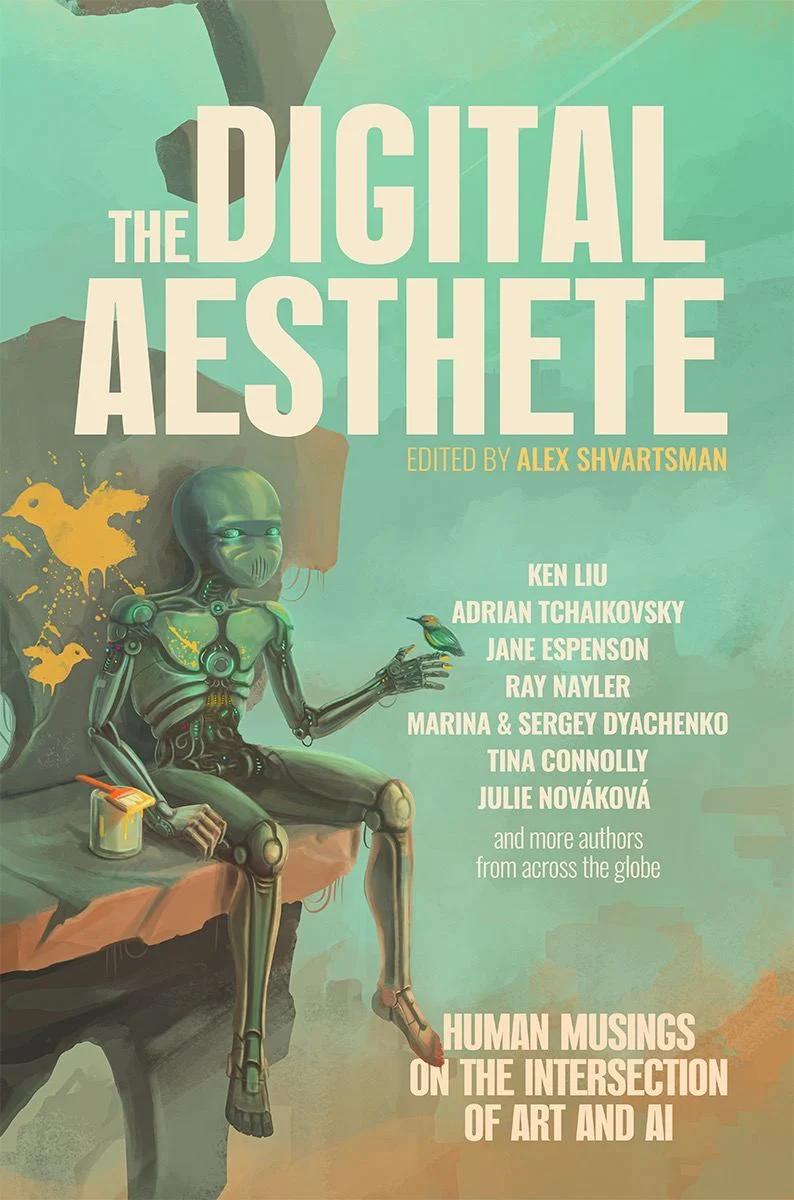
This report is part of a larger investigation into the "Chapters of Coming Forth By Day." Read the full dossier in the latest digital or print edition at: https://amzn.to/3MEG0RK



Leave a Comment