
Eurydice I: The Matriarch Who Forged Macedon’s Golden Age
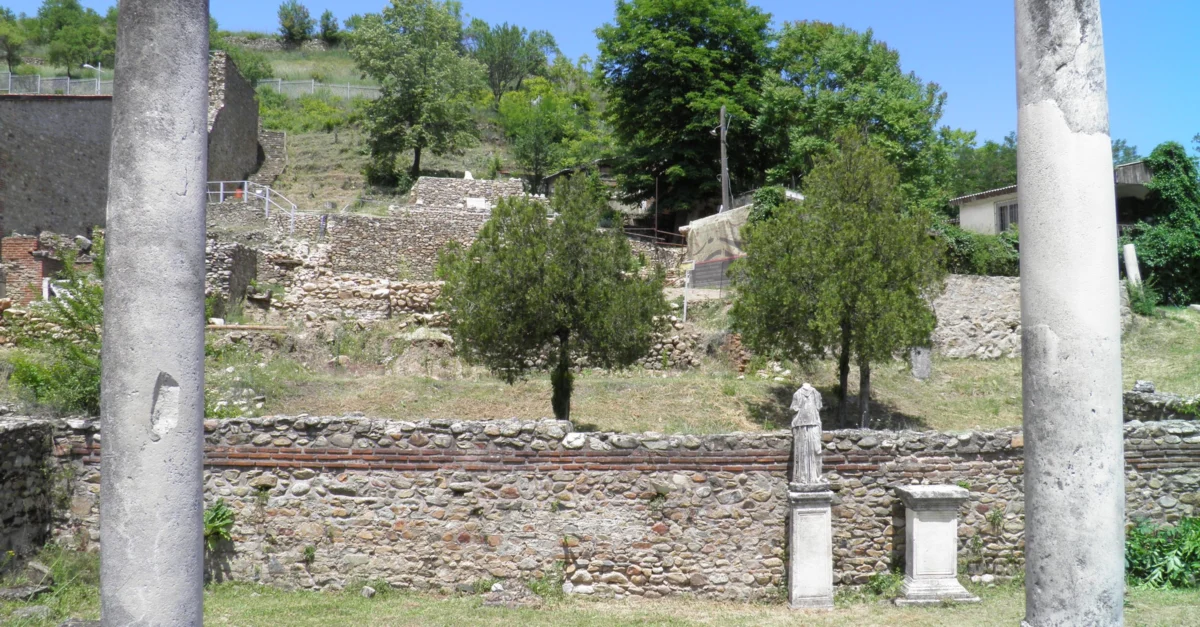
VERGINA, MACEDONIA – In the annals of ancient Macedonian history, a period often overshadowed by the colossal figures of Philip II and Alexander the Great, stands a woman whose influence was profoundly instrumental in shaping their destinies: Eurydice I. Born into the royal house of Lynkestis around 410 BCE, Eurydice I is not merely a historical footnote but the earliest queen in ancient Macedonia whose political impact is tangibly known. Her life, marked by strategic marriages, dynastic struggles, and a fierce determination to protect her lineage, set a powerful precedent for the queens of the Hellenistic era and directly contributed to the rise of the Argead dynasty to unparalleled power.
Main Facts: The Architect of a Dynasty
Eurydice I’s significance lies in her pivotal role as the mother of Philip II of Macedon (383/382-336 BCE) and the grandmother of Alexander the Great (356-323 BCE). Through her marriage to King Amyntas III of Macedon (circa 420-370/369 BCE), she solidified a strategic alliance that brought stability to a volatile kingdom and paved the way for its future expansion. Remarkably, all three of her sons—Alexander II, Perdiccas III, and Philip II—eventually ascended the Macedonian throne, a testament to her enduring influence in their rise to power.
Beyond her familial connections, Eurydice I stands as a classical model for subsequent Hellenistic queens, demonstrating an unprecedented ability to exercise varying degrees of power, autonomy, and authority in a largely male-dominated society. Her political acumen became particularly apparent after the death of her husband, Amyntas III, when she navigated treacherous dynastic rivalries to secure her sons’ succession. Her impact was so remarkable that she was honored through both verbal tributes and material constructions, with her son Philip II developing her birthplace into the major city of Heraklia Lynkestis and the orator Aeschines praising her noble actions during a critical moment in history. She was also notably literate, a rare achievement for women of her time, which likely underscored her capabilities in state affairs.
Chronology: A Life Woven into Macedonian History
Early Life and Strategic Origins (circa 410 – 390 BCE)
Eurydice was born into the royal house of Lynkestis, a powerful kingdom situated to the west of early Macedonia. While her exact birthdate remains debated, scholars place it between 410 and 407 BCE, with some evidence suggesting as late as 404 BCE. Her birthplace was almost certainly the main urban center of Lynkestis, a region ruled by her maternal grandfather, Arrhabaeus. Arrhabaeus, a descendant of the Bacchidae family from Corinth, had established control over Lynkestis, suggesting intertwined ancestral roots between the Lynkestian and Macedonian royal houses.
Her father, Sirras (or Sirrhas), was a distinguished commander whose ethnic background—whether Illyrian, Lynkestian, or maternally Macedonian—has been a subject of scholarly discussion. Sirras played a crucial role in the Lynkestian victory at the Battle of Lynkestis in 423 BCE, where Arrhabaeus successfully resisted the expansionist ambitions of Perdiccas II of Macedonia. It is believed Sirras leveraged his connections to persuade powerful Illyrian forces to switch allegiance, supporting Lynkestis against Macedonia. This strategic alliance was cemented when Arrhabaeus married his daughter, Irra, to Sirras, reinforcing the bond between Lynkestis and Illyria against their common adversary.
Marriage to Amyntas III: Securing the Throne (circa 390 BCE)
The political landscape of Macedonia in the late 5th and early 4th centuries BCE was fraught with instability. Amyntas III ascended the throne around 393/2 BCE, ending a tumultuous decade of regicide and political turmoil following the assassination of King Archelaus I. Facing persistent threats from neighboring kingdoms and internal rivals, Amyntas III was keen to forge powerful alliances. His marriage to Eurydice of Lynkestis, likely around 390 BCE, was a calculated move to solidify his position, integrating the powerful Lynkestian royal family into the Argead dynasty. This union was part of a broader diplomatic strategy, which included alliances with the Olynthians and a complex relationship with Athens and Thrace through the adoption of the Athenian commander Iphicrates. Eurydice’s marriage completed Amyntas’ collection of strategic alliances, crucial for his nascent reign.
The Queen Mother: Dynastic Succession and Crisis (370/369 – 359 BCE)
Eurydice I bore Amyntas III three sons—Alexander II (circa 388-367 BCE), Perdiccas III (circa 384/5-359 BCE), and Philip II (circa 383/2-336 BCE)—and possibly a daughter. Amyntas III’s peaceful death in 370/369 BCE, a rarity for Macedonian kings, marked the beginning of Eurydice’s most impactful period.
Little is known of her life before Amyntas’ death, save for one remarkable detail: Plutarch records that Eurydice sent a gift to the Muses, thanking them for her literacy education alongside her children. This detail underscores her unique position, as reading and writing were privileges largely reserved for elite men in the ancient Greek world. It also suggests a preparedness for the administrative and political responsibilities that would soon fall upon her.
Upon Alexander II’s succession, Macedonia was plunged into political chaos. Illyrian invasions, internal divisions among noble families, and numerous contenders for the throne threatened the young king’s rule. Two prominent "throne-hunters" emerged: Ptolemy of Aloros and Pausanias. Roman historian Justin presents a highly critical narrative, alleging that Ptolemy, a descendant of King Alexander I, was Eurydice’s secret lover and conspired with her to assassinate Amyntas III, later orchestrating Alexander II’s murder. In this account, Eurydice then marries her son’s murderer and makes him regent for her second son, Perdiccas III, while Philip II is taken hostage by the Illyrians.
However, modern scholarship largely rejects Justin’s portrayal of Eurydice as a scheming adulteress. Instead, it is recognized that Eurydice I possessed significant political influence, with her support or consent being essential for maintaining power. While Macedonian tradition did not permit women to act as regents, Eurydice’s era marked a clear growth in the influence, capabilities, and importance of royal women, foreshadowing later queen regents like her granddaughters Cleopatra of Macedon and Thessalonike.
Eurydice’s Decisive Intervention (circa 368 BCE)
The pivotal moment that highlights Eurydice’s political prowess is recounted by the Athenian orator Aeschines in his speech On the Embassy. During a period of extreme vulnerability, after the deaths of Amyntas III and Alexander II, with Perdiccas and Philip still minors, and with Ptolemy of Aloros seemingly betraying the royal family, Pausanias, a powerful exile, returned with a Greek force to claim the throne. In this crisis, Eurydice famously appealed to the highly acclaimed Athenian commander Iphicrates, who had previously been adopted as a son by Amyntas III.
Aeschines describes Eurydice bringing the young Perdiccas into Iphicrates’ arms and placing the even younger Philip upon his knees, imploring him to honor his familial ties and the friendship between Athens and Macedon. Though Aeschines’ account contains exaggerations (Philip was likely in his mid-teens, not a "little boy"), it serves as a near-contemporary testimony to Eurydice’s stunning competence and diplomatic skill in a moment of existential crisis for her dynasty. This appeal likely secured the protection of her sons, who were subsequently sent to safety under Iphicrates’ care.
The Rise of Philip II and Eurydice’s Legacy (365/4 BCE – 336 BCE)
Perdiccas III returned in 365/4 BCE, old enough to rule, and swiftly eliminated Ptolemy of Aloros. He reigned until 359 BCE, when he fell in battle against the Illyrians. Following his death, Philip II, disregarding the customary rights of his young nephew, initially declared himself regent and soon after seized the throne. Historians interpret this rapid succession to mean that being the son of Amyntas III and his powerful queen, Eurydice I, carried significant weight in legitimizing claims to the throne, even over traditional inheritance rules.
Eurydice’s date of death remains unknown, as she largely disappears from historical records after her appeal to Iphicrates. It is speculated that she was no longer alive by 343 BCE, the date of Aeschines’ speech, as he might have otherwise urged Philip to consult his mother for details of the event. However, her influence persisted. Philip II eventually incorporated Lynkestis, his mother’s homeland, into his expanding kingdom and rebuilt its capital, renaming it Heraklia Lynkestis, at least partially in her honor.
Supporting Data: Echoes in History and Archaeology
The evidence for Eurydice I’s impact, though fragmented, is compelling and multifaceted. Her story is pieced together through the writings of ancient historians like Plutarch, Justin, and Aeschines, complemented by significant archaeological discoveries.
Literacy and Royal Education: Plutarch’s account of Eurydice thanking the Muses for her education is a crucial piece of evidence. It highlights that Macedonian royal women, unlike many of their Greek counterparts, often received a reasonable level of education. This education was not merely for personal enrichment but served a practical purpose: preparing them to assume leadership roles, especially in the frequent absence or sudden death of their royal husbands. Eurydice is frequently cited as an early example of this trend, suggesting she was a forerunner in advocating for female intellectual development within the royal court. Her literacy likely provided her with the tools to understand and influence the complex political landscape.
Contrasting Narratives: Justin vs. Aeschines: The stark contrast between Justin’s salacious portrayal of Eurydice as a conspiratorial adulteress and Aeschines’ depiction of her as a courageous and astute protector of her children is a classic example of the challenges of ancient historical interpretation. Justin, writing centuries later, likely aimed for dramatic effect, and his narrative is now largely discredited by scholars who see it as a biased attempt to tarnish her reputation or sensationalize dynastic struggles. Aeschines, a near-contemporary orator, while potentially exaggerating Philip’s youth to serve his rhetorical purpose, offers a more credible account of her decisive political intervention. This divergence underscores the need for critical analysis of ancient sources, particularly concerning powerful women whose actions might have been viewed through a patriarchal lens or used for political propaganda.
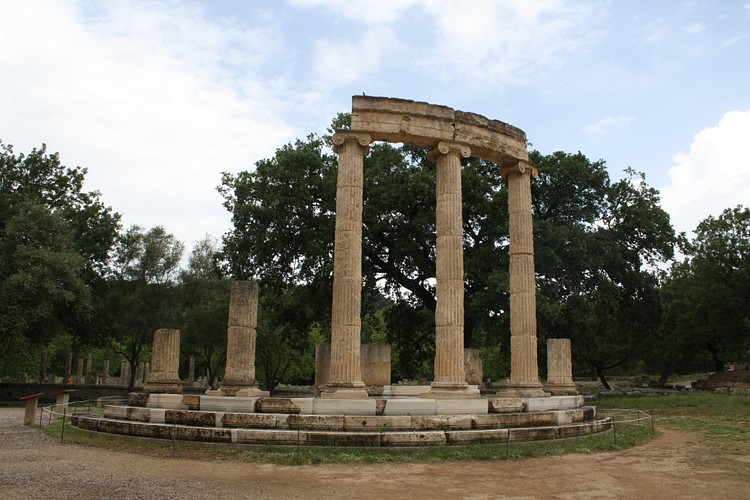
Archaeological Endorsements: Material evidence further supports Eurydice’s esteemed position. In 338 BCE, following his victory at the Battle of Chaeronea, Philip II commissioned a monumental sanctuary of Zeus at Olympia. After Philip’s assassination, Alexander the Great completed the project, including five chryselephantine statues sculpted by Leochares. These statues depicted Alexander alongside his parents (Philip II and Olympias) and his grandparents (Amyntas III and Eurydice I). Though the statues are lost, Eurydice’s name remains visible on one of the surviving pedestals. Her inclusion in this prestigious dynastic monument, placed among the most powerful figures of her time, unequivocally demonstrates her recognized importance within the Argead royal family.
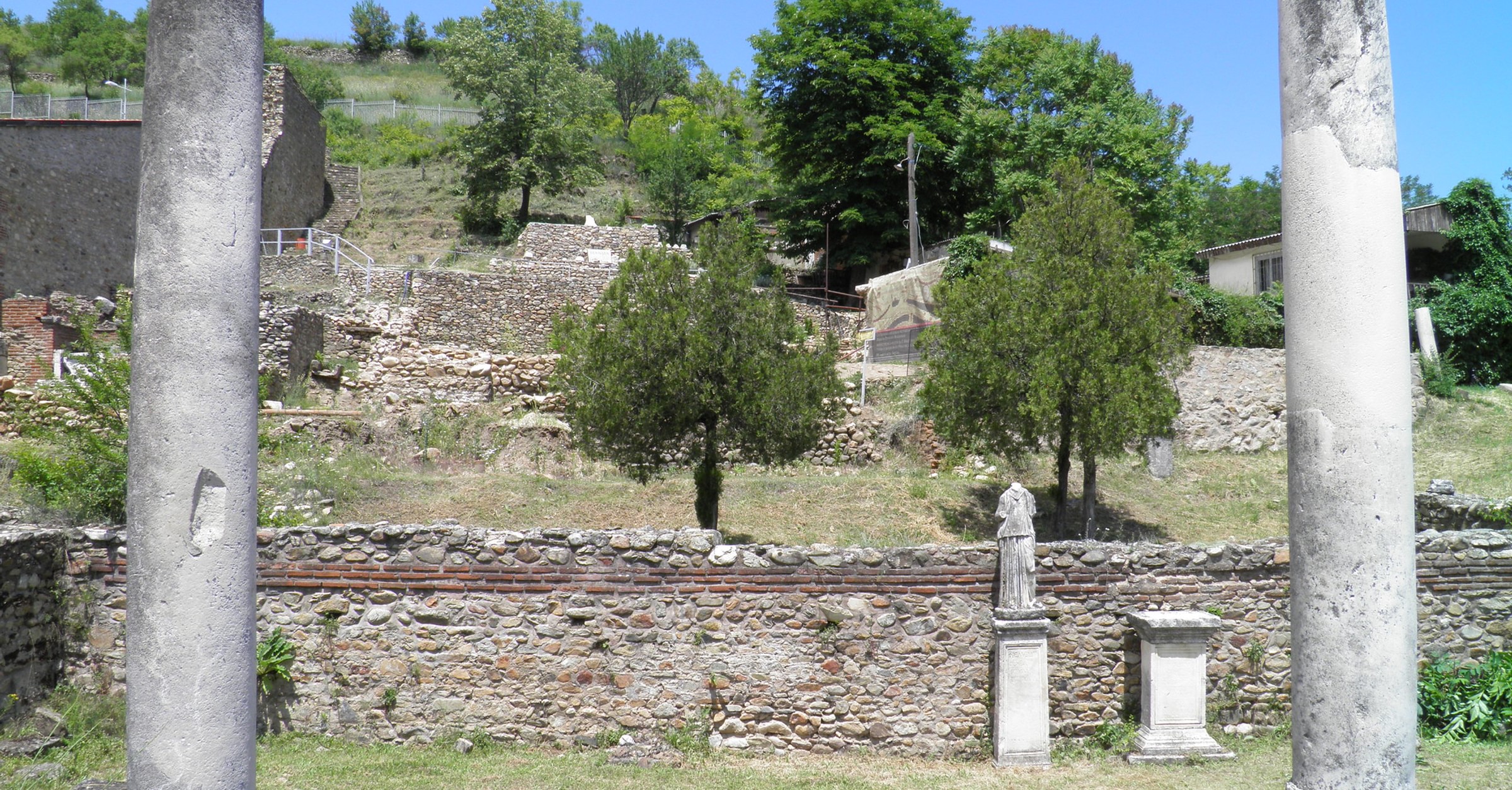
Further archaeological finds at Vergina, the ancient capital of Aigai, include two dedicatory inscriptions to Eukleia, a goddess associated with Artemis and maidens. These inscriptions, "Eurydice, daughter of Sirras," found on marble pedestals, were initially inferred to be offerings made by Eurydice around 390 BCE, possibly in connection with her marriage. However, a third similar inscription, found reused in a later basilica, suggests a potentially later date. To some scholars, this implies Eurydice had reasons to reassert her maiden identity, perhaps even after Amyntas III’s death. Regardless of the exact dating, it is noteworthy that these self-introductions emphasize her autonomous identity as "daughter of Sirras," rather than defining her solely through her husband, the king. This choice reflects a conscious assertion of personal identity and lineage, rather than merely a marital status.
Official Responses: Recognition and Enduring Tributes
The recognition of Eurydice I’s profound impact extended beyond mere survival, manifesting in concrete honors and public acknowledgments from her own family and contemporary figures.
Philip II’s Homage: One of the most significant official responses to Eurydice’s legacy came from her son, Philip II. His decision to develop her birthplace, Lynkestis, into a major city known as Heraklia Lynkestis around 358 BCE, served as a lasting tribute. This act was not merely an administrative reorganization; it was a clear demonstration of filial piety and an acknowledgment of his mother’s crucial role in his own lineage and the kingdom’s history. By elevating her ancestral home, Philip solidified his connection to a powerful regional dynasty and honored the woman who had fought to preserve his royal birthright.
Aeschines’ Public Praise: The orator Aeschines, in his speech On the Embassy (343 BCE), provided a crucial contemporary account that publicly lauded Eurydice’s actions. His detailed recollection of her appeal to Iphicrates, though perhaps embellished for rhetorical effect, was delivered to a wide audience and served to highlight her courage, intelligence, and diplomatic skill during a period of extreme vulnerability for the Macedonian royal house. This public endorsement from a prominent Athenian figure underscores that Eurydice’s political astuteness was not merely an internal Macedonian matter but was recognized and respected in the broader Greek world.
Alexander the Great’s Dynastic Commemoration: Alexander the Great’s decision to include Eurydice I in the chryselephantine statues at Olympia, alongside himself, his parents, and his paternal grandfather, stands as the ultimate official recognition. The Philippeion at Olympia was a monumental sanctuary celebrating the Argead dynasty’s triumphs, particularly Philip II’s victory at Chaeronea. To place Eurydice among these towering figures of power and conquest unequivocally cemented her status as a foundational matriarch of the dynasty that would conquer the known world. Her name inscribed on the pedestal ensured that her legacy would be remembered and revered for centuries to come.
Autonomous Identity in Inscriptions: The Eukleia inscriptions, "Eurydice, daughter of Sirras," serve as unique "official responses" in the form of self-introduction. By choosing to identify herself through her father, Sirras, rather than her husband, Amyntas III, Eurydice asserted an autonomous identity. This choice speaks volumes about her self-perception and her standing within Macedonian society. It suggests that her lineage from the powerful Lynkestian house was a source of personal authority and political legitimacy, an identity she proudly proclaimed even as queen.
Implications: Reshaping Royal Power and Historical Understanding
Eurydice I’s life carries profound implications for understanding the evolution of royal power, the role of women in ancient societies, and the very trajectory of Macedonian history.
A Model for Hellenistic Queenship: Eurydice I is widely considered a foundational figure for the Hellenistic queens who would follow. Her ability to navigate political intrigue, secure her sons’ succession, and assert her influence in a crisis set a precedent for women like Olympias (her daughter-in-law) and the Ptolemaic queens of Egypt. Before Eurydice, Macedonian royal women were largely invisible in public affairs. Her emergence as a politically active and respected figure marked a significant shift, demonstrating that queens could wield substantial, even decisive, power, laying the groundwork for the more prominent roles seen in the Hellenistic world. The fact that her own granddaughters, Cleopatra of Macedon and Thessalonike, later served as queen regents further highlights her enduring legacy in expanding the scope of female royal authority.
The Dynastic Cornerstone: Eurydice’s actions were crucial in ensuring the survival and eventual ascendancy of the Argead dynasty. Had she failed in her appeal to Iphicrates, or succumbed to the machinations of rivals like Ptolemy of Aloros, the young Philip II might never have survived to become the transformative leader he was, let alone father Alexander the Great. Her strategic marriage and fierce protection of her children, particularly in the chaotic period after Amyntas III’s death, provided the stability necessary for the future architects of the Macedonian Empire to eventually take the throne. She was, in essence, a cornerstone upon which the Macedonian golden age was built.
Challenging Historical Narratives: Eurydice’s story also underscores the challenges inherent in reconstructing the lives of women from ancient sources. The conflicting narratives from Justin and Aeschines highlight how historical accounts can be shaped by bias, political agendas, and the passage of time. The scholarly rejection of the "scheming adulteress" narrative in favor of a portrait of a shrewd and capable political actor represents a more nuanced understanding of female agency in antiquity, moving beyond simplistic moral judgments to appreciate the complexities of power dynamics.
The Enduring Power of Lineage: Even in a patrilineal society, Eurydice’s lineage and her identity as "daughter of Sirras" carried significant weight. Philip II’s tribute to her birthplace and Alexander the Great’s inclusion of her in the Olympia monument demonstrate that her maternal heritage and personal strength were integral to the Argead dynasty’s self-conception and legitimacy. She was not just a queen by marriage; she was a powerful figure whose own origins and actions contributed to the grandeur of her descendants.
In conclusion, Eurydice I emerges from the shadows of ancient history not merely as a royal consort but as a formidable matriarch and a shrewd political operator. Her intelligence, resilience, and strategic acumen, particularly during periods of intense vulnerability for the Macedonian throne, were instrumental in safeguarding the lineage that would ultimately produce two of history’s most renowned figures. Her legacy continues to resonate, offering invaluable insights into the evolving role of women in power and the intricate tapestry of ancient Macedonian dynastic politics.




Leave a Comment