
King Edmund I: The Consolidator of Anglo-Saxon England
Pucklechurch, Gloucestershire – In the annals of early English monarchy, King Edmund I, who reigned from 939 to 946, stands as a pivotal, if often overshadowed, figure. Inheriting a nascent kingdom still grappling with Viking incursions and fragile alliances, Edmund proved himself a formidable warrior-king and a shrewd diplomat, successfully reclaiming lost territories and laying critical foundations for the unified English state. His reign, though tragically cut short at just 25 years old, was marked by relentless campaigning against resurgent Norse power in the north and a sophisticated approach to managing the complex Celtic polities on his borders.
Edmund’s early life was steeped in the martial and political crucible of the House of Wessex. Alongside his illustrious elder brother, King Aethelstan (reign 924-939), he participated in the defining Battle of Brunanburh in 937, a decisive victory against a powerful Celtic-Viking alliance that momentarily secured English dominance. However, upon Aethelstan’s death in 939, the stability of the realm was immediately challenged. Vikings seized York, forcing Edmund to dedicate much of his reign to fierce campaigns to re-establish Wessex control over the north, a goal he achieved by 944. Beyond his borders, Edmund demonstrated a keen interest in Celtic affairs, fostering closer, albeit pragmatic, relations with Welsh and Scottish rulers, culminating in a successful invasion of the Kingdom of Strathclyde in 945.
Though often eclipsed by the monumental legacies of Aethelstan and their grandfather, Alfred the Great (reign 871-899), Edmund’s contributions were recognized by both contemporary and later scholars. The 12th-century chronicler John of Worcester hailed him as a "great king," while modern historian Sir Frank Stenton aptly described him as "both warlike and politically effective." His short but impactful rule solidified the territorial gains of his predecessors and introduced innovative administrative and diplomatic strategies that would shape the future of England.
A Royal Lineage Forged in Conflict
The early 10th century witnessed a radical transformation of the political landscape in what would become England. The once-diverse tapestry of rival English kingdoms had been largely swept away by the devastating Viking invasions of the late 9th century, which obliterated East Anglia, Mercia, and Northumbria as independent entities. Only the Kingdom of Wessex, under the inspired leadership of Alfred the Great, managed to withstand the Norse onslaught. Alfred’s son, Edward the Elder (reign 899-924), initiated a vigorous reconquest, expanding Wessex rule into the Viking-held territories of the East Midlands and East Anglia during the 910s. This period of intense conflict and consolidation formed the backdrop for Edmund’s birth and upbringing.
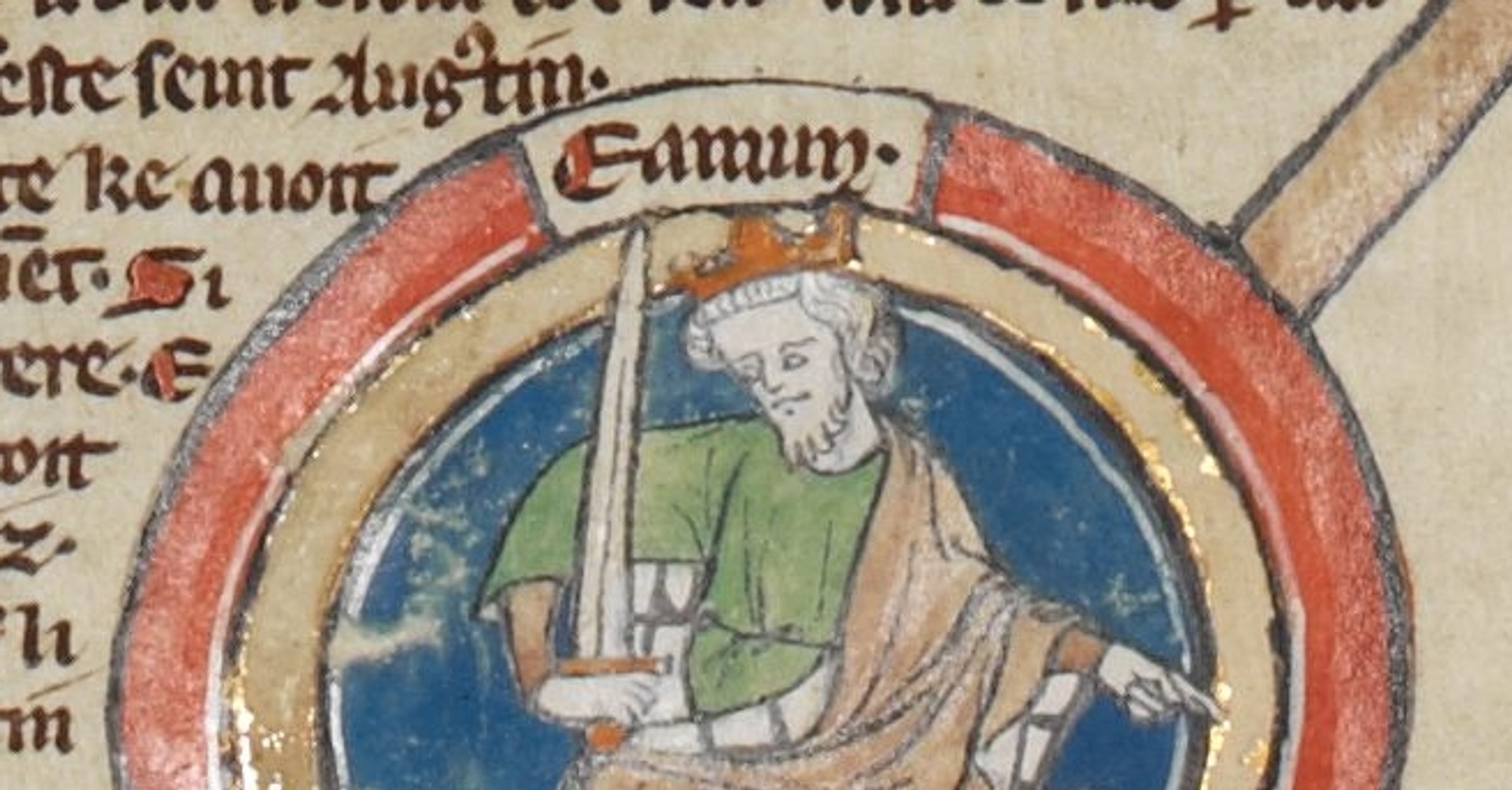
Edmund was born in 921, shortly after Edward the Elder’s major conquests were complete. He was the son of Edward and his third wife, Eadgifu of Kent. His naming held significant symbolic weight; by calling his son Edmund, the king consciously linked his burgeoning dynasty to the revered memory of Saint Edmund the Martyr, the last English ruler of the Kingdom of East Anglia, tragically killed by Vikings in 869. This connection served to legitimize Wessex rule over formerly Viking-held lands and to invoke a sense of continuity with England’s Christian past.
Growing up in Wessex under his mother’s watchful eye, Edmund’s education was comprehensive. The 12th-century historian William of Malmesbury noted that Edward’s sons were educated "like philosophers" and "received a thorough immersion in book-learning." This intellectual grounding would have been complemented by rigorous training in the martial arts, mastering the sword and spear, horsemanship, and military strategy – essential skills for any prince of the era.
Despite his royal birth, Edmund initially had little expectation of inheriting the throne. As Edward the Elder’s fourth son, his path to kingship seemed remote. From his father’s first marriage to Ecgwyn came Aethelstan, already a seasoned warrior. The second marriage to Aelfflaed produced two more sons, Aelfweard and Edwin. In addition to Edmund, the union with Eadgifu would later yield a fifth son, Eadred. The line of succession was long and complex, suggesting a future of service rather than rule for young Edmund.
Forging a Warrior-King: Apprenticeship Under Aethelstan
Edmund’s status within the royal family, however, was soon elevated by unforeseen circumstances. His father, Edward, died in 924, triggering a brief but intense succession contest between the eldest sons, Aethelstan and Aelfweard. Aethelstan emerged victorious, while Aelfweard died shortly thereafter. Given the significant age gap – Aethelstan was almost three decades older than Edmund and Eadred – he assumed a paternal role for his younger half-brothers. William of Malmesbury recounts Aethelstan’s "remarkable affection towards his other brothers [Edmund and Eadred] mere infants at his father’s death, he brought them up lovingly in childhood." This early mentorship proved crucial for Edmund’s development as a future ruler.
Aethelstan’s reign began with strong assertions of English power. In 927, following the death of King Sihtric of York, the Viking ruler, Aethelstan swiftly marched north, seized the town, and declared himself ruler of all England. His ambitions extended further, aiming for dominion over the entirety of Britain. Neighbouring rulers from Wales, Strathclyde Britons, Scots, and the English lord of Bamburgh were compelled to submit, publicly humbling themselves before their new overlord.
A critical turning point in Edmund’s apprenticeship came in 933 when Edwin, the third son, died at sea, making the 12-year-old Edmund the new heir to Aethelstan’s burgeoning empire. His practical education in leadership commenced almost immediately. In 934, the Scots, chafing under English overlordship, withdrew their fealty. Aethelstan responded with overwhelming force, assembling a vast army comprising English lords, Danish earls, a large fleet, and Welsh princes. This formidable host moved from Nottingham to Durham, and then into Scottish lands. Edmund, though too young to fight in the front lines, accompanied his brother, observing and learning the strategies of military command and regional domination. Scotland was thoroughly raided and plundered before King Constantine II was forced to surrender once more. He was allowed to live but was compelled to attend the English king’s council, a public display of his submission.
Despite this mighty show of force, the Scots remained restless. In 937, they forged a dangerous alliance with Strathclyde and Olaf Guthrithson of Dublin. Their combined forces landed on the Wirral peninsula, on England’s west coast, in the early winter of 937. Aethelstan marshalled his forces from Mercia and Wessex and marched north to confront them. By his side, once again, was Edmund. Now 16, the young prince had matured into a capable warrior, commanding a section of the army alongside his brother. The ensuing engagement, the Battle of Brunanburh, was arguably the greatest clash of 10th-century Britain. A contemporary poem celebrating the victory lauded the brothers’ heroism:
King Aethelstan, the lord of warriors,
Patron of heroes, and his brother too,
Prince Edmund, won themselves eternal glory
In battle with the edges of their swords
Round Brunanburh; they broke the wall of shields,
The sons of Edward with their well-forged swords
Slashed at the linden-shields; such was their nature
From boyhood that in battle they had often
Fought for their land, its treasures and its homes,
Against all enemies. Their foes fell dead,
The Scottish soldiers and their pirate host,
Were doomed to perish.
(Campbell)
This resounding victory temporarily secured northern England. Yet, the Scots, though defeated, remained beyond complete English overlordship. Edmund, having witnessed the immense effort required to subdue them, likely pondered the enduring challenges of maintaining control over Britain’s disparate kingdoms. These pressing questions of governance, defense against Viking incursions, and succession planning would soon become his own. Aethelstan died in 939 at the age of 45, and the 18-year-old Edmund was unexpectedly thrust onto the throne, tasked with proving himself a worthy successor.
The Crown Inherited: A Reign of Relentless Struggle
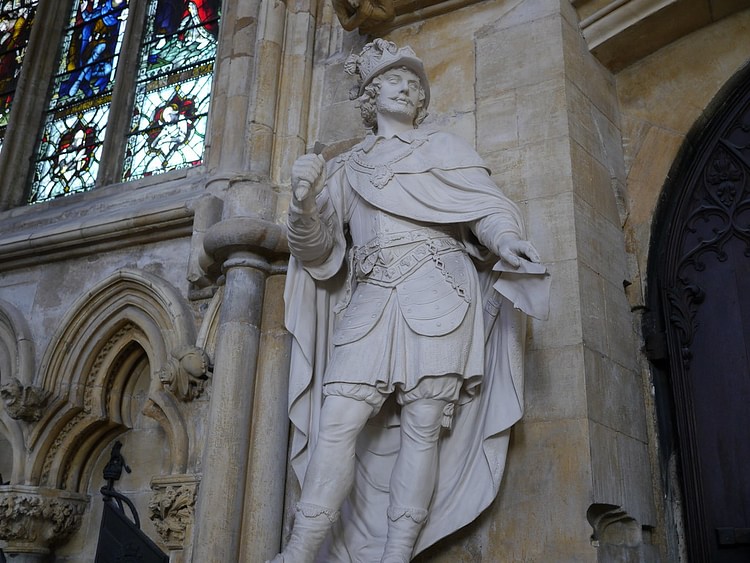
Edmund’s coronation took place in late 939 at Kingston-upon-Thames, a traditional site for West Saxon royal inaugurations. As he knelt before Archbishop Wulfhelm of Canterbury, the weight of his inheritance must have been immense. He may have envisioned a long and prosperous reign, but such aspirations were quickly shattered. England was immediately plunged into crisis. Within months of Aethelstan’s death, the leading men of York, ever opportunistic, summoned Olaf Guthrithson of Dublin to rule over them. Large swathes of the Danish East Midlands also defected, rapidly expanding Olaf’s new kingdom and threatening to undo Aethelstan’s hard-won unity.
The Fight for York and the Five Boroughs (940-944)
In 940, Olaf advanced south, meeting Edmund’s forces advancing north at Leicester. A direct confrontation was narrowly averted through the timely intervention of the Church. Archbishop Wulfstan of York, a key English defector who had become Olaf’s right-hand man, negotiated a precarious peace with Bishop Oda of Ramsbury, Edmund’s leading advisor. This truce, however, was fleeting. Olaf, a man of restless ambition, was not content to consolidate his gains. The following year, he turned his attention north, attacking the English earldom of Bamburgh. During this campaign, he met his death, possibly in battle.
Olaf Guthrithson’s demise created a new opportunity for Edmund. At York, Olaf was replaced by his cousin, Olaf Cuaran. Seizing on this transition of power, Edmund advanced north in 942. His campaign proved successful, allowing him to reconquer several strategically vital towns in the northeast Midlands, collectively known as the ‘Five Boroughs’ (Derby, Leicester, Lincoln, Nottingham, and Stamford). Contemporary poets celebrated this martial exploit, hailing Edmund as "the brave Edmund" and the "doer of necessary deeds," underscoring his decisive leadership in a challenging period.
Despite these gains, York itself remained outside English control. Olaf Cuaran, perhaps less warlike than his predecessor, sought peace with Edmund to prevent further losses. He even accepted baptism, a common tactic to encourage better relations with Christian English monarchs. However, this appeasement alienated his supporters in York, who were disgruntled by the loss of the Five Boroughs and his apparent capitulation. Consequently, Olaf Cuaran’s cousin, Ragnall, was elevated to the throne, leading to a split in the Viking kingdom.
Ragnall, too, initially followed a similar path, accepting both baptism and English friendship, likely hoping to enlist Edmund’s aid against Olaf. But he misjudged the astute young English king. Edmund, content to let the rival Viking factions weaken each other, waited for the opportune moment. In 944, with support from Archbishop Wulfstan, he launched a decisive strike, crossing his northern border and seizing York. Ragnall was executed, and Olaf fled into exile. After five years of intense, intermittent conflict, York was finally back in West Saxon hands, allowing Edmund to claim rule over all English territories, a triumph reminiscent of Aethelstan’s earlier assertions of authority.
This period was characterized not by grand pitched battles, but by a sophisticated "war of winning over local elites," exploiting power transitions, and skillfully dividing rival factions. These were crucial skills for any warrior-king, and Edmund had demonstrated a remarkable aptitude for them, solidifying his control over a diverse and often rebellious realm.
Beyond England’s Borders: A New Diplomatic Vision
Edmund’s ambitions were not confined to England. Like Aethelstan before him, he sought to exert influence across the entire island of Britain, adopting the impressive title "King of the English and of the surrounding peoples." His approach to achieving this broader dominion, however, marked a significant departure from his brother’s more heavy-handed strategies.

Reconfiguring Relations with Wales
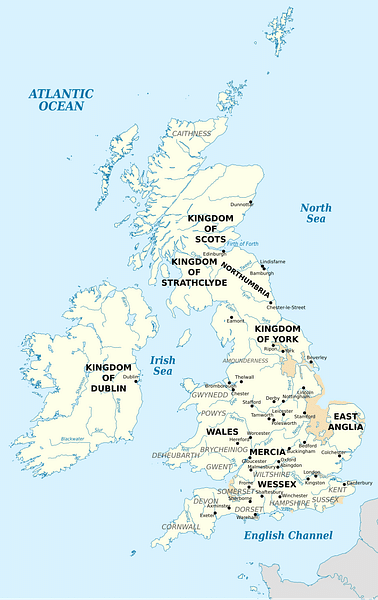
Wales during this era remained a patchwork of kingdoms, primarily divided between Idwal the Bald, ruler of Gwynedd in the north, and Hywel the Good, who led Deheubarth in the south. Edmund’s relations with these Welsh rulers, though poorly documented, suggest a lighter overlordship compared to Aethelstan’s more demanding stance. The Welsh kings were generally required to pay tribute and, crucially, to refrain from allying with the Vikings.
This fragile settlement was disrupted in 942 when Idwal of Gwynedd appears to have defied Edmund, either by openly rebelling against English overlordship or by forming an alliance with the Vikings. Edmund responded with characteristic swiftness, invading Gwynedd and defeating Idwal’s forces. The Welsh king was killed, and his kingdom passed into the hands of Hywel the Good, who now controlled almost all of Wales. Hywel proved to be a steadfast ally to the English, evidently deemed a trustworthy neighbour by Edmund, reflecting the success of this more cooperative approach.
Strategic Alliance with Scotland and Strathclyde
Further north, Edmund’s capacity to influence events early in his reign was limited by the presence of Viking York, which acted as a buffer between English power and the kingdoms of Scotland and Strathclyde. The fall of York to Edmund in 944 dramatically altered this dynamic, opening the way for direct English intervention in the far north.
Strathclyde, in particular, attracted Edmund’s attention. It had a history of allying with the Vikings and was suspected of harboring Norse raiders, potentially including the recently deposed Olaf Cuaran. Harbouring England’s enemies was deemed an unacceptable threat to stability. In 945, Edmund launched an invasion of Strathclyde, successfully driving out both the Norse elements and the Strathclydian ruler. Crucially, he did not annex the territory for himself. Instead, he granted it to King Malcolm I of Scotland, who had recently succeeded his cousin, Constantine II.
This "gift" of Strathclyde signaled a new diplomatic relationship between the English and the Scots. Unlike Constantine, Malcolm was not required to pay tribute or attend the royal court of Wessex as a supplicant. Instead, his obligation was primarily military: to provide support when northern England was attacked by the Vikings. This pragmatic alliance aimed to create a stable buffer against Viking resurgence and to secure England’s northern frontier through cooperation rather than outright subjugation.
"First Among Equals": A Sustainable Foreign Policy
Edmund’s dealings with his neighbours revealed a significant shift in strategic thinking. As Alaric A. Trousdale observes, "King Edmund’s strategy was the reinforcement of the power of friendly client kings in the lands bordering his own, as opposed to King Athelstan’s policies of enforcing the submission of client kings." As a veteran of Brunanburh, Edmund had firsthand experience of the dangers posed by a united Celtic-Viking front. He had witnessed how Aethelstan’s more heavy-handed approach could inadvertently push Celtic kings into alliances with the Vikings.
Learning from these experiences, Edmund opted for a less imperialistic model. Instead of promoting himself as an emperor or overking of Britain, his lighter touch positioned him as a ‘first among equals,’ with Wales and Scotland acting as England’s junior partners. These partners, notably Hywel and Malcolm, directly benefited from Edmund’s friendship, as he facilitated their territorial expansions into Gwynedd and Strathclyde respectively. While this approach might not have exalted the West Saxon monarchy to the same degree as Aethelstan’s more grandiose claims, it proved to be a more sustainable and effective way to maintain English power and to counter the persistent Viking threat in the long run. It was a pragmatic realization that stability could be achieved through strategic alliances and shared interests, rather than through constant imposition of authority.
Governance and Reform: Shaping the Anglo-Saxon State
On the home front, the young King Edmund relied heavily on a council of experienced advisors. These included his influential mother, Eadgifu; his cousin, Ealdorman Aethelstan, later known as the ‘Half-King’ due to his immense power; and Archbishop Oda of Canterbury. Ealdorman Aethelstan, as the ruler of East Anglia – a vast province encompassing significant parts of the East Midlands – was on the front lines of the wars against York and a crucial source of military might for Edmund. His influence extended through his wider family, with his brothers, Aethelwold and Eadric, becoming ealdormen in Kent and Wessex during Edmund’s reign. Another royal cousin, Ealhhelm, was appointed as an ealdorman in Mercia. This pattern reveals Edmund’s deliberate strategy of entrusting provincial power to trusted kinsmen rather than relying solely on local elites, thereby strengthening central control and loyalty.
A Lawgiver for His Time
A notable exception to this familial appointment strategy was Archbishop Oda, a figure of Viking heritage but a devout Christian. Oda, who had negotiated peace with York in 940 and became Archbishop of Canterbury the following year, emerged as a key figure in formulating the king’s legislation. His influence was likely positive and progressive, as Edmund earned a reputation as a wise lawgiver, remembered for decrees that "wisely decreed" and "honoured God and kept his laws." (Robertson, 129).
Like his predecessors, Edmund was deeply concerned with maintaining social order, focusing particularly on suppressing blood feuds and theft. However, his laws also displayed elements of innovation, possibly thanks to Oda’s influence. Oda, having undertaken numerous diplomatic missions, was likely exposed to reforming ideas prevalent in the Kingdom of Francia. Consequently, Edmund’s legislation promoted higher standards for monks and reinforced celibacy through harsh punishments, reflecting a growing ecclesiastical reform movement. The role of bishops was significantly enhanced, with mandates for them to tour their dioceses and deliver judgments at local assemblies. Bishops were also explicitly ordered to rebuild churches that had fallen into disuse, particularly in areas of former Viking settlement, with the king himself required to assist in this vital rebuilding project. These reforms underscore Edmund’s commitment to both spiritual renewal and the re-establishment of Christian authority across his consolidated realm.
Legacy and Untimely Demise
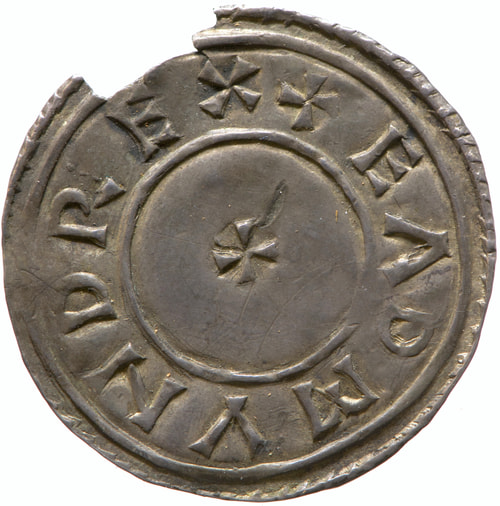
Edmund married twice during his reign. Around 939, he wed Ælfgifu of Shaftesbury, a woman from a wealthy family associated with Shaftesbury Abbey in Dorset. The couple had two sons, Eadwig and Eadgar, both of whom would eventually ascend to the English throne. Following Ælfgifu’s death in 944, Edmund remarried to Æthelflæd of Damerham, the daughter of Ealdorman Ælfgar of Essex. However, the political influence of both wives remained largely limited, overshadowed by the enduring prominence of the king’s mother, Eadgifu, who continued to be a leading lady of the royal court.
By 946, at the young age of 25, Edmund could look back on a remarkably successful reign. He had overseen military expansion, maintained harmony with his powerful magnates, and forged strategic alliances with his neighbours. He had indeed proved himself a worthy successor to Aethelstan, consolidating his brother’s achievements and navigating the complex political landscape of 10th-century Britain with considerable skill.
A King’s Sudden End and Enduring Impact
However, Edmund’s promising reign was brought to an abrupt and violent end. On May 26, 946, he withdrew to Pucklechurch, Gloucestershire, to celebrate the festival of Saint Augustine, the monk credited with bringing Christianity to the English. It was a rare moment for the king to set aside his arduous royal duties and enjoy festivities with his family and companions. During the celebrations, a notorious thief named Leofa intruded into the royal hall. His intentions remain unclear, but he was soon identified by the king’s steward and ordered to leave. Leofa refused, and a fight erupted. Witnessing the chaos, the king personally intervened. In the ensuing brawl, Leofa tragically stabbed and killed Edmund.
His untimely death was a shock to the kingdom. Edmund was buried at Glastonbury Abbey, a prestigious ecclesiastical center in Wessex that he had favored and patronized throughout his life.
With his sons, Eadwig and Eadgar, too young to rule, the throne passed to Edmund’s younger brother, Eadred. The fragile peace in the north was immediately shattered. York once again rebelled under Viking leadership, and Eadred would spend the remainder of his reign fighting to secure the north, a battle that Edmund had seemingly won. It would take another decade of intense conflict before York finally fell to the House of Wessex for the final time, underscoring the persistent challenges to English unity even after Edmund’s valiant efforts. Edmund I, though his reign was brief and his end sudden, played a crucial role in the arduous process of forging a unified England, demonstrating both the martial prowess and the diplomatic acumen necessary to navigate the turbulent 10th century. His legacy, though often understated, is one of vital consolidation and strategic innovation, ensuring the survival and eventual dominance of the Anglo-Saxon state.



Leave a Comment