
"The Last Unicorn": A Timeless Odyssey into Mortality, Meaning, and the Enduring Power of Myth
For over half a century, Peter S. Beagle’s "The Last Unicorn" has enchanted readers, transcending its fantasy genre roots to deliver a profound meditation on life, death, and the elusive nature of happiness. What appears on the surface as a whimsical tale of a mythical creature’s quest is, at its heart, a sophisticated exploration of the human condition, resonating with a universality that continues to captivate audiences worldwide.
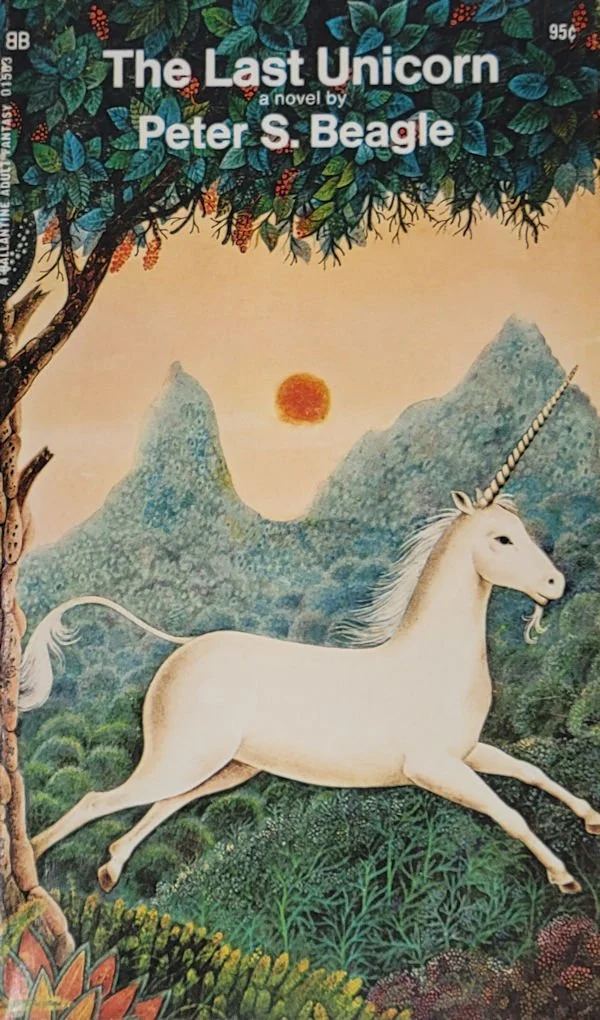
(Image: "The Last Unicorn" poster – a classic depiction hinting at the tale’s blend of wonder and melancholy)
Recently, the enduring appeal of this literary masterpiece has come under renewed focus, prompting a re-evaluation of its themes and unparalleled prose. Many, like this publication’s literary critics, confess to a similar experience: having seen the beloved animated film adaptation or owned the book as a child, yet never fully engaging with the novel’s deeper philosophical layers until adulthood. The book, much like classic literature such as "Beowulf" or the works of Jane Austen, possesses a subtle elegance that demands a certain maturity to fully appreciate, a quality that belies its fairytale exterior. To rectify this oversight is to embark on a journey that culminates in a singular, resounding conclusion: "The Last Unicorn" is not merely a fantasy novel; it is an essential piece of literature for anyone grappling with the fundamental questions of existence.
The Enduring Core: Main Facts of a Literary Phenomenon
"The Last Unicorn," published in 1968, tells the story of the last unicorn in the world, who, upon overhearing that she is unique, leaves the sanctuary of her lilac wood to seek out her lost kind. Her journey leads her through a world both wondrous and cruel, where magic is fading, and humanity, for the most part, has lost the ability to see her true form. Along the way, she is joined by an inept but well-meaning magician named Schmendrick and a cynical, world-weary woman named Molly Grue. Their quest ultimately brings them to the desolate kingdom of King Haggard, whose profound unhappiness is somehow connected to the disappearance of all other unicorns.
Beagle’s novel is celebrated for its lyrical prose, rich character development, and profound philosophical undercurrents. It seamlessly blends traditional fantasy tropes with a sophisticated examination of mortality, the search for meaning, the illusion of happiness, and the inexorable passage of time. Through the juxtaposition of an immortal creature with deeply human characters, Beagle crafts a narrative that speaks directly to universal hopes, fears, and the inherent frailty of human existence. It poses questions that every individual confronts: "Does enough time remain to achieve our goals?" "Are our aspirations truly worthy, or merely societal constructs?" "Can true happiness ever be attained?"
A Journey Through Time: Chronology and Context
"The Last Unicorn" emerged during a pivotal era for the fantasy genre. Published in 1968, it followed the immense success of J.R.R. Tolkien’s "The Lord of the Rings" in the mid-1960s, which had cemented high fantasy as a mainstream literary force. However, Beagle’s work distinguished itself by offering a more introspective, melancholic, and poetically nuanced approach to myth and magic. While Tolkien built grand mythologies, Beagle delved into the meaning of myth, exploring its impact on the human psyche and the fading wonder of the world.
The book quickly garnered critical acclaim and a dedicated following, establishing Peter S. Beagle as a significant voice in contemporary fantasy. Its unique blend of whimsical fairytale elements with profound philosophical depth set it apart from its contemporaries. Beagle’s masterful storytelling earned him a Mythopoeic Fantasy Award in 1987 for his body of work, though "The Last Unicorn" remains his most iconic and widely recognized contribution.
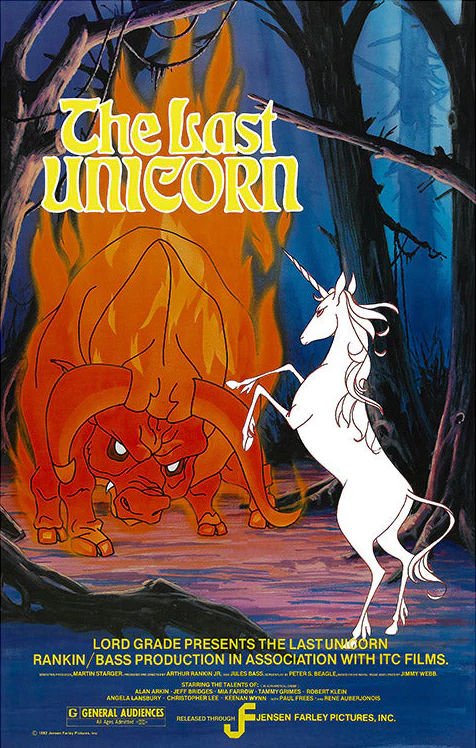
The novel’s enduring popularity was significantly amplified by the 1982 animated film adaptation, produced by Rankin/Bass and featuring the vocal talents of Mia Farrow, Alan Arkin, Jeff Bridges, Angela Lansbury, and Christopher Lee. The film, with its distinctive animation style and a memorable soundtrack by America, introduced the story to a new generation and cemented its status as a cult classic. While the adaptation faithfully captured much of the book’s narrative and tone, the depth of Beagle’s prose and the intricate philosophical musings are, by necessity, more fully realized in the written word.
Over the decades, "The Last Unicorn" has remained continuously in print, a testament to its timeless appeal. It has influenced countless fantasy writers and artists, demonstrating that fantasy can be both escapist and deeply introspective, entertaining and intellectually stimulating. Its legacy is not just in its beautiful story, but in its role in expanding the boundaries of what fantasy literature could achieve.
Unpacking the Narrative: Supporting Data and Thematic Depth
The true genius of "The Last Unicorn" lies in its ability to present complex philosophical ideas through accessible, archetypal characters and a captivating narrative. Beagle uses the quest for the lost unicorns as a vehicle to explore universal human experiences.
The Frailty of Existence and the Passage of Time
Beagle masterfully juxtaposes the immortal unicorn with mortal characters who acutely feel the press of time. This contrast highlights the human struggle with impermanence, the yearning for significance, and the fear of a life unfulfilled. Many of the characters confront questions about the frailty of existence, the illusions of happiness, and, most acutely, the relentless march of time.
Character Archetypes as Philosophical Mirrors
The novel’s diverse cast serves as a mosaic reflecting different facets of the human struggle.
-
Schmendrick the Magician: The Futility of Unfulfilled Potential
Schmendrick is a magician whose powers are unreliable and often work against him. He is cursed with immortality until he can "come to himself and know what [he is]." Beagle writes of him:“…your ineptitude is so vast, your incompetence so profound, that I am certain you are inhabited by greater power than I have ever known. Unfortunately, it seems to be working backward at the moment, and even I can find no way to set it right. It must be that you are meant to find your own way to reach your power in time; but frankly, you should live so long as that will take you. Therefore I grant it that you shall not age from this day forth, but will travel the world round and round, eternally inefficient, until at last you come to yourself and know what you are. Don’t thank me. I tremble at your doom.”
Schmendrick embodies the existential dread of having endless time but lacking the ability to achieve anything truly meaningful or fulfilling. His eternal inefficiency highlights the agony of untapped potential and the search for one’s true purpose, a struggle familiar to many in the modern world. -
Molly Grue: The Fear of Time’s Scarcity
Molly Grue, a brigand’s companion, represents the opposite side of Schmendrick’s coin. She is acutely aware of her own aging and the opportunities she believes have passed her by. Her poignant confrontation with the unicorn reveals this fear:“Where have you been?” she [Molly] cried. “Damn you, where have you been?” She took a few steps toward Schmendrick, but she was looking beyond him, at the unicorn.
“I am here now,” she [the unicorn] said at last.
Molly laughed with her lips flat. “And what good is it to me that you’re here now? Where were you twenty years ago, ten years ago? How dare you, how dare you come to me now, when I am this?” With a flap of her hand she summed herself up: barren face, desert eyes, and yellowing heart. “I wish you had never come. Why did you come now?” The tears began to slide down the sides of her nose.
Molly articulates the universal fear that life has passed one by, that it is "too late" for happiness or fulfillment. Her despair underscores the preciousness of time and the emotional toll of perceived missed chances, creating a powerful emotional resonance with readers who share similar anxieties.
(Image: "The Last Unicorn" cover 2 – an evocative illustration of the unicorn in a mystical setting)
-
King Haggard and Prince Lír: The Nature of Fulfillment
The father-son dynamic between King Haggard and Prince Lír serves to examine the worthiness of different paths to fulfillment. King Haggard, consumed by an emptiness he cannot fill, seeks happiness through possession. He captures all the unicorns, believing their presence will assuage his profound despondency. Yet, even with them, he remains hollow, paranoid, and profoundly unhappy, convinced that others share his acquisitive nature, which isolates him further.
Prince Lír, initially mirroring his father’s unfulfilled state, finds his purpose through love and selfless action. His transformation highlights the flaw in Haggard’s chosen path. Lír learns to use his strength and position to protect and serve others, particularly the unicorn in her mortal form as Lady Amalthea. He expresses this profound realization:
“You were the one who taught me,” he [Prince Lír] said. “I never looked at you [Lady Amalthea] without seeing the sweetness of the way the world goes together, or without sorrow for its spoiling. I became a hero to serve you, and all that is like you.”
The novel’s conclusion starkly differentiates their fates: Prince Lír, through his selfless love and deeds, achieves a true reward and fulfillment, a stark contrast to his father’s tragic end, which underscores Beagle’s assertion that true happiness lies not in possession but in connection and service. -
The Unicorn: Mortality as the Source of Beauty
The protagonist, the unicorn, initially embodies eternal beauty and innocence, but also a certain detachment from the world because she has never known mortality. It is only when she is forced to confront death, metaphorically represented by the terrifying Red Bull, and subsequently transformed into a mortal woman (Lady Amalthea), that she begins to truly appreciate the fragility and beauty of existence.
Her initial perspective on mortality is expressed:“This body is dying. I can feel it rotting all around me. How can anything that is going to die be real? How can it be truly beautiful?”
However, her journey brings her to the profound realization:
“Whatever can die is beautiful—more beautiful than a unicorn, who lives forever, and who is the most beautiful creature in the world.”
This central theme—that mortality gives life its true meaning and beauty—is the philosophical cornerstone of the novel. Time, often perceived as a cruel master, is revealed as a necessary component for understanding and appreciating the lives we have, urging us to live them well.
The Artistry of Beagle’s Prose
Beyond its profound themes, "The Last Unicorn" is a triumph of literary craftsmanship. Beagle’s writing is a delicate tapestry woven with poetic language, whimsical charm, and sudden flashes of profound wisdom. The narrative adopts a fairytale style, yet it is imbued with a sophistication that elevates it far beyond simple children’s literature.
- Lyrical Descriptions: Beagle’s ability to evoke atmosphere and character through vivid, poetic language is unparalleled. Consider his iconic description of the unicorn’s home:
The unicorn lived in a lilac wood, and she lived all alone. She was very old, though she did not know it, and she was no longer the careless color of sea foam but rather the color of snow falling on a moonlit night. But her eyes were still clear and unwearied, and she still moved like a shadow on the sea.
This passage immediately establishes a tone of ancient magic and solitary grace, drawing the reader into the mythical world with exquisite detail.
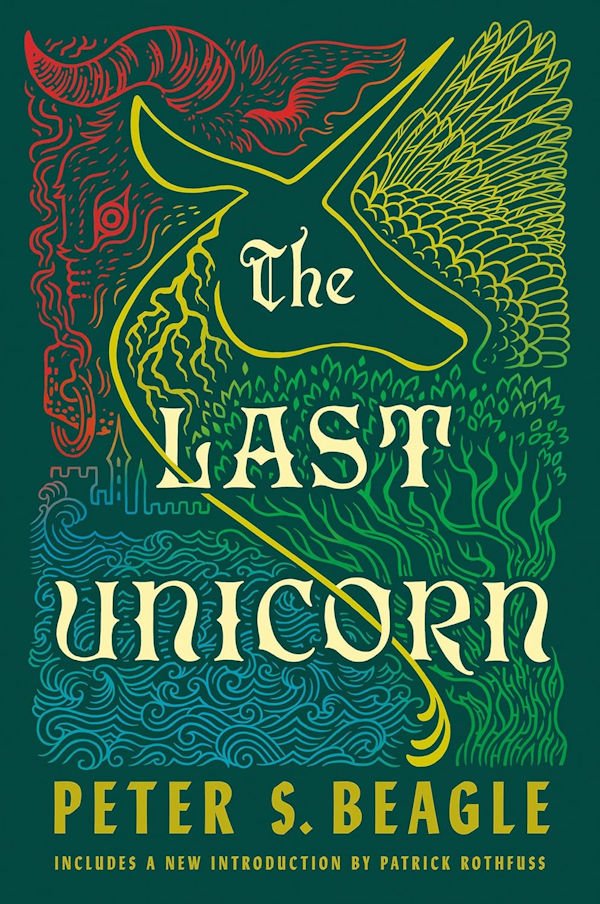
(Image: "The Last Unicorn" cover 3 – a close-up, ethereal portrayal of the unicorn)
-
Whimsical Touches: To balance the deeper themes and lyrical prose, Beagle sprinkles the narrative with delightful moments of whimsy and humor, often delivered through memorable dialogue:
“I would tell you what you want to know if I could, mum, but I be a cat. And no cat anywhere ever gave anyone a straight answer.”
And:
“I have ended my betrothal to the princess I had agreed to marry—and if you don’t think that was a heroic deed, you don’t know her mother.”
These lighthearted moments provide relief and add a layer of endearing charm, making the characters feel more real and relatable despite their fantastical setting. -
Profound Observations: Interspersed throughout the narrative are nuggets of profound truth, often presented with deceptive simplicity, reflecting Beagle’s keen insight into human nature:
“A lord who cheats an ugly old witch will cheat his own folk by and by. Stop him while you can, before you grow used to him.”
And:
“I always say perseverance is nine-tenths of any art—not that it’s much help to be nine-tenths an artist, of course.”
These aphoristic statements offer timeless wisdom, reflecting a deeper understanding of morality, societal dynamics, and the often-frustrating pursuit of mastery.
Critical Acclaim and Enduring Legacy: Official Responses
Upon its publication, "The Last Unicorn" was met with widespread critical acclaim. Reviewers lauded Beagle’s innovative approach to fantasy, his poetic prose, and the philosophical depth he imbued into a seemingly simple tale. It quickly established itself as a cornerstone of modern fantasy literature, earning praise for its literary merit from both genre enthusiasts and mainstream critics.
The book has been frequently cited by authors and academics as a significant influence, often appearing on "best fantasy novels" lists and being taught in university literature courses. Its themes of identity, sacrifice, and the interplay between myth and reality provide fertile ground for academic analysis. Peter S. Beagle himself has often spoken of the story’s personal significance, noting how the themes of loss and the search for meaning resonated deeply with his own experiences and observations of the changing world. The enduring fan base, which has celebrated the book and its adaptations for decades, further underscores its profound impact and continued relevance. Its "cult classic" status is not merely a label, but a reflection of a deeply felt connection readers have with its characters and its message.
Beyond the Pages: Implications for Contemporary Readers
The implications of "The Last Unicorn" for contemporary readers are profound. In an age often characterized by existential anxiety, a relentless pursuit of fleeting pleasures, and a pervasive sense of time accelerating, Beagle’s novel offers a timeless anchor. It invites readers to pause and contemplate their own lives, their aspirations, and their relationship with the finite nature of existence.
The journey of the unicorn and her companions serves as a powerful allegory for the universal human quest for purpose and happiness. It reminds us that true fulfillment often lies not in what we possess, but in how we connect with others, how we confront our fears, and how we choose to live within the boundaries of our mortality. The novel encourages an appreciation for the ephemeral beauty of life, reminding us that its very impermanence is what makes it precious.
"The Last Unicorn" is more than just a fantasy story; it is a mirror held up to the human soul, reflecting our deepest desires, fears, and hopes. Its universality and enduring beauty make it a vital read for anyone seeking not just an escape into a magical world, but a deeper understanding of themselves and the world around them. While not every book resonates with every reader, for the vast majority, "The Last Unicorn" will strike a profound chord, a harmonious merging of human honesty and ethereal beauty that beckons readers to revisit its enchanting pages year after year.
(Image: "The Last Unicorn" banner – a panoramic illustration of the main characters on their quest)

Leave a Comment