
Neon Despair and Velvet Shadows: The Evolution of Katie Skelly’s "Heaven"
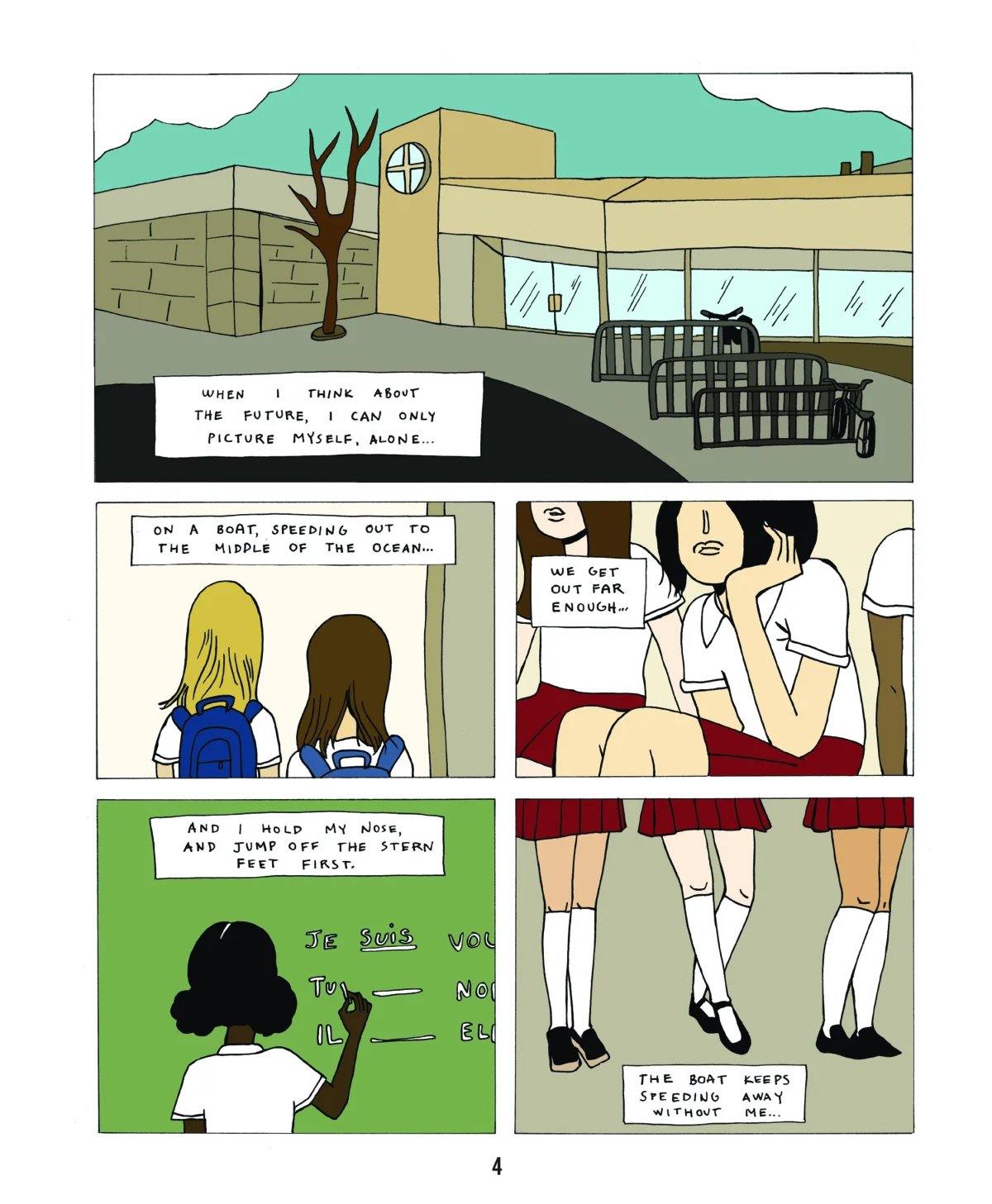
The landscape of contemporary independent comics is often defined by its ability to blend the visceral with the cerebral, and few artists navigate this intersection with as much razor-sharp precision as Katie Skelly. With the release of her latest graphic novel, Heaven, published by the venerable Fantagraphics, Skelly returns to the forefront of the medium. The book, first teased in the spring of 2026, represents a significant stylistic and thematic evolution for an artist who has spent the better part of two decades deconstructing the "cool girl" archetype through the lenses of horror, exploitation cinema, and pop art.
Heaven is more than a simple narrative; it is an atmospheric descent into a desert mirage, a story that balances the neon-soaked aesthetics of 1970s Giallo film with a deeply grounded exploration of identity and loss. As readers follow the protagonist, Dolly, from the rigid world of competitive gymnastics to the liminal space of a supernatural strip club, Skelly cements her status as a premier voice in modern sequential art.
Main Facts: The Architecture of a Mirage
At the heart of Heaven lies a central mystery: a strip club of the same name that exists on the periphery of a nondescript town. It is a location described as a "mirage-like velvet darkness," visible only to those who are searching for something they cannot name. For Dolly, the protagonist, the club represents a siren call. Having lost her identity as a gymnast—a role defined by extreme physical discipline and public performance—she finds herself drifting through a haze of family turbulence and social alienation.
The narrative hook of Heaven is built on the following core components:
- The Protagonist: Dolly, an ex-athlete struggling with the vacuum left by her former life. Her transition from the "perfect" body of a gymnast to the "mysterious" body of a seeker forms the emotional backbone of the story.
- The Setting: A desert landscape that serves as a character in itself. The neon-lit "Heaven" stands in stark contrast to the bleached-out, mundane reality of Dolly’s school and home life.
- The Supernatural Element: The "fanged femme fatale" trope, a recurring motif in Skelly’s oeuvre, returns here with a darker, more existential twist. The club is not merely a place of commerce; it is a predatory or perhaps redemptive entity that demands a high price for entry.
- The Aesthetic: Heavily influenced by the high-contrast color palettes of Italian horror director Dario Argento, the book utilizes "eye-popping" colors to signify the intrusion of the supernatural into the ordinary.
Chronology: From "Nurse Nurse" to the Gates of "Heaven"
To understand the weight of Heaven, one must look at the trajectory of Katie Skelly’s career, which has been a steady climb from the DIY zine scene to the heights of prestigious graphic novel publishing.
2010–2015: The Underground Origins
Skelly first gained significant attention with Nurse Nurse, a psychedelic space-nurse adventure that established her signature "Skelly Girl" look: large eyes, mod fashion, and a deceptive simplicity of line. This was followed by Operation Margarine, a desert-bound biker-girl epic that further explored themes of female friendship and rebellion. During this period, Skelly’s work was characterized by a playful engagement with "low-brow" genres, reimagining them through a feminist lens.
2017: The Vampire Pivot
With My Pretty Vampire, Skelly leaned heavily into the horror genre. The book introduced readers to Clover, a vampire kept in a gilded cage. It was here that Skelly began perfecting the "fanged femme fatale," using the vampire mythos to discuss consumption, desire, and the female body. This work served as a precursor to the supernatural elements found in Heaven.
2020: The "Maids" Breakthrough
The release of Maids marked a turning point. A fictionalized account of the Papin sisters—French maids who committed a gruesome double murder in 1933—the book was a critical sensation. It moved away from the fantastical and toward a claustrophobic, psychological horror. Maids proved that Skelly could handle heavy, historical subject matter while maintaining her distinct visual flair.
2026: The Arrival of "Heaven"
Six years after the success of Maids, Heaven arrives as a synthesis of Skelly’s entire career. It combines the desert isolation of Operation Margarine, the supernatural hunger of My Pretty Vampire, and the psychological depth of Maids. It is her first major work after a period of relative silence, making its release a landmark event for the comics industry in 2026.
Supporting Data: The Giallo Influence and Visual Language
The publisher, Fantagraphics, has specifically highlighted Skelly’s use of color in Heaven, noting its debt to Dario Argento. This is a crucial data point for understanding the book’s impact. In cinema, Argento’s "Giallo" films (such as Suspiria and Deep Red) used saturated reds, blues, and violets to create a sense of heightened reality and psychological unease.
In Heaven, Skelly translates this cinematic language into the static medium of comics. The use of "giant neon heels lighting up the desert night skies" is not just a plot point; it is a visual anchor. Data from early reviews and artistic analyses suggest that Skelly’s color theory in Heaven serves two purposes:
- Emotional Signalling: Bright, aggressive neons signify the dangerous allure of the club, while muted, dusty tones represent Dolly’s "real" world.
- Subverting the Gaze: By using such an aggressive palette, Skelly reclaims the strip club setting. It is not a place of "flesh-toned" realism designed for a male gaze, but a hyper-stylized, alien environment that belongs entirely to the women who inhabit it.
Furthermore, the "gymnast" background of the protagonist provides a rich vein of visual data. Skelly uses the geometry of the gymnasium—lines, bars, and rigid postures—to contrast with the fluid, "velvet" darkness of the supernatural world. This visual juxtaposition reinforces the theme of a character breaking out of a structured, performance-based existence into something wilder and more terrifying.
Official Responses: Publisher and Critical Perspectives
Fantagraphics, the publisher behind some of the most influential comics in history, has positioned Heaven as a flagship release. In their official statement, they emphasize the evolution of Skelly’s character work:
"Heaven finds out what happens when the artist’s quintessential cool girl characters let their guards down and let the world in. It is a transition from the impenetrable ‘cool’ of her earlier protagonists to a more vulnerable, raw exploration of what it means to belong."
Critics within the industry have noted that this "letting the guard down" is a significant departure. Where earlier Skelly characters like those in Operation Margarine were defined by their toughness and detachment, Dolly in Heaven is defined by her "adrift" nature. This shift has been praised by editorial boards as a "maturation of the Skelly archetype," moving from icon to human.
The Comics Journal (TCJ) editors, in their introduction to the book’s excerpt, touched upon the universal relatability of the story’s existential dread, stating: "Is the promise of a mirage-like velvet darkness the only thing getting you through the school day? You are not alone." This framing suggests that Heaven is being marketed not just as a genre piece, but as a "vibe" that resonates with the alienation of contemporary youth and the post-career identity crises of young adults.
Implications: The Future of the "Skelly-Verse"
The release of Heaven has broader implications for the comics industry and the representation of feminine horror.
Redefining the "Femme Fatale"
Traditionally, the "femme fatale" is a figure of danger for a male protagonist. Skelly’s work, culminating in Heaven, flips this entirely. The danger in Heaven is internal and existential. The "fangs" are not just weapons; they are symbols of a hunger for a life that makes sense. This shift signals a growing trend in independent media where "monstrous" female traits are explored as tools for self-discovery rather than plot devices for male tragedy.
The Survival of High-Aesthetic Print
In an era dominated by digital scrolling, Heaven is a testament to the power of the physical graphic novel. The emphasis on "eye-popping color" and "velvet darkness" suggests a reading experience that requires the tactile, high-quality printing for which Fantagraphics is known. The book’s success reinforces the idea that there is a dedicated market for "prestige" comics that prioritize artistic experimentation and cinematic pacing.
A New Chapter for Skelly
For Katie Skelly, Heaven appears to be the beginning of a new phase of her career. By moving away from the historical constraints of Maids and back into the realm of the supernatural, she has found a way to merge her interest in "trash" culture with high-concept psychological drama. Heaven reinforces her place as one of the most distinctive voices in the medium, proving that she can reinvent her own tropes while remaining true to the "cool girl" aesthetic that first made her a star.
As Dolly wanders toward those giant neon heels in the desert, readers are invited to follow her into a world where the shadows are made of velvet and the price of belonging is everything. Heaven is a haunting reminder that sometimes, the only way to find yourself is to get lost in the mirage.




Leave a Comment