
The Immortal Embrace: Frida Kahlo and Diego Rivera’s Final Dream Takes Center Stage at the Met Opera
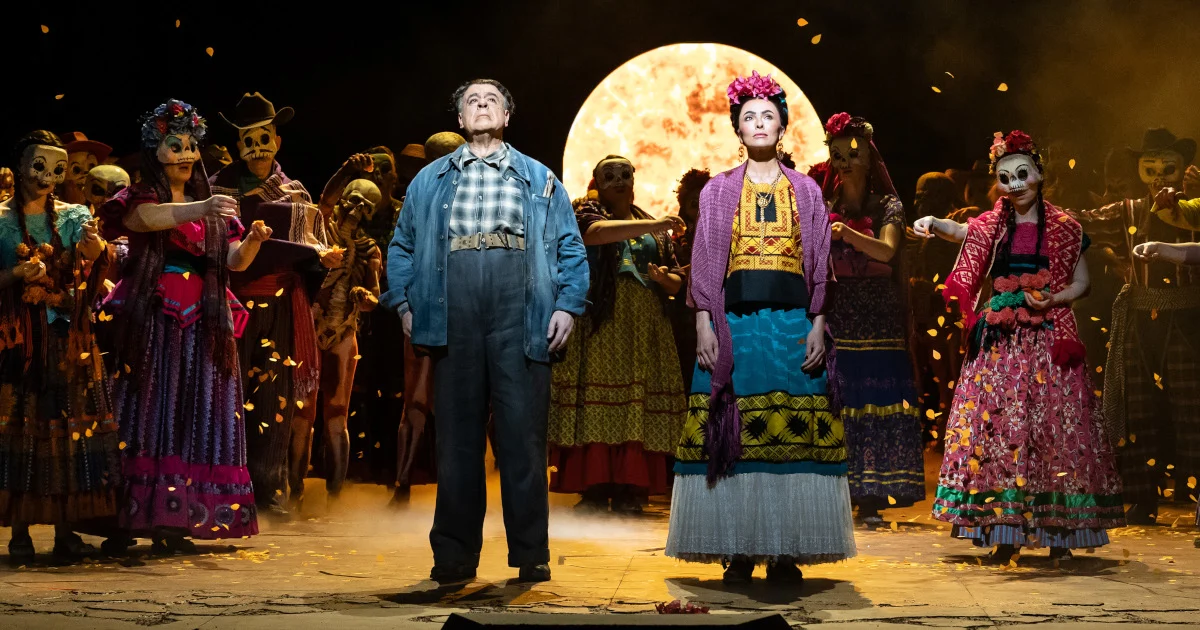
The Metropolitan Opera has long been a sanctuary for the classical canon, but its recent programming reflects a bold pivot toward contemporary narratives that resonate with a global, diverse audience. At the heart of this cultural shift is El Último Sueño de Frida y Diego (The Last Dream of Frida and Diego), a vibrant, Spanish-language opera that explores the transcendent bond between Mexico’s most iconic artistic duo. Composed by Gabriela Lena Frank with a libretto by Pulitzer Prize-winning playwright Nilo Cruz, the production serves as both a requiem and a celebration, reimagining the final days of Diego Rivera through a mystical lens.
Main Facts: A Convergence of Art, Myth, and Music
El Último Sueño de Frida y Diego is a landmark production for the Metropolitan Opera, marking a significant moment in the institution’s history as it embraces works sung entirely in Spanish. The opera is not a biographical retreading of the artists’ lives but rather a "poetic fantasy" set against the backdrop of Día de los Muertos (Day of the Dead) in 1957.
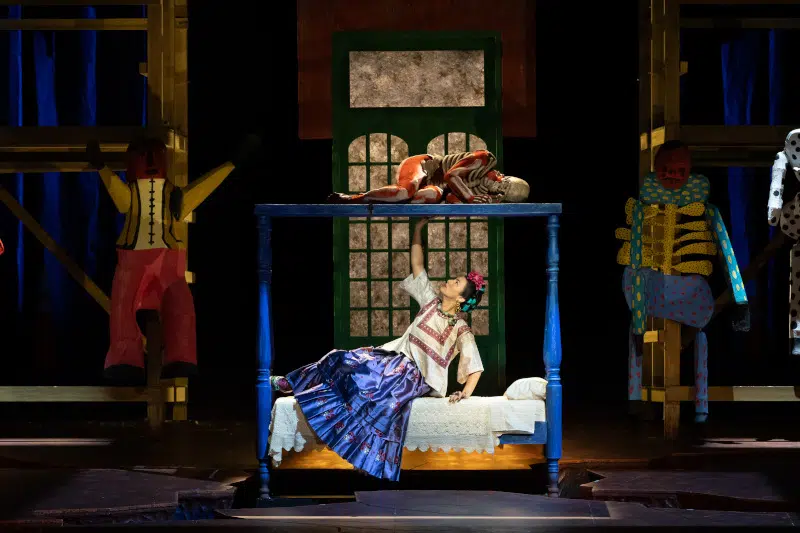
The narrative focuses on a dying Diego Rivera, who, three years after the passing of his wife, Frida Kahlo, finds himself yearning for her presence. The story unfolds in a liminal space between the land of the living and the underworld (Mictlān), where Frida is offered the chance to return to earth for twenty-four hours to guide her husband to the afterworld.
The creative team behind the production is a powerhouse of contemporary talent. Composer Gabriela Lena Frank, known for her ability to weave Latin American folklore into classical structures, provides a score that is both haunting and celebratory. Nilo Cruz, the first Latino to win the Pulitzer Prize for Drama, crafts a libretto that captures the volatile, passionate, and often painful dialogue that defined the couple’s relationship. Directed and choreographed by Deborah Colker—famed for her work with Cirque du Soleil and the 2024 production of Ainadamar—the opera is a visual spectacle that mirrors the vivid palettes of Kahlo’s paintings and the monumental scale of Rivera’s murals.
Chronology: From La Casa Azul to the Underworld
To understand the emotional weight of the opera, one must look at the chronological timeline of the artists’ lives and how the production interprets their final transition.
1954: The Death of Frida Kahlo
Frida Kahlo passed away at the age of 47 in her lifelong home, La Casa Azul (The Blue House). Her final years were marked by extreme physical suffering due to a bus accident in her youth and numerous failed surgeries. Upon her death, Diego Rivera was devastated, later describing her passing as the most tragic day of his life, realizing too late that "the most wonderful part of my life was my love for Frida."
1957: The Setting of the Opera
The opera begins three years later, in 1957. This was the final year of Diego Rivera’s life. Suffering from cancer and sensing his own mortality, Rivera is depicted in the opera as a man haunted by loneliness. The plot coincides with the Day of the Dead, the traditional Mexican holiday where the veil between worlds is thinnest.
The Underworld Negotiations
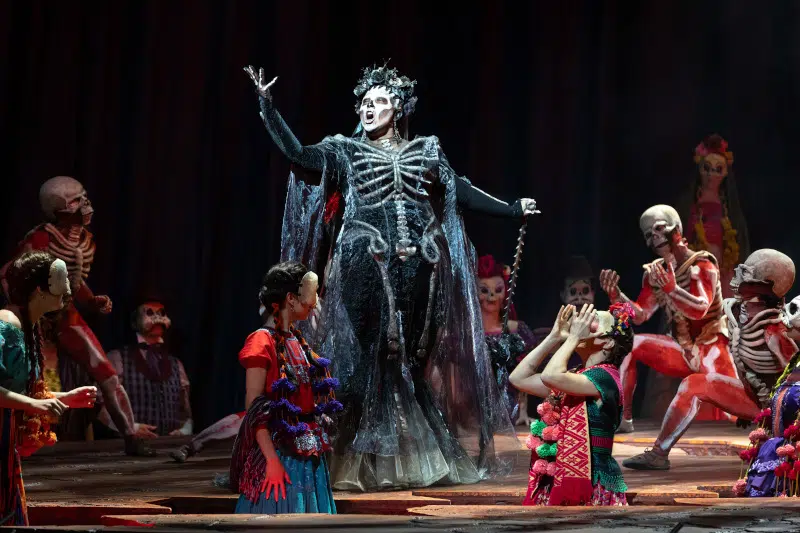
The middle act of the opera takes place in the underworld, where Frida has found a semblance of peace, free from the "broken column" of her body. When she is called back to the living world by the guardian of the dead, La Catrina, Frida initially resists. She fears the return of the physical agony that defined her earthly existence.
November 24, 1957: The Real-Life Conclusion
In history, Diego Rivera died on November 24, 1957. The opera’s climax mirrors this reality, as Frida eventually agrees to return, not just out of love for Diego, but out of a desperate desire to see her art, her home, and the colors of the world one last time. The production concludes with their spiritual reunion, bridging the gap between their separate deaths.
Supporting Data: Cast, Score, and Scenography
The success of El Último Sueño de Frida y Diego rests on its ability to translate visual art into auditory and physical performance.
The Cast and Musical Direction
The production features a world-class cast capable of navigating Frank’s complex score:
- Isabel Leonard (Frida Kahlo): The Grammy-winning mezzo-soprano brings a rich, emotive depth to the role, capturing Kahlo’s transition from a spirit of the underworld to a woman rediscovered by her own passions.
- Carlos Álvarez (Diego Rivera): The Spanish baritone portrays Rivera not as a titan of industry, but as a frail, regretful man seeking redemption.
- Gabriella Reyes (La Catrina): As the guardian of the dead, Reyes provides a vocal performance that is both authoritative and ethereal.
- Nils Wanderer (Leonardo): Playing an actor who channels Kahlo’s artistic vision, Wanderer adds a layer of meta-theatricality to the underworld scenes.
The Score
Gabriela Lena Frank opted for a sophisticated approach to the music. Rather than relying on a pastiche of Mariachi or folk music, she utilizes traditional Mexican motifs as "delicate narrative threads." The result is a score that feels modern and operatic while remaining deeply rooted in the cultural soil of Mexico.
Set Design and Visual Symbolism
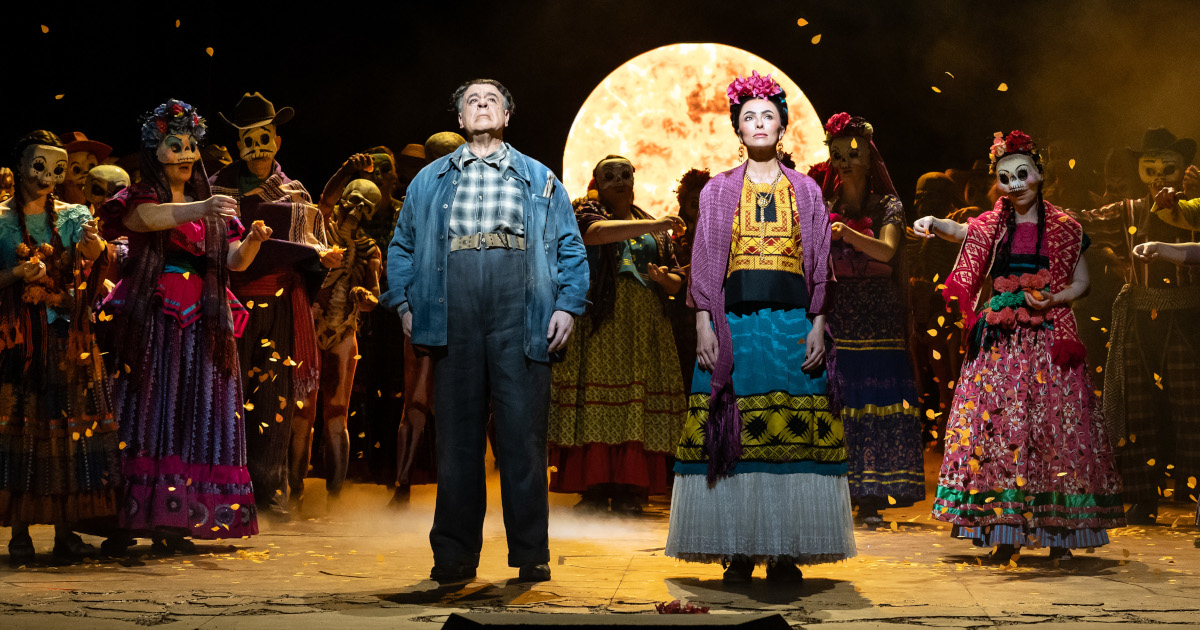
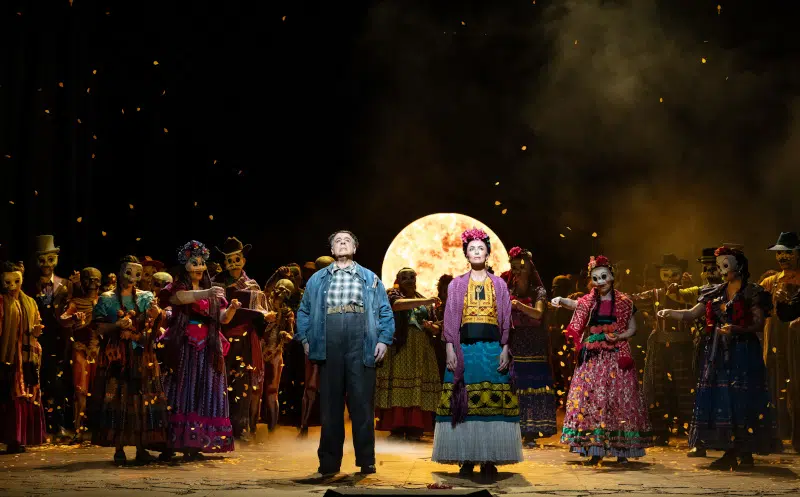
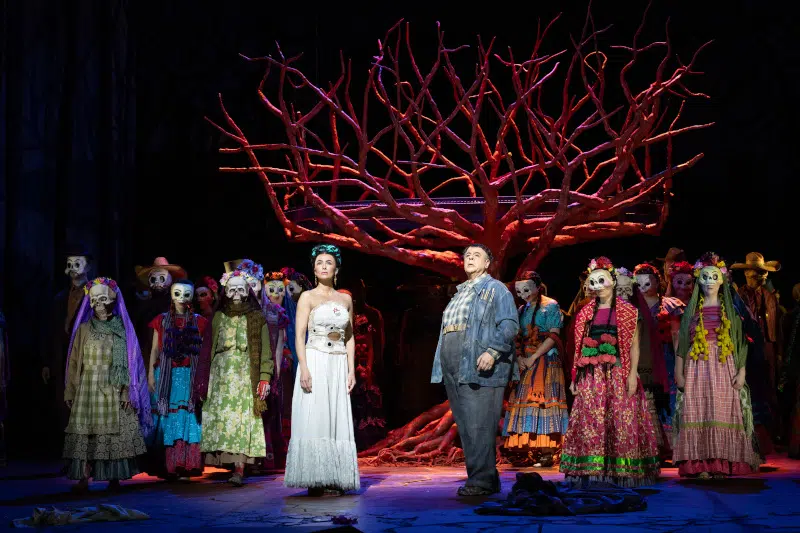
Set and co-costume designer John Bausor created a world that feels like a living painting. The stage transitions from the stark, skeletal structures of the underworld to the lush, vibrant gardens of La Casa Azul. References to Kahlo’s self-portraits and Rivera’s social-realist murals are embedded in the choreography and the physical environment, making the stage feel like an extension of their combined artistic legacies.
Official Responses: Voices from the Production
The performers and creators have emphasized that this opera is about more than just a famous couple; it is about the endurance of the human spirit.
Mezzo-soprano Isabel Leonard, in an interview with NPR, highlighted the complexity of Frida’s motivation to return to the world of the living. "She’s convinced to come back because she actually wants to see her art and she wants to see her house and she wants to visit the world again," Leonard explained. "She loved the world and she was in love with the colors of her home and the animals and the market. She had such passion, I think, for all of those things, including for Diego."
This sentiment reflects the duality of Frida’s life—a life defined by equal parts agony and ecstasy. The opera famously references Kahlo’s own words regarding her relationship with Rivera: "I’ve suffered two serious accidents in my life: one was the tram, and the other was Diego. Diego was the worst of them all." By incorporating this perspective, the libretto avoids romanticizing a relationship that was often toxic, instead focusing on the "last dream" of a reconciliation that transcends earthly failings.
Implications: A Cultural Synergy Between Met and MoMA
The arrival of El Último Sueño de Frida y Diego at the Met has triggered a broader cultural celebration in New York City. In a rare cross-institutional collaboration, the Museum of Modern Art (MoMA) launched a concurrent exhibition titled The Last Dream.
The MoMA Exhibition
Curated from MoMA’s permanent collection, the exhibit serves as a visual companion to the opera. It features:
- Five seminal paintings and one drawing by Frida Kahlo.
- Over a dozen works by Diego Rivera.
- Rare photographs of the couple at various stages of their lives.
To further bridge the gap between the museum and the stage, the exhibit features an imaginative setup created in collaboration with the opera’s set designer, John Bausor. This synergy allows audiences to see the physical art that inspired the music, creating a multi-sensory experience that is rare in the world of high art.
Global Impact and the Future of Opera
The production’s significance extends beyond New York. On May 30, the Metropolitan Opera will broadcast the performance to cinemas worldwide as part of its Live in HD series. This ensures that the Spanish-language narrative and the specific cultural heritage of Mexico reach a global audience, challenging the Eurocentric traditions of the opera world.
The success of El Último Sueño de Frida y Diego suggests a growing appetite for "new classics"—works that utilize the grand scale of opera to tell stories of diverse identities and modern myths. By centering on the Day of the Dead, the Met is not just presenting a story about two artists; it is honoring a cultural philosophy that views death not as an end, but as a vibrant, necessary part of the cycle of creativity.
As the production continues its run through June 5, it stands as a testament to the enduring power of Kahlo and Rivera. Their "last dream" is no longer a private fantasy, but a public masterpiece that continues to evolve, much like the art they left behind.


Leave a Comment