The Midnight Slump: Analyzing Clint Eastwood’s Failed Attempt to Capture Savannah’s Gothic Magic
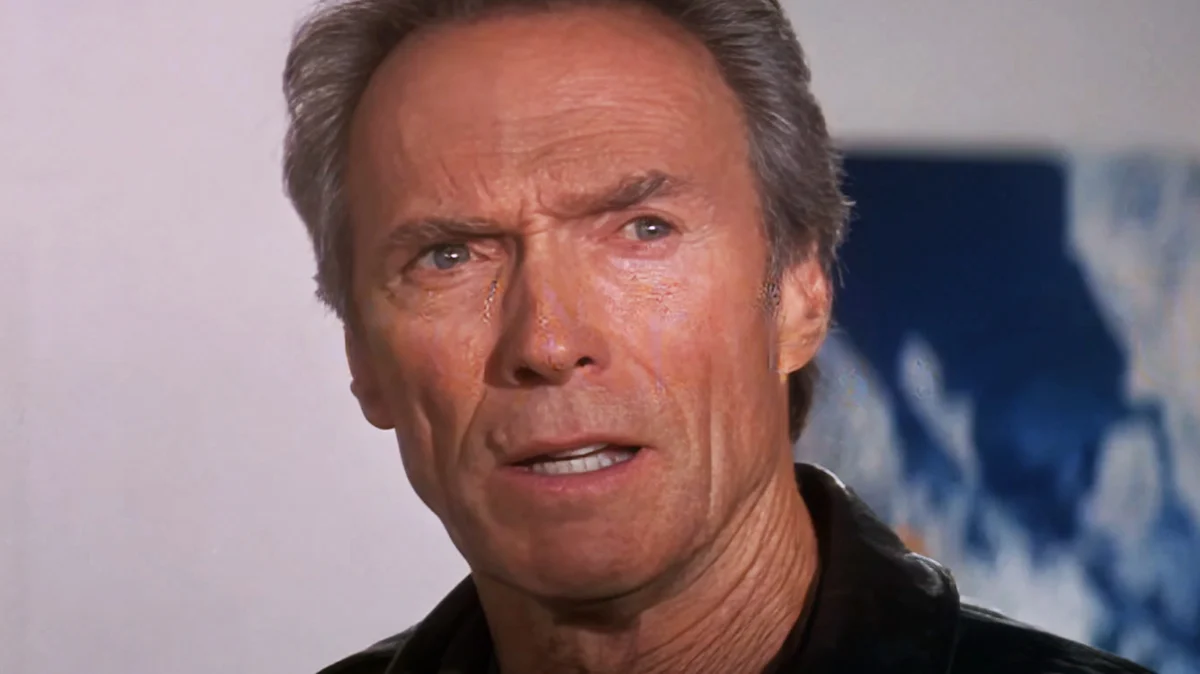
In the mid-to-late 1990s, Clint Eastwood occupied a precarious position in Hollywood. Having reached a career-high with the Oscar-winning Unforgiven (1992) and the romantic success of The Bridges of Madison County (1995), the legendary filmmaker entered a period of creative and commercial stagnation. This "nadir," as some critics described it, saw Eastwood struggle to translate literary and dramatic prestige into box office gold.
The most prominent casualty of this era was his 1997 adaptation of John Berendt’s Midnight in the Garden of Good and Evil. Despite being based on a record-breaking, Pulitzer Prize-finalist bestseller and boasting a cast of heavy hitters, the film became a definitive box office flop. It failed to recoup its budget, divided critics, and drew the ire of the original author. This article explores the anatomy of that failure, the historical context of the real-life murder trial it depicted, and the enduring legacy of a film that tried—and failed—to bottle the lightning of the Deep South.
The Source Material: A Literary Phenomenon
To understand why the film’s failure was so surprising, one must first understand the cultural weight of John Berendt’s 1994 book. Midnight in the Garden of Good and Evil was more than a true-crime novel; it was a travelogue, a character study, and a atmospheric masterpiece that turned the city of Savannah, Georgia, into a global tourist destination.
The Real-Life Saga of Jim Williams
The book recounts the story of Jim Williams, a wealthy, self-made antiques dealer and restorationist who was the king of Savannah’s high society. In 1981, Williams shot and killed his 21-year-old assistant and lover, Danny Hansford, in his palatial home, Mercer House. Williams claimed self-defense, but the state alleged a crime of passion.
What followed was a legal marathon unparalleled in Georgia history: four separate trials over the span of eight years. Williams was convicted twice, but both verdicts were overturned. A third trial ended in a hung jury, and he was finally acquitted in his fourth trial in 1989. Ironically, Williams died of a heart attack just months after his final acquittal, in the very same room where he had killed Hansford.
The "Savannah" Effect
Berendt’s book spent a staggering 216 weeks on the New York Times Bestseller list. Its success was attributed to the "eccentrics" Berendt encountered while living in Savannah—figures like the voodoo priestess Minerva, the man who walked an invisible dog, and most famously, The Lady Chablis, a transgender drag performer. The book created a "Southern Gothic" fever, and Warner Bros. naturally saw it as prime material for a prestige cinematic adaptation.
Production Chronology: Eastwood Takes the Reins
When Clint Eastwood signed on to direct, expectations were high. Eastwood was known for his efficiency and his ability to handle dark, morally complex material. He teamed up with screenwriter John Lee Hancock, with whom he had previously worked on the acclaimed 1993 thriller A Perfect World.
Casting and Creative Choices
The production sought to balance Hollywood star power with authentic Savannah flavor.
- Kevin Spacey was cast as Jim Williams. At the time, Spacey was at the height of his powers, having recently won an Oscar for The Usual Suspects.
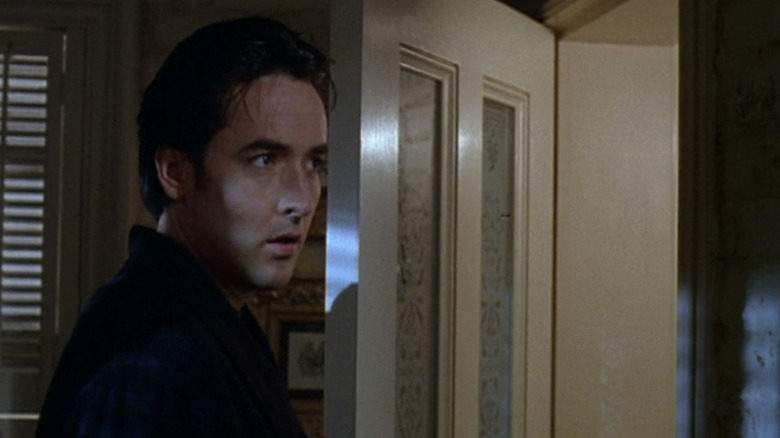
- John Cusack played John Kelso, a fictionalized surrogate for author John Berendt.
- Jude Law was cast as Billy Hanson (the film’s name for Danny Hansford), marking one of his first major American roles.
- The Lady Chablis was cast to play herself, a move intended to preserve the book’s authentic charm.
Filming took place on location in Savannah, including at the actual Mercer House. However, the production faced the immediate challenge of condensing a decade of legal drama and hundreds of pages of atmospheric prose into a two-and-a-half-hour runtime.
The Scripting Dilemma
Hancock’s script made the controversial decision to merge Williams’ four trials into a single courtroom showdown. While narratively efficient, this choice stripped the story of the "war of attrition" quality that defined the real-life events. Furthermore, the script added a romantic subplot between Kelso and a local singer, Mandy (played by Eastwood’s daughter, Alison Eastwood), to provide a traditional Hollywood emotional arc that the non-fiction source material lacked.
Supporting Data: Financial and Critical Reception
When Midnight in the Garden of Good and Evil opened in November 1997, the results were underwhelming.
Box Office Analytics
The film was produced on a budget of approximately $35 million, a significant sum for a character-driven drama in the late 90s. During its domestic run, it earned only $25.1 million. When factoring in marketing costs and the theater owners’ cut, the film was a clear financial loss for Warner Bros.
Critical Disapproval
The critical response was equally lukewarm. On the review aggregator Rotten Tomatoes, the film currently holds a 50% approval rating. The consensus among reviewers was that the film was "leaden" and lacked the "vividness" of Berendt’s prose.
- Roger Ebert, giving the film two stars, noted that "something ineffable is lost just by turning on the camera." He argued that the book worked because it allowed the reader’s imagination to populate Savannah, whereas the film felt like a literal, and therefore less magical, interpretation.
- David Ansen of Newsweek was more blunt, suggesting that Eastwood was the wrong director for the project. He argued that Eastwood approached the eccentricities of the South "like a tourist," failing to grasp the underlying menace and mystery that made the book a "Southern Gothic" classic.
Official Responses: The Author’s Repudiation
While critics were divided, the most stinging critique came from the man who wrote the story. In subsequent years, John Berendt has been vocal about his dissatisfaction with the adaptation, specifically targeting the performance of its lead actor.
The "Valium" Critique
In a 2015 interview with The Packet, Berendt revealed that he had offered Kevin Spacey the opportunity to listen to recordings of the real Jim Williams to capture his voice and mannerisms. Spacey declined, claiming he had already found a tape of Williams.
Berendt recalled his shock upon seeing the final film:
"He did it as if he were asleep. He talked as if he were in a fog or sleepwalking. Then I realized what had happened… Williams had popped a Valium before being cross-examined on the tape Spacey had heard."
According to Berendt, Spacey’s performance was based on a man who was literally drugged to stay calm under legal pressure, rather than the charismatic, sharp-witted socialite Williams was in daily life. This "spaced-out" portrayal, Berendt argued, drained the character of his agency and charm.
The Lady Chablis: The Lone Bright Spot
Interestingly, Berendt and many critics agreed that the most successful element of the film was The Lady Chablis. By playing herself, she brought an unvarnished authenticity to the screen that the professional actors struggled to match. Her performance remains the most celebrated aspect of the film, providing a rare glimpse of the "Savannah magic" the rest of the production missed.
Implications: The Legacy of a Misstep
The failure of Midnight in the Garden of Good and Evil had several lasting implications for the careers involved and the genre of literary adaptation.
1. The Eastwood Slump and Recovery
The film extended a fallow period for Eastwood. Between 1995 and 2000, his directorial efforts (including Absolute Power and True Crime) failed to achieve major critical or commercial success. It wasn’t until 2000’s Space Cowboys that he saw a box office hit, and not until 2003’s Mystic River that he returned to the top of the critical mountain. The failure of Midnight suggested that Eastwood’s "minimalist" and "straightforward" directing style was perhaps ill-suited for material that required a more flamboyant or atmospheric touch.
2. The Difficulty of "Atmosphere" on Film
The film serves as a case study in the difficulty of adapting books where the "vibe" is more important than the "plot." Berendt’s book was successful because of its digressions and its slow-burn exploration of a city. By trying to force that narrative into a standard legal thriller structure, the film lost the very soul of its source material.
3. The "Midnight" Tourism Boom
Ironically, despite the film’s failure, it did not stop the "Midnight" phenomenon from transforming Savannah. The city saw a massive spike in tourism that persists to this day. Mercer House remains a major landmark, and the "Bird Girl" statue (featured on the book cover and in the film) became so famous it had to be moved to a museum to protect it from vandals and souvenir hunters. The film, for all its flaws, served as a two-hour-long commercial for the city, even if it didn’t win any Oscars.
4. A Lesson in Casting
The disconnect between Spacey’s performance and Berendt’s vision highlights the risks of actors "finding the character" in isolation. While Spacey was a technician of the highest order, his refusal to engage with the author’s resources resulted in a performance that many felt was fundamentally "off."
Conclusion
Clint Eastwood’s Midnight in the Garden of Good and Evil stands as a reminder that even the most talented filmmakers can stumble when the material resists their sensibilities. It was a project that had everything going for it—a legendary director, a massive bestseller, and a stellar cast—yet it failed to capture the haunting, humid, and eccentric spirit of its setting.
Today, the film is largely remembered as a footnote in Eastwood’s storied career, a "swing and a miss" during a period of transition. For those looking to experience the true "Midnight" magic, the consensus remains the same: skip the DVD and pick up the book. As Roger Ebert noted, some things are simply better left to the imagination than captured on 35mm film.