
Unveiling Europe’s Spectral Night Riders: A Critical Look at Lecouteux’s "Phantom Armies of the Night"
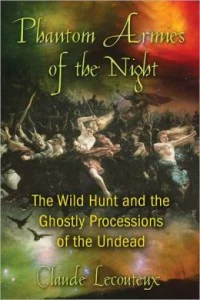
A groundbreaking study by Claude Lecouteux delves into the enigmatic phenomenon of the Wild Hunt, a pervasive motif in European folklore. His comprehensive work, Phantom Armies of the Night: The Wild Hunt and the Ghostly Processions of the Undead, offers an unparalleled collection of historical accounts and regional variations of these spectral cavalcades. While lauded for its exhaustive data, the book also sparks significant scholarly debate regarding its analytical framework, particularly concerning the identity of the Wild Hunt’s elusive leader and the interpretation of its ancient origins.
Main Facts: A Deep Dive into Europe’s Ethereal Cavalry
Claude Lecouteux’s Phantom Armies of the Night: The Wild Hunt and the Ghostly Processions of the Undead stands as a monumental contribution to the study of European folklore. Published in recent decades, it has quickly become an indispensable resource for scholars and enthusiasts alike, offering perhaps the most extensive compilation of historical accounts pertaining to the Wild Hunt and its myriad related phenomena across the continent. At its core, the book meticulously chronicles the pervasive legend of the Wild Hunt – a nocturnal cavalcade of spectral hunters or warriors, often described as riding sinister horses and accompanied by a cacophony of baying hounds, sweeping through the howling winds of midwinter nights. This eerie procession, steeped in ancient dread and fascination, was believed to bring mischief, woe, or even death to any unfortunate soul who crossed its path. Its leadership, while varied across regions and eras, was most commonly attributed to the formidable Germanic god Odin, or his various regional equivalents.
Lecouteux’s primary strength lies in his role as an indefatigable collector of information. The book serves as a veritable treasure trove, presenting a rich tapestry of narratives and testimonies from ancient, medieval, and early modern periods. Through this extensive compilation, Lecouteux illuminates the complex nature of these spectral processions, highlighting the difficulty, if not impossibility, of neatly disentangling the archetypal Wild Hunt from a multitude of other nocturnal apparitions recorded during the same epochs. Crucially, he reveals that not all these processions were malevolent; many exhibited a strikingly different, often benign, character, yet shared several fundamental commonalities with the more sinister Wild Hunt. This nuanced approach challenges simplistic interpretations, urging readers to appreciate the diverse spectrum of pre-Christian beliefs and their evolving manifestations within a changing European cultural landscape.
From an analytical standpoint, Lecouteux makes several compelling assertions. He insightfully posits that the Wild Hunt likely originated under the guidance of a psychopomp deity – a mediator between the realms of the living and the dead. This pre-Christian figure, like many others, was subsequently demonized by the burgeoning Christian Church, transforming a sacred guide into a terrifying harbinger of evil. Furthermore, Lecouteux astutely connects the Wild Hunt to "the vast complex of ancestor worship, the cult of the dead, who are the go-betweens between men and the gods." This linkage is profoundly significant, grounding the spectral phenomenon in fundamental human anxieties and veneration surrounding death and the ancestral realm. By situating the Wild Hunt within this broader spiritual context, Lecouteux provides a framework for understanding its enduring power and widespread appeal across diverse cultures.
However, despite these foundational insights, Lecouteux’s analytical framework has drawn considerable scrutiny. Reviewers have pointed to a perceived "convoluted and shaky" nature in parts of his interpretation, particularly his argument that Odin was not the original leader of the Wild Hunt but a later addition. This assertion is difficult to reconcile with a wealth of existing mythological and etymological evidence. A significant portion of this controversial argument appears to stem from what critics describe as an overly rigid application of the theories of eminent Indo-European scholar Georges Dumézil. Dumézil’s trifunctional hypothesis, while invaluable for understanding Indo-European social structures and divine pantheons, may be applied too literally by Lecouteux in this context. He seemingly argues that because the Wild Hunt exhibits many characteristics associated with the concerns of common folk – such as agricultural anxieties, death, and fertility – and because Odin is often linked with ruling classes, warrior aristocracies, and intellectual pursuits, the god could not have originally led a phenomenon so deeply rooted in popular belief. This interpretation, as will be explored further, overlooks the multi-faceted nature of Odin’s cult and his complex associations with both the elite and the more chthonic, ecstatic aspects of ancient Germanic religion.
Chronology: Tracing the Phantom’s Path Through History
The Wild Hunt, or its regional equivalents, is not a static legend but a dynamic narrative that has evolved over millennia, reflecting shifts in societal beliefs, religious practices, and cultural anxieties. Lecouteux’s work, by amassing a wealth of historical data, allows us to chronologically trace the echoes of this spectral phenomenon.
Ancient Roots and Pre-Christian Beliefs
The conceptual bedrock of the Wild Hunt can be found deep within the pre-Christian animistic and polytheistic belief systems of ancient Europe, particularly among Germanic and Norse peoples. Long before the advent of Christianity, northern European societies held complex views on death, the afterlife, and the spirit world. The boundaries between the living and the dead were often perceived as porous, especially during liminal times of the year, such as the darkest days of winter (Yule, or midwinter). It was during these periods that the veil was thinnest, allowing spirits, deities, and the souls of the deceased to traverse the earthly realm.
Early iterations of what would become the Wild Hunt likely stemmed from beliefs in ancestral spirits and the spirits of the untamed wilderness. Chthonic deities, associated with death, fertility, and the underworld, would have been natural leaders for such processions. Figures like Odin (Woden), known as the god of death, poetry, war, and ecstasy, possessed attributes perfectly suited to lead a spectral army. His association with frenzied warriors (berserkers), the gathering of the dead (Einherjar), and his ability to ride through the air (on Sleipnir) firmly establish him as a prime candidate for the leader of such a host. Indeed, early Germanic folklore often depicted Woden leading such an entourage, often referred to as "Woden’s Host" or "Woden’s Hunt."
Medieval and Early Modern Evolution
As Europe transitioned into the medieval period and Christianity began its widespread conversion efforts, the ancient pagan beliefs did not simply vanish. Instead, they underwent a process of syncretism and demonization. Many pagan deities and spirits were reinterpreted by the Church, often cast as devils, demons, or malevolent spirits. This recontextualization was crucial in shaping the character of the Wild Hunt as it is most commonly understood today.
During the medieval and early modern periods, accounts of the Wild Hunt proliferated across various parts of Europe, from the Germanic lands and Scandinavia to France, Britain, and beyond. Its leader’s name changed with regional dialect and Christian reinterpretation: "Herne the Hunter" in England, "King Herla" or "Arthur’s Hunt" in Britain, "Dame Holle" or "Frau Perchta" (a female leader, particularly in Alpine regions), and countless others. Despite these variations, the core elements remained strikingly consistent: a terrifying nocturnal procession, often heard before it was seen, bringing fear and sometimes death. These accounts were not confined to remote rural areas; they were often documented in urban centers and by educated clergy, underscoring the deep-seated nature of these beliefs within the collective consciousness. The lore frequently described the hunt as consisting of deceased souls, unbaptized children, or even the unrighteous dead, forever condemned to ride the night winds. This moralistic twist was a clear influence of Christian theology.
Lecouteux’s research meticulously compiles these diverse regional manifestations, demonstrating how a foundational concept adapted and mutated while retaining its core essence. He shows how the folklore, far from being monolithic, was a fluid entity, constantly being reshaped by local traditions, specific historical events, and the overarching influence of the Church.
The Impact of Christianization and Scholarly Reinterpretation
The Christianization of Europe played a pivotal role in transforming the Wild Hunt from a potentially sacred or neutral phenomenon into an explicitly demonic one. Pagan deities, once revered, were now often depicted as agents of evil, their retinues becoming legions of the damned. This theological reinterpretation served to consolidate Christian authority while simultaneously explaining and absorbing pre-existing folk beliefs. The Wild Hunt thus became a warning, a manifestation of sin and divine judgment, rather than a glimpse into the liminal realm between life and death.
In more recent centuries, particularly from the 19th century onwards, scholars began to collect and analyze these folk narratives more systematically. Figures like Jacob Grimm were instrumental in categorizing and interpreting the Wild Hunt within the broader framework of Germanic mythology. Lecouteux’s work stands in this tradition, but also seeks to push beyond it by incorporating a vast pan-European perspective and integrating more contemporary theoretical approaches, even if some of these applications prove controversial. His chronological mapping helps to illustrate the enduring power of these legends and their remarkable adaptability across changing religious and cultural landscapes.
Supporting Data: Nuances of the Phantom Processions and Analytical Debates
Lecouteux’s true strength lies in the sheer volume and diversity of data he presents, offering a comprehensive panorama of nocturnal processions across Europe. He effectively demonstrates that the Wild Hunt, as commonly understood, is but one prominent manifestation within a broader complex of spectral phenomena. This "treasure trove" includes accounts of benign or even benevolent processions, often associated with fertility, harvest, or the passing of the seasons, which nevertheless share structural similarities with the more feared Wild Hunt. These might involve figures like "Dame Holle" or "Frau Perchta" in Germanic folklore, who sometimes led processions of children’s souls or spirits associated with domestic well-being, blurring the lines between the terrifying and the protective. This detailed exposition of various forms of nocturnal apparitions is invaluable, pushing the reader beyond a singular, monolithic understanding of the phenomenon.
The Psychopomp and Ancestral Cults: Core Insights
Lecouteux’s most compelling analytical contributions revolve around the original leadership of the Hunt and its connection to ancestor worship. His theory that the Wild Hunt was originally led by a psychopomp deity is highly persuasive. Psychopomps – such as Hermes in Greek mythology, Charon, or various deities in other traditions – are entities responsible for escorting souls from the realm of the living to the realm of the dead. In pre-Christian societies, where the dead were often revered and seen as retaining influence over the living, a psychopomp leading a procession of spirits would not necessarily have been malevolent. Rather, it could have been a manifestation of the natural order, a bridge between worlds. The Christian demonization of these figures, transforming them into infernal entities or diabolical leaders, is a well-documented process in the history of religion and folklore. This reinterpretation, Lecouteux argues, fundamentally altered the perception of the Wild Hunt from a potentially sacred or neutral liminal event to an explicitly terrifying one.
Furthermore, his connection of the Wild Hunt to the "vast complex of ancestor worship, the cult of the dead" is a critical insight. In many ancient cultures, ancestors were not simply remembered but actively venerated and believed to intervene in the lives of their descendants. Processions of the dead, therefore, could be seen as manifestations of these ancestral spirits, ensuring fertility, prosperity, or delivering warnings. The Wild Hunt, in this light, becomes a powerful cultural artifact reflecting deeply ingrained beliefs about the continuity of life and death, and the enduring influence of those who have passed on. This framework provides a profound understanding of why such legends held such sway over the popular imagination for so long.
The Odin Controversy: A Sticking Point
Despite these strengths, Lecouteux’s analysis encounters significant resistance when he posits that Odin was a later addition to the leadership of the Wild Hunt, rather than its original figurehead. This claim, as noted by critics, is challenging to defend on both mythological and etymological grounds.
Mythological Evidence for Odin’s Primacy: Odin, or his Germanic counterpart Woden, possesses a panoply of attributes that align perfectly with the traditional depiction of the Wild Hunt leader. He is the god of death, war, poetry, and magic. He is associated with ecstatic states, frenzy (Oðr), and the gathering of slain warriors (the Einherjar) in Valhalla. He rides an eight-legged horse, Sleipnir, across the sky and through the underworld. His epithets often relate to storms, winds, and spectral hosts, such as "Herjan" (leader of the host) or "Wode" (the frenzied one). The concept of a "furious host" (furor teutonicus) is deeply ingrained in Germanic consciousness, and Odin is its natural commander. To argue that such a deeply embedded figure, whose very essence seems to embody the Wild Hunt, was a mere latecomer, requires substantial evidence that Lecouteux, in the eyes of many, fails to provide.
Etymological Grounds: The linguistic evidence further complicates Lecouteux’s argument. Across Germanic Europe, the leader of the Wild Hunt is frequently referred to by names directly derived from or cognate with Odin/Woden: "Wodan," "Wode," "Wuot," "Guoth," etc. These linguistic connections suggest an ancient and unbroken tradition linking the god to the phenomenon. While other figures certainly emerged as leaders in various regions, the linguistic and mythological persistence of Odin’s name or its derivatives strongly indicates a foundational role.
The Dumézil Application Critique: The reviewer highlights that Lecouteux’s insistence on Odin as a later addition stems from an "overly rigid application" of Georges Dumézil’s trifunctional hypothesis. Dumézil proposed that ancient Indo-European societies and their pantheons were structured around three functions: sovereignty (priestly/magical and juridical aspects), military (warrior), and fertility/prosperity (producer class). Odin, as a god of sovereignty (magic, wisdom, leadership) and war, is often placed firmly within the first two functions, frequently associated with kings, poets, and warriors – essentially the ruling classes. Lecouteux, it seems, interprets this too literally, concluding that because the Wild Hunt is a popular phenomenon rooted in the concerns of the common people (fertility, death, seasonal cycles), Odin, as a god of the elite, could not have originally led it.
However, this interpretation overlooks the complex and often contradictory nature of ancient deities. While Odin certainly held sway among the aristocratic and warrior classes, his cult was not exclusive to them. He also possessed chthonic and ecstatic aspects, associated with shamanism, magic, and the darker side of death, which would have resonated deeply with broader segments of the population. His role as a psychopomp, a wanderer, and a god associated with the raw forces of nature (storms, wind) inherently connects him to the very elements of the Wild Hunt. To compartmentalize Odin strictly as an "elite" deity and therefore exclude him from a "popular" phenomenon like the Wild Hunt is to oversimplify the multifaceted nature of his worship and the fluidity of religious belief. Ancient religions rarely adhered to such rigid social boundaries in their expressions of piety and fear.
The "Sparse Analysis" and "Scholarly Cop-Out"
A further point of contention is the perceived sparsity of Lecouteux’s analytical conclusions relative to the colossal amount of data he presents. While the collection of information is exemplary, the synthesis and interpretation are found wanting. The reviewer expresses disappointment that, after such an exhaustive presentation of evidence, Lecouteux frequently resorts to phrases like "we cannot reach a conclusion," "many points remain to be explored more deeply," and acknowledging "the limits of our knowledge." While scholarly humility is commendable, and qualifications are essential, these statements, when presented instead of a robust conclusion, come across as "hollow platitudes."
In academic discourse, particularly in a work of this scope, readers expect a scholar to grapple with their data, draw informed inferences, and propose a coherent argument, even if it is presented tentatively. To simply enumerate the complexities without attempting a synthesis can be frustrating, leaving the reader with a wealth of facts but little direction. Given Lecouteux’s "masterly knowledge" of the data, the expectation was for him to forge a more definitive path through the intricate web of folklore, rather than merely charting its vastness. This analytical restraint, or perhaps avoidance, diminishes the overall impact of what could have been an even more definitive work.
Official Responses: Navigating the Academic Discourse
While Phantom Armies of the Night has not elicited a single, monolithic "official response," its publication has undeniably stimulated significant discussion within academic circles specializing in folklore, mythology, and religious studies. Lecouteux himself is a highly respected and prolific scholar, particularly known for his extensive work on medieval beliefs, magic, and the supernatural. His reputation lends considerable weight to any publication he undertakes, and Phantom Armies of the Night is recognized as a serious academic endeavor.
The critiques, as highlighted in the review, are not dismissive of the book’s overall value but rather engage with specific aspects of its methodology and interpretation, particularly concerning the analytical conclusions drawn from the vast dataset. This is a common and healthy aspect of scholarly discourse. In fields as complex and interdisciplinary as folklore, where evidence is often fragmented, ambiguous, and subject to multiple interpretations, debates over origins, influences, and specific leadership figures are to be expected.
Many scholars would likely concur with the assessment that the book’s data collection is its paramount strength. The sheer volume of material presented by Lecouteux is a gift to future researchers, providing a foundational resource that will be cited and consulted for decades to come. The critical engagement with his analytical framework, particularly regarding Odin and the application of Dumézil, serves to refine understanding within the field. It forces scholars to revisit existing assumptions, to critically evaluate the evidence, and to consider alternative interpretations. These scholarly debates, far from detracting from the book, actually underscore its importance as a catalyst for deeper inquiry. The book compels a re-examination of how pre-Christian beliefs survived and adapted under Christianization, and how these transformations were documented in popular lore. In essence, the "official response" is one of appreciation for the data, tempered by critical discussion of the interpretation – a standard trajectory for significant scholarly works.
Implications: Enduring Legacies and Future Horizons
Despite its analytical shortcomings, Phantom Armies of the Night carries profound implications for our understanding of European cultural history and the enduring power of folklore. Its significance extends beyond the narrow confines of myth studies, offering valuable insights for historians, anthropologists, and scholars of comparative religion.
The Enduring Legacy of Folklore and Animism
The most striking implication of Lecouteux’s work is its vivid demonstration of the persistence of pre-Christian animistic beliefs and practices well into the Christian era. The Wild Hunt, in all its varied forms, serves as a powerful testament to the resilience of popular belief, showcasing how ancient ways of understanding the world continued to shape everyday life and belief long after official Christianization. This challenges simplistic narratives of a clean break between paganism and Christianity, revealing instead a complex process of syncretism, adaptation, and resistance. Elements of animism – the belief that spirits inhabit natural objects, phenomena, and the deceased – clearly survived and found expression in these spectral processions, illustrating a profound cultural conservatism at the grassroots level.
The book highlights how folklore acts as a repository of cultural memory, preserving echoes of ancient worldviews, anxieties about death, the power of nature, and the unseen forces that govern human existence. The Wild Hunt, whether terrifying or benign, reflects a fundamental human need to comprehend and ritualize the mysteries of life, death, and the transition between worlds.
Interdisciplinary Value and Future Research Avenues
Lecouteux’s meticulous research makes Phantom Armies of the Night an invaluable resource for a broad array of disciplines. Historians can glean insights into popular beliefs and anxieties during specific periods; anthropologists can study the cultural evolution and cross-cultural variations of supernatural narratives; and scholars of literature and art can trace the influence of these legends on creative expression. The book underscores the importance of interdisciplinary approaches to understanding complex cultural phenomena.
Furthermore, the very critiques leveled against Lecouteux’s analytical conclusions – particularly his acknowledged "many points remain to be explored more deeply" – inadvertently open up crucial avenues for future research. Scholars can build upon his extensive dataset to:
- Refine the historical chronology: Further investigate the earliest textual evidence for the Wild Hunt and its leader, potentially unearthing new connections.
- Deepen regional comparative studies: Conduct more focused analyses of specific regional variations, exploring unique local influences and the impact of specific historical events on the lore.
- Explore psychological and sociological interpretations: Delve into the psychological functions of the Wild Hunt for communities (e.g., as a projection of collective anxieties, a moralistic warning, or a cathartic expression of fear) and its sociological role in maintaining social cohesion or reinforcing power structures.
- Re-evaluate the role of key deities: Undertake more nuanced examinations of figures like Odin, integrating a broader range of evidence to understand their complex associations beyond rigid functional categories.
- Comparative Mythology: Broaden the scope to include similar spectral processions or beliefs in non-European cultures, seeking universal patterns in human responses to death and the unseen.
In conclusion, Claude Lecouteux’s Phantom Armies of the Night is an essential work for anyone seeking to understand one of Europe’s most enduring and captivating folk legends. While its analytical conclusions may invite scholarly debate and further scrutiny, its unparalleled compilation of source material makes it an indispensable cornerstone for future research. It serves as a powerful reminder of the deep, often unseen currents of belief that have shaped European culture, offering a window into a world where the boundaries between the living and the dead were far more fluid, and the night sky held the promise of both wonder and dread. The book is, without question, highly recommended for its profound contribution to the field, even as it beckons subsequent generations of scholars to continue the intricate work of unraveling the mysteries of Europe’s spectral night riders.


Leave a Comment