
The Friction of Truth: Cartoons, Human Rights, and the Global Struggle for Equality
Introduction: The Cartoonist as a Mirror to Power
In the landscape of political discourse, the editorial cartoon serves as a volatile intersection of art, satire, and social critique. While often dismissed as mere illustration, the medium’s historical role has been to distill complex systemic injustices into a single, visceral image. In May 2026, this role has become increasingly precarious as cartoonists across the globe grapple with two escalating fronts: the retrenchment of LGBTQ+ rights in Western democracies and the harrowing reports of human rights violations in the Middle East.
From the United Kingdom’s controversial mandates on gender-segregated spaces to the brutal interception of international aid flotillas bound for Gaza, the current sociopolitical climate is defined by a tightening of control over marginalized bodies. As political satirists like Baron, Berge, and Sheneman attempt to document these shifts, they are met with a paradox: a public that increasingly views equality as a zero-sum game and governments that treat investigative reporting as an act of hostility.
Main Facts: The Bifurcation of Civil Liberties
The current discourse is anchored by two major developments. In the United Kingdom, the Equality and Human Rights Commission (EHRC) has moved to codify a policy that mandates the exclusion of transgender individuals from single-sex toilets and changing rooms based on biological genitalia. This "separate-but-equal" framework has sparked a firestorm of criticism, with advocates arguing that it fundamentally undermines the "Equality" the commission is tasked with protecting.
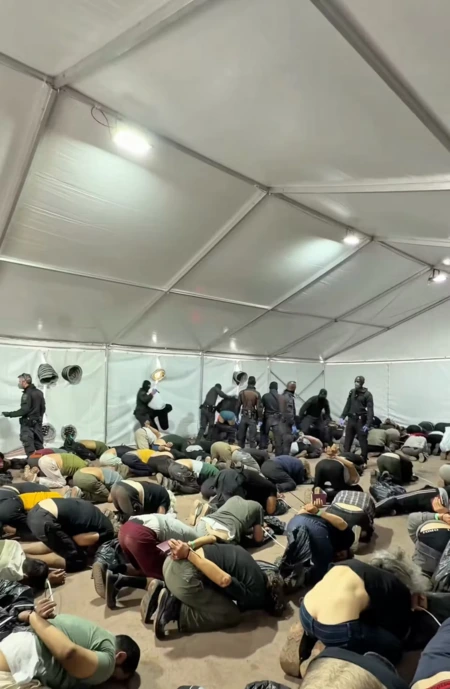
Simultaneously, international attention has shifted to the Mediterranean. The 2025 Global Sumud Flotilla, a civilian-led effort to deliver humanitarian aid to the blockaded Gaza Strip, was intercepted by the Israeli military. The aftermath of this interception has moved beyond traditional geopolitical debate into the realm of human rights atrocities. Reports from released activists allege systemic abuse, including beatings and sexual violence, while high-ranking members of the Israeli government have released promotional materials celebrating the harsh treatment of detainees.
Chronology: From Progress to Retrenchment
To understand the current friction, one must trace the timeline of advocacy and the subsequent backlash that has defined the early 2020s.
The Legacy of Barney Frank and the AIDS Crisis
The recent passing of Barney Frank serves as a somber milestone in the history of LGBTQ+ rights. Frank, one of the first prominent American politicians to openly declare his sexuality, was instrumental in shifting the public consciousness during the 1980s. His career was a testament to the idea that sexual identity should be "nobody’s business and nothing to be ashamed of."
The 1980s also saw the AIDS crisis force a level of visibility that the "closet" had previously suppressed. The death of icons like Rock Hudson broke the seal of silence, requiring the public to acknowledge the humanity of gay men. For decades, the trajectory of civil rights seemed to be moving toward an expansion of the "circle of inclusion."
2024–2026: The "Finite Equality" Era
By 2024, however, a shift in rhetoric began to take hold. Political movements in both the U.S. and the U.K. started framing the extension of rights to transgender individuals as a direct threat to the rights of others. This "zero-sum" psychology—the belief that there is a finite quantity of equality—culminated in the EHRC’s 2026 declaration. The commission’s new code of practice represents a formal pivot from inclusive protection to a mandate of exclusion, effectively reversing decades of progress in public accommodation.
2025: The Global Sumud Flotilla
In late 2025, the Global Sumud Flotilla set sail, mirroring the "Freedom Flotilla" movements of the previous decade. Its interception by Israeli forces in international waters led to a protracted legal and media battle. Unlike previous incidents, the 2025-2026 cycle has been characterized by an unprecedented level of "triumphalist" documentation by state actors, leading to the current crisis of international law.
Supporting Data: The Cost of Discrimination and Conflict
The impact of these policies is not merely ideological; it is documented through reports from international human rights observers and media investigations.

The EHRC Mandate
The Guardian’s analysis of the EHRC’s "Single-Sex Toilets Code of Practice" indicates that the policy mandates providers of public services to exclude transgender individuals whose genitalia do not match the "majority sexual identity" of the facility. Critics point out that this creates a logistical and legal nightmare for trans individuals attempting to navigate "normal life," drawing uncomfortable parallels to the Jim Crow laws of 1963. The policy relies on a definition of "sex" that excludes gender identity, a move that legal experts suggest may conflict with broader human rights treaties.
Allegations of Abuse in Detention
Following the interception of the aid flotilla, Reuters and Le Monde have published extensive reports based on the testimonies of freed activists. These reports detail a harrowing environment within Israeli detention centers:
- Physical Abuse: Activists reported systematic beatings during and after the boarding of the vessels.
- Sexual Violence: Specific allegations of rape and sexual abuse have been leveled against captors, leading to calls for an independent UN investigation.
- State Documentation: Israel’s National Security Minister, Itamar Ben-Gvir, released videos depicting the "harsh treatment" of European activists. The videos, titled "Welcome to Israel," were intended as a deterrent but have instead served as evidence for human rights groups.
Official Responses: A Divided World Stage
The response to these crises has been a mix of defiance, internal friction, and attempts at suppression.
The Israeli Government
Within Israel, the reaction to the "Welcome to Israel" videos has exposed a rift. While Minister Ben-Gvir championed the videos as a display of national strength, Prime Minister Benjamin Netanyahu reportedly spoke out against the "braggadocio" of the posts. However, critics like cartoonist Hudson suggest that Netanyahu’s objection was not based on the morality of the actions, but on the "indiscretion" of filming them.
Furthermore, the Netanyahu administration has taken a litigious stance against international media. When the New York Times published a documented report by Nicholas Kristof regarding the sexual abuse of Palestinian prisoners, the Prime Minister’s office threatened a lawsuit, labeling the report a "blood libel." This term, historically referring to false and anti-Semitic accusations against Jewish people, is being used by the state to delegitimize investigative journalism.
The New York Times and the Free Press
In response to these threats, NYT Publisher AG Sulzberger issued a staunch defense of independent reporting. Sulzberger emphasized that the newspaper would not "knuckle under" to bullying or legal intimidation. He highlighted that while the Biden administration has often been at odds with the Times, there remains a fundamental respect for the "unpleasant" necessity of a free press.
The Biden Administration
President Joe Biden, while often avoiding direct interviews with major papers, acknowledged the role of the press during a Pulitzer ceremony. He noted that while the process of being held to account by the media is not "pleasant," it is "the whole point." This stance stands in contrast to the more aggressive suppression tactics seen in other jurisdictions.
Implications: The Erosion of the Global Social Contract
The intersection of these events points to a broader, more troubling trend: the erosion of the global social contract regarding human rights and the freedom of information.
The Psychology of Privilege vs. Equality
The pushback against LGBTQ+ rights in the West suggests a deep-seated confusion between "equality" and "privilege." As noted by cultural commentators, those who have historically enjoyed dominant social status often perceive the empowerment of others as a personal loss. This "Mother’s Day vs. Kids’ Day" mentality—where the protected group asks "When is it my turn?"—ignores the reality that the dominant group’s rights have never been under threat.
The Normalization of State Brutality
The "Welcome to Israel" videos represent a shift in how states communicate their use of force. By moving from denial to "triumphant" display, state actors are testing the limits of international tolerance for human rights violations. This normalization of brutality, when combined with the labeling of critics as "antisemitic" or "traitors," creates a chilling effect on global dissent.
The Essential Role of Satire and Reporting
As governments become more adept at gerrymandering, voter suppression, and the legal bullying of the press, the role of the cartoonist and the investigative reporter becomes a final line of defense. The "noncontroversial" act of describing what hate and discrimination do to their targets has become a radical act.
The current climate suggests that the "fresh air" let in by figures like Barney Frank and the activists of the 20th century is being systematically choked out. Whether through bathroom bans in the UK or the abuse of aid workers in the Middle East, the target remains the same: the dignity of the individual and the public’s right to witness the truth. As AG Sulzberger noted, the press’s job is to make the world "think even as it informs." In 2026, making the world think has become more dangerous than ever.




Leave a Comment