
The New Frontier of Digital Impressionism: The Painterly AI Aesthetics of Jacob Holster
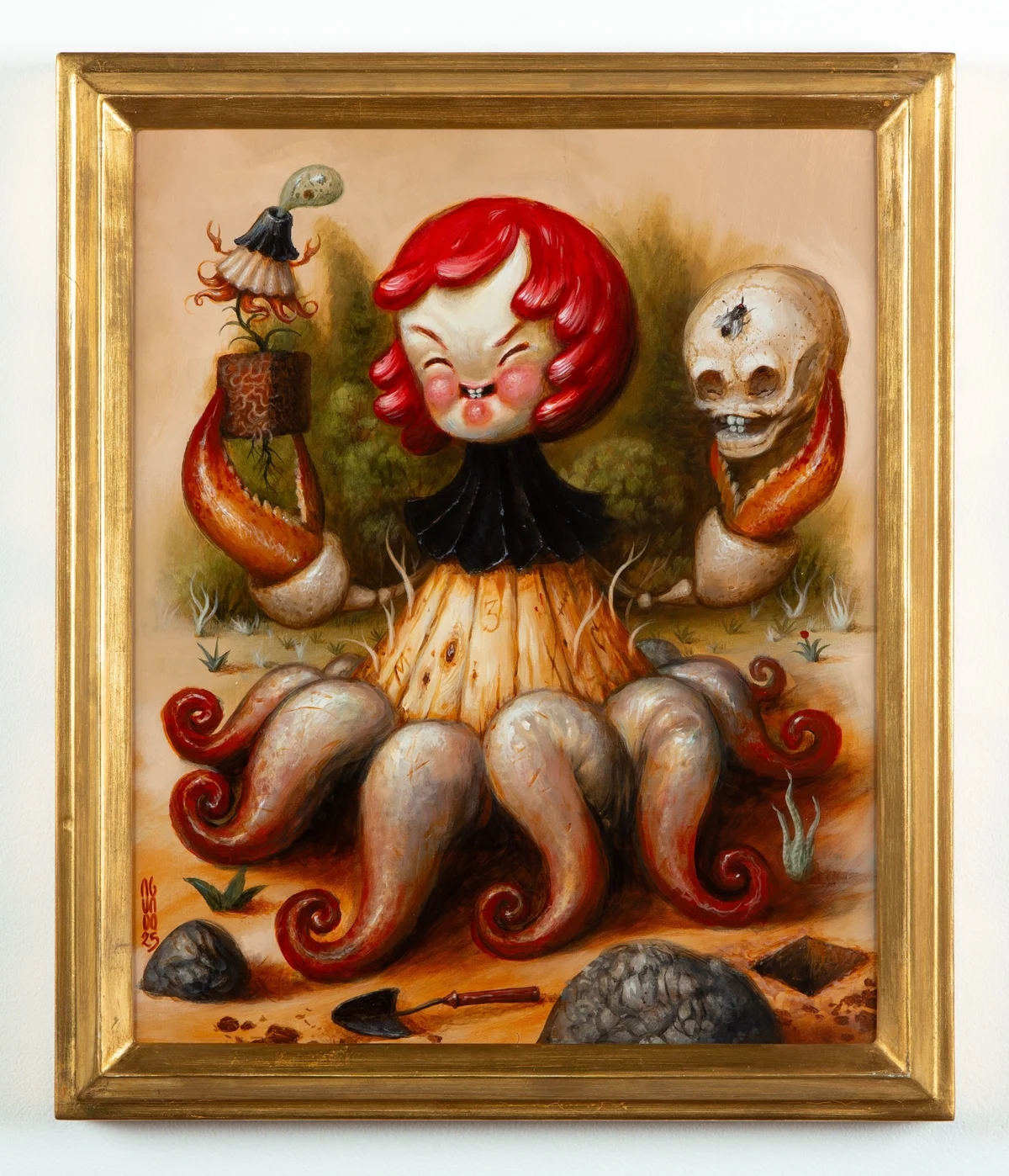
In an era where generative artificial intelligence is often synonymous with slick, hyper-realistic renders and the unsettling perfection of the "uncanny valley," a new movement is emerging that prioritizes texture, soul, and the tactile history of human art. At the forefront of this shift is Jacob Holster, an artist and academic whose work, under the moniker @bandyquantguy, is redefining the visual language of the algorithmic age.
By blending the rigorous inquiry of academia with a deeply emotive visual style, Holster has carved out a niche that moves away from the clinical precision of standard AI tools toward something far more organic: a "painterly" aesthetic that feels less like a computation and more like a memory.
Main Facts: The Human Terrain of Algorithmic Art
Jacob Holster is not your typical digital creator. While many AI artists focus on the "wow factor" of high-resolution realism, Holster’s work—most notably seen in his "Paint World" series—deliberately obscures clarity in favor of atmosphere. His aesthetic is characterized by warm palettes, visible "brushstrokes," and a flickering, dreamlike quality that mirrors traditional oil painting and impressionism.
Holster’s dual identity is central to his output. As an Assistant Teaching Professor of Music Education at Penn State University, his creative endeavors are not merely hobbies but extensions of his scholarly research. He explores the convergence of artificial intelligence, pedagogy, and creative practice. This academic grounding provides his work with a conceptual weight often missing from the broader landscape of social media art.
His recent short film, Art Is Human Terrain, serves as a manifesto for this approach. It suggests that while the tools may be synthetic, the "terrain" they map is fundamentally human. The film, along with his viral snippets on Instagram and YouTube, demonstrates a mastery over generative models that forces them to yield "imperfect" results—texture, grain, and color bleeds—that evoke a sense of nostalgia and physical presence.
Chronology: From Music Education to Visual Synthesis
The evolution of Jacob Holster’s artistic voice is a study in the cross-pollination of disciplines. To understand his current work, one must look at the timeline of his integration of technology into education.

The Academic Foundation
Long before the public release of tools like Midjourney or Sora, Holster was immersed in the world of music education. At Penn State, his focus has remained on how students learn and how technology can facilitate deeper creative engagement. His early work in pedagogy focused on the "how" of creation—the processes that lead to artistic breakthroughs.
The Rise of Generative Media (2022–2023)
As generative AI exploded into the mainstream, Holster began experimenting with how these tools could be used not just to create content, but to explore the very nature of consciousness and creativity. Unlike many who saw AI as a way to replace the artist, Holster viewed it as a new instrument—one that required a "musician’s" touch for phrasing, rhythm, and tone.
The "Paint World" Era (2024–Present)
The launch of his Paint World series marked a definitive shift in his public output. Moving through iterations like Le Voyage [Paint World 28] and Recipe for Consciousness [Paint World 38], Holster began to document a cohesive universe. This period saw him refining the "painterly" prompt engineering that would become his signature. By mid-2024, his work gained significant traction in the "NeuroSurrealism" community, a group of artists dedicated to using AI to map the subconscious.
Supporting Data: The Technicality of the "Tactile"
The "painterly" look Holster achieves is not an accident of the software; it is a deliberate technical subversion. Most generative AI models are trained on vast datasets of photography, leading to a default "glossy" output. Holster’s work requires a sophisticated understanding of latent space to steer the AI away from these defaults.
Texture vs. Resolution
In the digital art world, "quality" is often equated with "resolution" (4K, 8K, etc.). Holster’s data-driven approach flips this. His works, such as wait for the blue boat [Paint World 18], prioritize "textural density." By analyzing the way light interacts with digital "impasto" (the thick application of paint), Holster creates a sense of three-dimensionality on a flat screen.
The Sound-Image Connection
Given his background in music education, Holster’s films are meticulously scored. Data suggests that the human perception of "humanity" in AI art is significantly bolstered by synchronized, non-synthetic audio. Holster uses soundscapes that complement the flickering, low-frame-rate movement of his visuals, creating a multi-sensory experience that masks the algorithmic origins of the imagery.

Official Responses and Academic Context
The response to Holster’s work within the academic community has been one of cautious optimism and intellectual curiosity. As an Assistant Teaching Professor at a major institution like Penn State, Holster represents a bridge between the "Wild West" of AI art and the structured world of higher education.
The Pedagogical Perspective
In various scholarly discussions, Holster has posited that AI should be taught as a "collaborative agent" rather than a "utility." His work serves as a case study for his students, demonstrating that the artist’s "voice" is found in the constraints they place on the machine.
Critical Reception
Art critics specializing in digital media have noted that Holster’s work addresses the "aesthetic fatigue" caused by the flood of generic AI imagery. By leaning into the surrealist tradition, Holster’s work is often cited alongside the "NeuroSurrealist Manifesto," which calls for art that reflects the "chromatic aberrations of a thousand imminent worlds." His work is seen as a successful attempt to give the "ghost in the machine" a paintbrush rather than a camera.
Implications: The Future of the Human-AI Creative Bond
The work of Jacob Holster carries significant implications for the future of both art and education. As AI tools become more ubiquitous, the value of "perfect" imagery will likely depreciate, while the value of "stylized" and "human-centric" imagery will rise.
1. The Redefinition of Craft
Holster’s success suggests that the "craft" of the future lies in "aesthetic curation." The artist is no longer just the person who holds the brush, but the person who directs the vision, manages the texture, and ensures the emotional resonance of the output. This shifts the focus of art education from technical execution to conceptual and stylistic depth.
2. Combating the "Clinical" AI
There is a growing concern that AI-generated media will lead to a homogenization of culture. Holster’s "Paint World" provides a blueprint for how individual artists can resist this. By injecting deliberate "noise" and "imperfection" into the process, artists can maintain a distinct identity that is recognizable even when using the same tools as millions of others.

3. AI as a Pedagogical Tool
For music and arts education, Holster’s work proves that AI can be used to lower the barrier to entry for complex creative expression without sacrificing intellectual rigor. If a student can use AI to visualize the "terrain" of a musical composition, the potential for interdisciplinary learning is boundless.
4. The Rise of "NeuroSurrealism"
We are entering an era where the boundary between the digital and the organic is increasingly blurred. Holster’s work sits at the heart of this transition. His visuals don’t just look like paintings; they feel like the idea of a painting. This "NeuroSurrealist" approach—using algorithms to simulate the way the human brain remembers and interprets art—is likely to become a dominant movement in the late 2020s.
Conclusion: The Soul in the Code
Jacob Holster, through his @bandyquantguy persona, is doing more than just making pretty videos. He is conducting a live experiment in how we might live alongside intelligent machines without losing our sense of touch, history, and warmth.
His work reminds us that "Art Is Human Terrain." No matter how advanced the processor or how complex the algorithm, the value of the art remains rooted in its ability to make us feel something familiar—the stroke of a brush, the warmth of a sunset, or the quiet melancholy of a blue boat waiting in the harbor. As we move further into the algorithmic age, Holster’s painterly aesthetics offer a necessary anchor, proving that even in a world of code, there is still plenty of room for paint.
Where to Explore His Work:
- Instagram: @bandyquantguy
- YouTube: Jacob Holster
- Academic Profile: Penn State University, Department of Music Education


Leave a Comment