
The Search for a HoloLens Successor: Inside Shoujing’s Bid to Fill the Industrial AR Void
The augmented reality (AR) industry currently finds itself in a state of precarious transition. For years, the enterprise sector—spanning manufacturing, healthcare, and defense—relied on two primary pillars: Microsoft’s HoloLens and the Magic Leap series. However, with Microsoft effectively sunsetting the HoloLens 2 and Magic Leap pivoting away from its independent hardware dreams, a massive vacuum has opened in the market. Companies that have spent millions integrating spatial computing into their production lines are now searching for a viable exit ramp or a sustainable alternative.
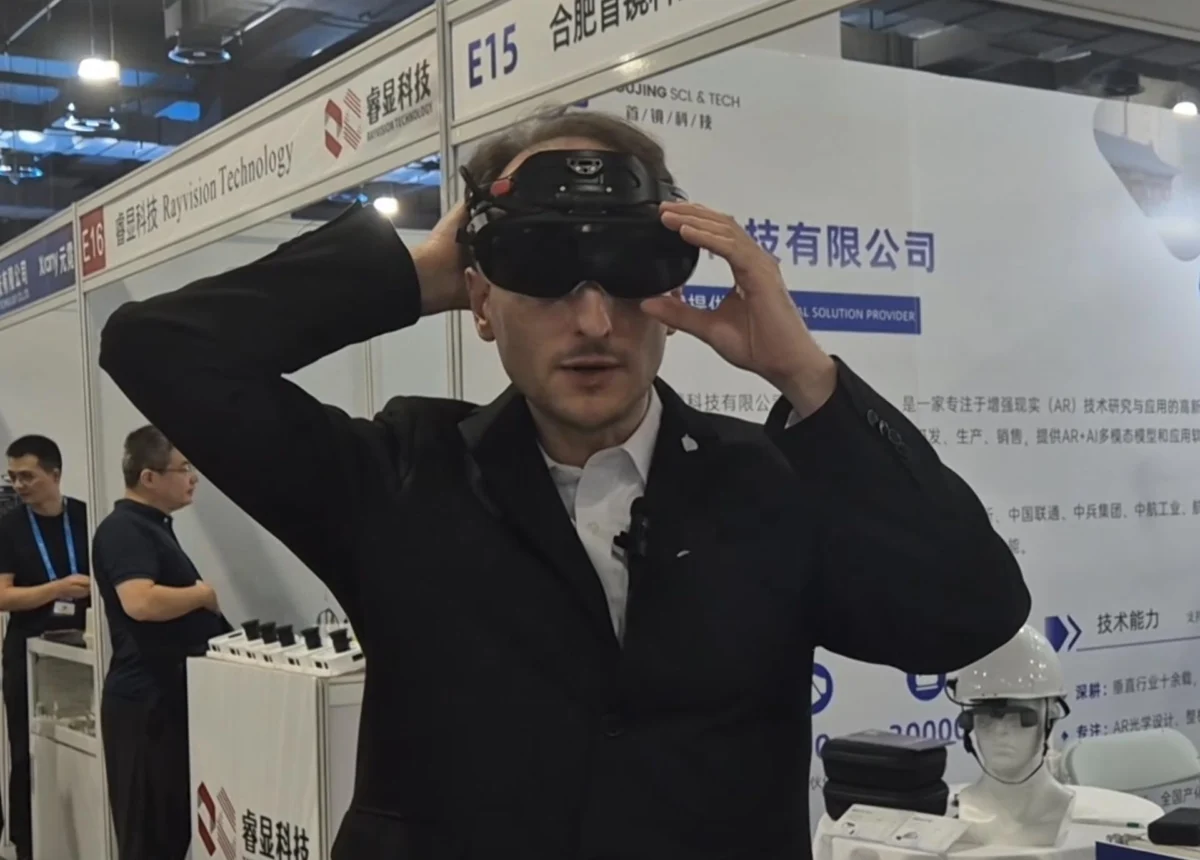
At the recent VR AR Expo China in Shanghai, a new contender emerged from relative obscurity. Shoujing Science & Technology, a Chinese firm specializing in high-end optical solutions, showcased a suite of devices that directly challenge the status quo. Most notably, their upcoming AR-MX2 headset is being positioned not just as a competitor, but as a direct spiritual and functional successor to the HoloLens.
Main Facts: The Shoujing AR-MX2 at a Glance
The Shoujing AR-MX2 is a standalone, see-through augmented reality headset designed specifically for B2B and industrial applications. While the global market has seen a surge in "birdbath" optics (found in consumer glasses like Xreal or Rokid), Shoujing has opted for the more complex and industrially robust waveguide technology.

Key Specifications and Features:
- Optics: Diffractive waveguides, offering high transparency and a slim profile.
- Field of View (FOV): 46 degrees, positioning it slightly below the HoloLens 2 (52 degrees) but significantly above first-generation AR devices.
- Tracking: 6 Degrees of Freedom (6DOF) spatial tracking, allowing for anchored digital twins and complex spatial mapping.
- Connectivity: Integrated 5G support, a critical feature for remote worksites, construction, and outdoor industrial maintenance where Wi-Fi is unreliable.
- Ergonomics: A balanced "halo" strap design with a rear-mounted battery to mitigate frontal weight—a common complaint with early AR hardware.
- Estimated Price: Approximately 10,000 RMB ($1,500 USD), positioning it as a disruptive, low-cost alternative to the $3,500+ enterprise headsets of the past.
Chronology: From Military Prototypes to Enterprise Solutions
The discovery of the AR-MX2 was the result of a systematic exploration of the VR AR Expo China floor. The narrative of Shoujing’s product line suggests a company that has spent years refining military-grade head-mounted displays (HMDs) before transitioning into the broader industrial sector.
The Military Connection
The journey began at the Shoujing booth with the sight of a ruggedized military helmet equipped with an HMD. Initially mistaken for a clone of the U.S. Army’s IVAS (Integrated Visual Augmentation System), the device—while visually similar to a HoloLens—was revealed to be a specialized 2D Heads-Up Display (HUD).
During initial testing, this military-oriented device demonstrated a high degree of clarity. Despite being a 2D overlay, the text was exceptionally readable, and the integrated sensor suite—including thermal imaging and night vision—offered a "Predator-style" visualization of the environment. While the display suffered from slight latency, it established Shoujing’s capability in integrating complex sensor data into a wearable form factor.

The Iterative Path: AR-MX1 to AR-MX2
Following the military HUD, the company presented the AR-MX1. This was a lightweight, 3D-capable headset, yet it lacked the spatial awareness (6DOF) required for true industrial AR. It served as a bridge, demonstrating the company’s ability to miniaturize waveguide optics.
The climax of the showcase was the unveiling of the AR-MX2. Unlike its predecessors, the AR-MX2 was built from the ground up to support the full suite of spatial computing requirements: environment scanning, hand tracking (implied by the sensor array), and stable digital overlays.
Supporting Data: Technical Analysis and Comparative Ergonomics
To understand if the AR-MX2 can truly replace the HoloLens, one must look at the technical trade-offs Shoujing has made.

Waveguide vs. Birdbath
In the current AR market, many startups use "birdbath" optics because they are cheaper to manufacture and offer vibrant colors. However, they are bulky and have low transparency, making them dangerous for industrial environments where a worker needs a clear view of their surroundings. Shoujing’s commitment to waveguides—the same tech used by Microsoft—signals a commitment to the high-end enterprise market. The 46-degree FOV is sufficient for "guided work" applications, such as showing a mechanic where to turn a bolt or displaying a schematic over a circuit board.
Connectivity as a Competitive Edge
One of the most significant data points is the inclusion of 5G. The HoloLens 2 was notoriously tethered to Wi-Fi environments, which limited its use in "in-the-field" scenarios like oil rigs or massive construction sites. By integrating 5G, Shoujing is targeting a pain point that Microsoft never fully addressed in its base hardware, potentially allowing for real-time "See-What-I-See" remote assistance in the most remote corners of the globe.
Ergonomic Distribution
A hands-on (though powered-off) assessment of the AR-MX2 revealed a sophisticated understanding of weight distribution. The device utilizes a rigid halo band with a rear-mounted adjustment knob. By placing the battery at the back of the skull, the center of gravity is shifted away from the nose and forehead. This design choice is essential for "all-day wearability," a metric that determines whether a piece of technology is actually adopted by frontline workers or left in a charging cradle.

Official Responses: Ambition and Market Strategy
During interviews at the expo, Shoujing representatives were remarkably candid about their market positioning. When asked directly if the AR-MX2 was intended to be a HoloLens substitute, the response was an emphatic "yes."
Better than the Original?
Company spokespeople claimed that in certain categories—specifically connectivity and price-to-performance ratio—the AR-MX2 would exceed the capabilities of the HoloLens 2. They emphasized that while Microsoft provided a "stellar package" of software and hardware, the high barrier to entry (price) and the subsequent discontinuation of the line have left customers feeling abandoned. Shoujing intends to fill this gap by offering a "good-enough" hardware platform that is open to various software ecosystems.
Launch Timeline and Global Availability
Shoujing confirmed that the AR-MX2 is slated for an official launch in August 2026. While the initial focus will be the domestic Chinese market, the company expressed a clear intent to ship worldwide. This global ambition is backed by a pricing strategy that targets bulk buyers. At a projected price of $1,500, companies could theoretically outfit an entire department for the cost of two or three HoloLens units.

Implications: The Risks and Rewards of a New Player
The emergence of Shoujing Science & Technology presents a fascinating dilemma for the global AR industry.
The Trust Gap
The primary hurdle for Shoujing is not hardware, but reliability. Microsoft and Magic Leap, despite their flaws, were established entities with global support infrastructures. For a company like Shoujing—which has little to no name recognition outside of specialized Chinese tech circles—the challenge will be proving long-term viability. Enterprise customers require a guarantee that their hardware will be supported, patched, and warrantied for five to ten years.
The "Shadow Creator" Precedent
The history of Chinese AR is littered with "HoloLens killers" that failed to gain traction. Companies like Shadow Creator once promised similar 6DOF waveguide experiences but struggled with software integration and global distribution. Shoujing must prove that they are more than just a hardware manufacturer; they must show they can foster a developer ecosystem or integrate seamlessly with existing platforms like Unity or OpenXR.

Geopolitical and Industrial Shifts
If Shoujing succeeds, it could signal a shift in the center of gravity for industrial AR. As Western tech giants pull back from specialized hardware to focus on AI and software, Chinese manufacturers are stepping in to provide the "shovels" for the spatial computing gold mine. For the end-user—the factory manager or the field engineer—the brand name matters less than the functionality. If the AR-MX2 delivers stable 6DOF tracking and 5G connectivity at half the price of the competition, market forces may override brand hesitation.
Conclusion: A Turning Point in 2026
The Shoujing AR-MX2 represents a bold bet on the future of industrial AR. On paper, it addresses the most glaring needs of the B2B sector: affordability, connectivity, and a reliable optical path. However, the "HoloLens substitute" title is a heavy one to carry. It requires not just cameras and lenses, but world-class spatial mapping algorithms and a robust support network.
As the industry moves toward the projected August 2026 launch, all eyes will be on Shoujing to see if they can transition from a promising expo booth prototype to a production-ready tool. For the many companies currently stranded by the discontinuation of Western AR hardware, the AR-MX2 might just be the lifeline they have been waiting for. Whether it can truly match the "stellar package" of the HoloLens remains to be seen, but for $1,500, many may find it a risk worth taking.


Leave a Comment