
Shadows in the Water: The Deep-Lore Significance of the Amani in ‘The Mandalorian and Grogu’
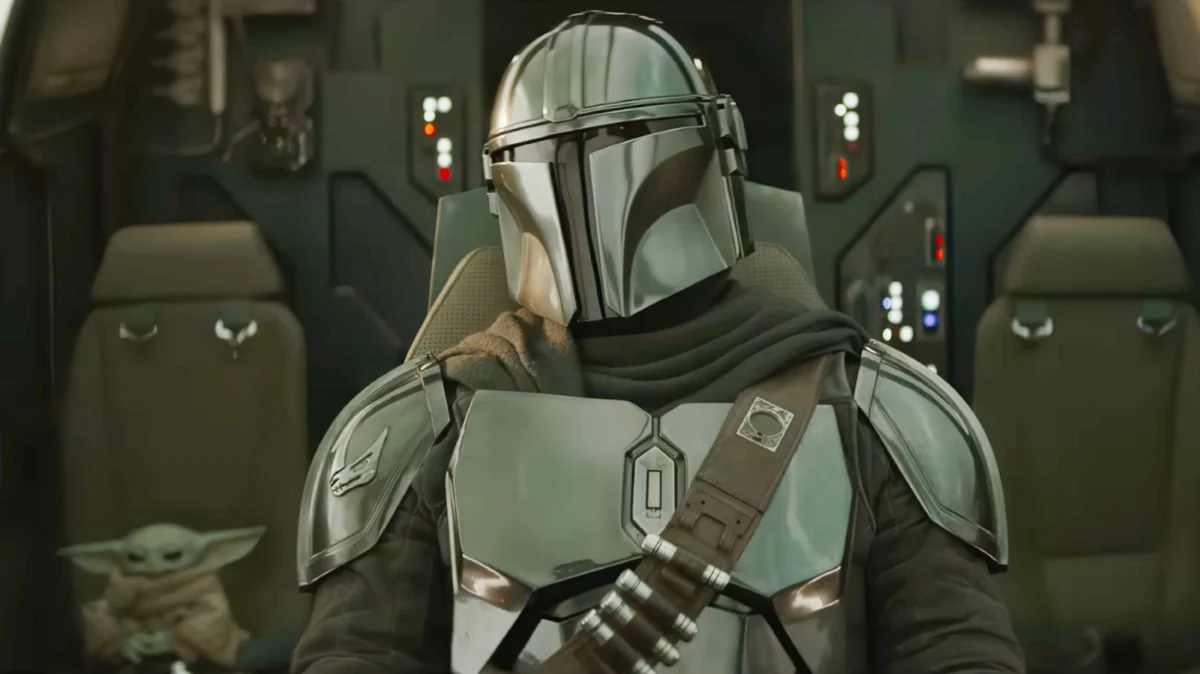
The transition of the "Mandoverse" from the small screen of Disney+ to the grand spectacle of cinema has brought with it a renewed focus on the tactile, lived-in universe that George Lucas pioneered in 1977. In The Mandalorian and Grogu, director Jon Favreau and producer Dave Filoni have not only elevated the stakes for Din Djarin and his formidable apprentice but have also reached deep into the Lucasfilm archives to populate their world. Among the most striking additions to the film’s bestiary are the Amani—tall, spindly, and deceptively lethal creatures that serve as a bridge between the Original Trilogy’s practical effects legacy and the modern era’s expansive lore.
Main Facts: A Deadly Encounter on Nal Hutta
In the narrative arc of The Mandalorian and Grogu, the central duo finds themselves in the crosshairs of "The Twins." These powerful Hutt crime lords, seeking to consolidate power in the power vacuum of the post-Imperial Outer Rim, deploy a staggering array of resources to eliminate the Mandalorian. Their arsenal includes the Droid Gotra, the legendary bounty hunter Embo, and a terrifyingly efficient unit of Amani trackers.
The Amani are utilized by the Twins specifically for their aquatic and amphibious prowess. In a standout sequence set within the murky, industrial waterways of Nal Hutta—the swampy homeworld of the Hutts—Din Djarin is forced into a high-stakes confrontation with these creatures. Unlike the lumbering background extras seen in previous installments, these Amani are depicted as elite hunters, using their unique physiology to navigate the treacherous environment with terrifying speed.
The inclusion of the Amani serves a dual purpose: it provides a fresh physical challenge for the protagonist while rewarding long-term fans with a deep-cut reference to the franchise’s creature-design history.
Chronology: From Jabba’s Palace to the Big Screen
The history of the Amani in Star Wars spans over four decades, reflecting the evolution of the franchise’s approach to alien biology and background storytelling.
1983: The Debut of Amanaman
The species first appeared in Star Wars: Episode VI – Return of the Jedi. Known as "Amanaman," a single representative of the species was visible in the background of Jabba the Hutt’s throne room. Brought to life by puppeteer Ailsa Berk, the creature was colloquially dubbed "the Banana Slug" by the production crew due to its elongated, hood-like head and yellow-mottled skin. Despite having no dialogue and minimal screen time, the design’s eerie, asymmetrical look made it an instant favorite among concept art enthusiasts.
1985: The Kenner Legacy
The Amani’s status as a cult icon was cemented in 1985 when Kenner released an Amanaman action figure as part of the "Power of the Force" line. Because it was released toward the end of the original toy run, it was produced in lower quantities than earlier figures. Today, a mint-condition, carded Amanaman is considered a "holy grail" for collectors, often fetching thousands of dollars at auction.
2014: The Unfinished "Crystal Crisis"
The species was slated for a major lore expansion in The Clone Wars animated series. A three-episode arc titled "Crystal Crisis on Utapau" featured the Amani as a native species of Utapau. While the episodes were never fully animated following the show’s initial cancellation, the "story reels" (completed voice acting with rough animatics) were released to the public. These reels established the Amani as tribal warriors capable of curling into balls and rolling at high speeds—a trait that is terrifyingly realized in live-action in The Mandalorian and Grogu.
2019: Galaxy’s Edge and the Modern Era
The Amani transitioned into the "theme park canon" with the opening of Star Wars: Galaxy’s Edge. Bina, the proprietor of the Creature Stall in Black Spire Outpost, is an Amani from Utapau. This character helped transition the species from "monstrous background alien" to "sentient citizen of the galaxy," setting the stage for their more complex role in the new film.
Supporting Data: Biology and Cultural Lore
To understand why the Amani are such formidable foes for a Mandalorian, one must look at the established "Xenobiology" provided by the Star Wars RPG sourcebooks and the New Essential Guide to Alien Species.
| Feature | Description | Tactical Implication |
|---|---|---|
| Anatomy | Long, spindly arms with a short torso and a hood-like head. | Incredible reach in hand-to-hand combat; difficult to target center mass. |
| Locomotion | Ability to curl into a wheel-like shape and roll. | Rapid closing of distance; immune to standard tripping hazards. |
| Homeworld | Maridun (originally), later Utapau. | Adapted to both arboreal (forest) and subterranean (cave) combat. |
| Social Structure | Tribal and territorial. | They hunt in packs with high levels of coordination. |
In The Mandalorian and Grogu, the film showcases their skin’s amphibious nature. Their hides are thick enough to deflect glancing blaster bolts, and their ability to remain submerged in the acidic waters of Nal Hutta for extended periods makes them the ultimate ambush predators.
Furthermore, the film touches upon the Amani’s history as refugees. In the "Crystal Crisis" lore, it was suggested that many Amani left their homeworld of Maridun to escape various conflicts. The Amani working for the Twins are portrayed not as mindless beasts, but as displaced warriors selling their specialized skills to the highest bidder—a recurring theme in the "Mandoverse" regarding the fallout of the Galactic Civil War.
Creative Context: The Filoni-Favreau Philosophy
The decision to feature the Amani is a hallmark of Dave Filoni’s creative philosophy. Filoni, who worked closely with George Lucas on The Clone Wars, has made it a personal mission to "rescue" unfinished ideas from the Lucasfilm vaults.
In various interviews regarding the development of the "New Republic" era, Filoni has noted that the transition to film allows for a higher budget to realize creature movements that were previously impossible. "There are things we wanted to do in animation—like the Amani rolling—that are actually harder to make look ‘right’ in a 2D or 3D cartoon than they are in a high-end live-action environment with a mix of CGI and practical rigs," Filoni remarked during a recent press junket.
The Amani in the film represent a "best of both worlds" approach. While their movement is augmented by digital effects to capture the physics of their rolling attack, the close-up shots utilize high-end animatronics that pay homage to Ailsa Berk’s original 1983 performance. This continuity of design ensures that the new film feels aesthetically linked to the Original Trilogy, even as it pushes the boundaries of modern cinematography.
Implications: The Future of the Star Wars Bestiary
The prominence of the Amani in The Mandalorian and Grogu signals a shift in how Lucasfilm intends to handle its cinematic releases. Rather than creating entirely new "disposable" alien species for every scene, the studio is leaning into "Legacy Aliens." This approach deepens the world-building by showing how species we’ve known for decades have evolved, migrated, and adapted to the changing political landscape of the galaxy.
1. Strengthening the Transmedia Narrative
By pulling from the "Crystal Crisis" arc, the film validates the "Legacy" content available on Disney+. It rewards fans who have explored the unfinished episodes and the Star Wars comics by Charles Soule, creating a cohesive universe where a background character from 1983 can become a primary threat in 2025.
2. Practical vs. Digital Equilibrium
The success of the Amani sequences serves as a proof-of-concept for future films. It demonstrates that "weird" designs—those that don’t fit the standard humanoid silhouette—can be successfully integrated into high-octane action sequences without losing their physical presence.
3. The Expansion of the Underworld
By associating the Amani with the Twins and Nal Hutta, the film sets the stage for a deeper exploration of the Hutt Cartels. If the Amani are just one part of the Twins’ arsenal, it suggests that future installments may bring back other "Palace Aliens"—such as the Gamorreans, Weequays, or even the Rancor species—in more prominent, tactically diverse roles.
As The Mandalorian and Grogu continues its theatrical run, the Amani stand as a testament to the enduring creativity of the Star Wars creature shop. They are a reminder that in a galaxy far, far away, even the most obscure background character has a story, a homeworld, and—in the right hands—the potential to become a deadly cinematic icon.



Leave a Comment