
The Enduring Legacy of Infernal Excellence: A Retrospective on Green Ronin’s Legions of Hell
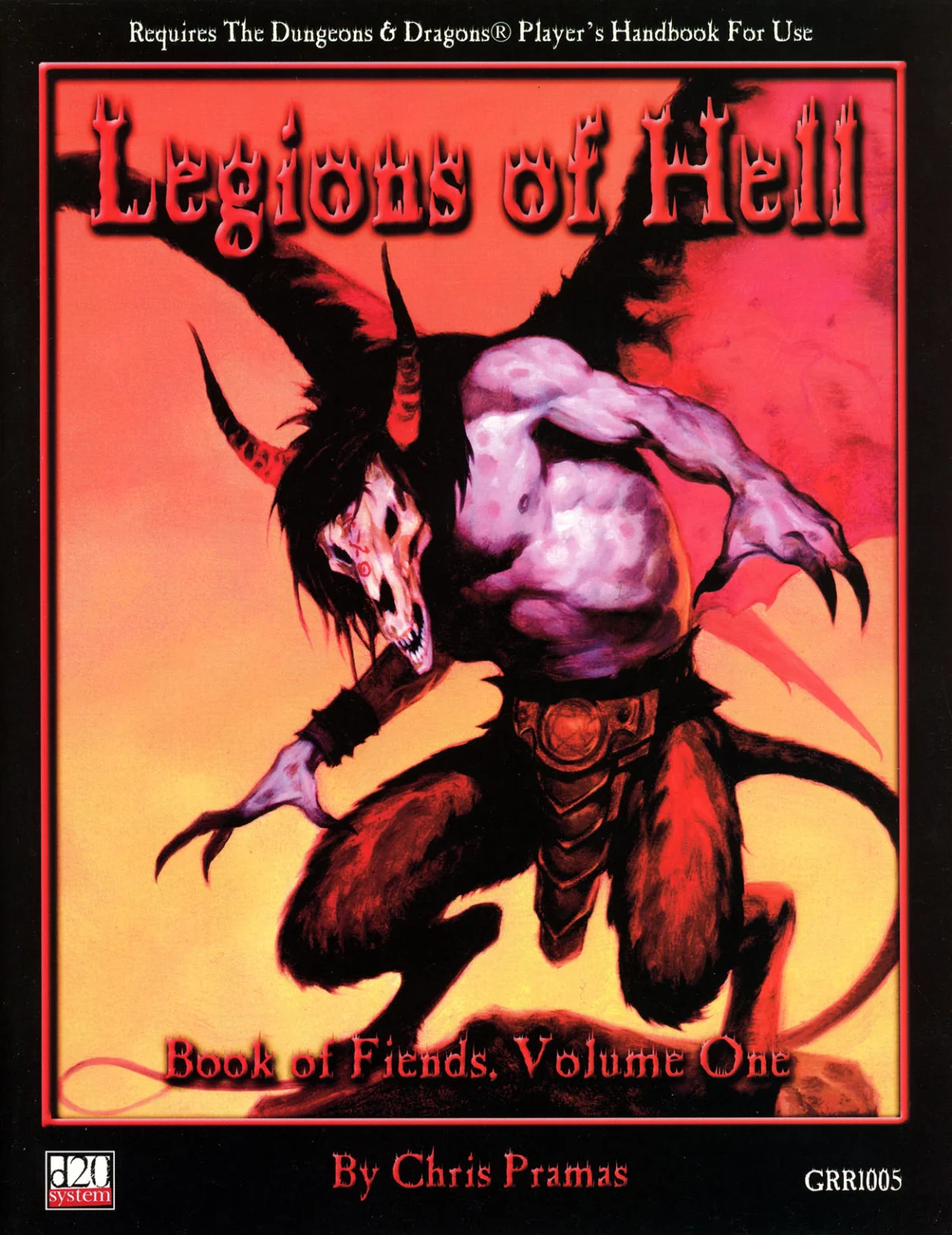
Main Facts: A Beacon in the Bestiary Blizzard
In the bustling landscape of the early 2000s, the D20 System had ushered in an era of unprecedented third-party content for tabletop role-playing games. While this surge brought innovation, it also led to an oversaturation of supplements, particularly monster manuals. Game shelves groaned under the weight of countless creature compendiums, many offering little more than minor variations on familiar archetypes, leaving even the most dedicated Dungeon Masters with a sense of déjà vu. It was a time when discerning genuinely groundbreaking material from the merely derivative became a critical skill for players and GMs alike.
Amidst this deluge, a singular product emerged from Green Ronin Publishing that would not only defy the trend but set a new standard for infernal lore: Legions of Hell. Originally published on October 13th, 2001, this D20 supplement immediately garnered an extraordinary reception. Critically acclaimed as "Excellent. Easily one of the Top 10 D20 supplements released to date," it cut through the noise with its unparalleled depth, originality, and artistic brilliance. Legions of Hell didn’t just present a collection of monsters; it offered a meticulously crafted dive into the Nine Circles of Hell, detailing the intricate hierarchy and diverse servants of Asmodeus, the King of Hell, with a richness rarely seen before or since.
Its initial impact was so profound that its core content would later be revised, expanded, and collected under the title The Book of Fiends, first for D&D 3.5 Edition and subsequently for D&D 5th Edition. This enduring adaptability and relevance across multiple editions of the world’s most popular role-playing game speak volumes about the timeless quality of its design and the power of its imaginative content. For many, Legions of Hell, in its various iterations, transcends mere utility to become an indispensable resource for crafting truly memorable and terrifying infernal campaigns.
Chronology: From D20 Phenomenon to Cross-System Staple
The D20 Boom and the Birth of Legions of Hell
The D20 System, released in 2000, revolutionized the tabletop RPG industry by opening the gates for third-party publishers to create content compatible with Dungeons & Dragons 3rd Edition. This open gaming license led to an explosion of creativity and product development, democratizing game design to an extent previously unimaginable. Publishers like Green Ronin rose to prominence by delivering high-quality, distinctive material that often pushed the boundaries of what was expected from a D&D supplement.
Legions of Hell, arriving in October 2001, landed squarely in the midst of this exciting yet crowded period. It was conceived as a comprehensive exploration of the infernal planes, a subject that, while popular, had rarely received such a focused and imaginative treatment outside of first-party offerings. At 64 pages, it packed an immense amount of content into a concise format, immediately establishing itself as a benchmark for detailed world-building and innovative monster design. Its success was not merely a fleeting moment of popularity but the beginning of a long-standing legacy.
Evolution to The Book of Fiends
The D20 System eventually gave way to D&D 3.5 Edition, and later to 4th and 5th Editions. For many supplements, this meant obsolescence. However, the foundational quality of Legions of Hell‘s content ensured its survival and evolution. Recognizing the enduring value of the material, Green Ronin, under the guidance of its original authors, embarked on a significant project: to consolidate and expand Legions of Hell into a larger, more comprehensive collection. This effort culminated in The Book of Fiends series, which encompassed not just the original content but also additional material, creating a definitive compendium of infernal lore.
The first major revision arrived for D&D 3.5, meticulously updating stat blocks and integrating new concepts while retaining the core narrative and creative vision that made the original so compelling. Years later, as Dungeons & Dragons 5th Edition revitalized the RPG market, The Book of Fiends once again proved its timelessness by undergoing another comprehensive adaptation. This multi-edition journey is a testament to the strength of its underlying design and the persistent demand for truly unique and well-developed infernal adversaries. It showcases a rare feat in the often-ephemeral world of RPG supplements: maintaining relevance and critical acclaim across several generations of game rules.
Enduring Influence and Adaptability
The impact of Legions of Hell (and subsequently The Book of Fiends) extends far beyond its initial D20 release. Its creatures and lore have permeated countless campaigns, inspiring Dungeon Masters to craft more intricate and terrifying encounters. The original reviewer, two decades on, continues to champion its brilliance, citing its extensive use in his own work. Notably, elements from The Book of Fiends were instrumental in enriching the popular Avernus Remix, a fan-created enhancement for the official D&D 5E module Baldur’s Gate: Descent into Avernus, demonstrating its seamless integration into contemporary campaigns.
Furthermore, the book’s influence is evident in the reviewer’s long-running In the Shadow of the Spire campaign, where its thematic threads and specific entities found new life, even contributing to the creation of the Chaos Lorebooks series. This illustrates how the product’s creative concepts transcend mere stat blocks, becoming foundational elements for expansive, long-form storytelling.
Perhaps the most compelling testament to its design excellence is its adaptability to entirely different game systems. The core concepts, unique creature designs, and rich narrative hooks of The Book of Fiends have been successfully adapted by GMs for systems as diverse as Mothership (a sci-fi horror RPG) and Numenera (a science-fantasy game). This cross-system utility underscores that the product’s strength lies not just in its D&D mechanics, but in its profound imaginative power and its ability to inspire compelling narratives regardless of the underlying ruleset. When asked to name his favorite RPG bestiary of all time, the original reviewer places The Book of Fiends in a toss-up with the legendary AD&D 2nd Edition Monstrous Manual – a comparison that solidifies its status as an all-time classic.
Supporting Data: Delving into the Depths of Design
A Pantheon of Pain: The Infernal Host Unveiled
At the heart of Legions of Hell lies its meticulously crafted bestiary, comprising roughly forty-five distinct monster entries. Unlike many contemporary monster manuals that offered slight variations on existing tropes, this book introduced a truly novel array of infernal beings, each with a unique ecology, motivations, and methods of terror. The sheer creativity on display is staggering, providing Dungeon Masters with a deep wellspring of antagonists that are both mechanically interesting and narratively compelling.
On one end of the infernal spectrum are the "foot soldiers of hell," yet even these rank-and-file creatures are far from mundane. The Akop, for instance, are an entire race tragically tricked into servitude and transformed into shadowy entities, offering a poignant narrative twist to their terrifying presence. The Bonedreg are gruesome constructs, formed by the Leviathan from the indigestible remains of its victims, a chilling testament to the cosmic horror lurking within Hell. The Chamagon are described as gaunt, quick-footed infiltrators and magical saboteurs, perfect for subtle, insidious threats rather than direct confrontation. Corrupted Darksphinxes present intellectual and physical challenges twisted by infernal influence. The Distender, a foul devil resembling a bloated stomach, attacks using the four classic humors, a grotesque and unique combat mechanic. Perhaps most disturbing are the Faceless, assassins who signal their success by literally wearing the face of their latest victim, a visceral detail that speaks volumes about their depravity. Hellwardens, living scarecrows, act as guardians, while Spinders are monstrous, swarming creatures that pose a threat even to other devils. Finally, the Soulsniffer tracks escaped souls across planes, adding a cosmic bounty hunter element to infernal pursuit. Each entry is a miniature adventure seed, begging to be integrated into a campaign.
At the other end of the scale, Legions of Hell introduces a variety of unique creatures, primarily powerful Princes and Dukes of Hell. These aren’t just bigger devils; they are distinct personalities with complex motivations and vast power. Balan, Master of the Infernal Hunt, offers opportunities for thrilling chases and dangerous pacts. Furcas, Duke of Rhetoric, suggests encounters built around deception, negotiation, and infernal manipulation rather than pure combat. Hadriel, Duchess of Domination, provides a formidable foe whose power lies in mental subjugation. Iblis, Duke of Pride, is a Fallen Solar, a poignant and tragic figure whose corruption offers deep narrative potential. The Lich Fiend combines the horror of undeath with infernal power. And in a stroke of brilliant cross-cultural inspiration, Krotep, Pharaoh of Axor, and Nekhet, Prophet of Set, are presented as infernal beings who believe themselves to be the son and daughter of the Egyptian god Set, adding a layer of ancient myth and rival deities to the infernal hierarchy. These powerful entities are designed to be campaign-defining antagonists, not just one-off encounters.
Beyond Bestiary Entries: Expanding Infernal Lore
Legions of Hell‘s brilliance extends beyond its creature entries. The supplement provides a wealth of additional material designed to deepen the infernal experience. It includes several prestige classes tailored for the servants of Hell, offering players unique pathways to embrace infernal power or for GMs to create formidable NPC villains with specialized abilities and roles within the infernal hierarchy.
Templates for Fallen Celestials are also presented, allowing GMs to explore the tragic and terrifying transformation of angels into devils. This provides a rich narrative vein for exploring themes of corruption, redemption, and the eternal conflict between good and evil, adding layers of moral ambiguity to encounters with former divine beings.
Furthermore, the book offers valuable information regarding the Angelic Choirs, providing a crucial counterpoint and context to the infernal forces. Understanding the divine hierarchy and its relationship to Hell enriches the world-building, allowing for more nuanced portrayals of the cosmic struggle. Finally, a comprehensive overview of Hell itself provides GMs with the geographical, political, and cultural framework needed to run truly immersive campaigns within the infernal planes, detailing its landscapes, power structures, and dangers. This holistic approach transforms the book from a simple monster manual into a campaign setting resource.
The Artistic Vision: A Hellish Gallery
A crucial element contributing to Legions of Hell‘s exceptional quality is its stunning artwork. The book boasts contributions from some of the most respected artists in the fantasy genre, including Brom, Sam Wood, Raven Mimura, and Toren Atkinson. These names alone signal a commitment to visual excellence that few supplements achieve.
The reviewer’s claim that there is "literally not a single weak piece of art in the entire book" is a rare and powerful endorsement. Brom’s distinctive dark fantasy style, often characterized by gritty realism and gothic horror, perfectly captures the grim aesthetic of Hell. Sam Wood’s dynamic and detailed illustrations bring the creatures to life with a sense of energy and menace. Raven Mimura’s work often blends intricate detail with a sense of the fantastical, lending an otherworldly quality to the infernal beings. Toren Atkinson’s contributions further enhance the book’s visual diversity, ensuring that each creature feels distinct and memorable. This collective artistic talent elevates Legions of Hell beyond a mere technical manual, transforming it into a visceral, immersive experience. The art doesn’t just depict the monsters; it embodies their essence, their terror, and their corrupted grandeur, making them leap off the page and into the imaginations of players and GMs.
Authorial Authority: Chris Pramas’s Infernal Pedigree
The creative force behind Legions of Hell is primarily Chris Pramas, a name synonymous with high-quality RPG content. His background is crucial to understanding the book’s depth and authenticity. Pramas was notably the author of Guide to Hell, the definitive AD&D reference for the infernal plane, published by Wizards of the Coast. This prior experience gave him an unparalleled understanding of infernal lore, established hierarchies, and the subtle nuances required to portray Hell with both reverence for tradition and innovative flair.
His expertise ensured that Legions of Hell was not merely a collection of random demonic entities but a cohesive, well-researched, and imaginative exploration of a complex setting. The review explicitly states that Pramas "puts this experience to good use, exploring the complete spectrum of Hell — rather than just focusing on one or two features." This depth of knowledge, combined with the collaborative efforts of Jim Bishop, Brian Kirby, and Erik Mona, resulted in a product that felt both familiar and refreshingly new. The "creativity and research" mentioned in the original review underscore the meticulous effort invested in making Legions of Hell a distinct and invaluable addition to any D20 library, setting it apart from the more generic offerings of its time. Pramas’s reputation, also bolstered by his Origins Award-winning work on Death in Freeport, firmly established him as a master craftsman in the RPG industry, making Legions of Hell a highly anticipated and ultimately celebrated release.
Official Responses and Sustained Acclaim
The Reviewer’s Unwavering Endorsement
The original review of Legions of Hell stands as an exceptional piece of critical praise, particularly notable for its absolute lack of reservation. The reviewer’s declaration that the book "doesn’t have any weaknesses" is a rare statement in professional journalism, especially in an industry often prone to nitpicking. This unequivocal endorsement, culminating in perfect scores of "Style: 5" and "Substance: 5," signifies a product that not only met but vastly exceeded expectations across all metrics. It speaks to a level of design and execution so flawless that it left no room for constructive criticism.
More than two decades later, this initial enthusiasm has not waned. The reviewer’s continued and fervent recommendation of The Book of Fiends (the revised and collected edition) across various platforms and personal campaigns underscores the product’s enduring quality. This sustained acclaim, from a reviewer who has seen countless RPG products come and go, acts as a powerful "official response" in itself—a testament to the timelessness of the content and its ability to continually inspire and enrich role-playing experiences. When a critic not only praises a product upon release but continues to use it extensively in their own games years later, adapting it to new systems and recommending it above almost all others, it transcends a mere review and becomes a profound validation of its intrinsic worth.
Green Ronin’s Commitment to Quality
Green Ronin Publishing, already famed for its Freeport modules which offered a distinct blend of swashbuckling adventure and Lovecraftian horror, further solidified its reputation for excellence with Legions of Hell. The decision to publish such a meticulously detailed and artistically rich supplement, particularly one that delves into a complex and often-revisited fantasy trope, showcases the publisher’s commitment to delivering premium content that stands out in a competitive market.
The subsequent investment in revising and re-releasing the material as The Book of Fiends for D&D 3.5 and then 5E is a clear indication of Green Ronin’s confidence in the product’s foundational quality and its long-term market viability. It demonstrates a strategic understanding that truly exceptional content transcends edition boundaries. By nurturing and evolving this product, Green Ronin effectively provided an "official response" through action, affirming the belief that Legions of Hell‘s vision of Hell was too valuable to be confined to a single ruleset or era. This commitment to quality and longevity has undoubtedly contributed to The Book of Fiends‘ esteemed position within the pantheon of great RPG bestiaries.
Implications: Shaping Infernal Campaigns and Bestiary Design
A Blueprint for Better Bestiaries
Legions of Hell did not merely offer new monsters; it provided a blueprint for how bestiaries could be designed to be truly impactful. It moved beyond the simple presentation of stat blocks and generic descriptions, instead embedding each creature within a rich tapestry of lore, motivation, and ecology. This approach demonstrated that monsters are most terrifying and engaging when they are integral parts of a larger world, with specific roles, weaknesses, and narrative potential.
The book highlighted the importance of creativity and research, proving that even a well-trodden theme like "devils" could be reimagined with fresh eyes. It set a standard for depth, urging other designers to consider how their creatures contribute to the overall campaign narrative, offer unique challenges, and spark the imagination of GMs. Its influence can be seen in the design of subsequent bestiaries that prioritize thematic coherence, compelling lore, and practical utility for Dungeon Masters seeking more than just combat fodder.
Enriching the D&D Landscape
For Dungeon Masters running infernal campaigns, Legions of Hell became an absolutely essential resource. It provided not just a wide array of compelling adversaries, but also the context for understanding the Nine Hells as a living, breathing (and suffering) plane of existence. It moved beyond the generic "demon lord in a dark castle" trope, offering a nuanced hierarchy, political intrigue, and a diverse range of infernal threats from the lowly foot soldier to the powerful Dukes.
Its continued relevance in modern D&D 5E campaigns, particularly its seamless integration into the Descent into Avernus module through fan-made remixes, speaks volumes about its enduring power. It offers GMs the tools to craft truly terrifying, morally complex, and unforgettable encounters with the denizens of Hell, moving beyond simple hack-and-slash to explore themes of corruption, damnation, and the struggle for souls. The book allows GMs to bring a level of infernal sophistication and dread that enriches the entire D&D landscape.
The Enduring Value of Imagination
In conclusion, Legions of Hell (and its later incarnation, The Book of Fiends) stands as a monumental achievement in tabletop role-playing game design. It is a testament to the power of imagination, meticulous research, and exceptional artistry. From its initial groundbreaking release during the D20 boom to its enduring adaptability across multiple D&D editions and even disparate game systems, its influence has been profound and lasting.
It set a high bar for bestiary design, demonstrating that monsters are most compelling when they are deeply integrated into a rich narrative and world. The unwavering critical acclaim, particularly the rare "no weaknesses" verdict and the reviewer’s two-decade-long endorsement, cements its status as an all-time classic. For any Dungeon Master with "even the slightest interest in having a demonic presence in your D20 campaign," this product remains "absolutely essential." Its ultimate recommendation rings true today as it did over twenty years ago: "You will never regret the money you spend on Legions of Hell." It is, unequivocally, a benchmark for excellence and a wellspring of infernal inspiration.
Product Details
- Original Author: Chris Pramas (with Jim Bishop, Brian Kirby, and Erik Mona)
- Publisher: Green Ronin Publishing
- Line: D20
- Original Price: $14.95
- ISBN: 0-9701048-4-7
- Product Code: GRR1005
- Pages: 64
- Review Originally Published: October 13th, 2001
- Later Revisions: The Book of Fiends (D&D 3.5, D&D 5E)


Leave a Comment