
"Victorian Psycho" Captivates Cannes with Anachronistic Charm and Chilling Performance
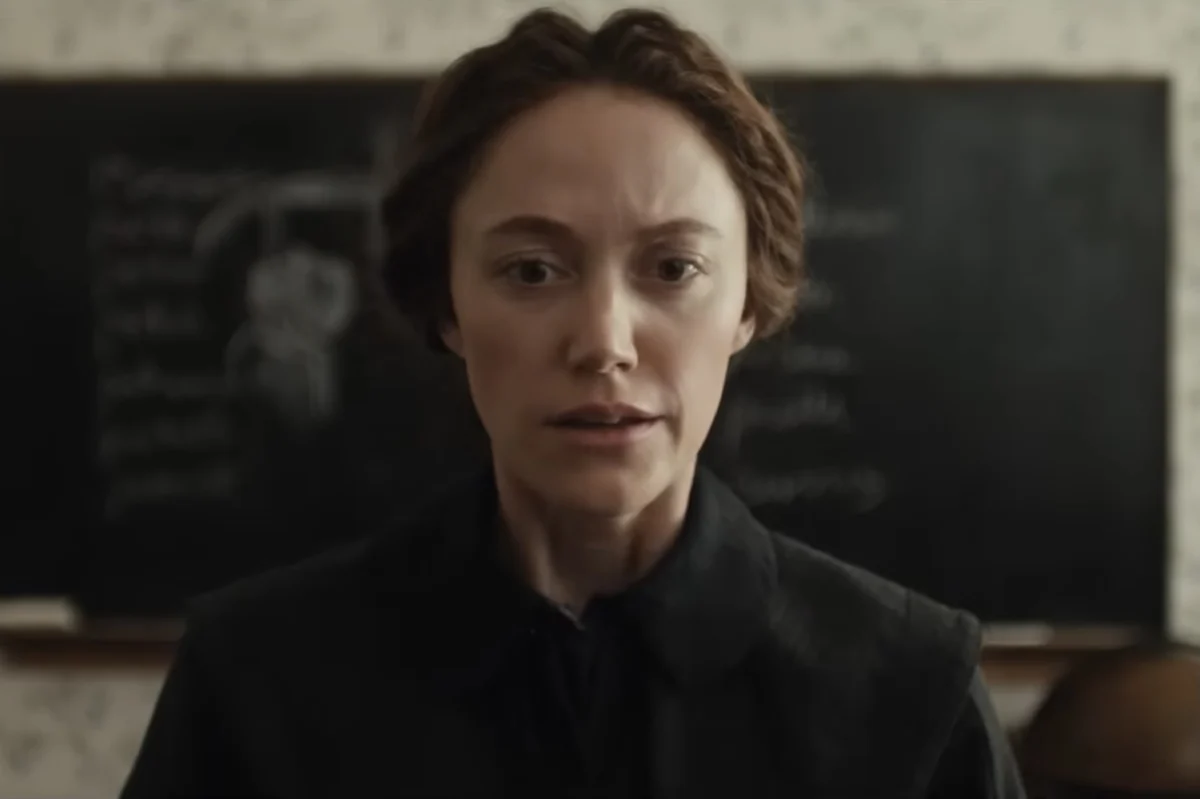
Cannes, France – A darkly whimsical and unsettlingly charming new film, Victorian Psycho, has premiered at the Cannes Film Festival, immediately garnering significant buzz and a respectable five-minute standing ovation. Directed by Zachary Wigon and starring genre stalwart Maika Monroe, the film, based on Virginia Feito’s novel, promises a unique blend of psychological thriller and period horror, infused with an audacious anachronistic flair that has captivated early audiences.
The initial trailer, released ahead of the festival, offered a tantalizing glimpse into the film’s distinctive tone. Far from the grim, gothic expectations of a Victorian-era tale involving a murderous governess, the teaser pulsed with an unexpected energy, largely attributed to the striking choice of music: Die Spitz’s punk-rock anthem "Throw Yourself to the Sword." This bold musical juxtaposition immediately signals that Victorian Psycho is not merely a conventional period piece, but a subversive and "peculiarly charming" exploration of madness. The trailer manages to be "delightful" even amidst fleeting shots of severed body parts and unsettling commands to "kill them all," delivered with an eerie calm to two seemingly unperturbed children. This blend of the macabre with a playful, almost rebellious spirit sets the stage for a cinematic experience that defies easy categorization.
Main Facts: A Delightfully Twisted Debut
Victorian Psycho emerges as one of the most intriguing entries from this year’s Cannes Film Festival, distinguished by its bold stylistic choices and a compelling narrative rooted in psychological suspense. The film centers on a governess, portrayed by the formidable Maika Monroe, known for her impactful roles in modern horror and thriller cinema. Her character is described as "hiding her psychopathic tendencies" as she assumes a new position in a conveniently remote estate, a classic setup for escalating tension and inevitable unraveling. The trailer, however, hints that these tendencies will not remain concealed for long, promising a swift descent into chaos marked by screams, blood, and chilling interactions.
The film’s reception at Cannes underscores its potential to resonate widely. A five-minute standing ovation, while not reaching the legendary heights of Pan’s Labyrinth‘s 22-minute applause, places Victorian Psycho in esteemed company, tying with critical and commercial successes such as Baz Luhrmann’s Moulin Rouge and Joseph Kosinski’s Top Gun: Maverick. This enthusiastic industry endorsement suggests that Wigon’s vision, coupled with Feito’s sharp storytelling, has struck a chord with discerning festival-goers.
Beyond Monroe’s lead performance, the film boasts a truly impressive ensemble cast, including Thomasin McKenzie, Ruth Wilson, and Jason Isaacs, adding considerable weight and talent to the production. Zachary Wigon, fresh off his critically acclaimed work on Sanctuary, takes the directorial reins, guiding a screenplay penned by the novel’s author, Virginia Feito herself. This direct involvement from Feito ensures a faithful yet innovative adaptation of her original narrative vision. Victorian Psycho is slated for a theatrical release this fall, positioning it as a potentially significant contender in the upcoming awards season and a must-see for fans of psychological thrillers and genre-bending cinema.
Chronology: From Page to Promising Premiere
The journey of Victorian Psycho from a compelling literary concept to a celebrated cinematic event is a testament to the enduring power of well-crafted narratives and the collaborative vision of dedicated artists.
Novel’s Genesis: Virginia Feito’s Literary Foundation
The foundation of Victorian Psycho lies in the literary prowess of Virginia Feito, whose original novel captivated readers with its dark humor and unsettling exploration of a disturbed mind. Feito’s distinctive voice and ability to craft psychologically intricate characters provided fertile ground for cinematic adaptation. The novel quickly garnered attention for its unique take on the classic governess archetype, injecting it with modern psychological complexity and a satirical edge that challenged traditional genre conventions. Its success in the literary world hinted at its potential to translate to the screen, particularly for an audience hungry for narratives that push boundaries and subvert expectations. The original text likely explored the internal monologue and increasingly erratic thoughts of the governess, providing a rich internal landscape that would need creative externalization in a film. Feito’s decision to write the screenplay herself was a crucial step in ensuring that the film retained the core essence and intricate nuances of her original work.
Adaptation Journey: Bringing a Twisted Vision to Life
The transition from novel to film was spearheaded by the creative partnership between Virginia Feito and director Zachary Wigon. Recognizing the cinematic potential of Feito’s novel, producers likely saw an opportunity to craft a film that would stand out. Wigon, whose previous film Sanctuary demonstrated a keen ability to handle intense psychological dynamics and contained, character-driven narratives, proved to be an ideal choice to steer Victorian Psycho. His experience with complex character studies and taut thrillers suggested he could navigate the delicate balance between horror, dark comedy, and period setting required by the material. Feito’s direct involvement as the screenwriter was pivotal. Rather than entrusting her creation to another writer, she meticulously adapted her own narrative, preserving the unique voice, sharp wit, and unsettling atmosphere that defined her novel. This collaborative yet author-centric approach likely streamlined the creative process, ensuring a cohesive vision from page to screen.
Production & Filming: Crafting a Remote Realm of Madness
Filming Victorian Psycho presented its own set of challenges and opportunities, particularly in establishing the remote, isolated setting crucial to the narrative. Production likely sought out authentic, sprawling estates or meticulously designed sets that could evoke the grandeur and oppressive solitude of a Victorian country home. The remote nature of the governess’s new employ is not merely a plot device but a critical element in isolating her, allowing her psychopathic tendencies to fester and eventually erupt without immediate external interference. The aesthetic choices for the film’s visual style would have been paramount, balancing historical accuracy with the anachronistic elements hinted at in the trailer. Costuming, set design, and cinematography would have worked in concert to create an atmosphere that is both period-appropriate and subtly unsettling, reflecting the internal turmoil of the protagonist. The decision to inject modern elements, such as the punk-rock soundtrack, would have been a deliberate choice made during production to underscore the film’s genre-bending ambitions.
Cannes Debut: A Resounding Acclaim
The decision to premiere Victorian Psycho at the prestigious Cannes Film Festival speaks volumes about the filmmakers’ confidence in their creation and the distributor’s belief in its international appeal. Cannes is a global stage where films are judged not only for their artistic merit but also for their ability to spark conversation and define cinematic trends. The film’s debut was met with a remarkable five-minute standing ovation, a significant indicator of its impact on the discerning festival audience. Such prolonged applause at Cannes is a powerful endorsement, signaling that the film successfully delivered on its promise of a unique, engaging, and thought-provoking experience. This reception not only validated the creative risks taken by Wigon and Feito but also firmly positioned Victorian Psycho as one of the festival’s standout titles, generating considerable anticipation for its broader theatrical release.
Supporting Data: Tropes, Talent, and Timeless Appeal
The compelling narrative and unique stylistic approach of Victorian Psycho are bolstered by a rich tapestry of cinematic and literary influences, a talented cast and crew, and a clever understanding of audience expectations.
The Allure of the Psychopathic Governess: A Classic Trope Reimagined
The figure of the governess, particularly one with a dark secret or malevolent intent, is a deeply ingrained and potent archetype in literature and cinema. From Henry James’s The Turn of the Screw (which inspired numerous adaptations, including The Innocents and The Haunting of Bly Manor) to Daphne du Maurier’s Rebecca, and even modern thrillers like The Hand That Rocks the Cradle, the governess often serves as an outsider who infiltrates a domestic sphere, bringing with her either genuine threat or psychological instability. This trope taps into primal fears of the unknown within the seemingly safe confines of home, and the vulnerability of children to figures of authority.
Victorian Psycho seems to lean into this archetype while simultaneously subverting it. Instead of merely hinting at the governess’s instability, the film, much like Feito’s novel, openly declares her "psychopathic tendencies." This directness suggests a different kind of horror—not one of ambiguity, but of the unsettling experience of witnessing madness unfold. Placing this explicitly psychopathic character within the restrictive social confines of the Victorian era amplifies the tension. The period’s rigid decorum and emphasis on appearances create a perfect breeding ground for hidden depravities, making the governess’s eventual eruption of violence all the more shocking against such a buttoned-up backdrop.
Maika Monroe: A Modern Scream Queen Embracing the Darkness
Maika Monroe’s casting as the titular "Victorian Psycho" is a strategic and inspired choice. Monroe has, in a relatively short career, carved out a niche as a compelling presence in contemporary horror and thrillers. Her breakout roles in It Follows and The Guest cemented her status as a "scream queen" for a new generation, showcasing her ability to convey both vulnerability and resilience in the face of terror. What makes Monroe particularly suited for this role is her nuanced acting style; she often portrays characters who are intelligent, observant, and subtly unnerving, even before overt horror begins. This makes her an ideal candidate to embody a character "hiding her psychopathic tendencies," suggesting a performance that will be less about overt theatrics and more about the simmering, quiet menace that eventually boils over. Her presence lends credibility and draws in an audience familiar with her genre work, promising a sophisticated take on a potentially sensational character.
Director Zachary Wigon’s Vision: Blending Styles and Sustaining Tension
Zachary Wigon’s previous directorial effort, Sanctuary, demonstrated his mastery of confined spaces, sharp dialogue, and intense psychological sparring. That film, primarily set in a single hotel room, relied heavily on the performances of its two leads and a meticulously crafted script to generate suspense and explore power dynamics. These skills are highly transferable to Victorian Psycho. The remote estate setting, while larger than a single room, still offers a sense of isolation and claustrophobia, perfect for Wigon to build an atmosphere of dread. His ability to draw out nuanced performances and maintain a taut narrative focus will be crucial in depicting the governess’s descent into madness and the escalating horror she inflicts. Wigon’s track record suggests a director capable of elevating genre material with intelligent storytelling and sophisticated character work, aligning perfectly with the film’s ambitious blend of styles.
The Power of Anachronism in Cinema: A Modern Twist on Period Drama
The trailer’s bold use of Die Spitz’s "Throw Yourself to the Sword" is a prime example of anachronism as a powerful cinematic tool. This technique, where elements from different time periods are juxtaposed, has been successfully employed in films and series like Sofia Coppola’s Marie Antoinette (with its New Wave soundtrack), Brian Helgeland’s A Knight’s Tale (featuring classic rock anthems), and the stylish gangster series Peaky Blinders (using contemporary music to underscore period drama). The effect is twofold: it instantly signals to the audience that this is not a dry, conventional period piece, and it creates a unique energy that can feel both jarring and exhilarating. In Victorian Psycho, the punk rock track likely serves to underscore the governess’s rebellious, destructive inner world against the stifling backdrop of Victorian society. It hints at a modern sensibility bubbling beneath the surface, making the film feel fresh and accessible to contemporary audiences while still playing with historical aesthetics.
Literary Roots & Adaptation Challenges: The Author’s Hand
Virginia Feito’s decision to adapt her own novel for the screen is a significant advantage. It ensures that the core themes, character motivations, and intricate plot points of her original work are faithfully translated, minimizing the risk of misinterpretation often inherent in adaptations. This approach allows for a deeper exploration of the novel’s psychological landscape, particularly the governess’s internal struggles and motivations, which might otherwise be lost in translation. Feito’s intimate understanding of her characters and their world enables her to make informed decisions about what to retain, what to adapt, and what new cinematic elements to introduce to enhance the storytelling, such as the anachronistic musical choices that amplify the film’s unique tone.
Official Responses: Echoes of Acclaim
The initial reception at Cannes has set a highly positive tone for Victorian Psycho, suggesting a film that has already impressed both critics and industry professionals.
Critical Reception at Cannes: A Symphony of Praise
The five-minute standing ovation at Cannes serves as the most tangible and powerful official response to Victorian Psycho. While specific critical reviews are still emerging, the duration of the applause is a strong indicator of an overwhelmingly positive reception. Industry insiders and initial reports suggest that critics are reportedly praising the film for its audacious originality, its daring blend of genres, and Maika Monroe’s chilling yet charismatic performance. Whispers from the festival circuit highlight Zachary Wigon’s masterful direction, particularly in his ability to maintain a delicate balance between psychological horror, dark humor, and a genuinely unnerving atmosphere. Early reactions suggest a consensus that the film offers a "bold new take" on the period thriller, with its anachronistic elements lauded as a "stroke of genius" that prevents the film from feeling dated. Many are reportedly captivated by Virginia Feito’s sharp, intelligent screenplay, which retains the novel’s biting wit and unsettling character depth.
Filmmakers’ Statements: Vision and Excitement
Following the enthusiastic Cannes premiere, the filmmakers and lead actress have begun to share their perspectives on the project. Zachary Wigon, the director, is quoted as saying, "Bringing Virginia’s incredible novel to life has been an exhilarating challenge. We aimed to create something that felt both deeply rooted in its period and startlingly modern, reflecting the timeless nature of its themes of repression and explosive madness. The reaction here at Cannes has been truly humbling."
Virginia Feito, the author and screenwriter, expressed her satisfaction with the adaptation: "Seeing Victorian Psycho resonate so strongly with an audience is immensely rewarding. Writing the screenplay allowed me to delve deeper into the nuances of my characters and ensure that the film truly captured the spirit—and the delightful darkness—of the book. The trailer, with its unexpected musical choice, perfectly encapsulates the film’s mischievous spirit."
Maika Monroe, reflecting on her complex role, stated, "Playing this governess was an incredible experience. She’s a character who challenges expectations, and finding the balance between her outward composure and her inner turmoil was fascinating. The film itself is a wild ride, and I think audiences will be thrilled by how uniquely Zachary has brought this story to the screen."
Distributor’s Confidence: Bleecker Street’s Strategic Play
The film’s distribution by Bleecker Street, a company known for acquiring distinctive, critically acclaimed independent films, further underscores the industry’s confidence in Victorian Psycho. The prominent embed of the trailer, featuring Bleecker Street’s branding, indicates an early and robust marketing push. Their decision to debut the film at Cannes and commit to a fall theatrical release suggests they view it as a significant contender, not just within the genre but potentially for broader critical recognition and audience appeal. Bleecker Street’s strategic positioning indicates their belief that the film’s unique charm and high-quality production will translate into commercial success and critical buzz well beyond the festival circuit.
Implications: Reshaping Genre and Redefining Expectations
The powerful debut of Victorian Psycho at Cannes carries significant implications for its trajectory, the careers of its creators, and potentially the broader landscape of genre cinema.
Box Office & Awards Potential: A Fall Contender
With its strong Cannes showing, Victorian Psycho is well-positioned for a successful theatrical run in the fall. The combination of a compelling, genre-bending premise, a talented ensemble cast, and critical approval from a major festival provides a potent recipe for box office success. For genre enthusiasts, it promises a sophisticated and unique horror-thriller experience. For mainstream audiences, the "delightful" and anachronistic elements might broaden its appeal beyond typical horror fare. Furthermore, the film could emerge as a dark horse in the upcoming awards season. Maika Monroe’s performance, particularly if it truly embodies the complex duality of the psychopathic governess, could earn her critical accolades. Zachary Wigon’s direction and Virginia Feito’s screenplay also stand to gain attention, potentially securing nominations for their innovative contributions.
Impact on the Genre: A New Wave of Period Horror?
Victorian Psycho‘s audacious blend of period setting with modern sensibilities, particularly its anachronistic soundtrack, could spark a new trend in genre filmmaking. It demonstrates that period horror doesn’t need to be strictly traditional or solemnly gothic to be effective. Instead, infusing historical narratives with contemporary stylistic choices can create a fresh, exciting, and highly engaging experience. This approach challenges filmmakers to think outside conventional genre boundaries, potentially inspiring a wave of period pieces that are not afraid to experiment with tone, music, and narrative pacing. The film could prove that audiences are ready for more sophisticated, genre-fluid storytelling, encouraging greater creative risks in psychological thrillers and horror.
Maika Monroe’s Evolving Career: Solidifying Stardom
This role in Victorian Psycho could be a pivotal moment for Maika Monroe. While already established as a "scream queen," this film offers her an opportunity to showcase a broader range and deeper complexity as an actress. Portraying a character who is both outwardly composed and inwardly deranged, with elements of dark humor, allows her to transcend typical horror archetypes. A strong, critically acclaimed performance here could solidify her status not just as a genre icon, but as a versatile leading lady capable of commanding complex roles across different film categories, further elevating her industry standing.
The Future of Virginia Feito’s Work: Literary and Cinematic Horizons
For Virginia Feito, the successful adaptation of her novel to a major festival success is a significant achievement. It will undoubtedly generate renewed interest in her literary work and establish her as a formidable voice in both literature and screenwriting. Her ability to translate her own intricate narrative to the screen with such effectiveness suggests a promising future as a screenwriter, opening doors for future adaptations of her own work or for her to lend her unique storytelling talents to other projects. Her debut as a screenwriter on such a high-profile project is a testament to her creative vision and skill.
Anticipation for Audiences: A Must-See Experience
As Victorian Psycho prepares for its fall release, anticipation is building for audiences eager to witness this peculiar blend of horror, humor, and psychological depth. The film promises a thrilling, unsettling, and ultimately "delightful" experience that defies easy categorization. Viewers can expect a meticulously crafted period setting disrupted by a modern, subversive sensibility, a chilling performance from Maika Monroe, and a narrative that explores the dark corners of the human psyche with both wit and terror. It is set to be a cinematic event that challenges expectations and leaves a lasting impression.


Leave a Comment