
Deep Rock Galactic: Rogue Core Emerges from the Depths, Promising a Harder, Faster, and More Focused Experience
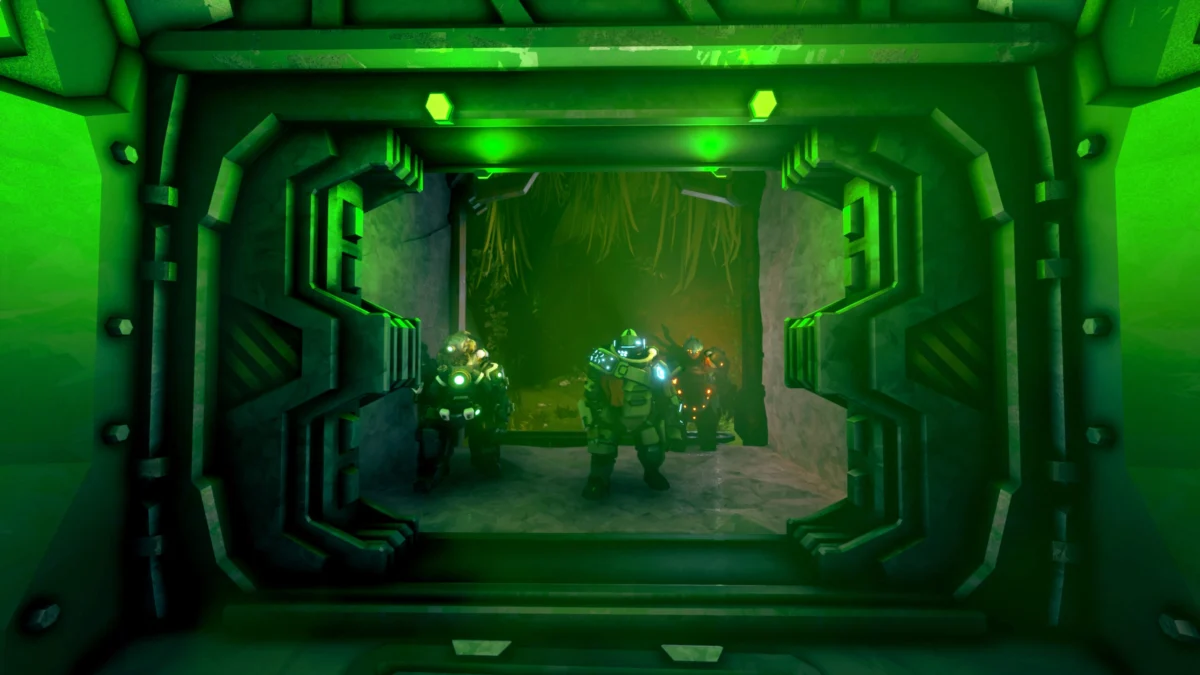
Ghost Ship Games’ spin-off ventures into roguelike territory, drawing inspiration from its predecessor while forging its own challenging identity.
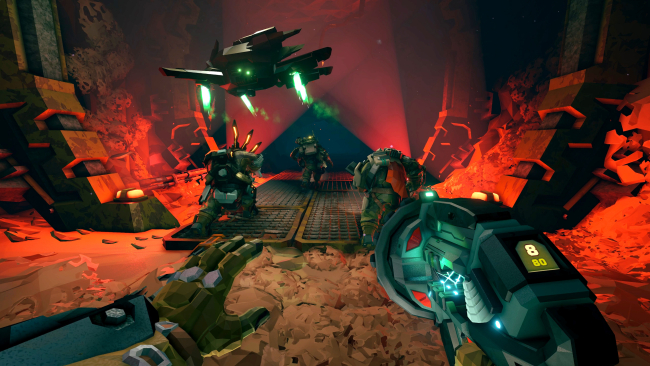
Deep Rock Galactic: Rogue Core has officially launched into Early Access, offering players a fresh, intensified take on the beloved cooperative mining and combat formula. This new iteration promises a significantly tougher, more combat-centric experience than its predecessor, while striving to retain the core elements that captured the hearts of millions. Aaron Hathway, Marketing Manager at Ghost Ship Games, recently sat down with Gamereactor to shed light on the development journey, the design philosophy behind Rogue Core, and what players can expect from this ambitious spin-off.
The Genesis of Rogue Core: From Deep Dives to a Standalone Venture
The initial spark for Deep Rock Galactic: Rogue Core, according to Hathway, can be traced back to an in-house experimentation with the "Deep Dive" mission mode from the original Deep Rock Galactic. This mode, known for its extended challenges and commitment-based gameplay, served as a fertile ground for new ideas.
"Many years ago, when Rogue Core was just a twinkle in our eye, it stemmed from us playing around with the Deep Dive mission model," Hathway explained. "We wanted to experiment with a longer, more challenging endeavor, with this sense that you really put a crew together and commit to fighting through it or die trying."
However, as the concept evolved through numerous iterations, it became clear that Rogue Core was destined for a path independent of its progenitor. The ambitious scope of new gameplay systems, art direction, weaponry, and damage mechanics necessitated a departure from the constraints of a mere DLC.
"When we started working on Rogue Core more seriously, we quickly realized that it couldn’t be a DLC for Deep Rock Galactic," Hathway elaborated. "We’d really have had to dial down our scope and ambitions if we wanted it to all fit into Deep Rock Galactic. It’s been much more motivating – and fun – to explore new gameplay systems, art direction, weapons and damage mechanics when we don’t have to ‘justify’ or balance it with regular Deep Rock Galactic. If we tried to mash it into Deep Rock Galactic, we’d risk screwing up the balance, or diluting that game’s own identity."
This creative freedom has allowed Ghost Ship Games to explore a more expansive vision. Rogue Core is positioned not as a sequel, but as a distinct spin-off, designed to cater to a different player itch. It aims to coexist with Deep Rock Galactic, offering a complementary, rather than a direct continuation, experience. The development team has relished the opportunity to introduce novel damage systems, an expanded arsenal of weapons, intricate progression structures, unique characters, and a fresh thematic direction.
The Hand-Picked Team: Reinforcing Individual Identity
A notable departure from the original Deep Rock Galactic is the implementation of a strict one-player-per-class rule within a team. This design choice is rooted in the game’s narrative and thematic aspirations.
"We imagine the Reclaimers of Rogue Core as distinct individuals," Hathway stated. "Like, in the game’s universe, there is only one Slicer, Retcon, Guardian, and so on – these are their callsigns, rather than general class descriptors. Having class exclusivity reinforces that, and creates more of a sense of a hand-picked team of operators to fit the whole feeling of the game."
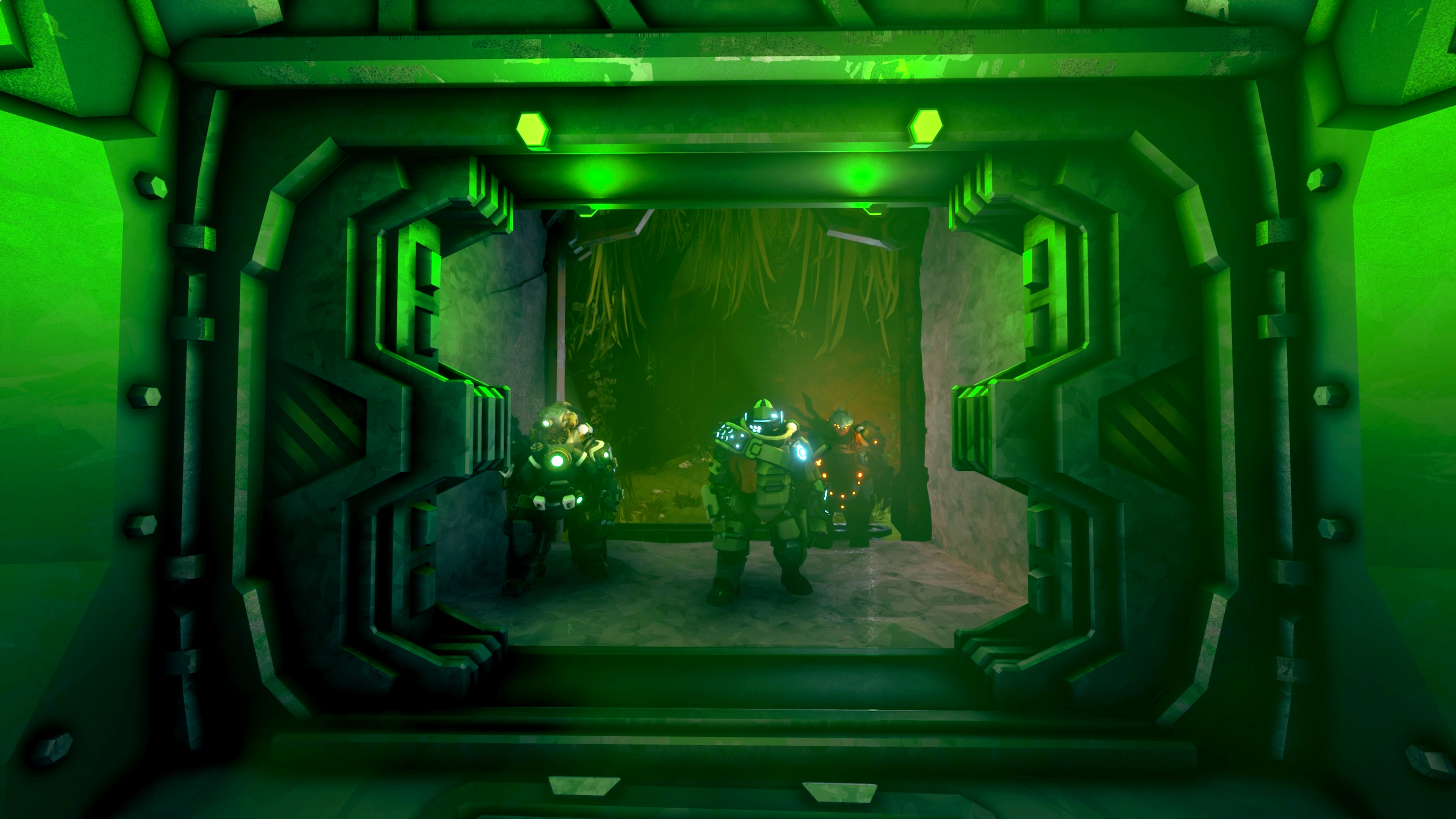
This exclusivity aims to foster a deeper sense of individuality for each character, transforming them from interchangeable archetypes into unique, specialized operatives. This approach enhances the game’s narrative immersion and encourages players to truly embody their chosen role within the squad.
Accessibility and the Learning Curve: Bridging the Gap for Newcomers
For those new to the Deep Rock Galactic universe, the question of familiarity arises. Hathway assures that while prior knowledge of the original game can be beneficial, it is by no means a prerequisite for enjoying Rogue Core.
"You don’t have to be familiar at all, but it helps," he clarified. "Rogue Core shares a lot of DNA with Deep Rock Galactic, so many fundamental controls will translate – movement, shooting, mining, traversal."
However, the gameplay experience itself diverges significantly. Rogue Core is designed to be faster-paced, more demanding, and heavily focused on combat. Hathway likens the starting difficulty to "Hazard 3" from Deep Rock Galactic, with a clear upward scaling. This means the more relaxed, mining-centric approach of the original game might prove detrimental in Rogue Core.
"So in that sense, the Deep Rock Galactic approach of ‘chill in the caves and mine a bit’ will probably get you killed here," Hathway warned. "So yes, some core skills do translate. But it’s a different game, so it’s a different gameplay experience."
Interestingly, Hathway also suggests that a lack of prior Deep Rock Galactic experience might even allow players to adapt more quickly to Rogue Core’s distinct demands. "It’s also possible that not having experience with Deep Rock Galactic would mean players can more quickly adapt to what Rogue Core asks of the players. We’ll see!"
Unraveling the Narrative: A "Show, Don’t Tell" Approach
The narrative of Deep Rock Galactic: Rogue Core, much like its predecessor, embraces a "show, don’t tell" philosophy. Players are not presented with a straightforward, linear story. Instead, the lore is embedded within the gameplay loop, requiring active engagement and interpretation from the player.
"Like with Deep Rock Galactic, we go for a ‘show, don’t tell’ approach with the game’s story and lore," Hathway explained. "There’s not a traditional linear narrative arc. It’s more about collecting more details, pieces of a puzzle that might (or might not) fit together, so you can speculate about what’s happening."
This fragmented storytelling method encourages player agency and speculation, allowing the collective imagination of the community to shape the interpretation of the narrative.
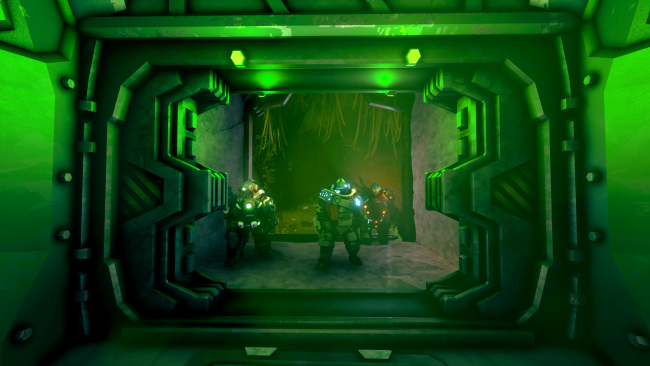
"We always want to make room for players’ own interpretations. At the end of the day, our players’ collective imaginations are always going to be more interesting than any single concrete story we’d make," Hathway emphasized. "So in that sense Rogue Core definitely does expand on the Deep Rock lore, but it’s rarely served up neatly on a platter. You’ll have to play a whole lot to catch all the thousands of different voice lines, hidden interactions and tooltips, and decide for yourself how they fit together and what they say about this world."
Enduring the Gauntlet: Replayability and Long-Term Engagement
With nine levels already present in the Early Access build, Rogue Core offers a substantial amount of content from the outset. However, Ghost Ship Games is keenly aware of the desire for long-term replayability, especially for players who invest hundreds or even thousands of hours into their favorite titles.
"Yes! The Enhancement Tree and Chip-based upgrade system, along with different Bio-Booster decks, introduce a ton of ways to change and re-focus your starting build, with lots of different ways to synergize with the upgrades you get during a run," Hathway confirmed. "Since the game is harder than Deep Rock Galactic, we’d say there’s an overall higher skill ceiling, so more ‘room to grow’ for players looking for that."
Beyond the inherent depth of the upgrade systems, the team is also developing the "Gauntlet" challenge mode, which is described as the most punishing difficulty level yet seen in a Deep Rock Galactic game. Furthermore, plans are in motion for additional progression systems that are not directly tied to escalating difficulty.
"We’re also looking at more progression that isn’t necessarily tied to increasing difficulty," Hathway added. "But again, it’s too early for us to commit to any details there, as we’d like to wait to see what the players want and how they engage with the game."
The Ship’s Quarters: Expanding the Social Hub
The in-game spaceship, the "good ship Ramrod," has been designed with ample space for expansion, hinting at future additions to the player hub. Even in Early Access, players can find amenities like a gym and a dance floor, suggesting a playful and character-driven environment.
"The good ship Ramrod has been designed with a whole lot of extra space, so we’ve certainly got room for expansion if we need it," Hathway stated. "We’ve got a lot of ideas here, but this is a place where it’s more fun for us to keep quiet about it and wait to see how it pans out."
Hathway noted that the evolution of the Space Rig in the original Deep Rock Galactic was heavily influenced by player engagement patterns. Similarly, future expansions for the Ramrod will likely be shaped by how players interact with the existing space and what they find most appealing. A recurring theme in these expansions, he humorously added, is finding "more ways to annoy OMEGA."
The Friction of Loot: Fostering Collaboration
The loot system in Deep Rock Galactic: Rogue Core is designed to be a collaborative endeavor, introducing a degree of friction that the developers believe enhances the overall experience.
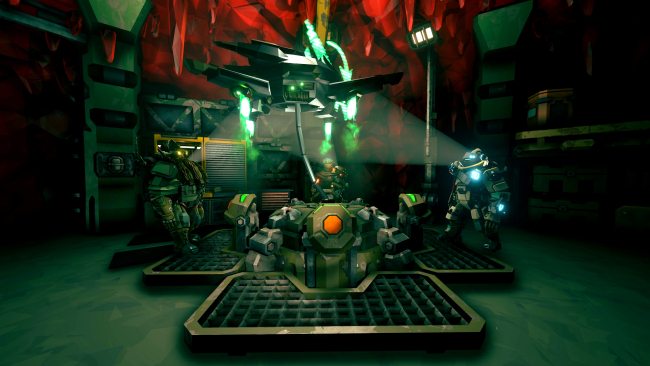
"The shared loot selection introduces friction, but we think a bit of friction can be fun," Hathway explained. "It ups the stakes, and nudges players to consider their teammates a bit more. If we wanted a frictionless game, we could turn off friendly fire too. But we keep that locked in for similar reasons."
This shared loot system compels players to communicate and strategize, fostering a more cohesive team dynamic. The decision to retain elements like friendly fire underscores the game’s commitment to a more challenging and interdependent cooperative experience.
The Core Objective: Balancing Depth and Accessibility in Progression
Ghost Ship Games aims to strike a delicate balance with the main progression of Rogue Core, ensuring it’s both substantial for dedicated players and accessible to more casual gamers.
"Looking at the average player experience in Deep Rock Galactic, we wanted to make the main progression of Rogue Core something you can get through in about 40-50 hours," Hathway revealed. "Keep in mind, this absolutely doesn’t mean full completion – it’s just the barebones core, like if you only do the ‘main quests’ and ignore all the side missions and collectibles."
This target playtime is designed to provide a meaningful experience for players who may not have hundreds of hours to dedicate. However, the game’s design actively encourages deeper engagement.
"This was designed so that a more casual player could still have a meaningful experience with the game. But beyond that, there’s plenty to replay and unlock," Hathway continued. "We’ve already seen people logging hundreds of hours in the Closed Alpha, and much of that was on versions of the game that had less content than it does now."
The team’s post-Early Access development will focus on further enriching this core experience for casual players while simultaneously deepening the challenge and progression for those seeking to invest significantly more time.
Roguelike Inspirations: A Blend of Proven Successes
When it comes to influences within the roguelike and roguelite genres, Ghost Ship Games has drawn inspiration from several well-regarded titles.
"Roboquest, Gunfire Reborn and Risk of Rain 2 come to mind first," Hathway stated. "Some of us in the office were really into Witchfire as well, but I think those first three are safe to call the biggest inspirations for Rogue Core’s roguelite aspects."
The team also offered a nod to "Far Far West," acknowledging its quality and innovative approach to the co-op roguelike experience, even though it was released too late in Rogue Core’s development to be a direct inspiration.
The Philosophy of Controlled Chaos: Managing On-Screen Action
A key challenge in developing fast-paced roguelikes is managing the sheer volume of information and action on screen without overwhelming the player. Ghost Ship Games approaches this with a deliberate design philosophy.
"It’s tricky with roguelikes, as you often want to keep track of a lot of different upgrades and synergies and balance that with fast-paced gameplay," Hathway admitted. "We mentioned our shared upgrade system, and in that sense, we think this actually can help people avoid that overload you describe – it creates natural breathing room, as it gives the team a moment to come together, discuss their builds, and check out what makes sense for them."
The structure of each level also plays a role. Unlike the immediate intensity of some Deep Rock Galactic missions, Rogue Core levels often begin with a quieter phase, allowing players to strategize and assess their current build before plunging into the fray.
"The start of each level also tends to start somewhat quietly, unlike in Deep Rock Galactic which can sometimes drop you directly into an absolute hellzone," Hathway observed. "So we think that’s also a nice chance to check out your upgrades and do a bit of strategic thinking."
The developers are committed to refining this aspect of the game, with plans to explore more effective ways to present information and help players understand their builds and the dynamic flow of a run. The Early Access roadmap will undoubtedly shed more light on these ongoing efforts.
Deep Rock Galactic: Rogue Core is now available in Early Access, inviting players to embrace its demanding nature and discover its unique blend of familiar mechanics and innovative roguelike elements. With its focus on intense combat, strategic depth, and a commitment to evolving alongside its community, Rogue Core is poised to carve out its own significant niche within the gaming landscape.



Leave a Comment