
Unveiling the Ancient North: A Deep Dive into Norse Mythology and the Germanic World
FOR IMMEDIATE RELEASE
REYKJAVIK, ICELAND – [Date] – In an increasingly interconnected world, the quest for understanding our ancient roots and the diverse tapestry of human belief systems continues to captivate scholars and enthusiasts alike. Leading this charge in the realm of Northern European spiritual heritage is "Norse Mythology for Smart People," an acclaimed online resource dedicated to providing meticulously researched and accessible information on the enthralling mythology and religion of the Norse and other Germanic peoples. This comprehensive platform stands as a beacon for those seeking reliable, well-documented insights into a belief system as complex and captivating as the landscapes from which it emerged.
Main Facts: The Enduring Heart of Northern Belief
Norse mythology represents the vibrant spiritual bedrock of the pre-Christian Germanic peoples, particularly those who came to be known as the Vikings. Far from a collection of simple fairy tales, these religious narratives provided profound meaning and structure to the lives of a people intimately connected to their often-harsh Nordic environment. At its core, Norse mythology is a polytheistic system centered around a rich pantheon of gods and goddesses whose fascinating and often complex characters embody a spectrum of human and natural forces.
Figures like Odin, the enigmatic Allfather, god of wisdom, war, and poetry; Thor, the mighty protector of humanity, wielder of Mjolnir; Freya, the goddess of love, beauty, fertility, and battle; and the infamous trickster Loki, are more than mere archetypes. They are multifaceted beings whose sagas reflect the virtues, vices, and existential concerns of their adherents. The religion itself, simply referred to by its practitioners as "tradition," shaped a unique worldview that profoundly influenced everything from societal structure to daily rituals. Following the advent of Christianity, those who steadfastly held to these older ways were often termed "heathens," a term originally denoting "people of the heaths" or countryside dwellers, which has since become a lasting descriptor.
This ancient faith, while distinct in its particulars, shared a universal human quest: the search for the numinous, for a connection to the transcendent majesty of the sacred. Unlike some later belief systems that sought salvation from the world, the Norse revelled in an "enchanted world," finding inherent delight and marvel in "the way things are." Their myths unflinchingly acknowledged the strife, sordidness, and unfairness of earthly existence, yet simultaneously championed the mastery of these challenges through great deeds performed for the benefit of oneself and one’s community. A life thus lived, imbued with honor and purpose, constituted "the good life" for the Vikings. Even a millennium after the last Viking warrior laid down their sword, the vitality and wonder of these myths continue to inspire, demonstrating their enduring power and timeless appeal.
Chronology: From Pagan Peaks to Christian Conversion and Preservation
The narrative of Norse mythology is inextricably linked to the historical trajectory of the peoples who practiced it, particularly during the tumultuous era known as the Viking Age. Understanding this chronology is crucial to appreciating the evolution and eventual preservation of these ancient traditions.
The Viking Age: An Era of Expansion and Belief (c. 793-1066 CE)
The Viking Age, spanning roughly from the late 8th century to the mid-11th century, marked a period of unprecedented expansion and cultural exchange for the Norse peoples. Hailing primarily from modern-day Norway, Sweden, Denmark, and Iceland, these seafaring individuals were much more than just the fearsome raiders often depicted in popular culture. They were also intrepid explorers, establishing settlements across the North Atlantic; astute traders, connecting distant markets from Baghdad to the British Isles; and skilled conquerors, leaving their indelible mark on vast swathes of Europe. Their voyages stretched as far east as the Byzantine Empire, where they served as Varangian Guards, and as far west as North America, which they famously discovered approximately five centuries before Christopher Columbus.
This era of intense activity was fueled by a complex interplay of factors, including population growth in their homelands, advancements in shipbuilding technology (such as the longship, a marvel of engineering), and the universal human desires for wealth, prestige, and power. Whether seeking portable treasures like gold, silver, and gemstones, or the more enduring asset of land, the Vikings’ motivations were deeply intertwined with their worldview. Their ancestral religion, with its emphasis on courage, fate, and the pursuit of renown, provided a powerful spiritual framework for these ambitious undertakings. During this period, the Old Norse language flourished, and runes served as their primary written script, often used for memorial stones, short inscriptions, and magical purposes.
The Gradual Shift: Conversion to Christianity
The conversion of the Norse peoples to Christianity was not a sudden, monolithic event but rather a protracted and often complex process that unfolded over several centuries, beginning in earnest in the 9th and 10th centuries and largely completed by the 12th century. This transition was frequently driven by political expediency, as emerging kingdoms sought alliances with Christian European powers and a more unified internal social structure. Missionaries, traders, and returning warriors who had encountered Christianity abroad all played roles in introducing the new faith.
Initially, a period of syncretism often prevailed, where Christian symbols and beliefs coexisted with pagan practices. Archaeological finds from this period, such as burial sites containing both Thor’s hammers and Christian crosses, attest to this blend. Over time, however, the monotheistic, more centralized structure of Christianity gradually superseded the localized, polytheistic traditions. Kings like Olav Tryggvason and Olav II Haraldsson of Norway (later Saint Olav) famously employed forceful methods to hasten conversion, often dismantling pagan temples and establishing churches. The acceptance of Christianity ultimately integrated the Norse into the wider European cultural and political sphere, but it also meant the gradual suppression and eventual disappearance of overt pagan worship.
Post-Viking Age Preservation: The Icelandic Sagas and Eddas
Crucially, the survival of Norse mythology for future generations owes an immense debt to the intellectual and literary efforts of Iceland, a former Norse colony that remained culturally conservative and relatively isolated. Centuries after the conversion of mainland Scandinavia, Icelandic scholars, most notably Snorri Sturluson (c. 1179–1241), meticulously recorded the ancestral myths and legends. Sturluson, a chieftain, poet, and historian, authored the Prose Edda, a comprehensive guide to Norse mythology and skaldic poetry, which aimed to preserve the knowledge necessary to understand the complex poetic traditions of his time. This work, alongside the Poetic Edda (a collection of anonymous Old Norse poems), and various Icelandic sagas, provides the vast majority of our knowledge about the pre-Christian Norse religion.
These texts, written by Christian authors, naturally contain elements of interpretation and sometimes subtle alteration. However, they represent an unparalleled window into the worldview, cosmology, and pantheon of the ancient Norse. Without the diligence of these Icelandic scribes, our understanding of these rich traditions would be far more fragmented, leaving gaping holes in the picture of the pre-Christian Germanic world.
Supporting Data: Gods, Worlds, and Wisdom
The richness of Norse mythology is not merely in its historical context but in the intricate details of its divine figures, its unique cosmological framework, and the profound philosophical underpinnings that guided the lives of its adherents.
The Pantheon: Complex Characters and Their Domains
The gods and goddesses of Norse mythology are far from one-dimensional. They possess flaws, strengths, and complex motivations that resonate with human experience:

- Odin (Óðinn): The Allfather, a god of paradoxes. He is the lord of Asgard, but also a wanderer, seeking knowledge at any cost – famously sacrificing an eye for wisdom from Mímir’s Well. He is associated with war, death, poetry, magic (seiðr), and ecstasy. His hall, Valhalla, is where chosen warriors feast and prepare for Ragnarök. Accompanied by his ravens Huginn (thought) and Muninn (memory), and his wolves Geri and Freki, Odin embodies the relentless pursuit of insight and power.
- Thor (Þórr): Son of Odin, Thor is the quintessential protector of Midgard (the human world) and Asgard. A god of thunder, lightning, storms, and strength, he is perhaps the most popular deity among the common folk due to his straightforward valor and his constant battle against giants (jötnar), forces of chaos. His iconic hammer, Mjolnir, is not merely a weapon but a symbol of protection, consecration, and fertility.
- Freya (Freyja): A prominent goddess from the Vanir tribe, Freya is multi-faceted. She is the goddess of love, beauty, fertility, and wealth, often depicted with her necklace Brísingamen. Yet, she is also a formidable warrior goddess, leading the Valkyries and claiming half of the slain warriors for her hall, Fólkvangr, a parallel to Odin’s Valhalla. She is also deeply associated with seiðr, a powerful form of magic.
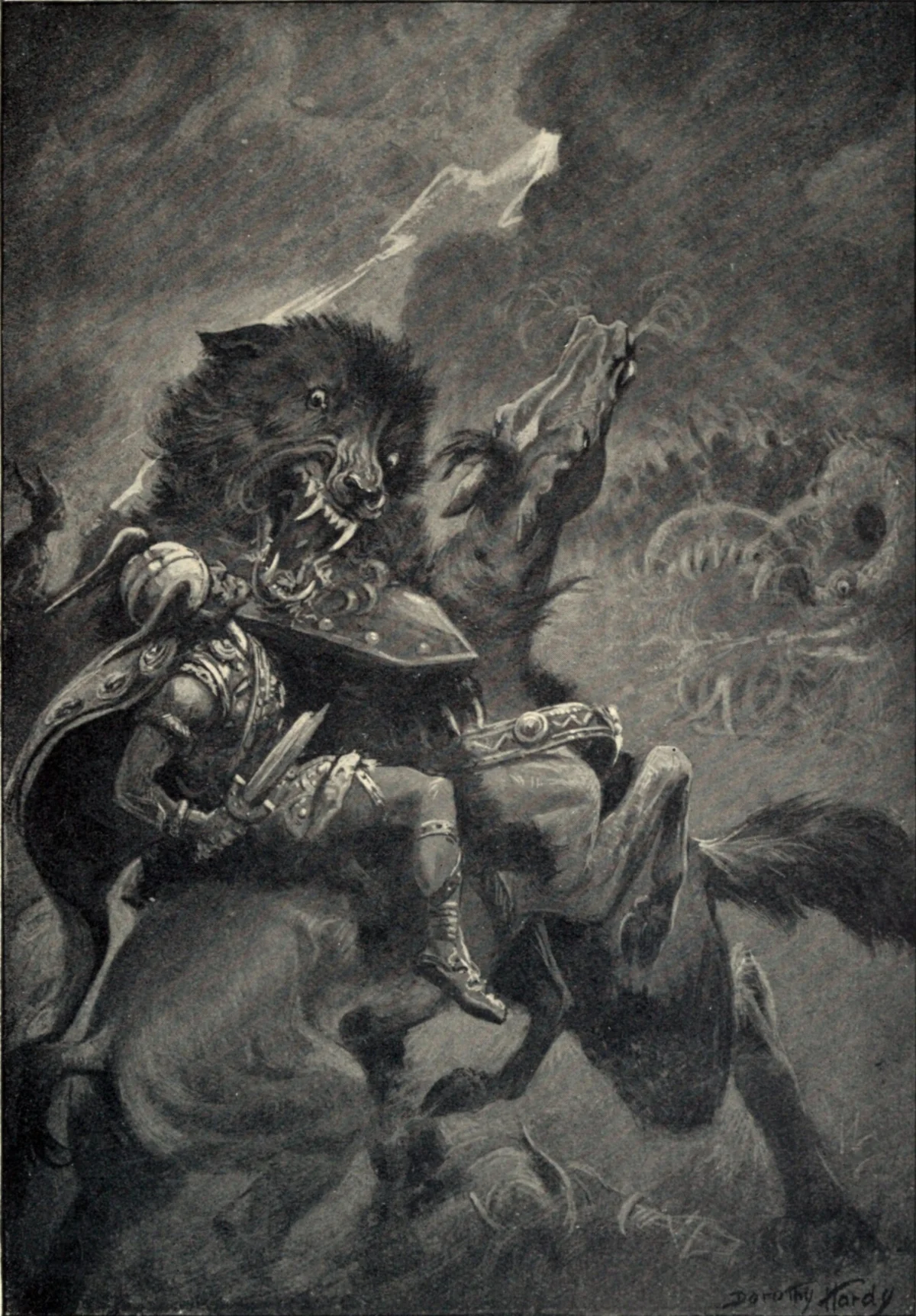
- Loki: The trickster, a jötunn by birth but raised among the Æsir (the main tribe of gods). Loki embodies chaos and ambiguity. He is a shape-shifter, a master manipulator, and the father of monstrous offspring, including Fenrir the wolf, Jörmungandr the Midgard Serpent, and Hel, ruler of the underworld. While often helping the gods with his cunning, he is ultimately responsible for the death of Baldr and plays a pivotal role in bringing about Ragnarök. His character serves as a crucial counterbalance to the ordered world of the Æsir, highlighting the ever-present threat of disorder.
The Norse Worldview: An Enchanted Cosmos and the Pursuit of Honor
The Norse peoples lived in an "enchanted world," where the divine permeated every aspect of existence. Their cosmology was complex, featuring nine interconnected realms centered around the world tree Yggdrasil. These realms included Asgard (home of the Æsir), Vanaheim (home of the Vanir), Midgard (humanity’s realm), Jötunheim (land of the giants), Helheim (realm of the dead), and others. This intricate structure underscored the interconnectedness of all things and the constant interplay between cosmic order and chaos.
Crucially, the Norse worldview did not preach an escape from the world but rather a deep engagement with it. Life was not to be endured but lived fully, embracing its joys and confronting its hardships. The concept of wyrd (fate) was central, suggesting that while one’s ultimate destiny might be set, the manner in which one met that destiny – with courage, honor, and loyalty – was within human agency. The pursuit of fame and a good reputation (lofgjǫrn) was paramount, as it ensured a form of immortality beyond death. Great deeds, valor in battle, and loyalty to one’s kin and community were highly valued, shaping a society that prized strength, self-reliance, and a stoic acceptance of life’s challenges. The cyclical nature of Ragnarök, the twilight of the gods and the destruction of the world, followed by its rebirth, further emphasized a belief in constant renewal and the interconnectedness of creation and destruction.
Linguistic and Archaeological Confirmations
Beyond literary sources, linguistic and archaeological evidence corroborates and enriches our understanding of the Germanic peoples and their religion. The Old Norse language, preserved in runic inscriptions and later manuscripts, provides direct insight into their thought processes and cultural nuances. Many of our modern English weekdays (Tuesday, Wednesday, Thursday, Friday) are direct linguistic descendants of Norse deities (Tiu/Tyr, Woden/Odin, Thor, Frigg/Freya), illustrating the deep penetration of these beliefs into everyday life.
Archaeological finds offer tangible links to the material culture and practices of the era. Spectacular ship burials, such as those at Oseberg and Gokstad in Norway, reveal elaborate grave goods and insights into funerary rites, reflecting beliefs about the afterlife. Artifacts like Thor’s hammer amulets, intricate carvings depicting mythological scenes, and the remains of cultic sites provide concrete evidence of religious practice. These physical remnants, combined with linguistic and literary sources, allow scholars to reconstruct a much fuller picture of this ancient and influential culture.
Official Responses: Scholarship and the Modern Interpretation
The study of Norse mythology and the pre-Christian Germanic religions is a dynamic field of academic inquiry, marked by rigorous scholarship and evolving interpretations. Platforms like "Norse Mythology for Smart People" play a vital role in disseminating this academic consensus to a broader audience, ensuring accuracy and dispelling common misconceptions.
Scholars approach the sources with critical methodologies, recognizing the challenges inherent in studying a largely pre-literate religion primarily through texts written centuries later by Christian authors. This necessitates careful textual analysis, comparative mythology, and interdisciplinary approaches, integrating archaeology, linguistics, and historical research. Expert commentary emphasizes the importance of distinguishing between historical fact, mythological narrative, and later reinterpretations. For instance, the popular image of Vikings wearing horned helmets is a 19th-century artistic invention, not supported by archaeological evidence.
Modern scholarship continually seeks to address the "unfortunate holes" in our knowledge, using comparative studies with the limited sources available for other Germanic peoples (like the Anglo-Saxons or continental Germanic tribes) to reconstruct common themes and variations. While absolute certainty remains elusive for many aspects of these ancient beliefs, the collective efforts of dedicated academics provide increasingly nuanced and reliable insights into the worldview of these fascinating cultures. The commitment to "reliable, well-documented information" by resources such as "Norse Mythology for Smart People" is crucial for fostering an informed understanding of this rich heritage, moving beyond sensationalism and popular inaccuracies.
Implications: Legacy and Universal Resonance
The impact of Norse mythology extends far beyond the historical period of the Vikings, permeating contemporary culture and continuing to offer profound insights into the human condition.
Enduring Cultural Legacy
The vitality of Norse mythology is evident in its powerful presence across modern media. From J.R.R. Tolkien’s foundational works like "The Hobbit" and "The Lord of the Rings," which draw heavily from Norse cosmology and linguistic elements, to the immensely popular Marvel Comics universe and its cinematic adaptations featuring Thor and Loki, these myths continue to inspire new narratives. Video games, television series, and fantasy literature frequently mine this rich vein of storytelling, demonstrating its enduring appeal and adaptability.
Beyond popular entertainment, there has been a significant resurgence of interest in ancestral traditions, including various forms of neo-paganism and Ásatrú (a modern revival of Norse paganism). These movements often seek to connect with the spiritual heritage of their ancestors, finding meaning and community in the ancient gods and values. The academic study of these myths also contributes to a broader understanding of European cultural identity and the complex interplay of pagan and Christian influences that shaped the continent.
Universal Themes and Human Quest
Ultimately, the power of Norse mythology lies in its exploration of universal human themes that transcend time and culture. The myths grapple with fundamental questions: the nature of courage in the face of an inescapable fate, the relentless pursuit of wisdom, the constant struggle between order and chaos, the cyclical nature of life and death, and the importance of honor, loyalty, and community. These narratives, though specific to a particular people and place, resonate because they address the core experiences of humanity.
Whether one claims Germanic ancestry or not, the stories of Odin’s quest for knowledge, Thor’s defense of the innocent, Freya’s multifaceted power, or Loki’s disruptive cunning offer a compelling lens through which to examine our own lives and values. They remind us that mythologies, at their heart, are mankind’s attempts to make sense of the universe and our place within it. They offer not just historical insight but a spark of something timeless and universal, a continued source of inspiration for understanding the breadth of human experience and the persistent search for meaning.
Til árs ok friðar (For a good year and peace),
Daniel McCoy
Founder, Norse Mythology for Smart People


Leave a Comment