
The Architecture of Experience: Leeum Museum Reclaims the History of Immersive Art Through Pioneering Women
SEOUL — In the contemporary art world, "immersion" has become a buzzword, often associated with high-tech digital projections and Instagram-friendly "selfie museums." However, a landmark exhibition at the Leeum Museum of Art in Seoul is seeking to correct this modern misconception by tracing the medium’s radical, tactile, and largely female-led origins.
The exhibition, titled Inside Other Spaces: Environments by Women Artists 1956–1976, is a profound archival and sensory undertaking. Running from May 5 through November 29, 2026, the show revisits a pivotal twenty-year window in postwar art history. During this era, women artists across the globe began dismantling the boundaries between the viewer, the object, and the architectural site. By reconstructing long-lost installations, Leeum is not merely hosting an exhibition; it is performing an act of historical restoration, giving voice to the women who pioneered "environments" decades before the term "installation art" entered the mainstream lexicon.
1. Main Facts: A Global Collaboration in Seoul
Inside Other Spaces is the result of an ambitious partnership between the Leeum Museum of Art and Munich’s Haus der Kunst. The exhibition first premiered in Germany in 2023, curated by Andrea Lissoni and Marina Pugliese. For its Seoul iteration, the scope has been significantly broadened to include a deeper focus on Asian and specifically Korean avant-garde practices, ensuring the narrative is truly global rather than Eurocentric.
The exhibition features twelve major reconstructed environments. These are not mere replicas but meticulously researched restorations of works that were often ephemeral, site-specific, or destroyed shortly after their initial debut. The artists represented include:
- Tsuruko Yamazaki (Japan)
- Jung Kangja (South Korea)
- Lygia Clark (Brazil)
- Marta Minujín (Argentina)
- Nanda Vigo (Italy)
- Judy Chicago (USA)
- Lea Lublin (Argentina/France)
- Aleksandra Kasuba (Lithuania/USA)
- Tania Mouraud (France)
- Laura Grisi (Italy)
- Marian Zazeela (USA) in collaboration with La Monte Young and Jung Hee Choi
By focusing on the period between 1956 and 1976, the museum highlights a era of intense social upheaval and artistic experimentation. This was a time when artists moved away from the "white cube" tradition of hanging a painting on a wall, instead choosing to manipulate light, sound, air, and texture to create "total" experiences.
2. Chronology: From the Gutai Group to the Post-Minimalist Shift
The timeline of the exhibition begins in 1956, a year that marked a significant departure from traditional aesthetics.
The Mid-1950s: Breaking the Canvas
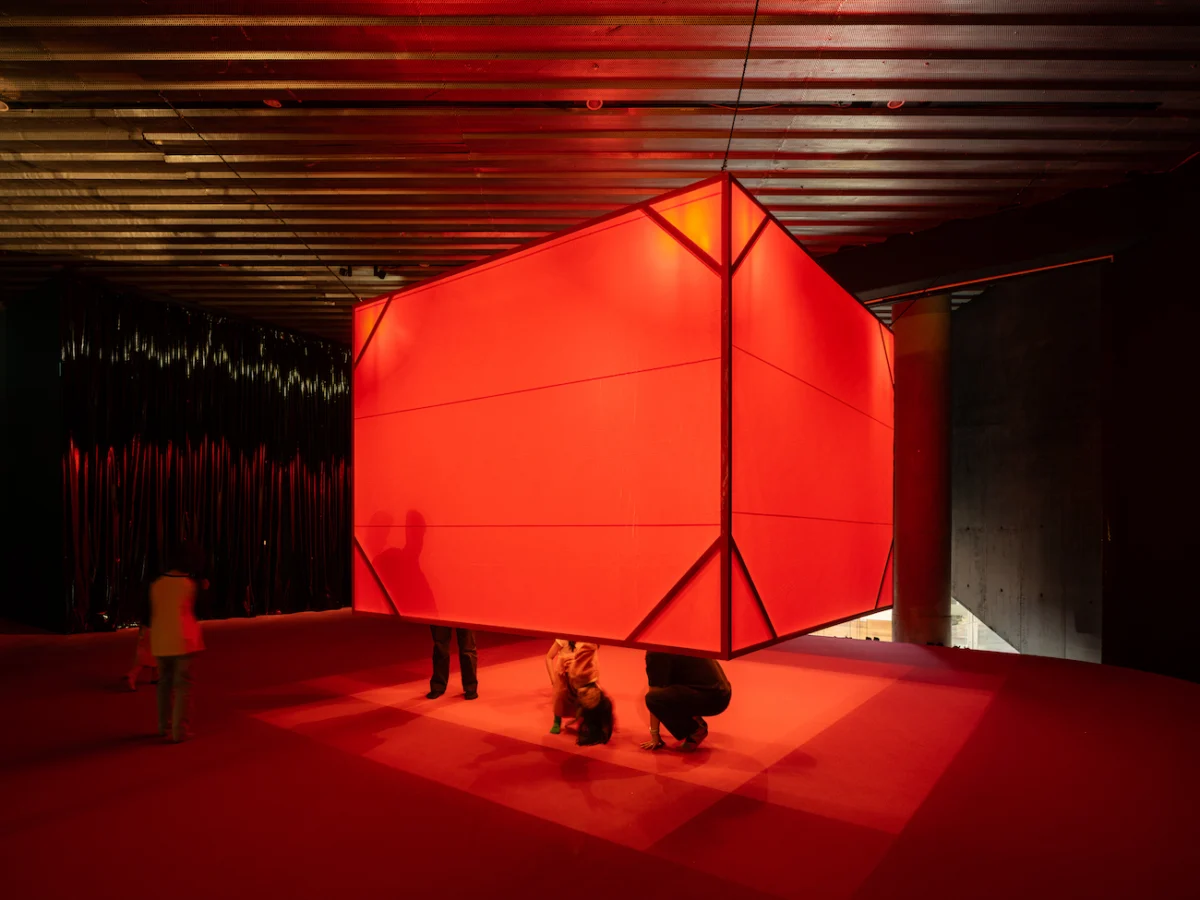
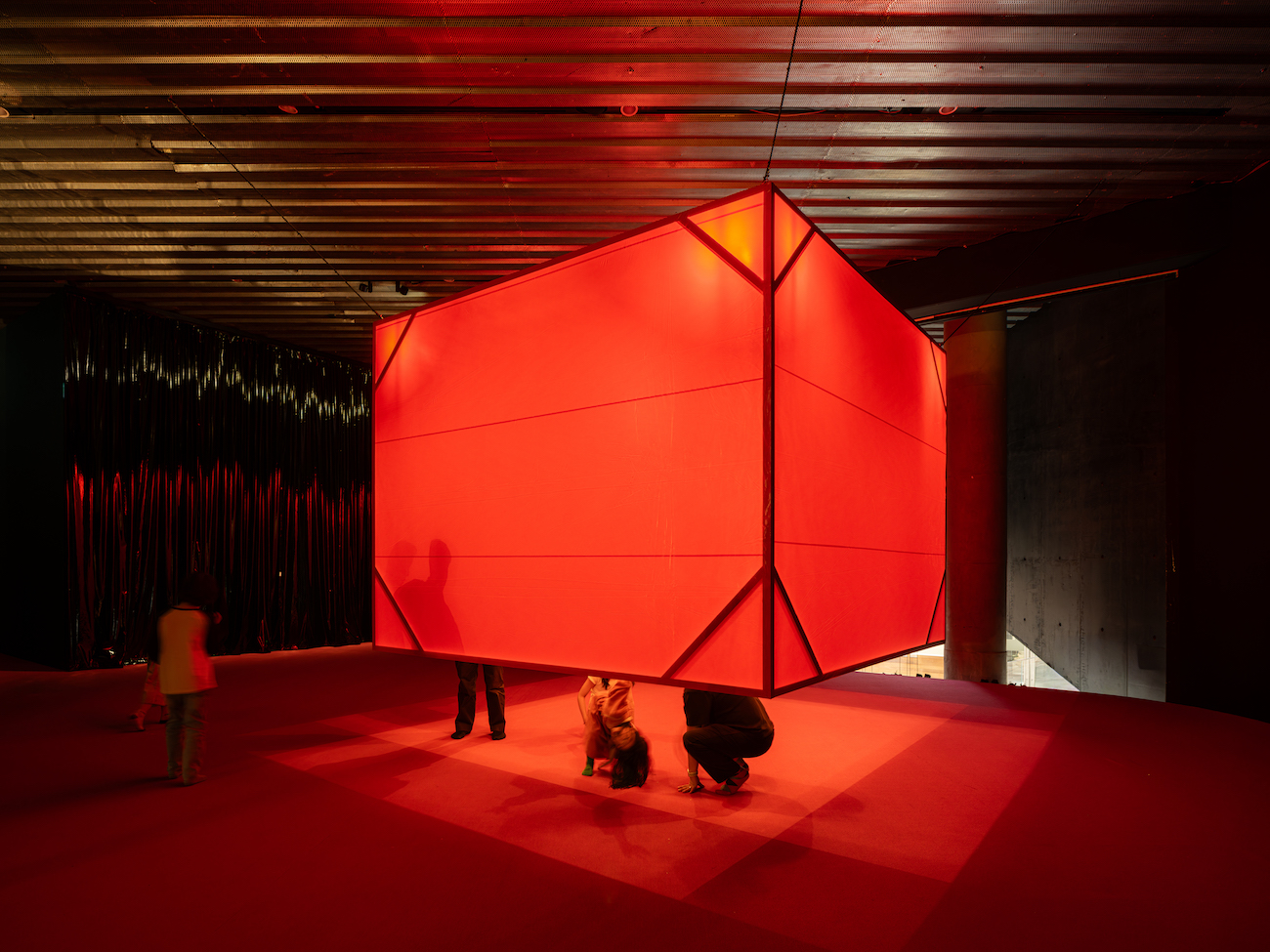
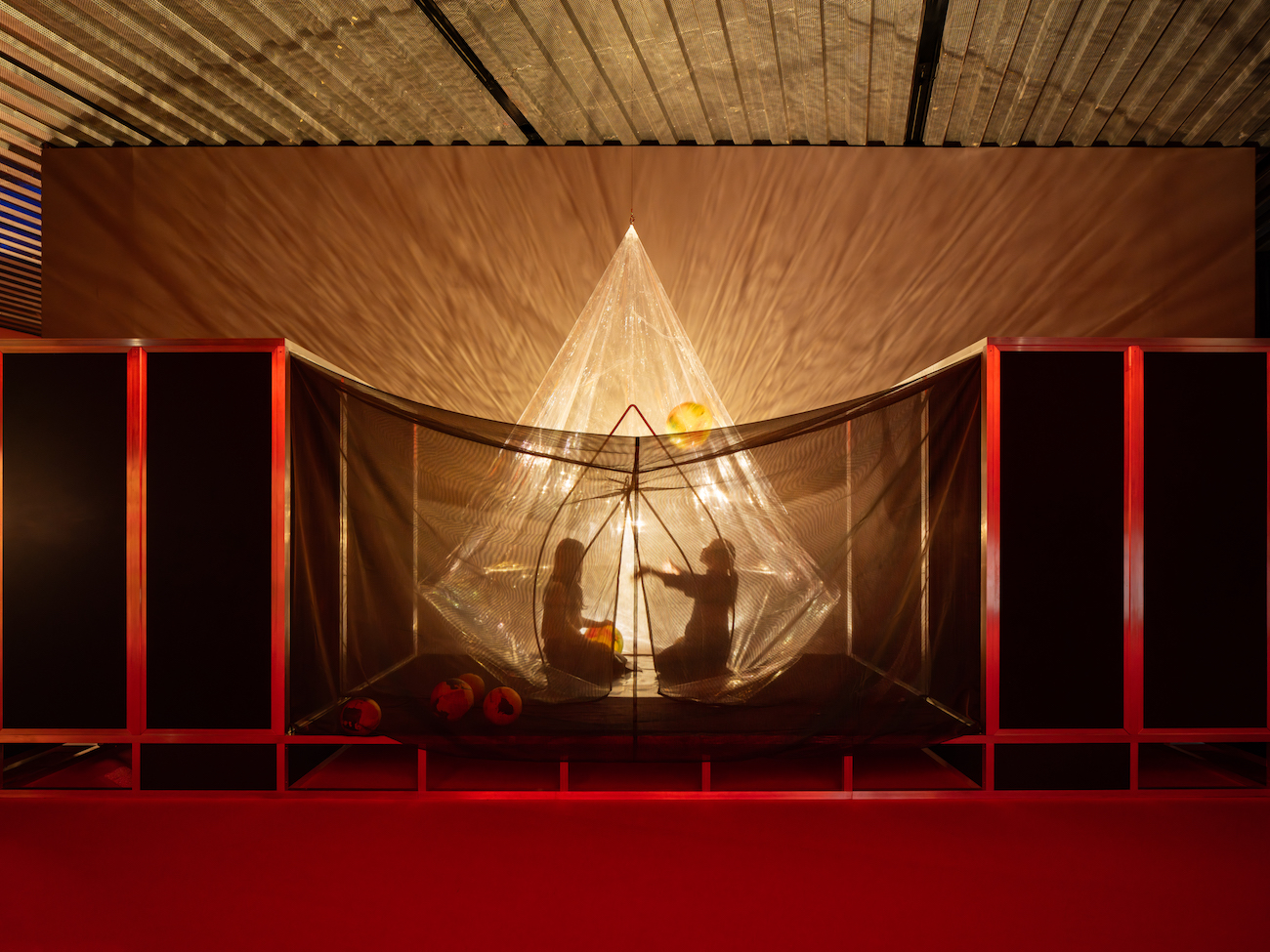
In 1956, Tsuruko Yamazaki, a key member of the Japanese Gutai Art Association, created Red. This work is the earliest environment in the show. Consisting of a large, suspended vinyl structure illuminated from within, it challenged the idea of art as a solid, impenetrable object. It invited viewers to consider the space around and inside the work, setting the stage for the next two decades of experimentation.
The 1960s: The Body as Architecture
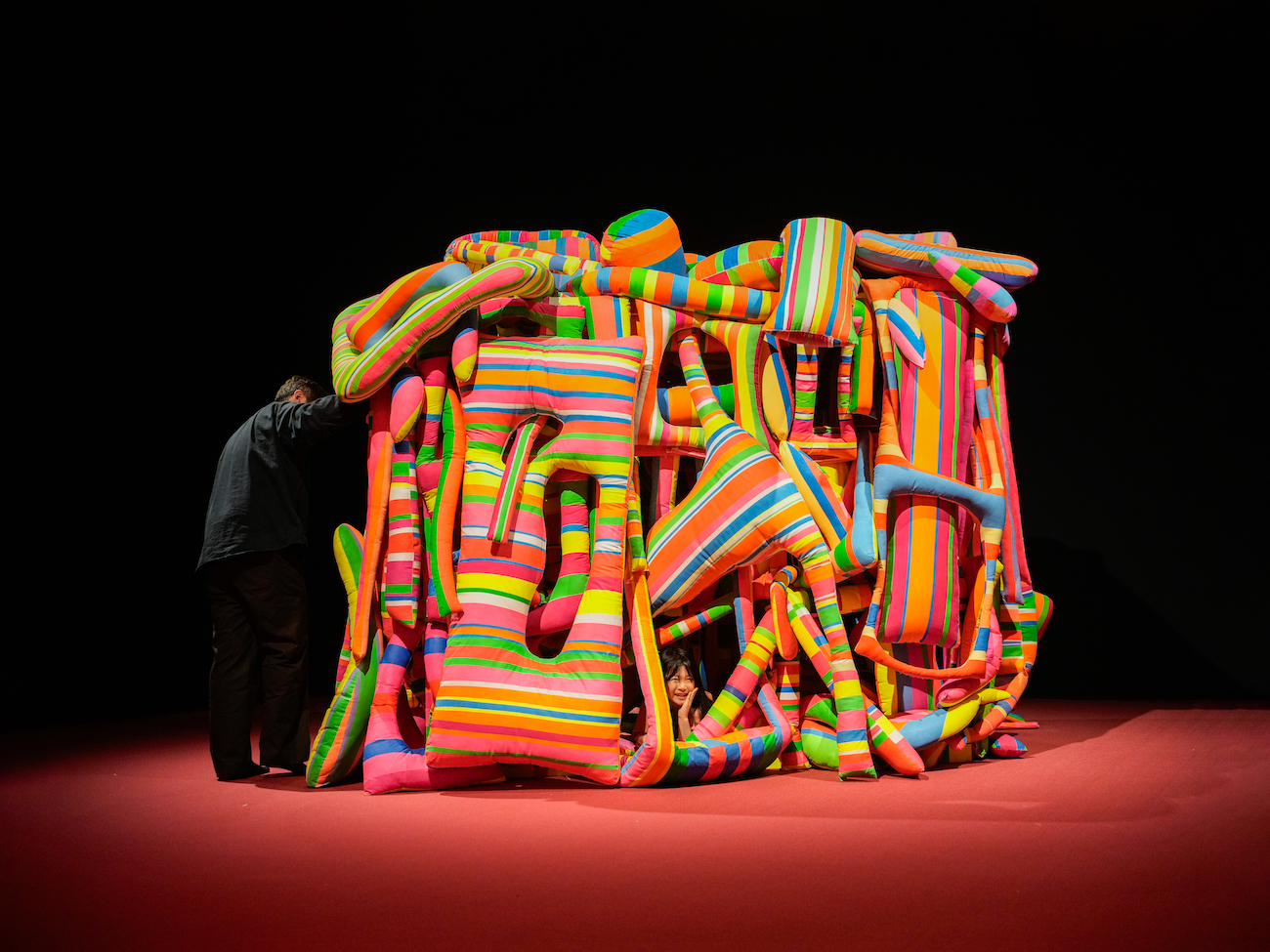
Throughout the 1960s, the focus shifted toward the "phenomenological" experience—how the human body perceives space. In Brazil, Lygia Clark moved from Neo-Concrete painting to "sensorial" objects. Her 1968 work, A casa é o corpo (The House is the Body), serves as a centerpiece for this era, metaphorically guiding the viewer through the stages of biological life—penetration, ovulation, germination, and expulsion—using elastic fabrics, balloons, and foam.
Simultaneously, in Argentina, Marta Minujín was creating "happenings" and environments like ¡Revuelquese y viva! (Roll Around and Live!) (1964), which encouraged physical play and irreverence, breaking the hushed, reverent atmosphere of traditional galleries.
The 1970s: Technology and Transcendence
By the early 1970s, artists began integrating sophisticated technology. The exhibition highlights how Italian artists like Nanda Vigo and Laura Grisi used neon, glass, and industrial wind machines to simulate natural or cosmic phenomena. The chronology concludes in 1976, by which time "installation art" was beginning to be institutionalized, often losing the raw, experimental edge that these pioneers had established.
3. Supporting Data: Sensory Materials and Archival Recovery
The exhibition is as much a feat of engineering as it is of curation. Because many of the original works were designed to be temporary, the Leeum and Haus der Kunst teams had to rely on a "forensic" approach to art history.
The Reconstruction Process
Curators utilized:
- Original architectural sketches and blueprints.
- Vintage photographs and grainy film footage of original "happenings."
- Artist diaries, letters, and interviews with surviving estate executors.
- Scientific analysis of 1960s-era synthetic materials (vinyl, PVC, foam) to find modern, sustainable equivalents that mimic the original tactile response.
Notable Installations and Their Components
The technical diversity of the works on display is staggering:
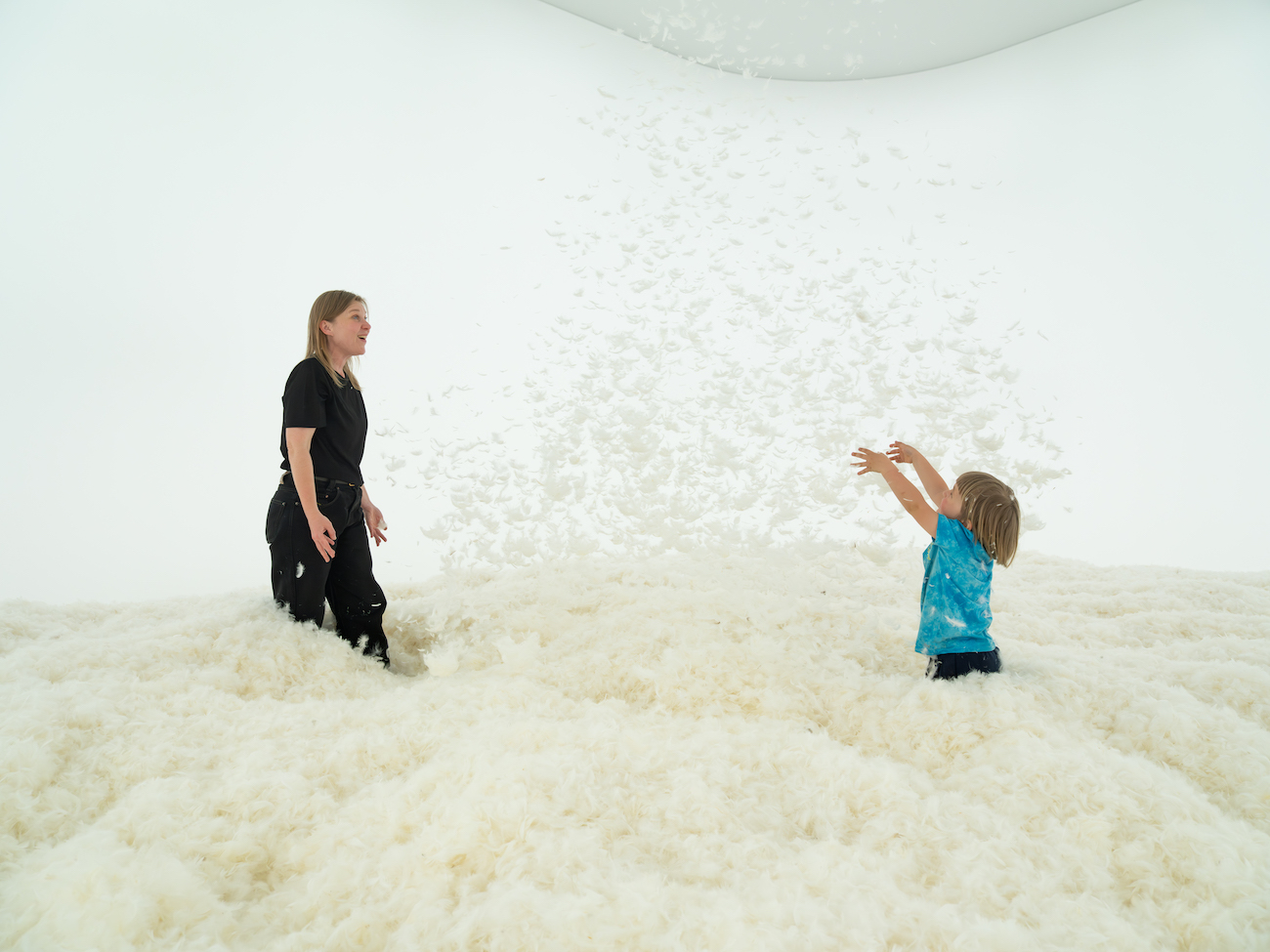
- Judy Chicago’s Feather Room (1966): A 400-square-meter space filled with hundreds of pounds of cruelty-free goose feathers and down, lit by soft LED lights to create a "feminine" architectural space that feels both infinite and suffocatingly soft.
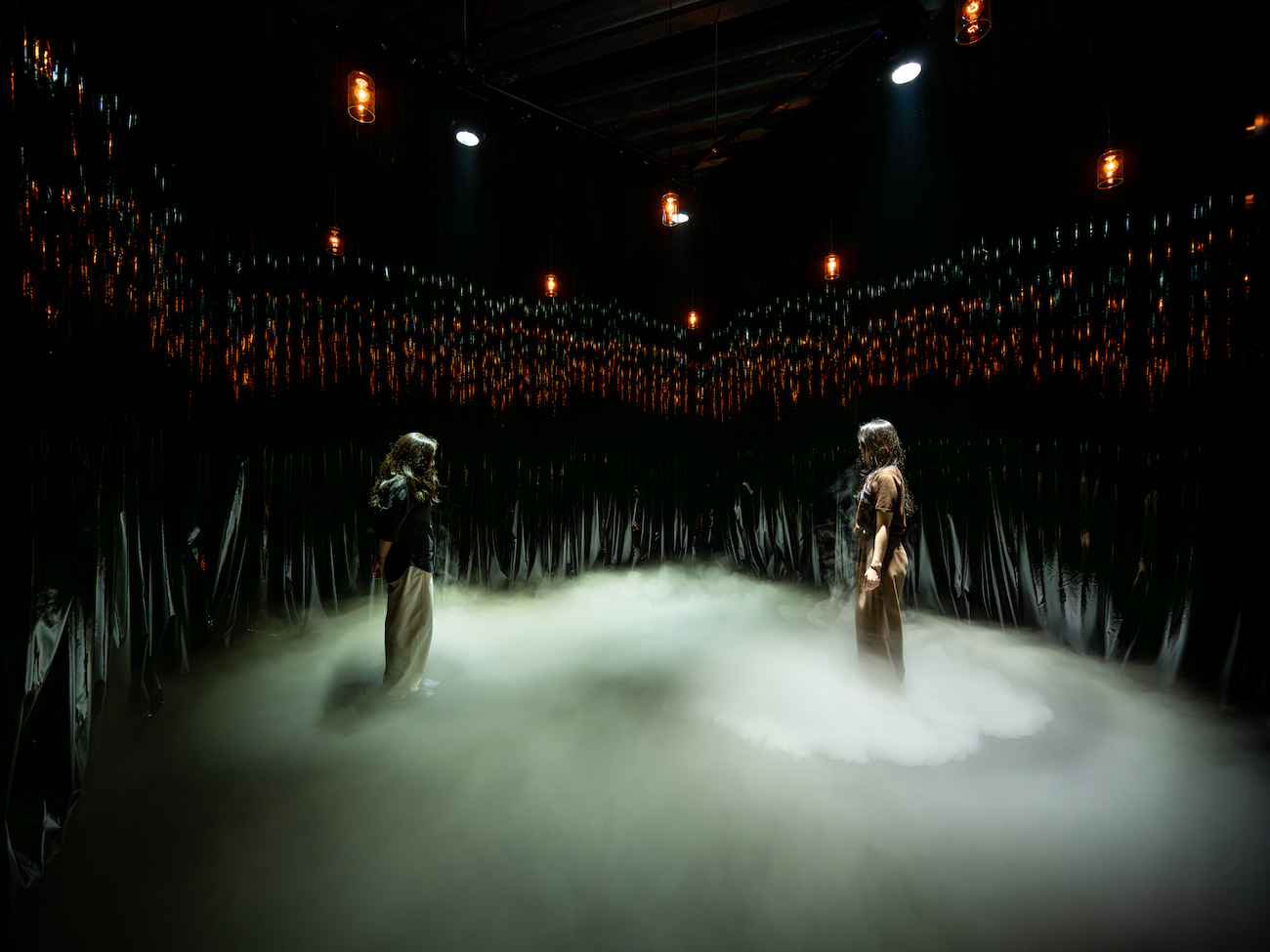
- Jung Kangja’s Muche-Jeon (Incorporeal Exhibition) (1970): A seminal Korean work featuring artificial leather, low-fog machines, and the recorded voice of the artist, creating a hauntological environment that reflects the tensions of modernizing Seoul.
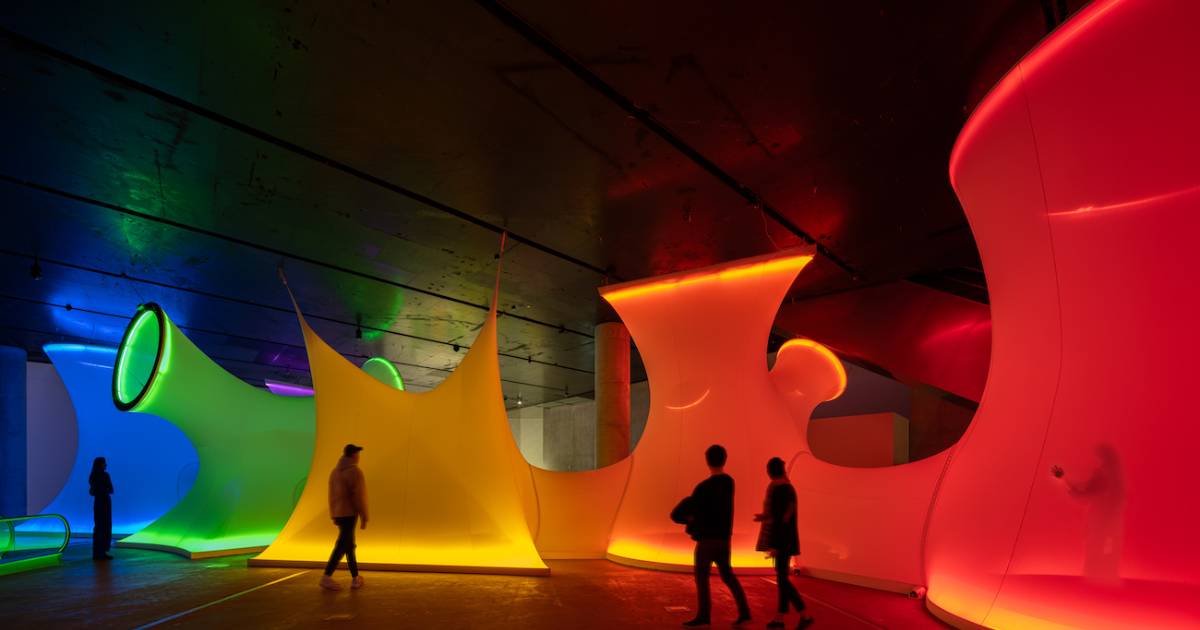
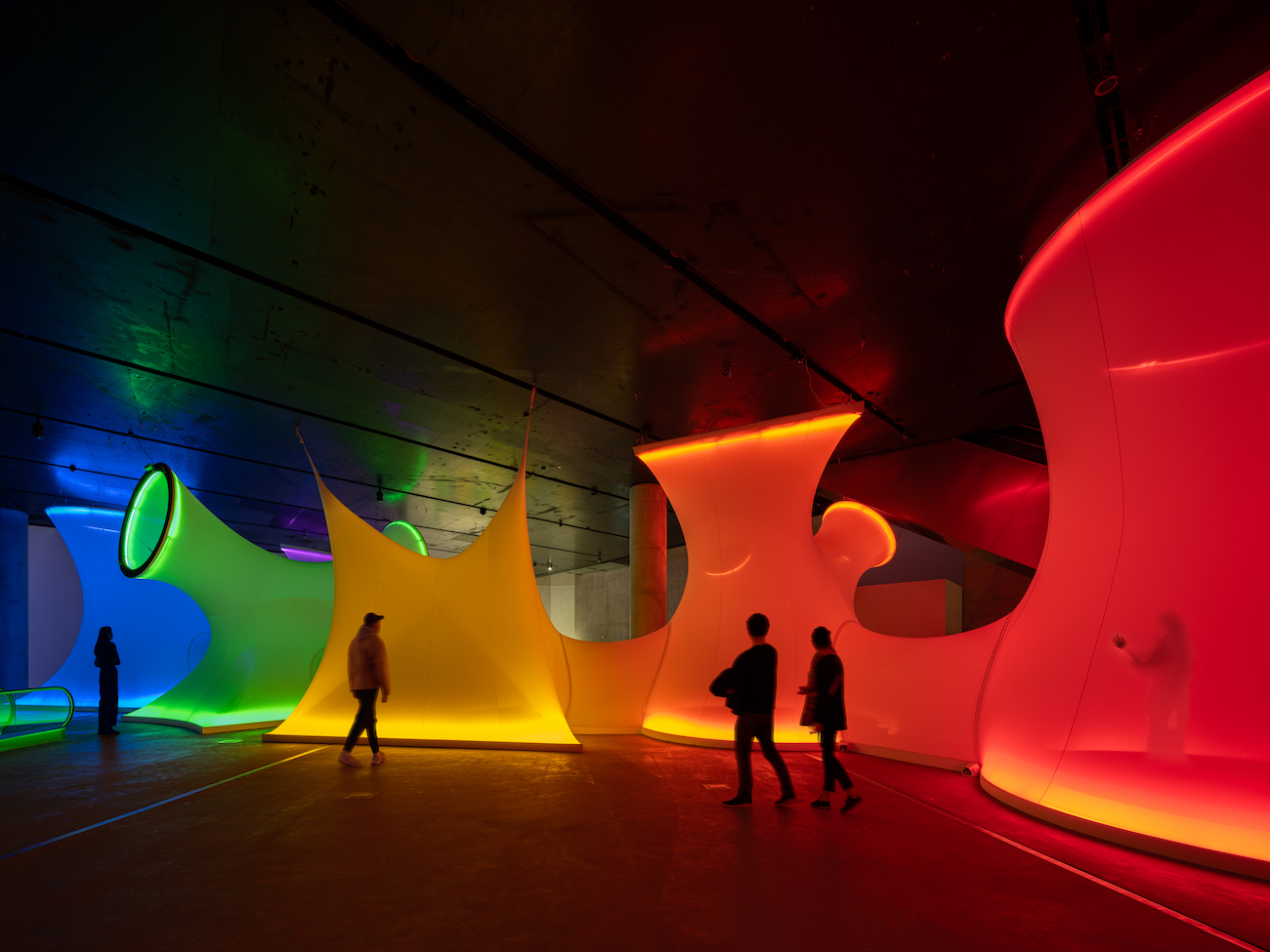
- Aleksandra Kasuba’s Spectral Passage (1975): A massive, multi-room structure made of stretched nylon fabric and neon tubes, creating a rainbow-hued corridor that distorts the viewer’s sense of distance and depth.
- Laura Grisi’s Vento di Sud-Est (1968): An environment that uses industrial wind machines to simulate a 40-knot wind, forcing the viewer to physically struggle against the "artwork."
4. Official Responses: Challenging the "Great Man" Narrative
Museum leadership and curators have emphasized that Inside Other Spaces is an essential intervention in a male-dominated history. For too long, the history of installation art has been centered on figures like Allan Kaprow, Claes Oldenburg, or Robert Morris.
"This exhibition is a vital re-examination of the genealogy of contemporary art," stated a representative from the Leeum Museum of Art. "By bringing these environments back to life, we see that women were not just participants in these movements—they were the architects of the conceptual frameworks we use today. They were exploring the relationship between the body and the environment long before it became a commercial trend."
Andrea Lissoni, Director of Haus der Kunst, previously noted that the "loss" of these works from history was not accidental. Because these women often worked with "soft" materials or focused on "ephemeral" experiences rather than permanent bronze or steel, their contributions were frequently dismissed as "decorative" or "domestic" by the critics of the time. This exhibition serves as a formal apology and a long-overdue spotlight.
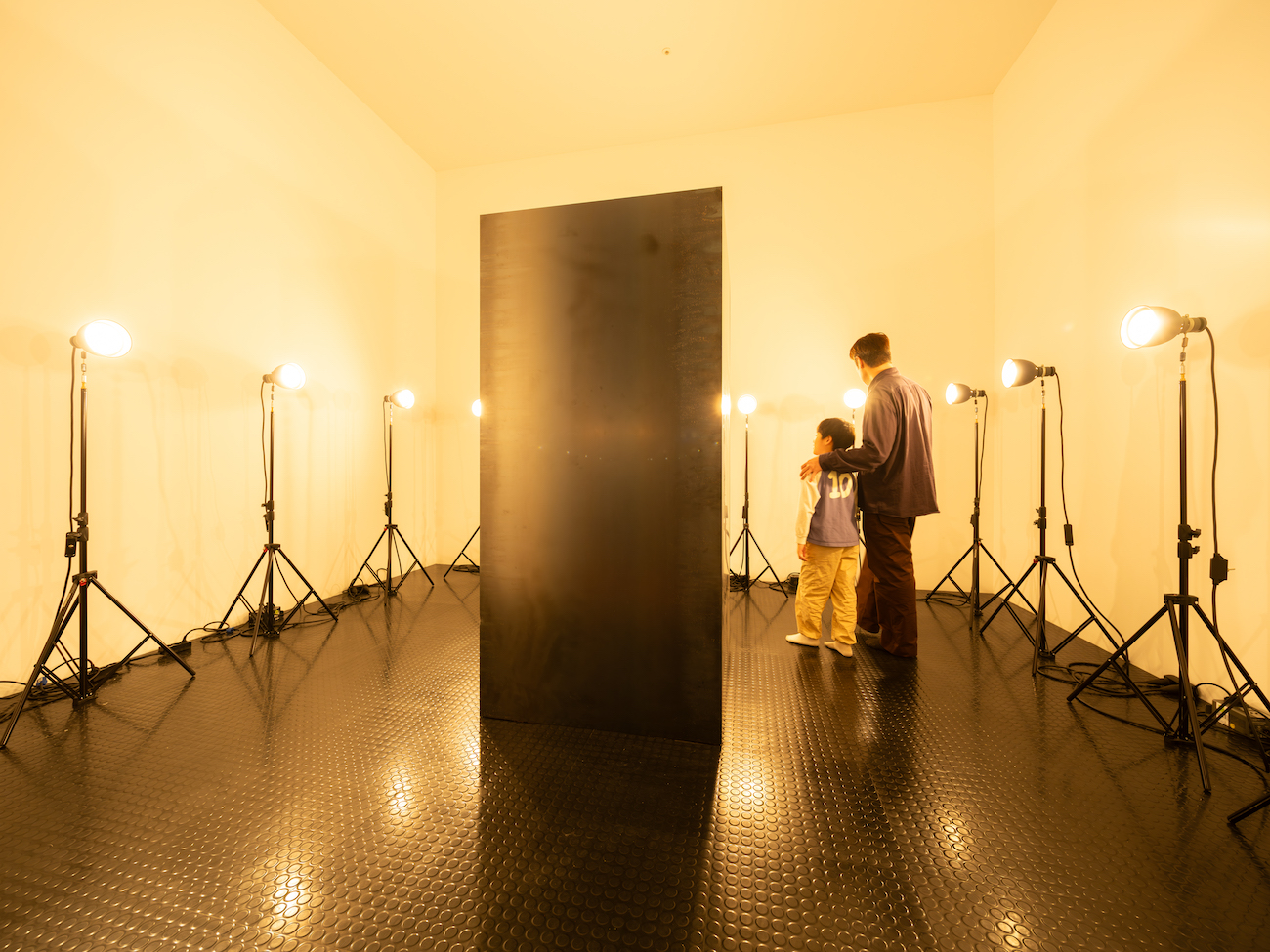
The inclusion of Korean artists like Jung Kangja is particularly significant for the Leeum Museum. It positions the Korean avant-garde not as a localized curiosity, but as a crucial thread in a global tapestry of radical female creativity.
5. Implications: The Future of Immersion and Art History
The success and scale of Inside Other Spaces have significant implications for both the future of museum curation and the way we consume "immersive" media today.
Restoring the Radical
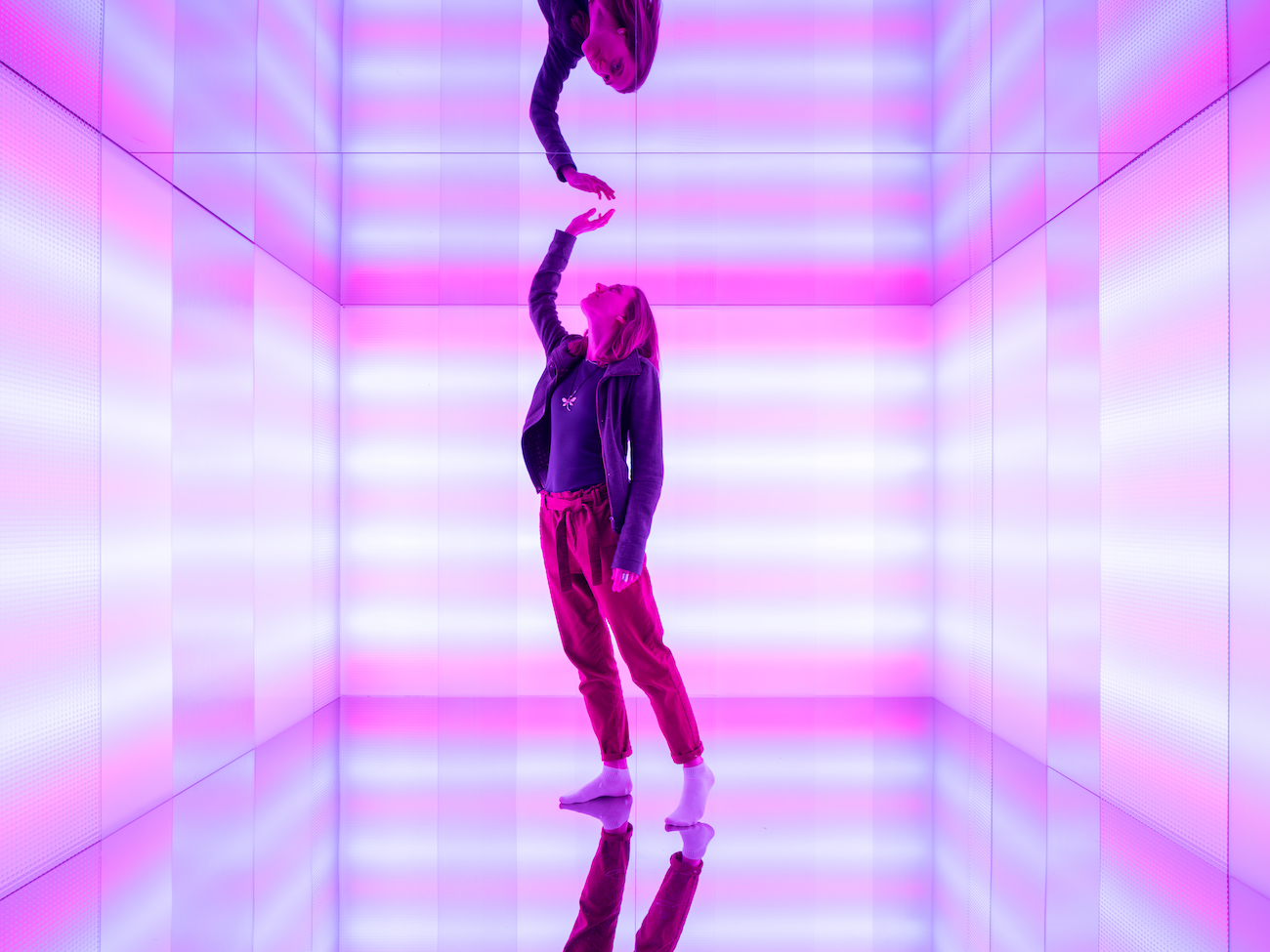
In an age where "immersive art" is often synonymous with digital screens, this exhibition reminds the public that true immersion is physical. The works by Vigo, Clark, and Mouraud require the viewer to use their skin, their ears, and their sense of balance. This shift back to the "analog-immersive" challenges contemporary artists to move beyond the screen and engage with the material world.
A New Curatorial Standard
The project sets a high bar for "archival restoration." It suggests that museums have a responsibility to do more than just display what has survived; they must actively rebuild what was lost due to systemic bias. The techniques used to reconstruct Inside Other Spaces will likely serve as a blueprint for future exhibitions seeking to recover the "lost" works of marginalized groups.
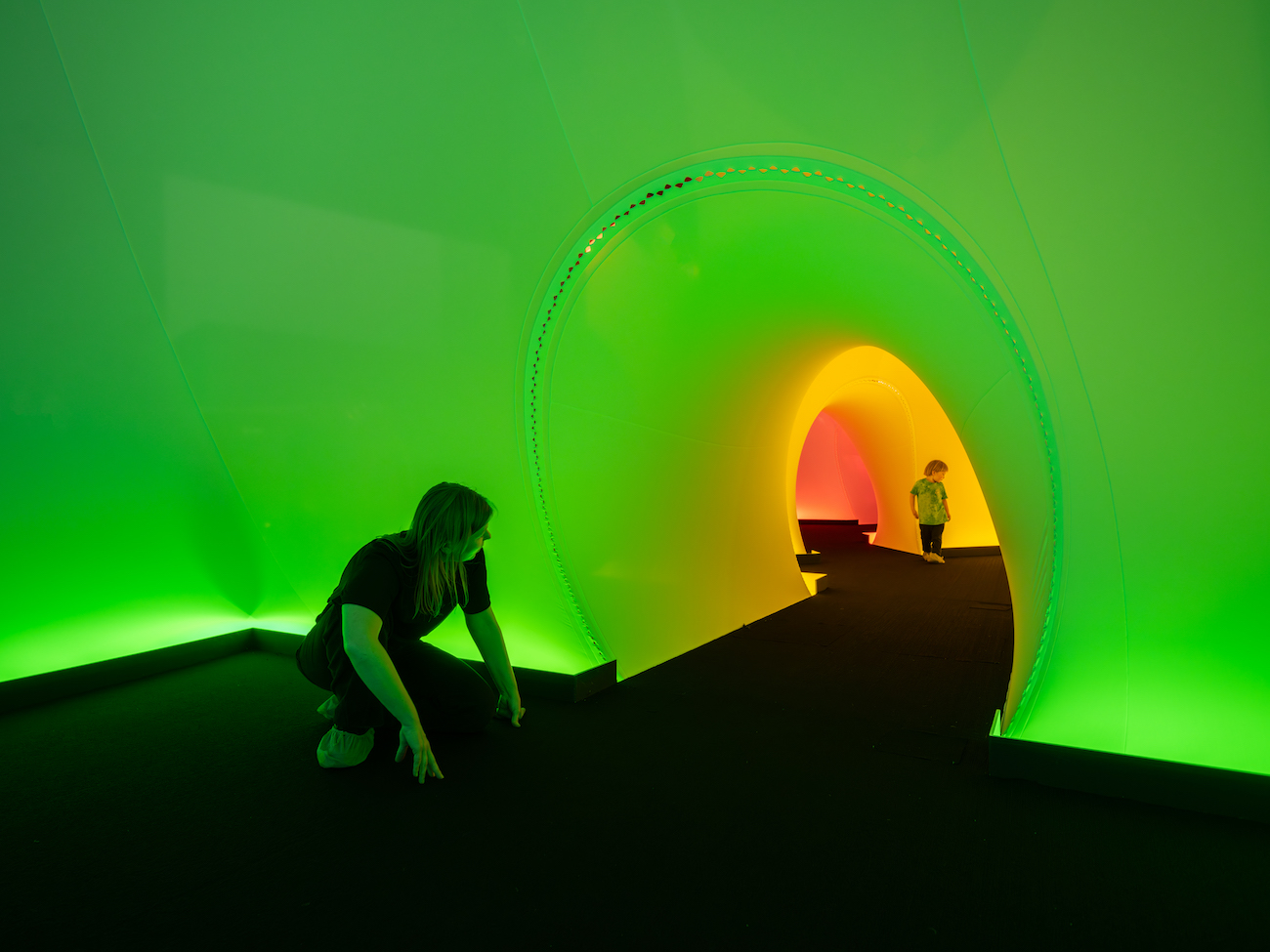
Re-evaluating the Canon
Finally, the exhibition forces a rewrite of art history textbooks. By proving that women from Brazil to Japan were simultaneously developing the language of environmental art in the 1950s and 60s, the narrative of art history shifts from a Western-centered "progression" to a decentralized, global "confluence."
As visitors walk through the blinding red light of Yamazaki’s vinyl rooms or feel the 40-knot winds of Grisi’s installation, they are not just looking at art—they are stepping into a corrected history. The Leeum Museum has ensured that while these environments were once temporary, their impact on the story of art will now be permanent.
Exhibition Information
- Inside Other Spaces: Environments by Women Artists 1956–1976
- Dates: May 5 – November 29, 2026
- Venue: Leeum Museum of Art, 60-16 Itaewon-ro 55-gil, Yongsan-gu, Seoul, South Korea
- In Collaboration With: Haus der Kunst, Munich

Leave a Comment