The Battle for the American Narrative: White House Escalates Campaign Against Smithsonian Over “Extreme Political Activism”
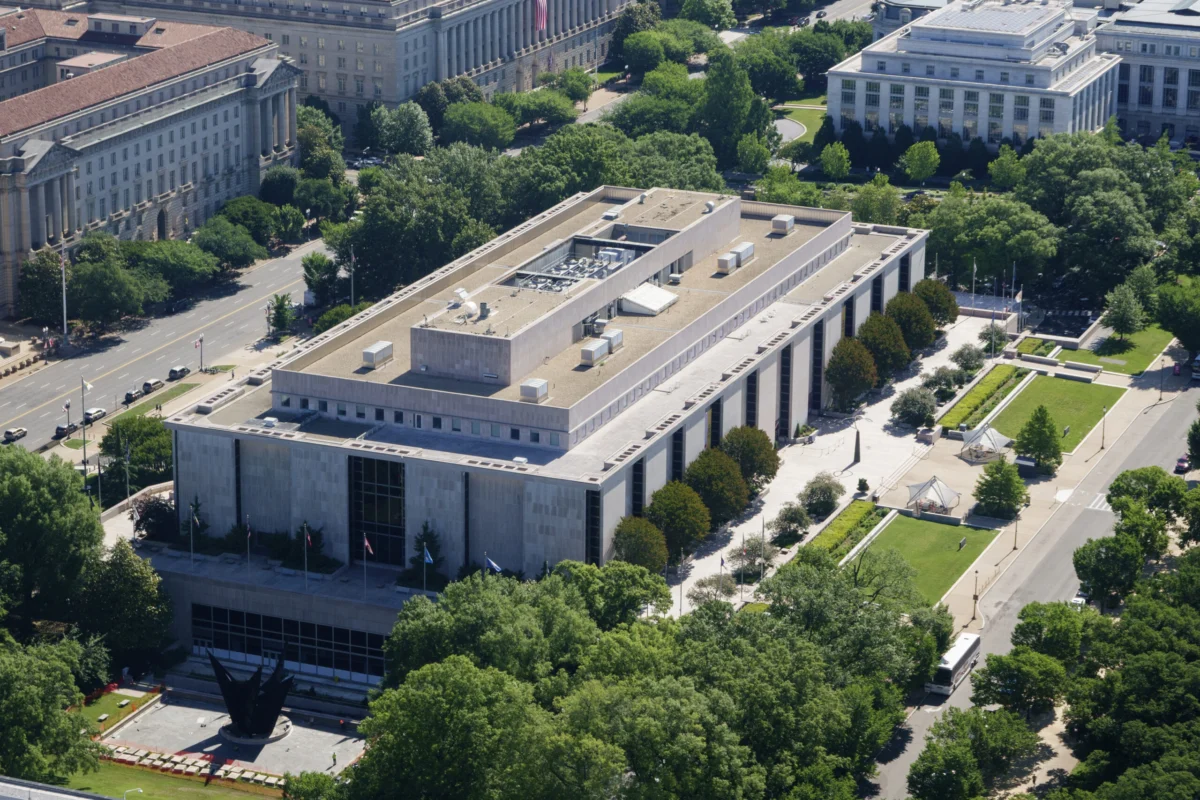
WASHINGTON, D.C. — In a move that significantly escalates the ongoing "culture wars" within the federal government, the White House released a scathing 162-page report on July 4, 2026, accusing the Smithsonian National Museum of American History (NMAH) of abandoning its mission in favor of "extreme political activism."
The report, titled "Saving America’s Story," represents the most aggressive volley to date in a multi-year effort by the Trump administration to overhaul the nation’s premier cultural institutions. The document lambasts the Smithsonian’s leadership for adopting what it describes as an "ideological framework" that views American history not as a unifying national heritage, but as a "political instrument to divide, dispirit, and discourage our citizens."
The timing of the release—on the 250th anniversary of the nation’s founding—was clearly intended to maximize its symbolic impact. It signals a definitive break between the executive branch and the world’s largest museum, education, and research complex, which has traditionally operated with a high degree of nonpartisan independence.
Chronology of a Cultural Conflict
The friction between the White House and the Smithsonian did not emerge in a vacuum. It is the culmination of a systematic campaign that began shortly after the administration took office in early 2025.
March 2025: The Executive Order
The seeds of the current report were sown in March 2025, when President Donald Trump signed an executive order titled "Restoring Truth and Sanity to American History." This order laid the groundwork for federal intervention in museum curation, accusing the Smithsonian and other federally funded entities of presenting a version of history that "deepens societal divides and fosters a sense of national shame." The order mandated that these institutions strip "improper ideology" from their halls and refocus on "patriotic education."
Mid-2025: The Comprehensive Review
Following the executive order, the White House initiated a comprehensive review of all current and planned exhibitions at the Smithsonian. The stated goal was to "assess tone, historical framing, and alignment with American ideals." This period was marked by internal strife within the institution, as curators and historians reportedly faced unprecedented scrutiny from political appointees regarding the "historical framing" of exhibits related to race, gender, and Western expansion.
Late 2025 to Early 2026: Financial Pressure
Throughout the winter of 2025 and the spring of 2026, the administration leveraged the power of the purse. Repeated threats to withdraw or significantly curtail federal funding—which accounts for roughly 60% of the Smithsonian’s annual budget—were used as a cudgel to demand changes in leadership and content. This culminated in the July 4th report, which serves as a formal "indictment" of the NMAH’s current trajectory.
The July 4th Report: Supporting Data and Key Allegations
The 162-page document is not merely a press release; it is a detailed critique of specific exhibits, acquisitions, and educational programs. The report argues that the NMAH has moved away from a "Great Man" or "Progress" narrative of history toward a "Critical Theory" model.
Accusations of Ideological Bias
The report asserts that the Smithsonian has "explicitly adopted" a framework that prioritizes the grievances of marginalized groups over the achievements of the American republic. It cites several unnamed exhibits as examples of "national self-flagellation," arguing that by focusing on systemic injustices, the museum is failing in its duty to foster national unity.

Targeting Leadership
A significant portion of the report is dedicated to personal critiques of the Smithsonian’s top officials. Anthea Hartig, the director of the National Museum of American History, is mentioned dozens of times. The report characterizes her tenure as one defined by "radical restructuring" and accuses her of prioritizing social justice goals over historical objectivity.
The report also casts a shadow over Smithsonian Secretary Lonnie G. Bunch III, the first Black American to lead the institution. While the language regarding Bunch is more measured than that directed at Hartig, the report suggests that under his leadership, the entire Smithsonian system has drifted into "partisan waters."
The "Shared National Inheritance"
The core philosophical argument of the report is the concept of a "shared national inheritance." The White House contends that a national museum should function as a "temple of civic identity," where citizens of all backgrounds come to celebrate common triumphs. By presenting a "fragmented" history, the report argues, the NMAH is effectively "disinheriting" the American public from their own story.
Official Responses and Defensive Measures
The Smithsonian and the broader historical community have responded to the report with a mixture of defiance and professional concern.
The Smithsonian’s Defense
In a concise statement released through a spokesperson, the NMAH stood by its record. "For more than 180 years, the Smithsonian has served the American public with nonpartisan scholarship, and we remain committed to doing so," the statement read.
Privately, sources within the institution suggest that the leadership is attempting to weather the storm without making concessions that would compromise academic integrity. However, the threat of budget cuts remains a looming reality that complicates this stance.
Lonnie G. Bunch III on the Institution’s Mission
Secretary Lonnie Bunch addressed the institution’s role during a recent interview with PBS’s Meet the Press. While not responding directly to the July 4th report, his comments provided a clear counter-narrative to the White House’s demands.
"I think what I want people to understand is that there is a responsibility to continue to make those aspirations available, accessible, meaningful to a whole range of people," Bunch said. He argued that America’s "greatest strength" is not "running away from its history," but rather "understanding how that history shaped us and continues to shape us." His vision of history is one of complexity and reckoning, rather than uncritical celebration.
Academic Critique
Beth English, executive director of the Organization of American Historians (OAH), provided a blunt assessment of the White House’s motives. Speaking to the Washington Post, English argued that the administration’s complaint isn’t about factual inaccuracy, but about a lack of "celebratory" tone.

"In many ways, the report’s real complaint isn’t necessarily inaccuracy; it’s that the museum isn’t celebratory enough," English noted. "And that’s a demand for a single version of history, dressed up as a defense of balance."
Implications for the Future of American Culture
The release of "Saving America’s Story" marks a turning point in the relationship between the federal government and the institutions that curate the national identity. The implications of this conflict extend far beyond the walls of the Smithsonian.
The Threat to Academic and Curatorial Independence
The most immediate concern for historians and museum professionals is the precedent of political interference. If the executive branch can successfully dictate the "tone" and "framing" of a national museum, it suggests that history is no longer a field of objective study but a tool of state propaganda. This raises questions about the future of the National Endowment for the Humanities (NEH) and the National Endowment for the Arts (NEA), which may face similar pressures.
The Funding Crisis
With the White House explicitly linking "alignment with American ideals" to funding, the Smithsonian faces a precarious financial future. If Congress follows the administration’s lead, the institution may be forced to choose between its scholarly independence and its operational viability. This could lead to a reliance on private donors, which brings its own set of ideological and corporate pressures.
The Polarization of History
The conflict reflects a broader societal divide over the meaning of the American experiment. One side views history as a source of national pride and a means of social cohesion; the other views it as a tool for critical self-reflection and the pursuit of a "more perfect union." By branding the Smithsonian’s approach as "extreme political activism," the White House is essentially declaring that there is no middle ground in the interpretation of the American past.
Potential for Legislative Action
The report may serve as a blueprint for upcoming legislative battles. Republican lawmakers have already signaled an interest in holding hearings on "ideological capture" at the Smithsonian. These hearings could be used to push for a new charter for the institution, one that mandates specific types of "patriotic" content and gives the executive branch more direct control over the appointment of directors.
Conclusion
The "Saving America’s Story" report is more than a critique of a museum; it is a manifesto for a new era of state-sponsored historiography. As the Smithsonian NMAH prepares to navigate the fallout, the central question remains: Who owns the American story?
For the administration, the answer is a centralized, celebratory narrative intended to bolster national pride. For the Smithsonian’s leadership, the answer is a diverse, often difficult, but ultimately more accurate reflection of the many peoples and events that have shaped the nation. As this battle unfolds, the very definition of what it means to be an American—and how we remember our journey—hangs in the balance.