
Cinematic Giants and Galaxy Quests: The 2024 Global Box Office Report
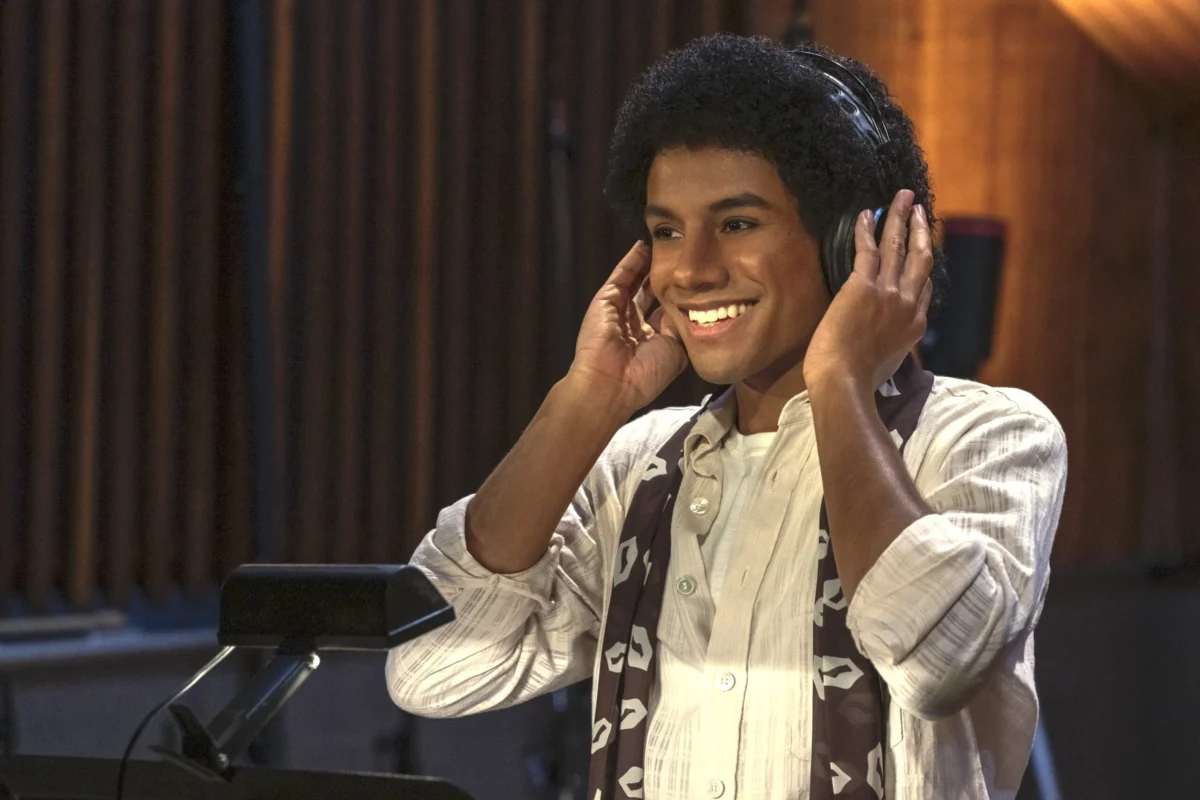
The global theatrical landscape is currently witnessing a fascinating tug-of-war between the nostalgic draw of musical icons, the enduring charm of legacy sequels, and the high-stakes return of the world’s most famous space opera. As the mid-year box office figures begin to crystallize, several major narratives have emerged: the unstoppable momentum of the Michael Jackson biopic, the surprising international resilience of the fashion world’s favorite sequel, and a critical litmus test for the Star Wars franchise as it attempts to reclaim its big-screen dominance.
Main Facts: A Triple Threat at the Box Office
The headlines this week are dominated by three distinct cinematic properties, each representing a different pillar of modern studio strategy.
Leading the charge is “Michael,” the sprawling musical biopic centered on the life and career of the "King of Pop." The film is currently on the precipice of a historic milestone, having generated a staggering $788 million in global ticket sales. Industry analysts expect the film to eclipse the $800 million mark within days, positioning it as a legitimate contender for the title of the highest-grossing musical biopic in history.
Simultaneously, Disney is celebrating a dual victory. “The Devil Wears Prada 2,” the long-awaited follow-up to the 2006 cult classic, has officially crossed the $600 million threshold worldwide. This achievement is particularly notable given the film’s fourth-weekend performance, which saw it continue to draw significant crowds, especially in international markets.
However, the most scrutinized performance of the weekend belongs to “The Mandalorian and Grogu.” Marking the first Star Wars theatrical release in seven years, the film serves as a bridge between the franchise’s successful Disney+ streaming era and its cinematic roots. Opening to a global total of $165 million over the four-day Memorial Day weekend, the film is performing with surgical precision against its production budget, though it faces the heavy shadow of past franchise stumbles.
Chronology: The Journey from Development to Debut
The path to these current box office heights has been years in the making, reflecting broader shifts in how studios greenlight and market "event" cinema.
The Rise of the Biopic
The development of “Michael” was a complex undertaking, requiring a delicate balance between the Jackson estate’s involvement and the creative vision of director Antoine Fuqua. Distributed through a unique partnership—Universal handling international duties and Lionsgate managing domestic release—the film was positioned from the start as a global event. Since its premiere, the film has followed an aggressive rollout strategy, building momentum through "word-of-mouth" screenings before expanding into major territories. Its current trajectory toward the $900 million mark is a result of sustained interest in Europe and Latin America, with the final piece of the puzzle—the Japanese market—set to open shortly.
The Sequel Strategy
“The Devil Wears Prada 2” represents Disney’s refined approach to legacy sequels. Rather than a direct-to-streaming release, the studio opted for a robust theatrical window, betting that the original film’s multi-generational fan base would show up for a premium experience. Now in its fourth week, the film’s chronology shows a steady hold, with minimal "drop-offs" between weekends, a sign of strong audience satisfaction and "legs" in the marketplace.
Reclaiming the Stars
The journey for “The Mandalorian and Grogu” began in the wake of 2019’s “The Rise of Skywalker.” Following that film, Disney shifted the Star Wars focus entirely to the Disney+ platform, launching series like The Book of Boba Fett, Ahsoka, and Andor. The decision to transition the "Mando-verse" back to theaters was an intentional pivot by Lucasfilm to prove that the franchise still possessed the "theatrical gravity" required for billion-dollar runs. Production for the film was streamlined, utilizing the "Volume" technology pioneered in the series to keep costs manageable compared to previous entries.
Supporting Data: By the Numbers
To understand the health of these films, one must look at the granular data defining their success or struggle.
“Michael” and the Biopic Record
With $788 million currently in the bank, “Michael” is chasing the $911 million record set by 2018’s “Bohemian Rhapsody.”
- International Gross: $468 million (representing approximately 59% of the total).
- Domestic Gross: $319 million.
- Key Growth Factor: The film has yet to debut in Japan, a market historically obsessed with Michael Jackson, where analysts predict an additional $40M–$60M could be added to the tally.
“The Devil Wears Prada 2” International Dominance
The fashion sequel has proven that American cultural exports still hold immense value abroad.
- Global Total: $608 million.
- Domestic vs. International: While it has earned a respectable $200 million in North America, its $408 million international haul accounts for two-thirds of its revenue.
- Weekend Performance: It added $21 million overseas in its fourth weekend, showing a decay rate of less than 30%, which is exceptional for a non-action sequel.
“The Mandalorian and Grogu” vs. “Solo”
The most critical data point for Disney is how the new Star Wars entry compares to the 2018 failure of “Solo: A Star Wars Story.”
- Opening Weekend: “The Mandalorian and Grogu” earned $145 million over three days and $165 million over the four-day frame.
- Budgetary Efficiency: The film cost $165 million to produce. In contrast, “Solo” cost nearly $300 million and opened to $103 million over the same holiday frame.
- Market Breakdown: Top international performers included the UK ($7.1M), Germany ($6.5M), China ($5.3M), and Japan ($4.9M).
Official Responses and Industry Context
While studios rarely issue defensive statements during a successful run, the narrative surrounding Disney and Lucasfilm has been one of "cautious optimism." Internal sources at Disney have noted that the $165 million production budget for “The Mandalorian and Grogu” was a deliberate attempt to return to "responsible filmmaking."
Jon Favreau, the film’s director and the architect of the modern Star Wars television era, has emphasized that this film was designed to be "accessible." This is a direct response to the criticism that recent Star Wars projects required too much "homework" (watching multiple TV seasons) to understand. Early critical response and audience exit polls suggest this strategy is working, with "word-of-mouth" trending significantly higher than it did for “Solo” or “The Rise of Skywalker.”
On the Lionsgate and Universal side, the success of “Michael” is being viewed as a validation of the "super-biopic" genre. Executive sentiment suggests that the film’s ability to draw crowds despite its nearly three-hour runtime and the complex history of its subject matter proves that audiences are hungry for high-production-value adult dramas, not just superhero spectacles.
Implications: The Future of the Cinematic Experience
The current box office landscape offers several profound implications for the future of the film industry.
1. The Biopic as the New Superhero Movie
The success of “Michael,” following in the footsteps of “Oppenheimer” and “Bohemian Rhapsody,” suggests that the "life story" of a global icon is now one of the few guaranteed ways to bring older demographics back to theaters. We can expect a surge in greenlighting similar projects as studios look to replicate this $800M+ formula.
2. The Streaming-to-Theater Pipeline
“The Mandalorian and Grogu” is a massive experiment. If it continues to hold well in its second and third weeks, it will prove that Disney+ can serve as a "farm system" for theatrical hits. This would fundamentally change how Disney plans its content, potentially moving more high-performing series (like The Bear or Marvel spin-offs) toward theatrical finales or bridge movies.
3. The "Star Wars" Litmus Test
The modest but healthy opening of the new Star Wars film suggests the brand is not "dead," but it is no longer the invincible juggernaut it was in 2015. The real test will be next summer’s “Star Wars: Starfighter.” Directed by Shawn Levy and starring Ryan Gosling, that film will lack the "Mando" and "Grogu" safety net. It will be an original adventure, and its performance will determine if the brand can survive on its own merits or if it is now permanently tethered to its most popular characters.
4. The Resilience of the "Mid-Budget" Sequel
“The Devil Wears Prada 2” crossing $600 million is a wake-up call for studios that have abandoned mid-budget comedies and dramas. There is a massive, underserved audience—particularly women and international viewers—who are looking for sophisticated, character-driven entertainment that doesn’t involve capes or lightsabers.
In conclusion, the box office this week tells a story of a diversifying market. While "Star Wars" fights to regain its crown, and Michael Jackson’s legacy continues to dominate the global stage, the real winner is the theatrical experience itself, which continues to prove that, given the right story, audiences are more than willing to leave their couches behind.


Leave a Comment