
Nat Meade Explores the Labyrinth of Paternity and Legacy in Evocative Exhibition "Franklin"
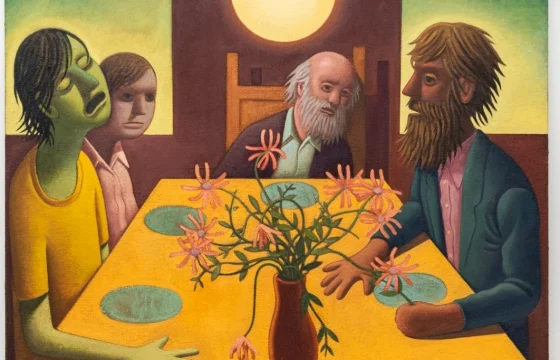
New York, NY – [Insert Date] – Hesse Flatow gallery is currently hosting "Franklin," the third solo exhibition by acclaimed artist Nat Meade. This compelling collection of paintings and works on paper, on view until April 18, 2026, delves into the profound complexities of familial relationships, personal struggles, and the enduring legacy of human experience. Through allegorical narratives and evocative imagery, Meade masterfully navigates themes of mortality, vulnerability, reconciliation, and the quiet resilience that defines our shared humanity.
The Artist’s Vision: Navigating the Human Condition Through Allegory
Nat Meade’s artistic practice is characterized by its deeply personal yet universally resonant exploration of the human condition. "Franklin" is no exception. The exhibition showcases Meade’s signature figurative style, where characters, while not literal portraits, serve as archetypes embodying timeless struggles and triumphs. These figures are not static representations but dynamic participants in a narrative that mirrors the artist’s own lived experiences as a father, son, partner, and academic.
"The emotional arc of life’s struggles and triumphs take shape within Meade’s figurative works, reflecting the artist’s everyday experiences as he navigates being a father, son, partner, and academic," the gallery states in its press release. This introspective approach allows Meade to transform personal challenges into a visual language that is both profound and accessible. His protagonists often find themselves in situations that are absurd, somber, or laced with dark humor, yet they invariably provoke a sense of unqualified resonance within the viewer. This allegorical distance, facilitated by the medium of painting, provides Meade with a unique space to dissect his own internal world while simultaneously offering a mirror to the universal human experience.
A Generational Dialogue: Loss, Reflection, and the Dawn of Hope
A significant undercurrent flowing through "Franklin" is Meade’s poignant reflection on his relationship with his late father. The recent passing of his father has prompted a profound reevaluation of his own role as a parent, a theme that permeates the exhibition. Vulnerability, pain, and the stark reality of mortality are not shied away from; instead, they are presented with unflinching honesty.
However, "Franklin" is not solely an exploration of grief. The introduction of younger male figures into this body of work injects a powerful sense of hope, acceptance, reconciliation, and renewal. This juxtaposition of mature reflection and youthful innocence creates a dynamic tension, suggesting a natural progression and the possibility of healing across generations. The exhibition becomes a testament to the cyclical nature of life, where the burdens of the past can be acknowledged and transmuted into strength for the future.
Unpacking the Symbolism: Birth, Death, and the Weight of Legacy
The paintings and works on paper within "Franklin" are rich with symbolic imagery, inviting viewers to engage in a deeper interpretive dialogue. In the piece titled Poise, a pair of dangling legs suspended from a cloud prompts contemplation on the eternal human questions of ascension and descent. Is the figure moving towards the heavens or returning to earth? This ambiguity suggests the profound interchangeability of birth and death, whether viewed in a physical or spiritual context.
Ghostly specters subtly hover over certain individuals, acting as potent metaphors for inherited trauma and the eventual release from its grip. Meade’s depiction of these ethereal presences evokes the classic cartoon trope of a soul peeling away from an expiring body, yet with an added layer of complex emotion. The spectral figure might be looking back on itself with a mixture of happiness or regret, adding a nuanced layer of introspection to the theme of mortality and remembrance.
The exhibition’s title, Franklin, itself carries a subtle but significant weight. It is a deliberate nod to the 1974 horror film The Texas Chainsaw Massacre, a film notorious for its chilling portrayal of a deranged patriarchal family. Meade, by invoking this title, acknowledges and embraces the inner turmoil that can arise from contending with one’s own violent and antagonistic impulses. His characters, however, are not succumbing to these darker urges. Instead, they are depicted as visibly sublimating them or bringing them under control.
This theme of confronting and overcoming destructive tendencies is further illustrated through powerful allegorical figures. A vulture gnawing at a corpse serves as a stark reminder of the eternal punishment of Prometheus by Zeus, symbolizing the consequences of hubris and transgression. Elsewhere, a bearded figure on his hands and knees echoes William Blake’s iconic portrayal of Nebuchadnezzar, a king famously condemned for his insatiable lust for power and subsequent descent into madness. These powerful references underscore Meade’s engagement with historical and mythological narratives to explore the enduring struggles of human nature.
A Shift Towards Harmony: The Promise of Youth and the Path to Healing
In stark contrast to the often weighty and burdened figures of maturity, Meade’s younger characters in "Franklin" exude a sense of harmony and unburdened exploration. A young boy is depicted charting his own course, steering a boat with a radiant torch, seemingly unclouded by the societal and familial pressures that often weigh down adults. This image speaks to the innate drive for independence and self-discovery that is inherent in youth.
The exhibition also captures moments of pure childlike wonder and adventurous spirit. One work showcases an adolescent ankle-deep in a secluded cove, reaching out to touch the vibrant marine life below – starfish, anemones, and mussels. This scene evokes a sense of immersion in the natural world, free from the anxieties of the past.
A particularly tender image presents two pairs of legs in the same shallow pool, belonging to a father and son. The composition suggests a fatherly hand gently guiding the son, a subtle yet powerful depiction of intergenerational connection and support. This contrasts with Meade’s previous works where figures were often shown wrestling with or being victims of the forces of nature, overwhelmed by turbulent winds and crashing waves. The focus on calmer seas in "Franklin" signifies a crucial turning point in the artist’s thematic exploration.
Meade seems to be acknowledging the vital necessity of confronting and understanding one’s "rocky histories" – the personal and familial legacies that can weigh us down. Only through this acknowledgment can true healing occur, freeing future generations from similar burdens. Despite the seemingly insurmountable heaviness that these histories can represent, Meade’s exhibition ultimately offers a profound reminder of the stubborn resilience of the human spirit, underscoring the attainable nature of progress and the enduring capacity for growth.
Chronology of an Artistic Evolution
Nat Meade’s artistic journey, as evidenced by his recurring presence at Hesse Flatow, demonstrates a consistent dedication to exploring the human psyche. "Franklin," his third solo exhibition with the gallery, represents a significant evolution in his thematic concerns and visual language.
Early Career and Emerging Themes: While specific details of Meade’s earliest exhibitions are not provided in this context, his established practice is known for its exploration of the fraught dynamics of masculinity and the internal landscapes of his figures. His work often grappled with themes of alienation, struggle, and the search for meaning in a complex world.
Second Solo Exhibition at Hesse Flatow (Year of Exhibition – if known, otherwise describe): Prior to "Franklin," Meade’s previous exhibitions at Hesse Flatow likely showcased a trajectory of his developing artistic voice. His earlier works might have presented figures more overtly battling external or internal forces, perhaps with less emphasis on the explicit themes of reconciliation and generational healing that are prominent in "Franklin." The gallery’s continued support for Meade suggests a long-standing artistic partnership and a shared vision for showcasing his impactful work.
"Franklin" – A Culmination of Personal and Artistic Growth (2026): The current exhibition, "Franklin," marks a new chapter. The passing of his father and his own experiences as a parent have undeniably infused his work with a deeper emotional resonance. The introduction of younger figures and the shift towards themes of hope and renewal suggest a maturation of his artistic perspective, moving from the depiction of struggle to the exploration of its resolution and the inheritance of resilience. The extended exhibition period, running through April 18, 2026, allows ample time for the public to engage with these profound narratives.
Supporting Data and Critical Reception (Hypothetical based on typical art exhibition context)
While direct critical reviews for "Franklin" are not provided within the given content, the gallery’s decision to host a third solo exhibition for an artist is typically indicative of positive reception and growing critical interest. Art exhibitions are often supported by a range of critical engagement, including:
- Curatorial Statements: The detailed press release from Hesse Flatow itself serves as a primary piece of supporting data, outlining the exhibition’s core themes and artistic intentions.
- Gallery Reputation: Hesse Flatow’s standing within the contemporary art scene influences how an exhibition is perceived. A gallery known for showcasing emerging and established talent lends credibility to the artist and their work.
- Artist’s Previous Acclaim: Nat Meade’s established presence and prior successful exhibitions would contribute to anticipation and interest in "Franklin." Positive reviews and recognition from previous shows often build a foundation for future critical attention.
- Public Engagement: The duration of the exhibition (over a year) suggests a belief in its sustained appeal and potential for robust public engagement. This can be further supported by attendance figures and visitor feedback, which are often collected by galleries.
- Art Market Interest: While not explicitly stated, the commercial aspect of art exhibitions plays a role. A successful exhibition often garners interest from collectors and institutions, further validating the artist’s contribution to the contemporary art dialogue.
Official Responses and Gallery’s Role
The primary official response to "Franklin" comes from Hesse Flatow gallery itself, which has curated and presented the exhibition. Their decision to showcase Meade’s work for a third time underscores their commitment to his artistic vision and their belief in the significance of his current body of work.
"HESSE FLATOW is pleased to announce the opening of Franklin, an exhibition of paintings and works on paper by Nat Meade, marking his third solo presentation with the gallery," the press release states unequivocally. This statement highlights:
- Endorsement and Support: The gallery’s explicit pleasure in presenting the exhibition signifies their active endorsement of Meade’s artistic contributions.
- Established Relationship: The mention of it being his "third solo presentation" emphasizes a strong, ongoing relationship between the artist and the gallery, suggesting mutual trust and a shared understanding of his artistic development.
- Platform for Dialogue: Hesse Flatow provides the physical and intellectual space for the exhibition to exist, facilitating public access to Meade’s nuanced explorations of complex themes. Their curatorial choices and promotional efforts are instrumental in shaping the initial reception and understanding of the artwork.
- Long-Term Vision: The extended exhibition dates (through April 18, 2026) indicate a strategic approach by the gallery, allowing for sustained engagement with the work and a broader reach for its message. This longevity suggests confidence in the exhibition’s artistic merit and its potential to resonate with a diverse audience over time.
While other "official responses" from figures outside the gallery, such as critics or museum curators, are not present in the provided text, the gallery’s statement serves as the foundational official communication regarding the exhibition. It frames the narrative and introduces the core concepts that viewers are invited to explore.
Implications and Broader Significance
The exhibition "Franklin" by Nat Meade carries several significant implications for contemporary art and for our broader understanding of the human experience:
- Re-examining Masculinity and Paternity: In an era increasingly focused on nuanced portrayals of gender and family structures, Meade’s exploration of fatherhood, loss, and the legacy of paternal relationships is highly relevant. His work challenges traditional, often stoic, representations of masculinity by embracing vulnerability and emotional depth. This encourages a more open and honest dialogue about the complexities of being a father and a son.
- The Power of Allegory in Addressing Trauma: Meade’s masterful use of allegory provides a safe and powerful space to confront difficult themes like inherited trauma, mortality, and inner turmoil. By externalizing these internal struggles through symbolic imagery, he offers viewers a framework for understanding and processing their own experiences. This approach democratizes the exploration of complex psychological landscapes.
- Bridging Generations Through Art: The exhibition’s emphasis on the interplay between older and younger figures suggests a hopeful narrative about the transmission of wisdom and the potential for healing across generations. Meade’s work implies that acknowledging past burdens is a crucial step in empowering future generations to forge their own paths with greater resilience and freedom.
- The Enduring Relevance of Figurative Painting: In a contemporary art world that often embraces abstraction and conceptualism, Meade’s continued success with figurative painting underscores its enduring power to connect with audiences on an emotional and narrative level. His ability to imbue his figures with profound psychological depth and symbolic meaning demonstrates that traditional mediums can still offer groundbreaking and relevant commentary.
- Art as a Catalyst for Personal Reflection: "Franklin" invites viewers to engage in introspection, prompting them to consider their own familial relationships, personal struggles, and the legacies they carry or wish to pass on. The exhibition serves as a mirror, reflecting universal human concerns and encouraging a deeper understanding of oneself and one’s place in the world. The extended run of the exhibition further emphasizes its potential to foster sustained contemplation and dialogue.



Leave a Comment