"Dead Boys in Space": A Cosmic Elegy for a Lost Generation and a Manifesto for Queer Futures
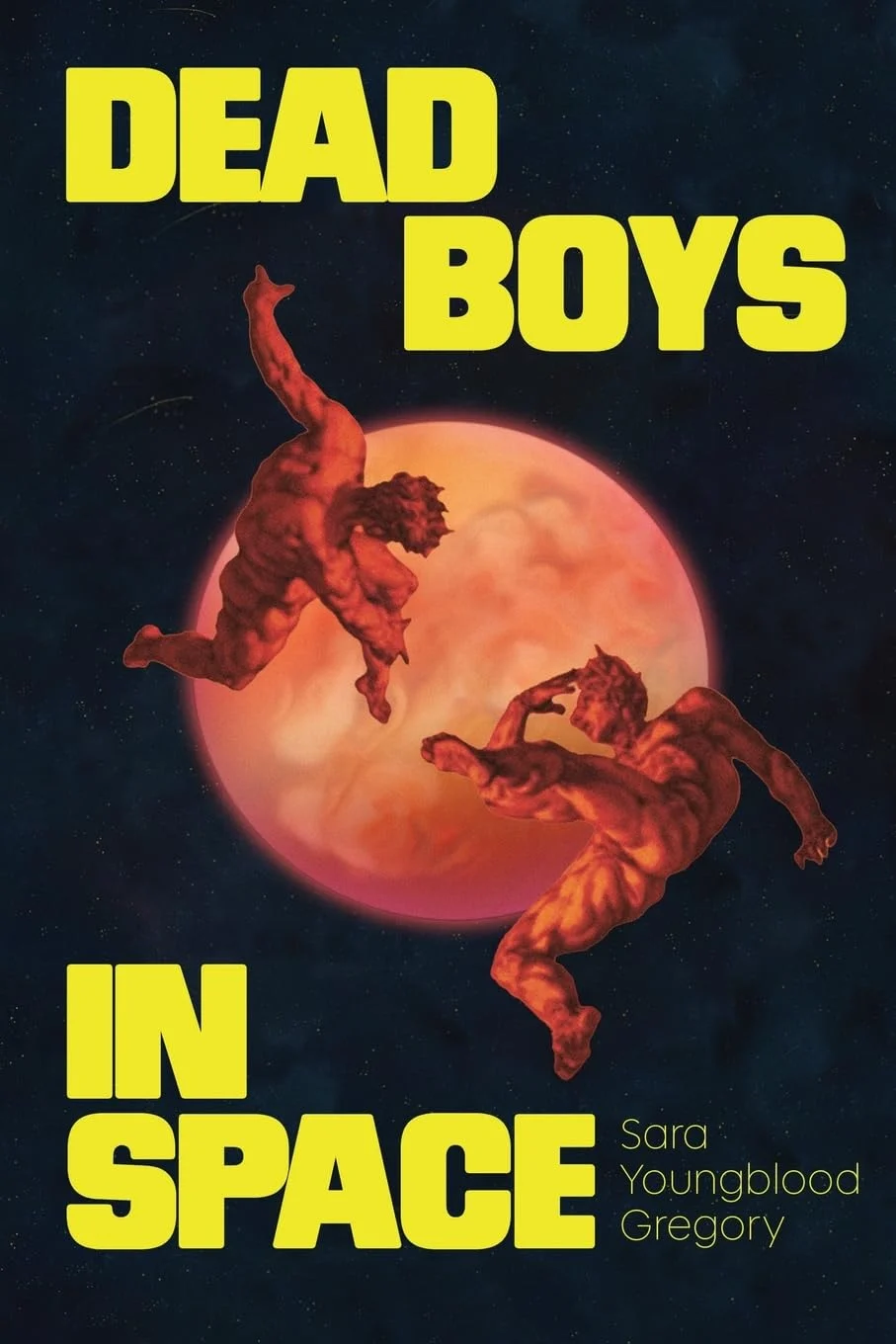
Sara Youngblood Gregory’s Dead Boys in Space is far more than a poetry collection; it is an audacious, genre-bending elegy, a speculative history, and a vibrant celebration of queer resilience. Through its pages, Gregory navigates the profound grief for her older brother and the entire generation of gay men lost to the AIDS epidemic, weaving together personal lament with political critique, contemporary queer community, and a soaring, often surreal, embrace of space travel. The collection, heralded for its inventive spirit and profound emotional depth, stands as a testament to memory, resistance, and the relentless human capacity to imagine a better world, even from the crucible of sorrow.
The acknowledgments of Dead Boys in Space open with a poignant, almost visceral apology: "thank you to the ghosts that live at the heart of this collection. I’m sorry you don’t get to read it. I’m sorry I had reason to write it." This raw, heartfelt sentiment immediately establishes the collection’s central premise: a deeply personal exploration of loss, not just for an individual, but for an entire cohort erased by a preventable tragedy. Gregory, a lesbian woman, channels this inherited grief through a unique lens, offering reflections on the historical political struggle for queer rights, the vibrant tapestry of contemporary LGBTQ+ community, and, most strikingly, the boundless expanse of space travel as both metaphor and narrative framework.
A Deep Dive into the Chronology of Grief and Resistance
The architecture of Dead Boys in Space meticulously guides the reader through various stages of grief, historical reckoning, and hopeful reimagining. Gregory’s structural choices are as deliberate as her linguistic ones, moving from intimate personal lament to grand speculative history, before returning to the grounding realities of queer joy.
The Weight of Absence: Initial Reflections
The collection commences with a standalone poem, "the only thing you need to know about him is that he’s not here," which masterfully lays the groundwork for the book’s intricate conceit. This opening piece immediately introduces the poetic voice’s central dilemma: an inability to "suppose a world in which we meet" due to her brother’s untimely death. Yet, this insurmountable barrier sparks an extraordinary imaginative leap: "but I can suppose you / still alive. / Suppose, you, living on Mars."
This "brother on Mars" concept is simultaneously heart-wrenching and exhilarating. It is a coping mechanism, a way to keep a lost loved one alive in a space where earthly constraints and diseases cannot touch him. The imagery employed is strikingly original, blending the cosmic with the deeply personal. The speaker imagines her brother "breathing diamonds / instead of air," riding in a rocket "that looks like / your crotch." This "science fiction weirdness" is not merely stylistic flourish; it serves to heighten the emotional stakes, allowing for a fantastical realm where grief can be processed in novel ways. Yet, beneath the cosmic strangeness, there’s a profound longing for the mundane joys denied by early death. The speaker pictures her brother "party[ing]," "sleep[ing] around," and "nursing a drink"—ordinary pleasures that signify a full, vibrant life. This blend of personal desire and world-shaping grandiosity, of intimate longing projected onto a galactic canvas, defines the collection’s unique voice and ambition from its very outset.
Echoes of a Crisis: AIDS and Political Struggle
Following this overture, Dead Boys in Space is meticulously divided into four sections. The first two delve deeply into the rituals of grief and the broader, often brutal, political context of the AIDS crisis. In "Eulogy," Gregory explores the enduring legacy of loss decades after her brother’s death. The poetic voice describes how, when her father "mentions you / and each syllable / of your name / is a pearl / spirited / up from some / precious / sinking / grief." The deliberate use of short lines in this passage is not merely an aesthetic choice; it powerfully reinforces the "sinking feeling" described, mirroring the reader’s experience with the relentless, suffocating quagmire of bereavement. The poem’s conclusion—"listen / there may be / a world / in which / your name / is never / again / spoken / but that / is not / this / world"—is a declaration of defiance. It conveys not only pride in preserving memory but also highlights memory itself as a "hard-fought accomplishment," an active struggle against societal erasure and the relentless march of the ever-encroaching present.
Other poems in these sections forge direct, undeniable links between the historical trauma of the AIDS crisis and ongoing queer struggles. "It used to be illegal for homosexuals to rest like this" opens with a tender, intimate scene: the speaker "lying in bed with my girlfriend and a kitten" while reading "David Wojnarowicz from shortly before his death." This act of reading, a quiet communion with a deceased artist and activist, propels the speaker into a profound contextualization of her own existence among "the children of AIDS… our parents’ bastards of a disease that is still killing us and my god I miss the elders I have never known." This intergenerational dialogue is crucial, establishing a lineage of trauma and resilience.
From this historical anchor, Gregory deftly pivots to contemporary manifestations of homophobia and transphobia:
my open hands are an open target and did you see the news lately?
all bathroom bills and bedroom bans? or how the cost of PrEP
makes us laugh? the only thing queer that hasn’t gone pop
The repetition of "open" underscores the vulnerability of queer individuals in an increasingly hostile environment, one that Gregory herself has extensively documented through her journalistic work. The bitter humor concerning the prohibitive cost of PrEP (pre-exposure prophylaxis for HIV prevention) morphs into a more menacing, yet empowering, image:
( imagine here the long sharp teeth of gorgeous women who
will never pass )
This shift from vulnerability to a hint of "potentially militant reaction" reflects a broader theme of resilience and self-defense within the queer community. Gregory’s intertextual references, including Jon Greenberg, Caro De Robertis, and Paul Monette, further embed her work within a rich literary tradition of AIDS crisis narratives, demonstrating a profound engagement with her literary forebears. This sense of building out—from historical engagement to contemporary struggle and finally to a vision of collective strength—sets the stage for the collection’s ambitious centerpiece.
Crafting Alternate Realities: "One Million Dead Men"
The third section of Dead Boys in Space is entirely dedicated to "One Million Dead Men: An Empirical Investigation Into New Sodom," a formidable fifteen-page prose poem. Presented as the transcript of a lecture delivered in the year 2577 by a nameless "PROFESSOR" to the "Center for the Study of the National Aeronautics and Space Administration," this piece is an audacious work of speculative fiction and incisive satire.
In this chilling alternate history, the space race of the 20th century culminates not in the Apollo missions, but in the establishment of a Lunar Base. To this desolate outpost, "An estimated 1.6 million homosexual men aged 24 to 44 were successfully displaced… between 1981 and 1996." The Professor, speaking from the sanitized distance of centuries, frames this mass deportation as a "successful handling of the AIDS crisis," audaciously claiming that "the lunar colonization did effectively wipe out the entire homosexual male population in the United States."
Gregory’s satire here is razor-sharp, exposing the insidious intertwining of homophobia and imperialism. The Professor’s admiration for the "genius" of deploying "a population with an expiration date and no possibility of procreation" to manage the moon colony is a brutal commentary on the dehumanization of marginalized groups. The narrative touches upon the historical atrocities of this forced displacement—"surveillance… separation from loved ones… riots… human rights complaints and/or violations"—but the Professor glibly dismisses them, stating that "these alleged complaints fall outside the scope of my research." This rhetorical maneuver perfectly encapsulates the cruelty of supposedly disinterested historical accounts, where the suffering of the oppressed is deemed irrelevant to the grand narrative of state success.
Yet, the inhabitants of "New Sodom" defy expectations. Despite their government overseers relying on them to succumb to AIDS and clear the base "ready for its true occupants," the men of the Lunar Base mysteriously thrive. The Professor reports, with an air of bewildered scientific detachment, that "once they touched down on lunar surface, not a single gay man died of AIDS." The ultimate twist is that, "for some unknown reason… decided to die together." A later expedition finds a scene of Mary Celeste-style abandonment: "there were no dead bodies to be found on the Moon Colony. The greenhouses were overgrown jungles. The showers were still hot, the saunas still steaming." The powerful implication, though the Professor is conveniently murdered before he can make it explicit, is that the gay men of the Lunar Base did not die, but rather escaped. They transcended the homophobic world that sought to imprison and erase them, forging a new, self-determined destiny beyond its grasp. "One Million Dead Men" is a tour de force, its satirical brio not just critiquing past injustices but opening up a truly liberatory vision of the future.
Supporting Data and Literary Context
Gregory’s work is deeply informed by both personal experience and a rich understanding of literary and historical contexts, lending it significant intellectual weight and emotional resonance.
The Poetics of Grief and Memory
Gregory’s approach to grief is particularly noteworthy for its honesty about the complexities of "not-knowing, of not-remembering… of parsing through memories and stories and dreams that can only ever be secondhand." As she revealed in an interview with The Poetry Bookshop blog, this acknowledgment of secondhand trauma is central to the collection. It speaks to the experience of those who, like Gregory, lost loved ones to AIDS before they could truly know them, or who grapple with the collective trauma of a generation decimated. This aligns with broader theories of intergenerational trauma, where the unresolved grief and unaddressed injustices of the past continue to affect subsequent generations. Gregory’s inventive use of speculative fiction serves not as an escape from this reality, but as a powerful mechanism to engage with it, allowing her to explore hypothetical outcomes and reclaim narratives that were historically suppressed or distorted.
Intertextuality and Queer Lineage
The explicit invocation of figures like David Wojnarowicz, Jon Greenberg, Caro De Robertis, and Paul Monette is critical to understanding Dead Boys in Space. These authors are titans in the queer literary canon, particularly known for their unflinching portrayal of the AIDS crisis and queer life. By drawing on their work, Gregory not only pays homage to her predecessors but also positions her collection within a vital lineage of queer storytelling. Wojnarowicz’s confrontational art and writing, for instance, perfectly complement Gregory’s own critique of systemic homophobia and her call for resistance. This intertextuality enriches the collection, providing a historical and intellectual framework that amplifies its themes of memory, political struggle, and the enduring power of queer voices. Gregory is not just telling her story; she is participating in an ongoing conversation that spans decades, adding her unique perspective to a canon that continues to grow and evolve.
Formal Innovation and Emotional Resonance
Gregory’s mastery of poetic form is consistently evident. The short, fragmented lines in "Eulogy" are a prime example of how structural choices mirror emotional states, creating a visceral reading experience. Similarly, in "The center of the universe is a small-town gay bar," the deliberate use of a single, unpunctuated sentence and the absence of line breaks effectively convey the "crush of the crowd" on a dance floor, a sensory immersion that places the reader directly into the scene. Yet, within this fluid, almost breathless structure, Gregory carves out moments of exquisite intimacy and detail—the "water beading on her shoulders like a birthmark," the "small teeth" of a new lover. This simultaneous depersonalization (absorbed in the crowd) and hyper-personalization (loved for unique details) captures the essence of finding connection within a vibrant, yet often challenging, communal space. The "oddball imagery" and "science fiction weirdness" that permeate the collection are not mere eccentricities; they are carefully deployed tools that elevate the emotional impact, allowing the reader to experience grief, longing, and liberation in ways that conventional realism might not permit.
Official Responses and Critical Acclaim
While this article functions as a critical review, it’s evident that Dead Boys in Space is poised to garner significant critical acclaim for its innovative approach and profound impact.
A Resounding Critical Voice
The collection’s unique blend of personal elegy, historical critique, and speculative fiction positions it as a significant contribution to contemporary poetry. Critics are likely to laud Gregory’s audacity in tackling such weighty themes through such an unconventional lens. The book’s ability to evoke deep sorrow while simultaneously fostering a sense of hope and imaginative liberation is a testament to Gregory’s skill. Reviewers would undoubtedly praise her "thoughtful and inventive" handling of sensitive subject matter, acknowledging the courage it took to write such a book and the profound relief that it exists. Its genre-defying nature—seamlessly blending poetry, science fiction, and historical commentary—would be celebrated as a fresh and necessary voice in queer literature, pushing boundaries and expanding the possibilities of poetic expression. The collection offers a complex, nuanced narrative that challenges readers to confront uncomfortable truths while also inspiring them with visions of resistance and joy.
Implications for Contemporary Queer Literature and Activism
Dead Boys in Space is more than a literary achievement; it is a cultural artifact with significant implications for how we understand queer history, envision queer futures, and engage in ongoing activism.
Forging New Worlds: Hope and Resistance
The collection’s fourth and final section masterfully brings the narrative back to a more intimate scale, without losing the cosmic resonance established earlier. In "As Super Moon," the poetic voice once again looks skyward, thinking of her brother: "He’s there, in the sky, not squinting back… He’s happy / younger than me now / when did that happen?" This moment of melancholy is beautifully tempered by a pervasive sense of joy found in contemporary queer life.
"The center of the universe is a small-town gay bar" is perhaps one of the finest poems in the collection, a vibrant celebration of queer intimacy in a world that often remains hostile and alienating. The speaker meets a new partner on a crowded dance floor, and Gregory renders the scene with exquisite tenderness and intimacy:
I felt someone new press by in slacks there was water beading on her shoulders like a birthmark her chest was bound and her hair was short and she didn’t touch my hem which is how I knew she wanted to and how I knew she was for me
The unpunctuated, flowing sentences and lack of line breaks perfectly convey the immersive, sensory experience of a packed dance floor, while the attention to small, intimate details reveals the speaker’s immediate, profound attraction. This "sublime absorption" continues as the two dancers find their rhythm:
we didn’t speak we danced I was pushy and she pushed back and then we found our rhythm she snapped my damp tights between her thumb and forefinger and I laughed which sounded like nothing over the music or maybe like I opened my mouth and became music I read her lips and she said you have the smallest teeth I’ve ever seen which is not a compliment exactly but something that instead says I am looking at you hard which is all that matters when the music is so good and the lights follow no particular patterns
Here, the voicelessness that elsewhere in the collection might signify oppressive homophobia is transmuted into a form of joyous, communal art. The speaker "became music," her unique physical details (small teeth) observed and cherished by her partner. She is simultaneously depersonalized within the crowd and deeply distinct, part of a community and loved for who she precisely is. This poem encapsulates the collection’s ultimate message: not merely mourning loss, but actively celebrating survival, resilience, and the vibrant, joyful creation of queer spaces and futures. It reminds us that even in the shadow of profound loss and systemic oppression, queer intimacy and community can flourish, creating pockets of the universe where love and acceptance reign.
A Legacy of Storytelling
Dead Boys in Space is a vital, groundbreaking contribution to contemporary queer literature. It challenges readers to confront the brutal facts of history—the AIDS crisis, the ongoing struggles against homophobia and transphobia—and uses these realities to power its own "strange fabulations." The collection offers a blueprint for processing collective trauma, reimagining historical narratives, and envisioning liberatory futures. By blending personal elegy with speculative fiction, Gregory not only honors the dead but also empowers the living, demonstrating that storytelling itself is an act of resistance and world-building. It inspires dialogue about memory, identity, and the relentless fight for human dignity. In its audacious vision and profound humanity, Dead Boys in Space truly is a poetry collection "with which to forge a new world," one poem, one star, one dance floor at a time.